The National Monument, known as Monas, is a 132-meter tower in the middle of Merdeka Square in central Jakarta. It was built between 1961 and 1975 to commemorate Indonesia's fight for independence from Dutch rule, and it ends in a flame covered with gold foil. The National History Museum sits in the base, with dioramas that run from prehistory to the post-independence years. A lift takes you up to the observation deck, which looks over the city. The park around the tower is free to enter and good for a long walk.
Why Monas was built
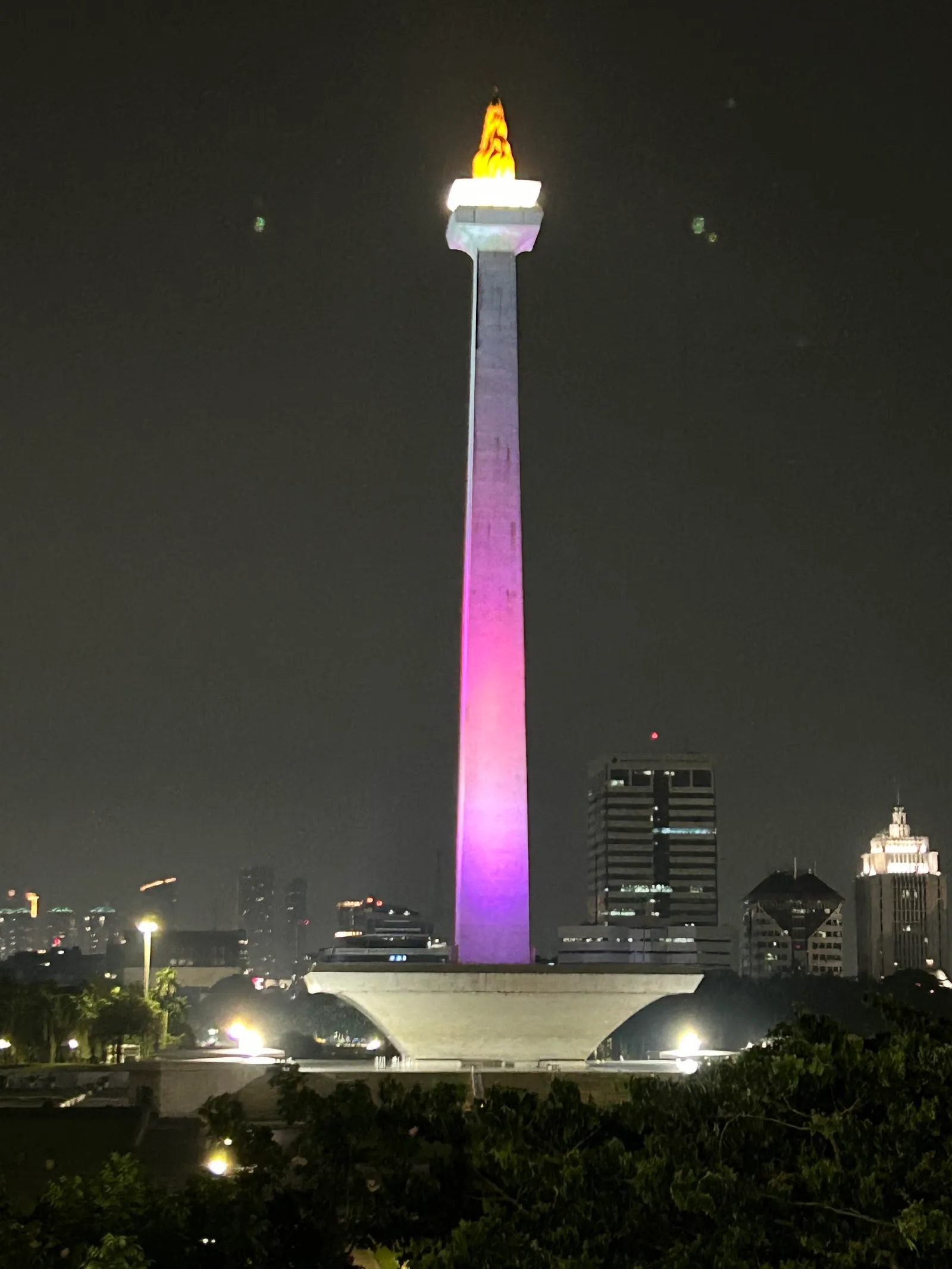
Monas stands in the center of Merdeka Square, which was called Koningsplein, or King's Square, in the Dutch colonial period. The monument commemorates Indonesia's struggle for independence from the Dutch. Sukarno, the country's first president, pushed for its construction, and the Eiffel Tower in Paris is said to have inspired the idea.
Construction began in 1961 and the monument opened to the public in 1975, five years after Sukarno's death. Today it is the best-known landmark in Jakarta and a common first stop for visitors to the city.
The design and its symbols
The tower is a tall obelisk set on a wide base, topped by a flame covered in gold foil. Its cup and tower shape is read as a lingga and yoni, two Hindu symbols that are often shown together to represent male and female energies. The design is also described as drawing on two traditional tools used to produce rice, to express balance and harmony between different forces.
The monument has three main parts: the observation deck at the top, a large podium level below it that looks over the square, and the museum in the base.
Inside the museum and the Independence Hall
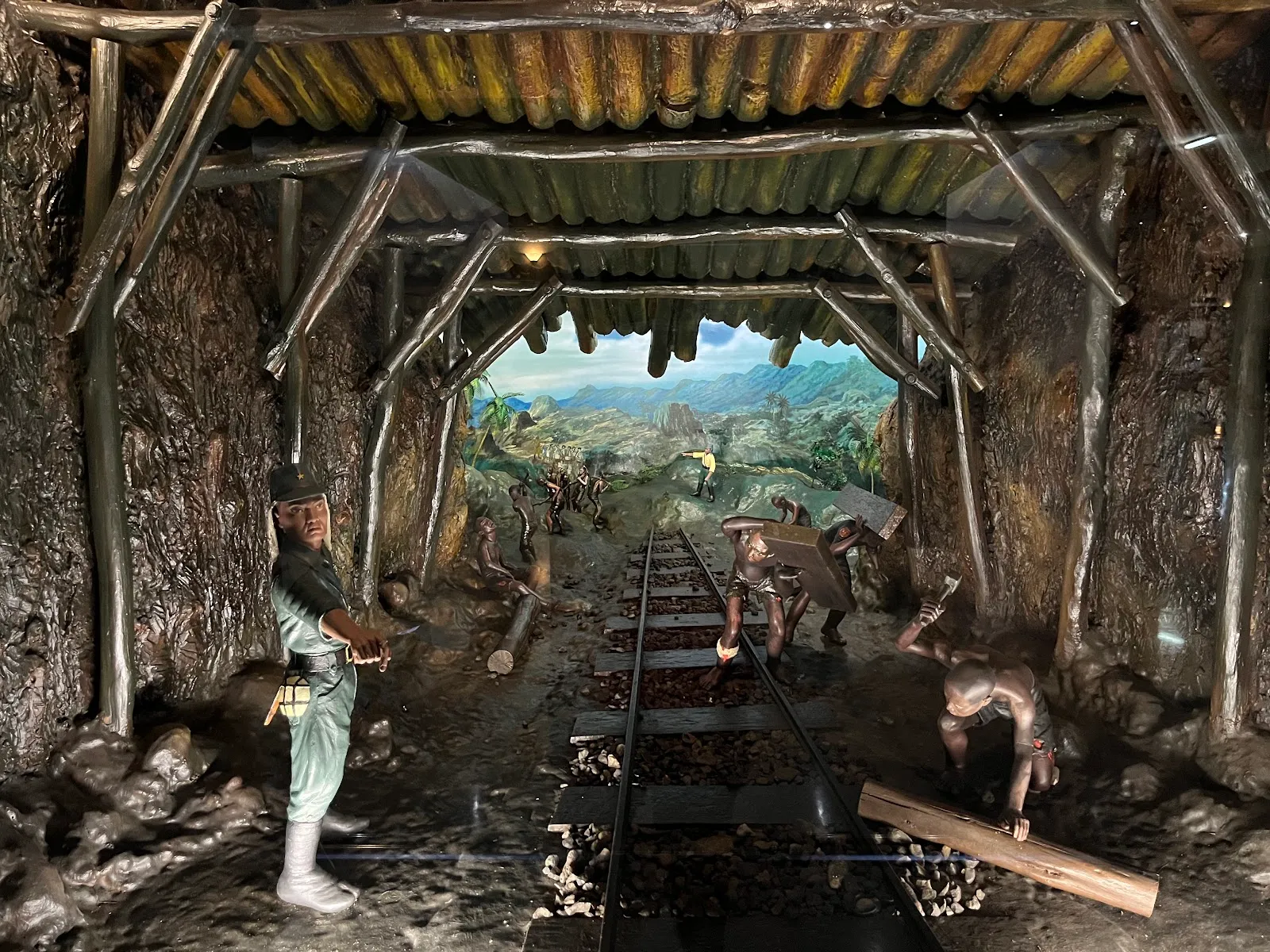
The lower part of the monument houses the National History Museum. Its dioramas depict major events in the country's history, from prehistoric times to the period after independence. The miniature figures are carefully made, and the exhibition is quiet enough to look at slowly on a weekday.
The Independence Hall (Ruang Kemerdekaan) holds a replica of the national flag and a room where you can hear the proclamation text read aloud in the voice of Sukarno. The hall also has a large wall map and the Garuda, the national emblem. From here, your ticket gets you into the line for the lift to the top.
The view from the top
A small lift with an operator carries visitors up to the observation deck, and music plays during the ride. From the deck you look out over central Jakarta in all directions. Landmarks you can pick out include the Istiqlal Mosque, the National Library and the Hotel Indonesia roundabout.
Clear weather gives the best view. At night the city lights are less readable from above, and the floodlights at the very top can glare through the deck's steel fence. The deck can also close during national celebrations and large events, so check before you go if your visit falls on a public holiday.
The park and what is nearby
Merdeka Square covers about 80 hectares and is one of the larger city parks in Asia. Wide paths, big trees with benches beneath them, ponds and fountains make it comfortable for walking or jogging. Entering the park does not require a ticket. A fee applies only for the museum and the observation deck.
Battery-powered carts run inside the grounds. One visitor reports that they are free for ticket holders and carry you back toward the front gate, so keep your ticket. A market outside sells souvenirs.
Across the road to the east are the Istiqlal Mosque and the Jakarta Catholic Cathedral, both free to enter. The National Museum is also close, and the Gambir railway station is nearby.
FAQ
Is there an entry fee for Monas?
The park around the monument is free to enter. A ticket is needed for the museum and for the observation deck, and you buy it at the underground ticket area.
Which day is Monas closed?
Monas is closed on Mondays. It is open the other six days of the week, including in the evening.
How long does a visit take?
A walk around the park alone can take about 15 minutes. The museum, the lift queue and the deck add more time, and queues are longer on busy days.
When is the best time to visit Monas?
Early morning or around sunset. The square is hot and exposed in the middle of the day. Some visitors also like the evening, when the monument is lit up.
Is Monas wheelchair accessible?
The entrance, restroom and parking lot are wheelchair accessible. Free and paid parking are available.