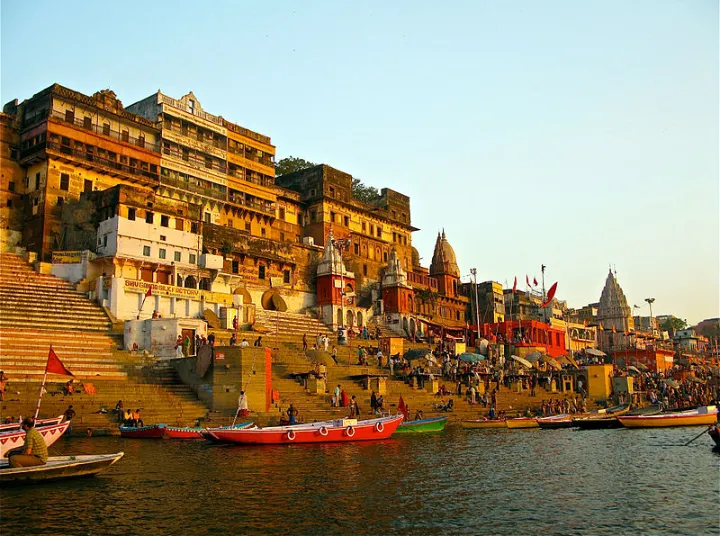
Manikarnika Ghat is one of the oldest sets of steps on the Ganges in Varanasi and the city's main cremation ghat. Families bring their dead here from across India, and the pyres are kept burning day and night. Many Hindus believe a cremation here brings moksha, release from the cycle of birth and rebirth. Older people also come to spend their last days in the city, close to the river. Visit to watch quietly and to understand how Hindu belief shapes the way Varanasi treats death.
The name and the legends
The name Manikarnika is usually explained as "jewel of the ear", with mani meaning jewel and karnika meaning ring of the ear. Several legends link the name to an earring lost at this spot, and the story is told in more than one form.
Another legend tells of Lord Vishnu digging a pit here with his discus and filling it with his sweat during long penance. The pit is known as the Manikarnika Kund, a sacred pool beside the ghat.
Some believers say Lord Shiva whispers a sacred mantra into the ear of the dead, which is why the ghat is linked to liberation. These stories are part of the faith that people bring here, so they are worth knowing before you arrive.
Cremation and the belief in moksha
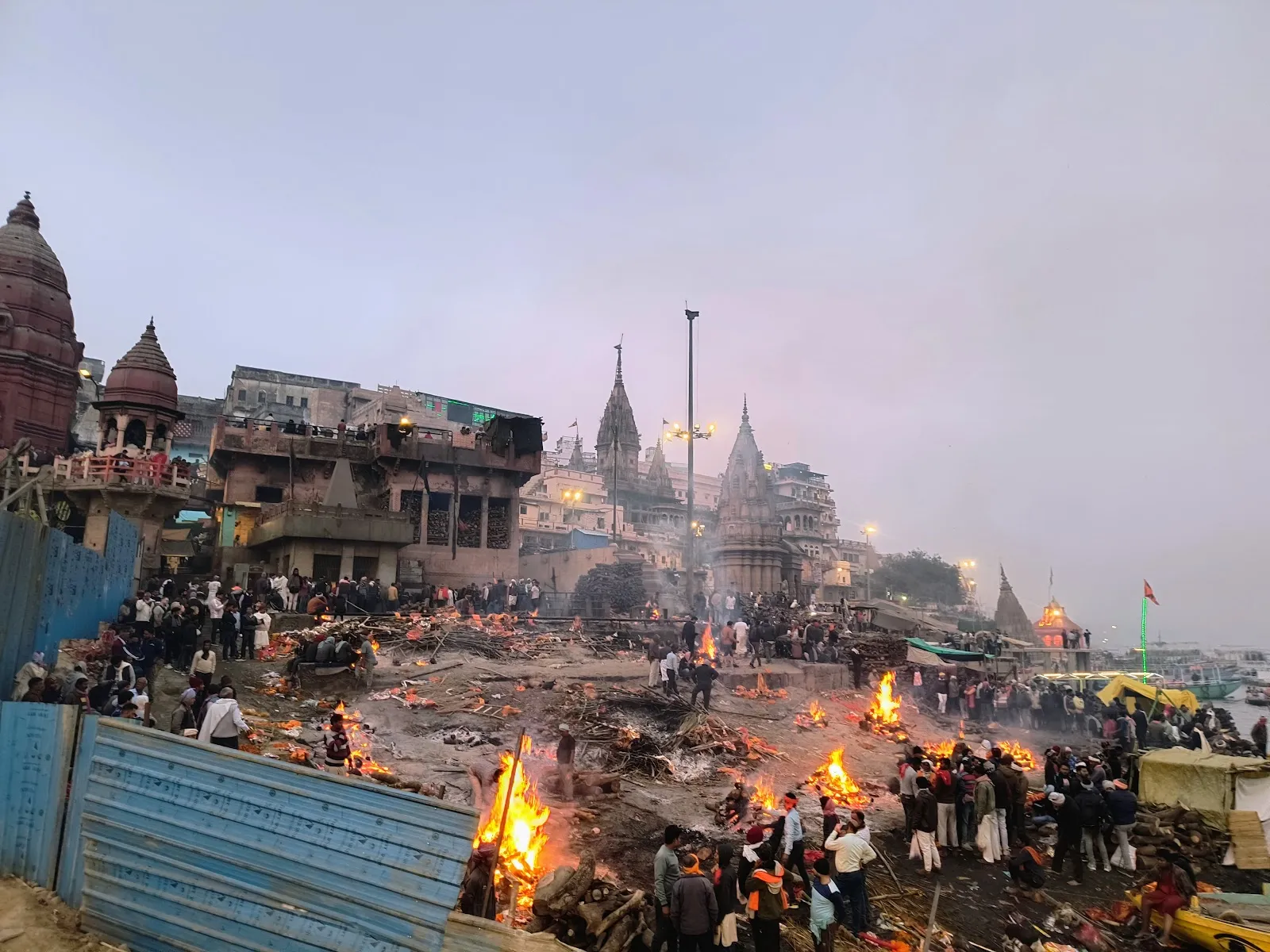
Cremations take place here throughout the day and night, which is why the ghat is often called the burning ghat. Bodies are brought from many parts of India, because many families believe that a death in Varanasi and a cremation on these steps bring moksha.
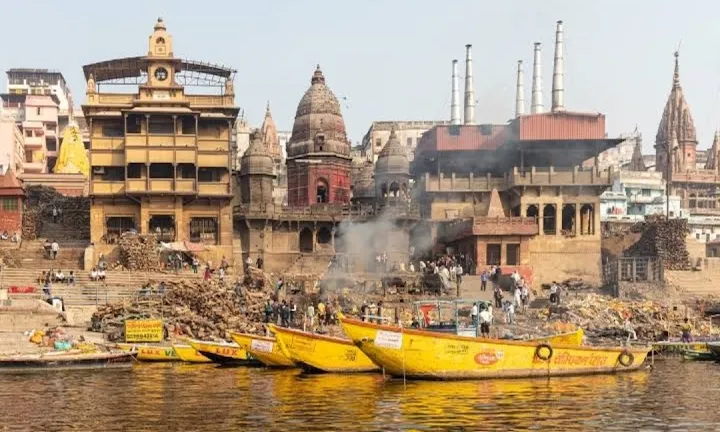
Before the cremation, the body is dipped in the Ganges. The pyres are built from firewood, and the wood is stacked in the lanes that lead down to the river. Workers who tend the pyres carry out the cremations as part of their work, and their role is a central one in how the ghat runs.
For many elderly people, the city is a place to spend their final years, and this ghat is a place they visit often. The sight of smoke, flames and grieving families can be overwhelming, so take time to watch in silence.
Around the ghat
Manikarnika Ghat sits between Dashashwamedh Ghat and Scindia Ghat. Walking the river steps from one to the next shows how the ghats change in character, from busy evening ceremonies to quieter stretches of stone.
Harishchandra Ghat is the other cremation ghat in Varanasi and is also worth knowing about if you want to compare the two. The ghat is also associated with the Shri Kashi Vishwanath Temple, which is a short distance away in the old city.
The narrow lanes near the ghat are also where many local shops sell souvenirs, if you want to buy something after your visit.
How to visit with respect
Treat the ghat as a place of mourning rather than a sight. Stand at a distance, keep your voice low and do not step into the space around the pyres. Families may be present, so follow their lead.
The ghat is open around the clock, but the early morning and the late evening are calmer. A boat on the Ganges gives a view of the steps and the smoke from the water, and many visitors find this a gentler way to see the ghat.
Avoid photographing cremation ceremonies. The rites are private to the families, and a camera can make a grieving moment feel like a performance.
FAQ
Is Manikarnika Ghat open at night?
Yes. The ghat is listed as open 24 hours, and cremations continue day and night.
Can I take photos at Manikarnika Ghat?
Avoid photographing cremation ceremonies. Keep your camera away from the pyres and the families out of respect for the rituals.
Why is it called the burning ghat?
Cremations take place here regularly, which gave the ghat its common name. The name Manikarnika is linked to legends of an earring lost at this spot.
When is the best time to visit?
Early morning or late evening is quieter and gives you more space to watch in silence.