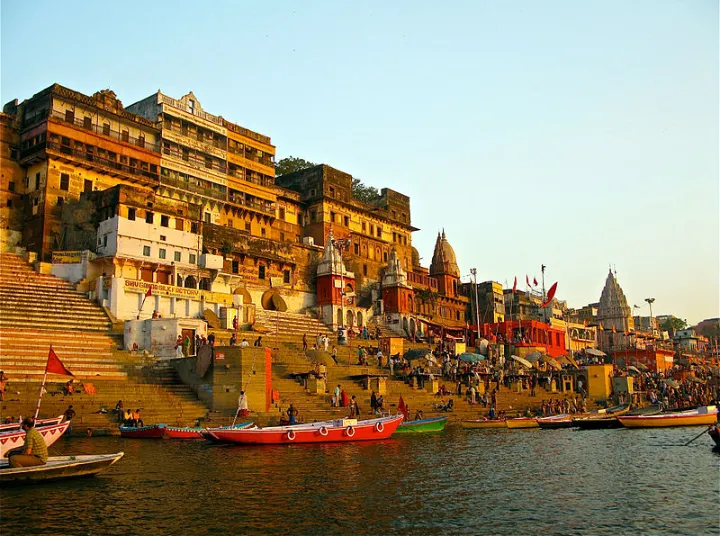
Dashashwamedh Ghat is the main ghat on the Ganges in Varanasi, a short walk south of the Kashi Vishwanath Temple. Its name means ten horse sacrifice, and Hindu tradition links it to Lord Brahma. Every evening after sunset, priests perform the Ganga Aarti here with large brass lamps, conch shells, bells, chants and incense. The ghat is open around the clock. Outside aarti time, the steps are a place to watch pilgrims bathe, priests seated under bamboo umbrellas and boats moving along the river. Come early for the aarti, or return in the early morning or late at night for quieter hours.
What the name means
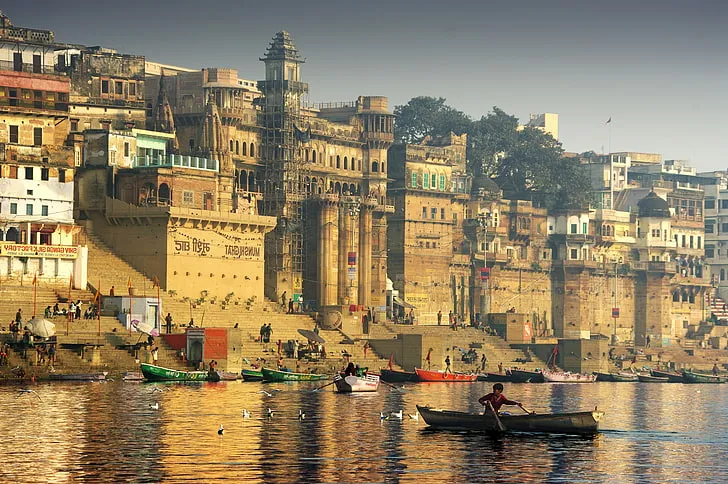
Dashashwamedh combines three Sanskrit words: dasha for ten, ashwa for horse and medh for sacrifice. According to Hindu tradition, Lord Brahma performed the Dasha Ashwamedha Yajna, a ten-horse sacrifice, at this spot to welcome Lord Shiva to Varanasi. Another telling holds that Brahma created the ghat itself for that welcome.
The ghat is considered one of the oldest in the city. The present structure dates to the 1700s and is linked to Peshwa Balaji Baji Rao, a Maratha ruler. It sits close to the Kashi Vishwanath Temple, directly to its south, and is counted among Varanasi's most important ghats.
The evening Ganga Aarti
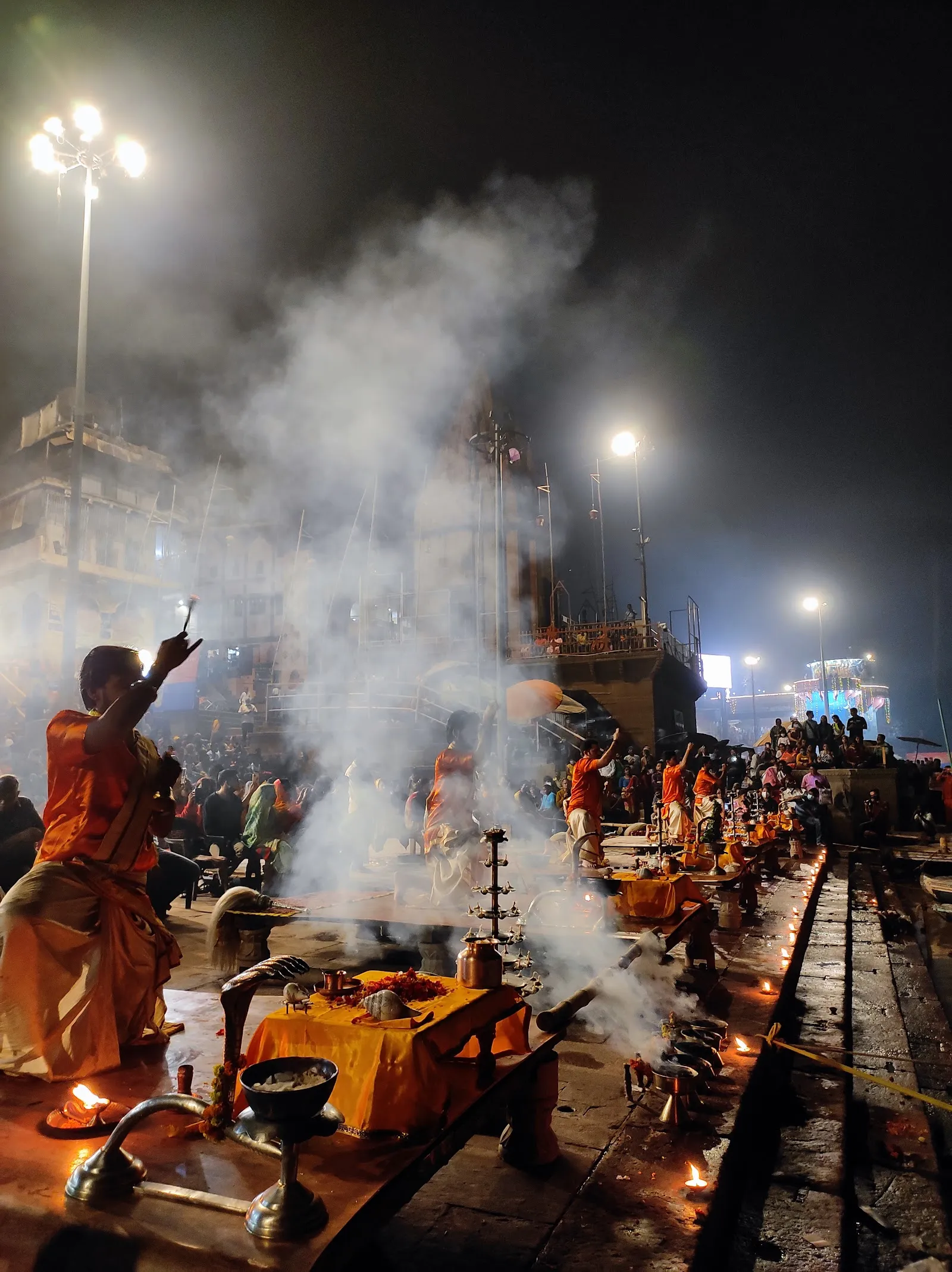
The aarti is the ceremony the ghat is known for. It is a fire worship offered to the river Ganga, and also to Shiva, the sun, fire and the universe. It begins after sunset, around 6:30 pm in summer and 7 pm in winter, and lasts about 45 minutes.
Priests in traditional dress perform it in unison, lifting large brass lamps while hymns are chanted. Conch shells and bells sound throughout, and incense smoke hangs over the steps. The ceremony is led by learned priests under the head priest of the Gangotri Seva Samiti. Preparation starts hours earlier, when the ghat is cleaned and purified.
On Tuesdays and on religious festivals a special form of the aarti is held. When it ends, many people set small earthen lamps, called diyas, onto the water.
Life on the steps
The steps are busy from morning to night. Priests sit under umbrellas, pilgrims bathe in the river, and sadhus murmur prayers. Boatmen, flower sellers and vendors work among them. Pujas for a birth, a wedding or a death may take place a few steps from one another.
The ghat is also considered cleaner than many others in the city, despite the numbers. It is a good place to sit and watch, though the sellers and touts can be persistent. Quieter hours come in the early morning and late at night, when the crowd thins and the bells and chanting carry across the water.
Seeing it from the river
A boat gives another view. One popular route starts at Raj Ghat at sunset and follows the river to Dashashwamedh Ghat, past the old palaces and temples as the light fades. At sunrise or sunset, a ride shows the whole line of ghats and the daily life along them.
Many boats gather off the ghat for the aarti. Watching from the water is less crowded than the steps, and the lamps and fire reflect on the river.
Getting there and where to stay
The ghat is on Dashashwamedh Ghat Road in the Godowlia area. It is about a 10 minute walk from the Kashi Vishwanath Temple. The site has a free parking lot and restrooms. It is open 24 hours a day.
The area around the ghat has stays at most budgets, from simple rooms in the backstreets off the ghats to midrange hotels and boutique places. Several are clustered between Meer Ghat and Scindhia Ghat. A room within walking distance makes it easier to reach the aarti early and avoid the evening crush.
FAQ
What time is the Ganga Aarti at Dashashwamedh Ghat?
It takes place every evening after sunset, around 6:30 pm in summer and 7 pm in winter. It lasts about 45 minutes. A special aarti is held on Tuesdays and on religious festivals.
Is Dashashwamedh Ghat open 24 hours?
Yes, the ghat is open at all hours. Early mornings and late nights are quieter than the evening aarti.
When should I arrive to get a good view of the aarti?
Arriving around 4 PM gives you a front-level seat on the steps. Watching from a boat on the river is a less crowded option.
Why is it called Dashashwamedh Ghat?
The name means ten horse sacrifice. According to Hindu tradition, Lord Brahma sacrificed ten horses here to welcome Lord Shiva.
How far is it from the Kashi Vishwanath Temple?
The ghat is about a 10 minute walk from the temple, directly to its south.