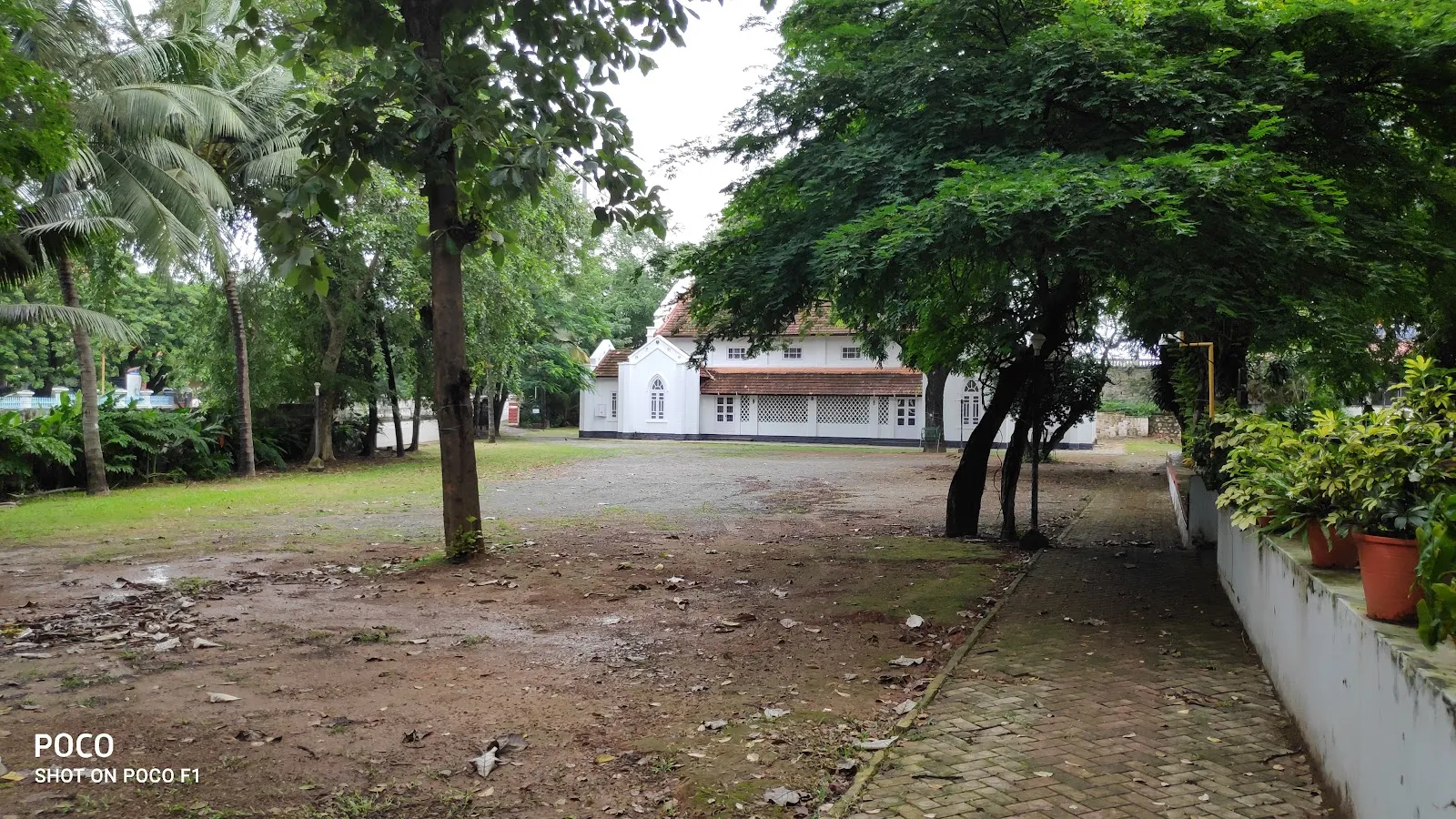
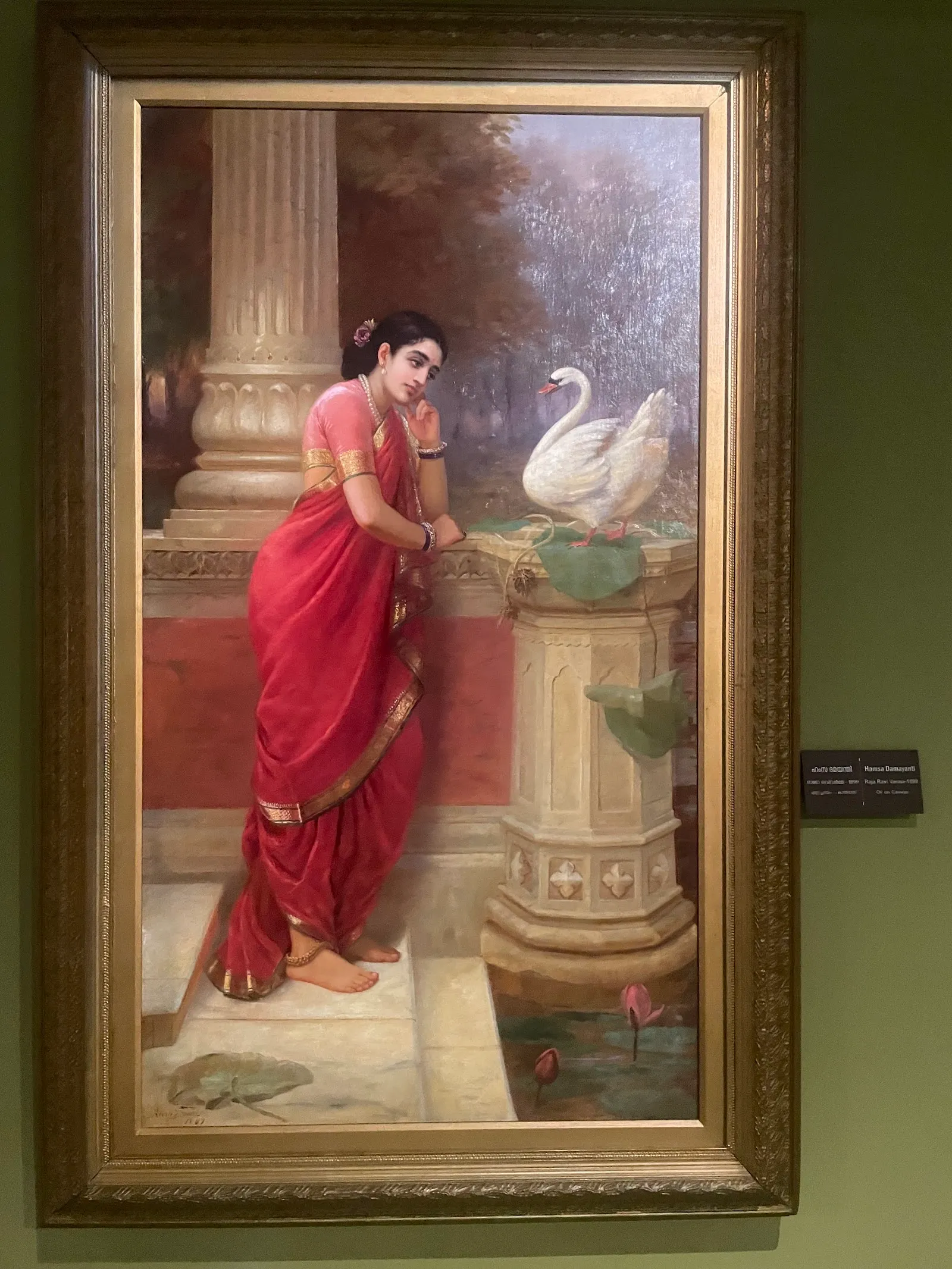
Sree Padmanabhaswamy Temple stands in the East Fort area of Thiruvananthapuram and is dedicated to Vishnu as Padmanabha. The sanctum holds an 18-foot idol of the god reclining on the serpent Anantha, and you see it through three separate doors. A seven-tiered gopuram marks the temple from afar, and long corridors lined with carved stone pillars lead inside. The city takes its name from the deity. The temple is open to Hindus only, with a strict traditional dress code, and the compound is kept clean and orderly.
The reclining Vishnu and the three doors
The presiding deity is Padmanabha, a form of Vishnu, shown in the Anantha Shayana posture: asleep on the coils of the serpent Anantha, also called Adi Shesha, whose five hoods shelter his head. The idol is 18 feet long and cannot be seen in one view. Devotees pass three doors in turn.
Through the first door you see the face and upper body, with the hand hanging down. The second shows the middle of the body and Brahma, who sits on a lotus rising from the god's navel. The third shows the feet. The doors are described as gold-plated, and the inner sanctum is lit mainly by oil lamps, which gives the darshan a dim, quiet setting.
The name Padmanabha refers to that lotus. Thiruvananthapuram, in Malayalam, means the city of Lord Ananta, so the deity and the city share a name. The temple is counted among the 108 Divya Desams, the sacred abodes of Vishnu.
Gopuram, corridors and carvings
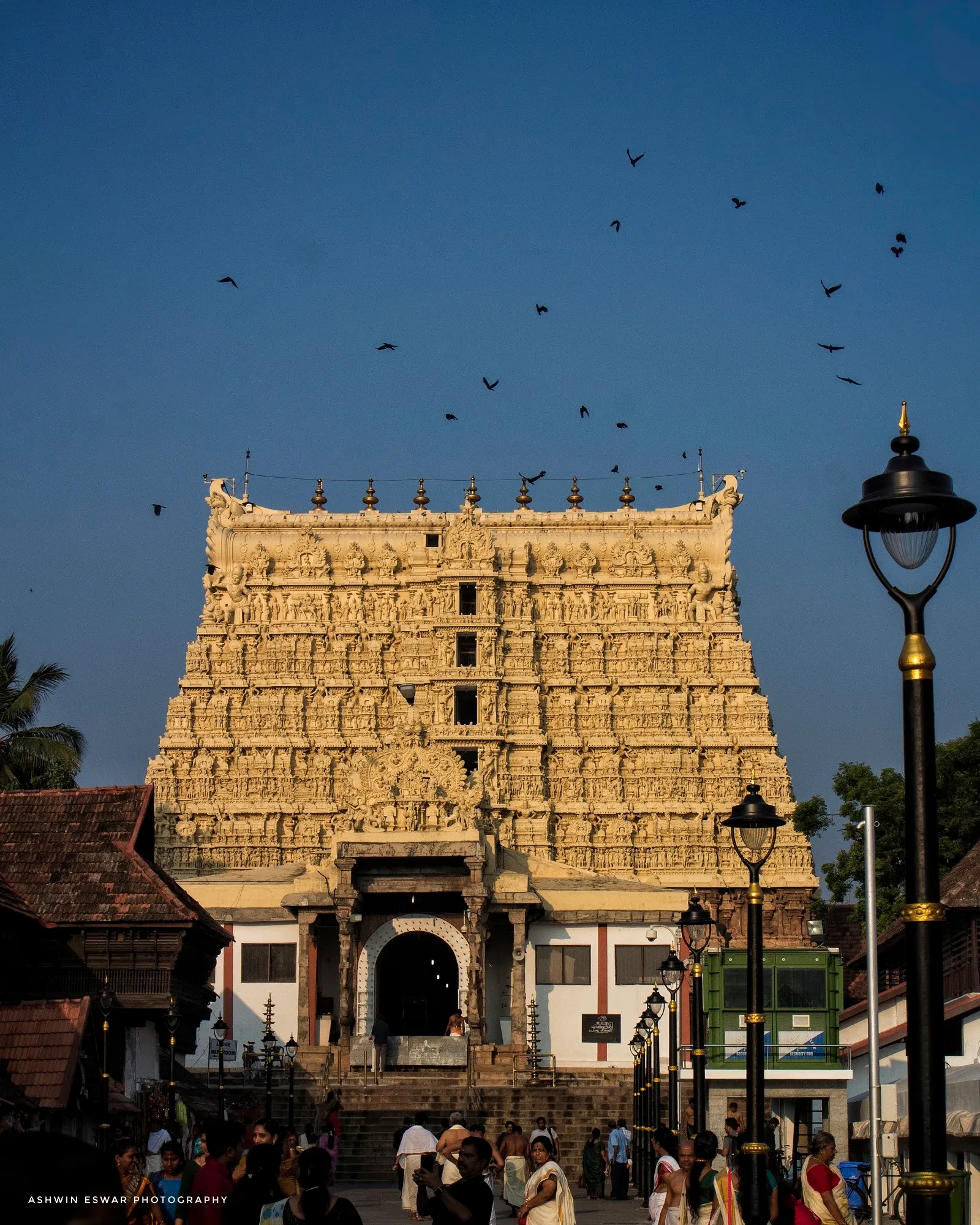
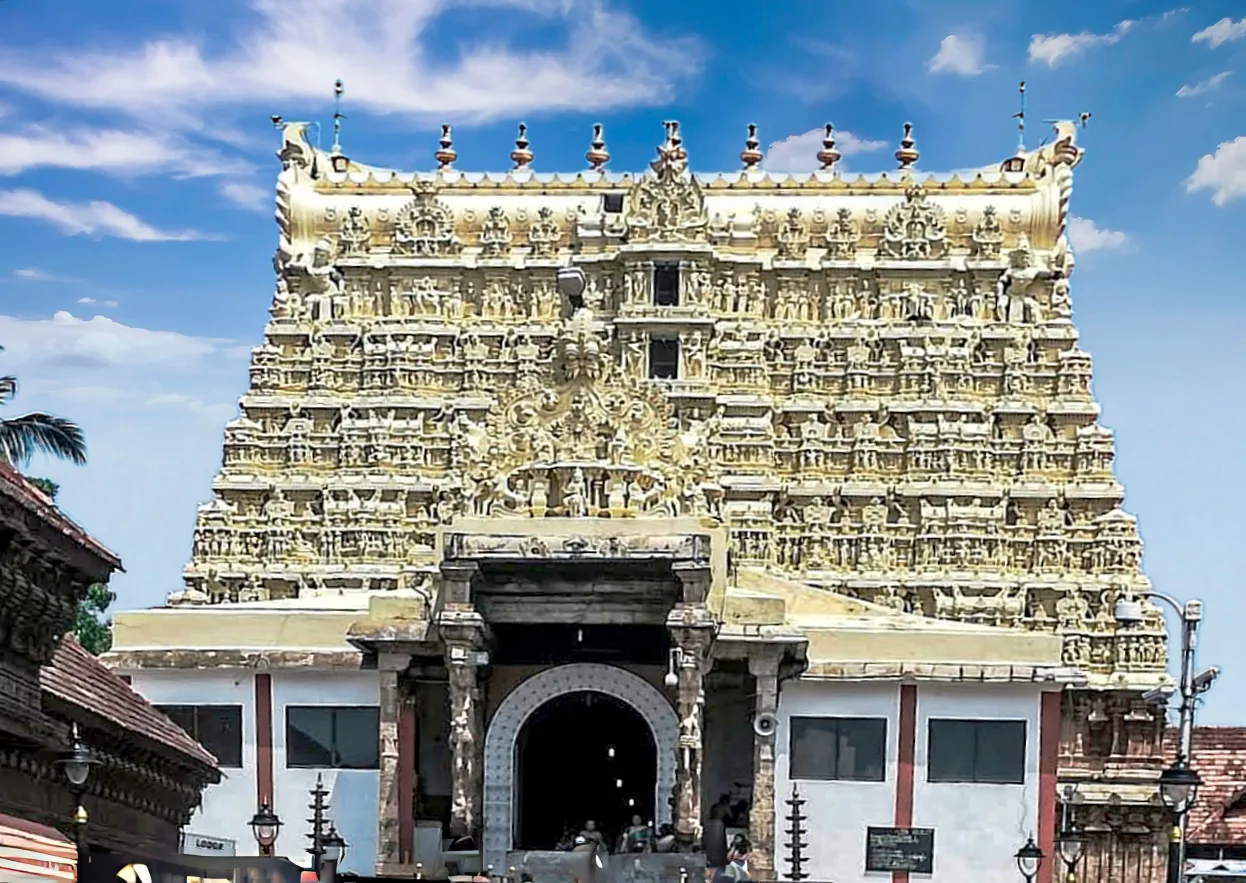
The architecture joins the Kerala style with the Dravidian style of neighbouring Tamil Nadu. The seven-tiered gopuram, the entrance tower, is wide as well as tall, and you can see it from many points around the Fort area.
Inside, the corridors are supported by nearly 400 pillars, and these carry stone sculpture. Murals and carvings in stone and wood on pillars, walls and ceilings show scenes from Hindu epics and gods. There is also a pond within the compound. Look up as you walk, since much of the detail is on the roofs and capitals.
The temple is also known for its lamp festivals. Lakshadeepam, the festival of lakhs of lamps, is one of the celebrations held here.
The temple and Travancore
The Travancore royal family has been closely linked to the temple for centuries. The ruler governed on behalf of Padmanabha, and the city's name comes from this dedication. That connection is part of why the temple is seen as the centre of Thiruvananthapuram rather than only a place of worship.
The temple is also widely known for the wealth found in its underground vaults, which became public knowledge in 2011. The vaults are a matter of ongoing public interest, but nothing of this is on view to visitors. What you see is a working temple where daily rites continue.
Who can enter and how a visit works
Entry is limited to Hindus. Non-Hindu travellers can still walk the streets around the temple and see the gopuram from outside, which many do before continuing to nearby sights.
The dress code is applied firmly. If you wear kurtis or churidars, a wrap-around dhoti is expected over them. Items left in the lockers are collected on your way out.
For darshan, the general queue is free of extra charge, but at busy times it can be long. Special Darshan tickets are priced at about ₹150 to ₹250, and a VIP ticket at about ₹500. These get you through faster and a little closer to the doors. Advance tickets are recommended, and the temple's own website carries details on pooja bookings, darshan timings and dress code. Check these before you go, because timings can change with the day and the crowd.
Parking is free, there is a restroom, and the temple has wheelchair-accessible seating, restroom and parking. Kuthiramalika Palace Museum is close by and shows royal collections in traditional Kerala architecture.
FAQ
Can non-Hindus enter Sree Padmanabhaswamy Temple?
No. Only Hindus are allowed inside. Others can see the gopuram and the temple streets from outside.
What is the dress code?
Men wear a dhoti or mundu and no shirt, with a shawl allowed on the shoulder. Women wear a saree or a traditional long skirt. Shops outside sell or rent dhotis, for about ₹50 to ₹250.
Can I take my phone or camera inside?
No. Mobile phones, cameras and leather items such as belts and wallets are not allowed. Lockers near the entrance hold them for around ₹10.
Are there paid darshan tickets?
Yes. Special Darshan costs about ₹150 to ₹250 and a VIP ticket about ₹500. Both cut the wait compared with the general queue, which can run over two hours at peak times.
When is the best time to visit?
Early morning on a weekday is the quietest. Evenings are busier, especially on Thursdays and weekends.
How long do you need?
Plan one to three hours, depending on the length of the queue and how long you spend in the corridors.