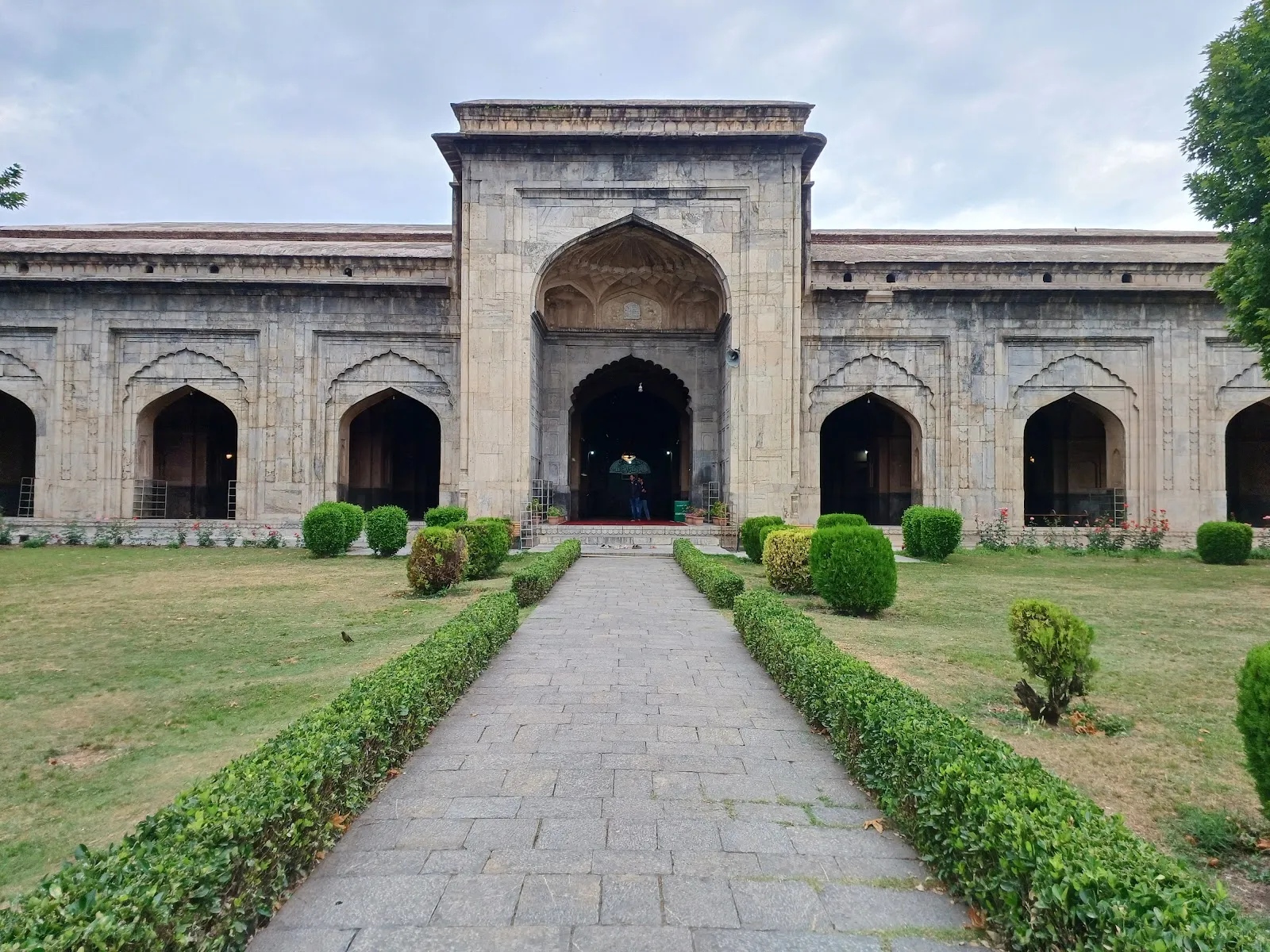
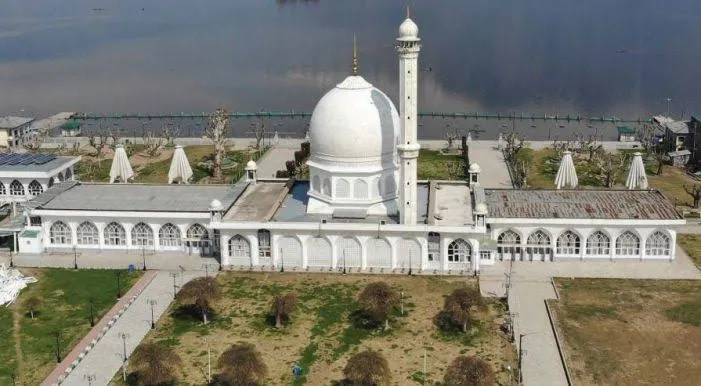
The Shankaracharya Temple sits on a hill above Srinagar, in the Zabarwan range, and is dedicated to Lord Shiva. It is a working place of worship, so the mood is calm and devotional. Most people come for the view: from the top, the city, Dal Lake and the surrounding valley spread out below. Inside, the Shiva lingam is the focus, and the carvings on the walls and pillars reward a slow look. Allow time for the climb and a few minutes on a bench at the top.
Tradition and history
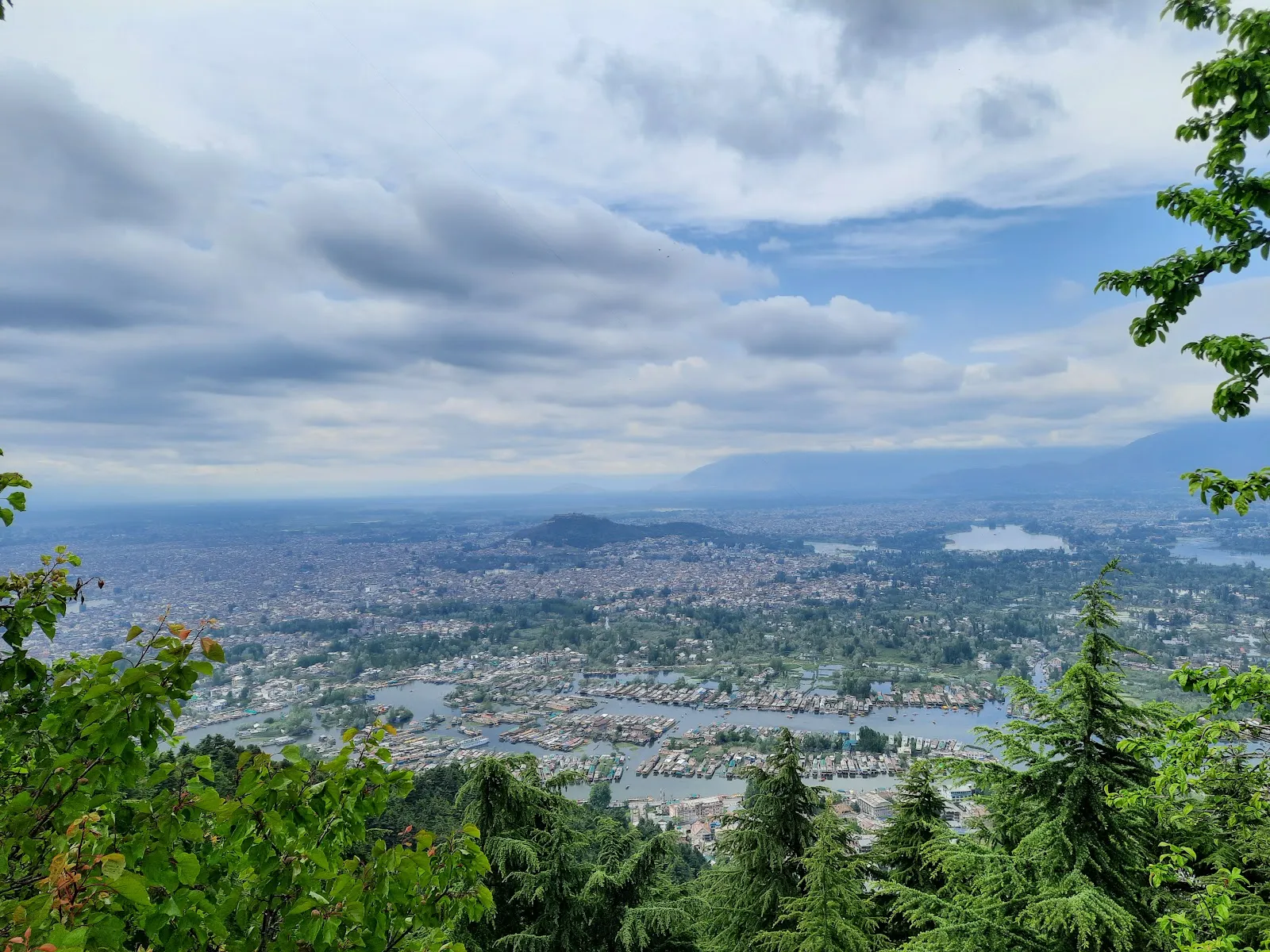
Tradition links the hill with Adi Shankaracharya, the philosopher who is said to have reached spiritual enlightenment here. Tradition holds that he performed deep penance on the hill and established a Shiva lingam. After that, he is said to have founded the four Hindu schools of Advaita, the philosophy of non-dualism.
The temple is also known as Jyeshteshwara Temple. Some people call the hill Takht-e-Sulaiman or Pas Pahar, and Buddhists also regard the site as sacred.
Accounts of the date differ, but the stone structure standing today is many centuries old. It is counted among the oldest religious sites in Kashmir.
Inside the temple
The central sanctuary holds the Shiva lingam, which is the centre of devotion. The lingam is said to be encircled by a snake and supported by four octagonal pillars.
Carvings cover the walls and pillars. They show scenes from earlier eras. The paint that once coloured them has faded with time, but the carved detail is still clear.
The restoration kept the original structure, with no artificial additions. Hymns and the glow of oil lamps are part of the worship inside, and they set a quiet tone for a visit.
Getting up the hill
The temple stands on a hill above the city, so most visitors go by taxi or hired car. The access road is a winding route of about 5.5 km. It starts from a checkpoint near Nehru Park, roughly a 15-minute drive from The Lalit hotel.
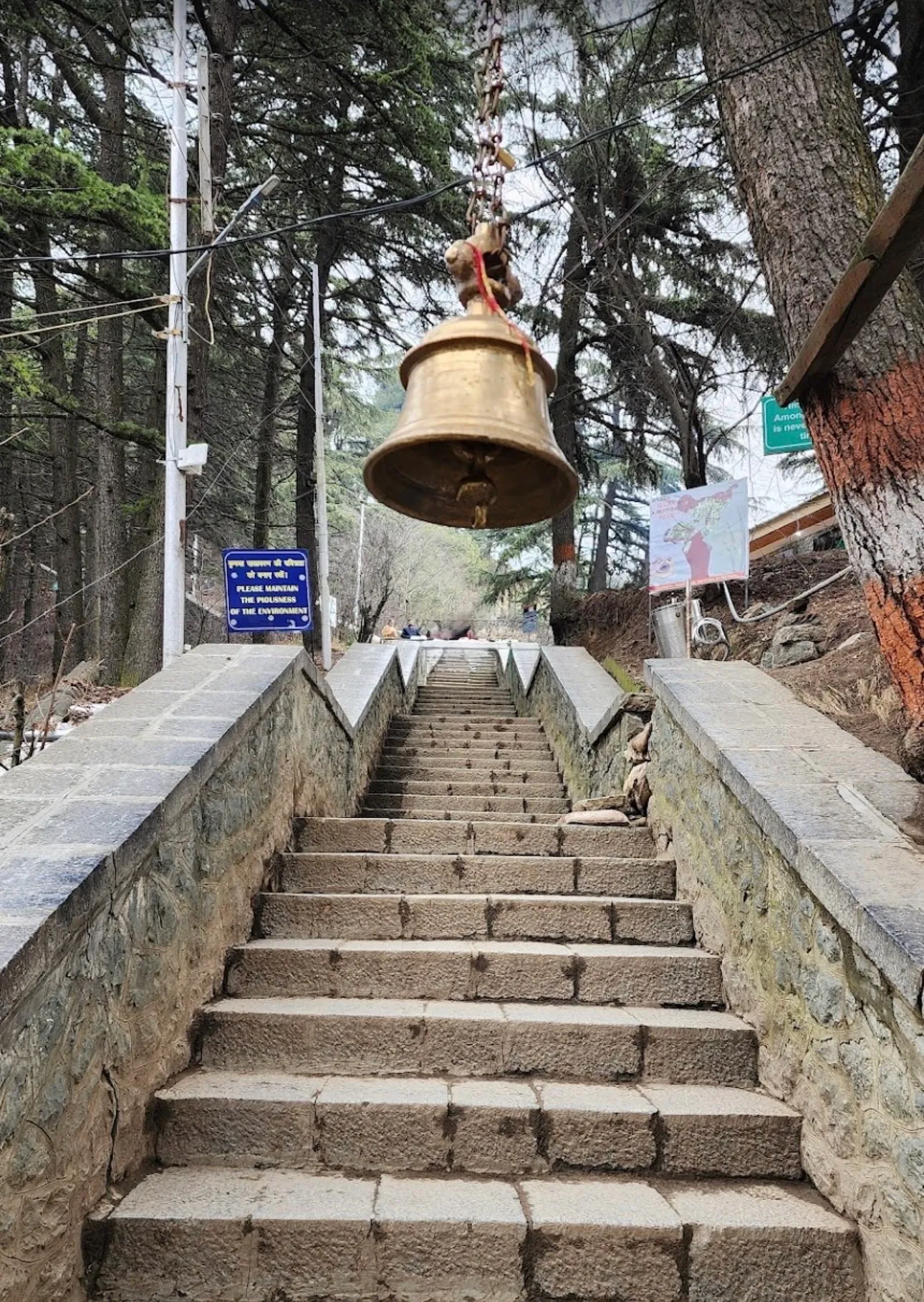
The road ends at a second checkpoint. Here you must leave phones and cameras behind before you climb the stairway to the temple. The stairway has 243 steps and takes about 10 to 15 minutes to climb at a steady pace. Views open out with every turn on the way up.
Benches are available at the top, where you can sit and take in the view before going back down.
Visiting as a place of worship
The temple is a working place of worship. Dress modestly, keep your voice low, and follow the guidance of staff at the checkpoints.
People of different backgrounds visit the hill, and many say they feel at ease there. The quiet of the sanctuary is shared by pilgrims and sightseers alike, so take your photographs outside the sanctuary and respect the people praying inside.
Festivals and pilgrims
Kashmiri Hindus visit the temple during festivals such as Herath, which is Maha Shivaratri. Thousands of devotees come each year.
The temple is also a stop for pilgrims on their way to the Amarnath Yatra, who come to bow before the Shiva lingam.
Visitors who are in Srinagar for a few days often combine the hill with Hazratbal Shrine, Shalimar Bagh and a walk or boat ride on Dal Lake.
FAQ
Is there an entry fee?
There is no entry fee to visit the temple.
How long do you need at the temple?
Plan about 30 to 60 minutes. The climb by stairs takes about 10 to 15 minutes, and you will want time at the top for the view.
How do you get to the temple?
Most visitors take a taxi or hired car. The access road is about 5.5 km and starts from a checkpoint near Nehru Park.
Can you take a phone or camera up to the temple?
No. Phones and cameras must be left at the second checkpoint, where the road ends, before you climb the stairway.