Shaniwar Wada in Shaniwar Peth was the seat of the Peshwas of the Maratha Empire. Bajirao Peshwa I built it in 1732 as a seven-storey palace. The stone walls, bastions, gateways and gardens still stand, while inside the walls most of the palace survives only as foundations. The main entrance, the Delhi Darwaza, is studded with spikes and about 21 feet tall. Look for the latticework on the remaining structures and walk along the raised wall. Entry is ₹20 per person. Late afternoon and evening are cooler than midday, and an evening light and sound show is also held here.
From 1732 to the fire of 1828
Bajirao Peshwa I built Shaniwar Wada in 1732 as a seven-storey structure. For nearly a century it was the political base of the Maratha Empire, and it is still a symbol of Maratha history in Pune.
Peshwa rule here ended in 1818, when the British East India Company took over. A major fire in 1828 destroyed much of what the palace had been. The walls were tested again in 1961, when the Panshet floods hit the city and the fort survived them.
What stands today
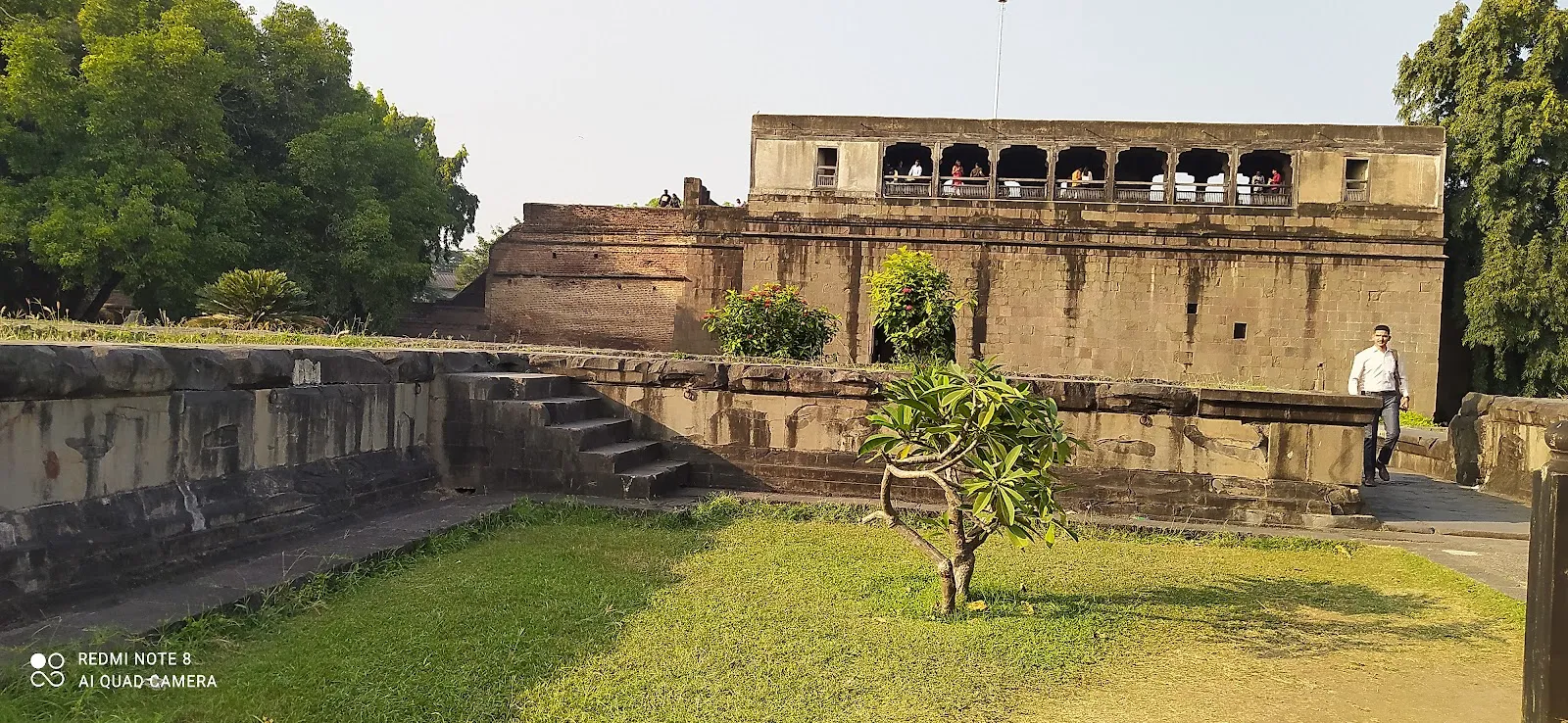
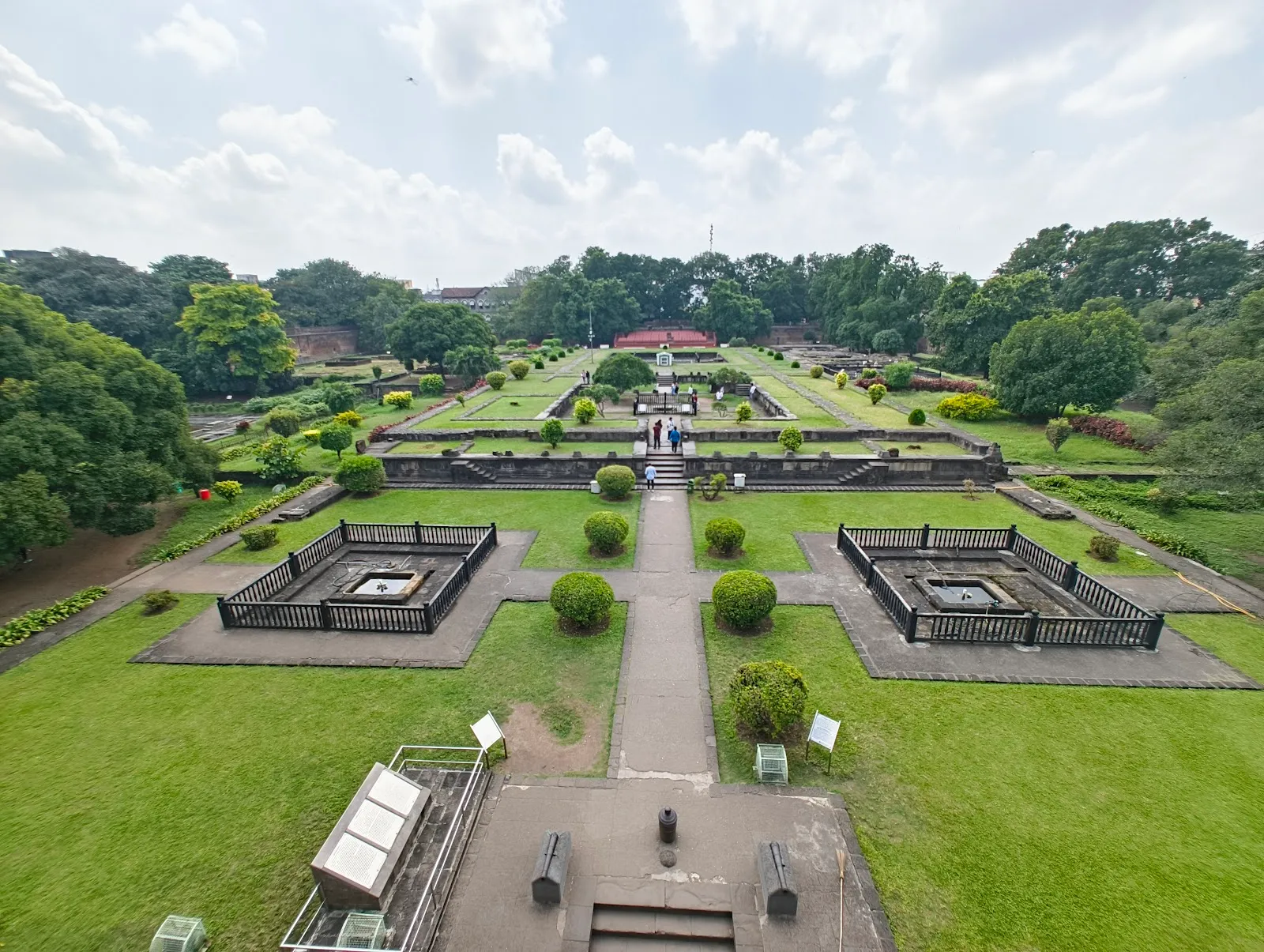
The palace is a ruin. Inside the walls the foundation stones mark where buildings once stood, so expect an outline of the old complex, not a furnished palace. What remains in full are the fort walls, the bastions, the gateways and the gardens, which also have fountains.
The layout was planned for defence. The main gate, the Delhi Darwaza, is about 21 feet tall and fitted with spikes, and it is the best-known feature of the site. The architecture mixes Mughal forms with Maratha influence, and the carved latticework on the surviving structures repays a closer look.
Walking the grounds
You enter through one of the gates and can walk along the raised wall. Narayan Gate is one of the points of access. The courtyards and lawns are open, and the paths suit a relaxed walk of an hour or two.
The gateways, the jharokhas (projecting windows) and the lawns also make the fort a popular backdrop for photography, including pre-wedding shoots. Morning is the quieter time for pictures. In the evening a light and sound show tells the story of the site.
Planning the visit
Entry is ₹20 per person, paid by scanning the QR codes on the boards at the entrance. Advance tickets are recommended. The site has a wheelchair accessible entrance and parking, and it suits families with children.
The Dagdusheth temple is another stop in the city that can be combined with this visit. A guide is a good idea if you want to understand what stood where, since few buildings remain to explain themselves.
FAQ
How much is the entry fee for Shaniwar Wada?
Entry is ₹20 per person. You can pay by scanning the QR codes on the boards at the entrance.
How long do you need at Shaniwar Wada?
Allow one to two hours. That is enough to walk the walls and gardens, read the displays and take photographs.
What is the best time to visit Shaniwar Wada?
Late afternoon after 3 p.m. or the evening, when it is cooler than midday. Early morning is quieter for photography. The grounds also look their best after rain.
Is the palace still intact?
No. The walls, bastions, gates and gardens stand, but inside the walls mostly foundations remain. A fire in 1828 destroyed much of the palace.
Is Shaniwar Wada accessible, and is there parking?
The entrance and the parking lot are wheelchair accessible. There is free and paid parking in a lot and on the street nearby.