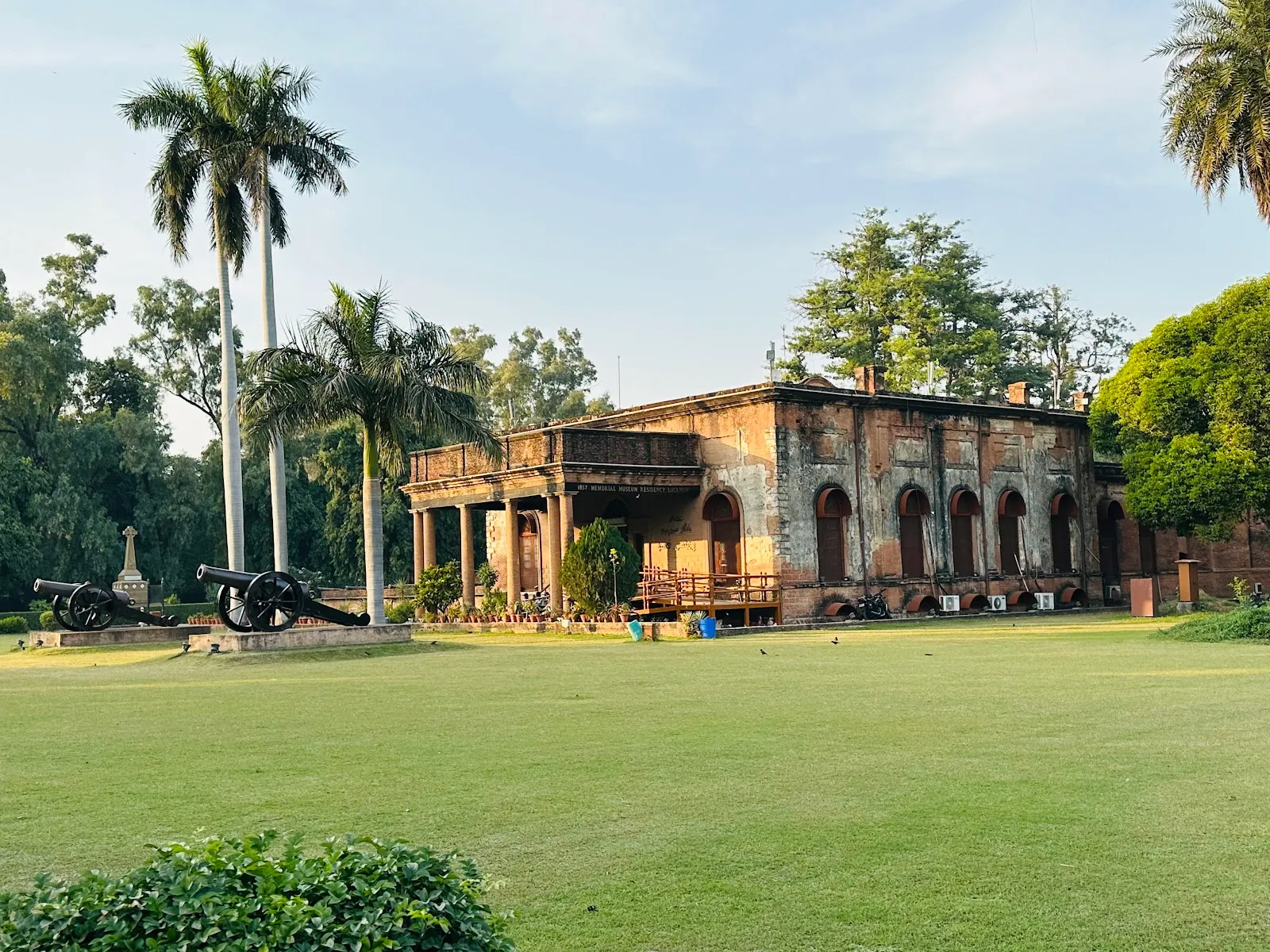
The Residency in Lucknow is a British-era complex of buildings on the banks of the Gomti River, now mostly in ruins. It was the home and office of the British Resident at the court of the Nawabs of Awadh, and it was besieged during the uprising of 1857. Bullet and cannon marks remain on the walls, because the ruins were kept as they were after the siege. Lawns, shaded paths and a small memorial museum make it a quiet place to learn about those events, and parrots and peacocks move through the grounds.
Built as a British residence
The Residency was built between 1780 and 1800 as the residence and office of the British Resident, the representative of the East India Company at the court of the Nawabs of Awadh. It was built during the reigns of Nawab Asaf-ud-Daulah and Saadat Ali Khan II. Over time the complex grew into a group of European-style buildings, with gardens, a church, a hospital, barracks and administrative spaces.
Its role changed in 1856, when the British annexed Awadh. The move caused deep resentment among local people, and that anger fed into the uprising the following year.
The 1857 siege
The uprising of 1857, also called the Indian Rebellion or the First War of Independence, reached Lucknow that year. British residents took shelter inside the Residency, together with Indian soldiers who remained loyal to them. High Commissioner Henry Lawrence was among those inside.
The siege began on 1 July 1857. The building was turned into a hospital, an arsenal and a shelter. Relief attempts were made, but the siege ended in defeat for the British. Lawrence was killed, and many people on both sides died, including Indian soldiers who had sided with the British. The British later retook Lucknow. Those who died defending the Residency were buried in the cemetery around the ruined St Mary's Church.
What survives
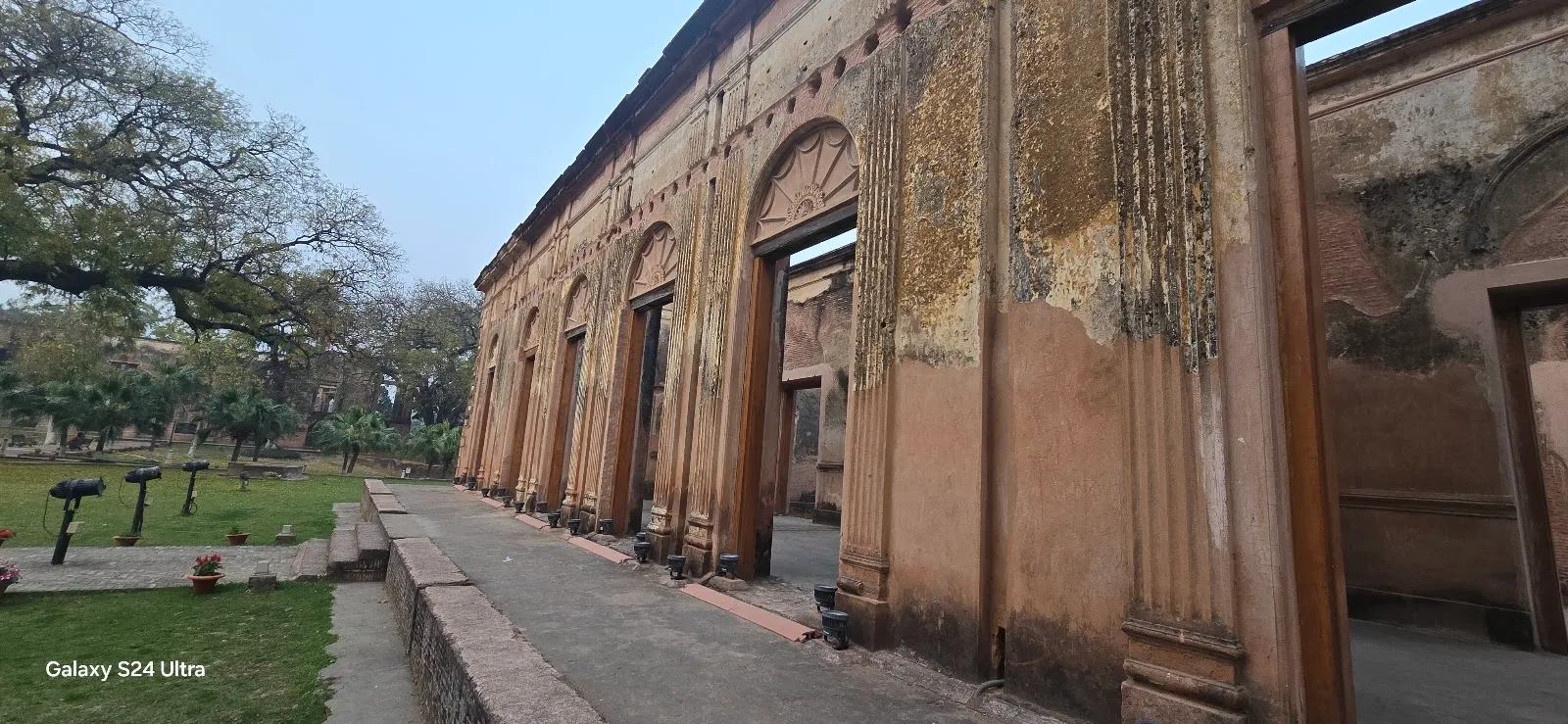
Much of the complex is in ruins, and it has been kept as it was at the end of the siege rather than rebuilt. Walls still show bullet holes, and cannon marks remain on some structures. The Archaeological Survey of India protects the site as a monument.
The main building overlooks the Gomti River. Its ruined rooms once held residential quarters, dispensaries, stables and armories.
Inside the complex
A walk through the grounds takes you past the Baillie Guard Gate and the Treasury Building, then on to the church ruins and the cemetery. Underground chambers are also part of the complex. Lawns and paths link the sections, and a few vantage points give wide views over the whole site.
Parrots, peacocks and squirrels can be seen around the grounds, so the walk is as much about birds and trees as about stone.
The 1857 Memorial Museum
The small museum sits near the end of the route. It holds artifacts, documents, photographs and lithographs of places linked to the uprising, along with relics from the period. The museum is run by the Archaeological Survey of India. Reading its displays before you walk the ruins gives the site more context.
Parking and access
A paid parking lot is on site, and free and paid street parking is available nearby. The entrance, the parking lot and the seating are wheelchair accessible. Onsite services are available.
FAQ
Is there an entry fee?
Yes. The latest figures we have are 250 rupees for foreign visitors and 25 rupees for Indian nationals. Rates can change, so confirm them at the entrance.
Can I bring food inside?
No. Food is not allowed inside the complex.
Is The Residency wheelchair accessible?
Yes. The entrance, the parking lot and the seating are wheelchair accessible.
Where can I park?
There is a paid parking lot on site. Free and paid street parking is also available nearby.
Are the bullet marks still visible?
Yes. Bullet and cannon marks remain on the walls, because the ruins were kept as they were after the siege.