Planifier un voyage
Langue: Français
Planificateur de voyagePlanifiez votre voyage sur une carte

Destinations incontournables

EnglishDeutschFrançaisEspañolPortuguêsPortuguês (BR)Italiano
Avis aux voyageurs · IndeLadakh se trouve dans ou près d'une zone où les gouvernements déconseillent tout voyage : À moins de 10 km de la frontière indo-pakistanaise, route Srinagar–Ladakh.Les conseils dépendent de votre passeport. Consultez ceux de votre propre gouvernement avant de réserver.Conseils officiels
Zones signalées
  • Jammu-et-Cachemire (territoire de l'Union) · éviter tout voyage · Canada, Allemagne, Irlande, Nouvelle-Zélande, Royaume-Uni, États-Unis
  • vallée du Cachemire · éviter tout voyage · Espagne, France, Italie
  • Manipur · éviter tout voyage · Canada, Allemagne, Espagne, Irlande, Italie, Nouvelle-Zélande, Royaume-Uni
  • À moins de 10 km de la frontière indo-pakistanaise · éviter tout voyage · Canada, Allemagne, Espagne, France, Irlande, Italie, Nouvelle-Zélande, Royaume-Uni, États-Unis
  • Bihar · éviter les voyages non essentiels · Espagne, Italie
  • Chhattisgarh · éviter les voyages non essentiels · Espagne, Italie, Nouvelle-Zélande
  • Jharkhand · éviter les voyages non essentiels · Espagne, Italie
  • Odisha (Orissa) · éviter les voyages non essentiels · Espagne, Italie
  • Bengale-Occidental rural · éviter les voyages non essentiels · Espagne, Italie
  • route Srinagar–Ladakh · éviter les voyages non essentiels · France, Italie

Également signalé par un seul gouvernement : région de Jammu (Espagne), Tripura (Irlande), zones frontalières de l'Assam avec le Bangladesh (Nouvelle-Zélande), zones frontalières du Jammu-et-Cachemire (Italie), Gulmarg (Italie), Imphal (Irlande), frontière indo-birmane (France), Ladakh (Espagne), Ladakh, proximité immédiate de la frontière chinoise (France), zones frontalières du Nagaland avec le Myanmar (Nouvelle-Zélande), Pahalgam (Italie), Andhra Pradesh rural (Espagne), Sonamarg (Italie), Srinagar (Italie)

GouvernementConseilsMis à jourLire les conseils
Royaume-Uni (FCDO)No advice against the whole country (regional advisories)–Lire les conseils
États-Unis (State Dept)Exercise increased caution (regional advisories)16 juin 2025Lire les conseils
Canada (Affaires mondiales)Exercise a high degree of caution (regional advisories)–Lire les conseils
Allemagne (Auswärtiges Amt)No warning against the whole country; partial warnings for specific areas (regional advisories)14 oct. 2026Lire les conseils
Nouvelle-Zélande (SafeTravel)Exercise increased caution (regional advisories)–Lire les conseils
Irlande (ministère des Affaires étrangères)High Degree of Caution (regional advisories)–Lire les conseils
France (ministère de l'Europe et des Affaires étrangères)Pays relativement sûr dans son ensemble, sous réserve de respecter certaines règles et de tenir compte du risque terroriste (regional advisories)–Lire les conseils

Vérifié quotidiennement d'après les conseils publiés par les gouvernements ; dernière vérification le 3 nov. 2026.RoamLedger résume les conseils officiels ; il ne s'agit pas de conseils émanant d'un gouvernement.

Shanti Stupa
Temple

Shanti Stupa

Shanti Stupa is a white Buddhist stupa on Changspa hill, about 5 km above Leh in Ladakh.

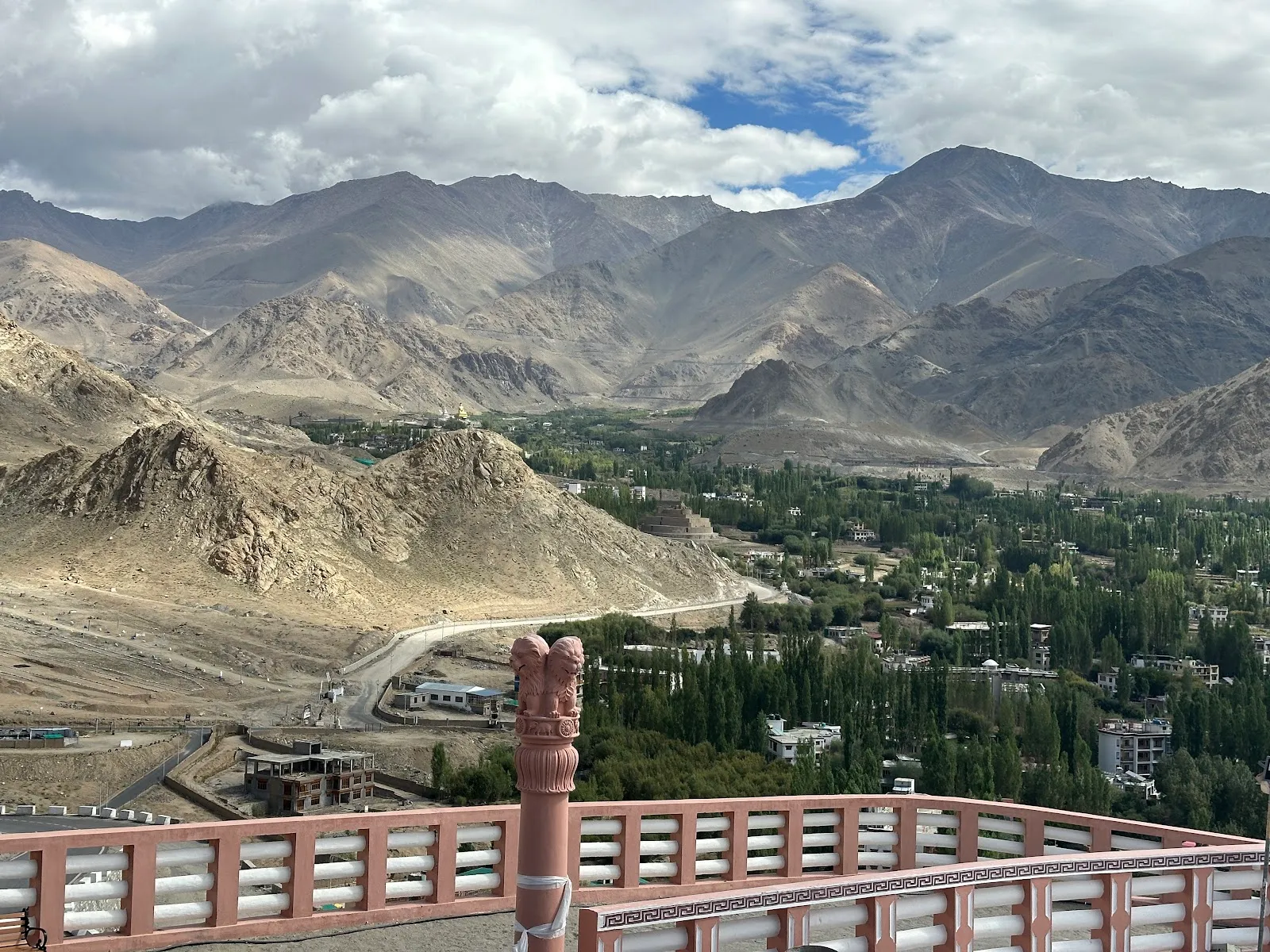
Shanti Stupa is a white Buddhist stupa on Changspa hill, about 5 km above Leh in Ladakh. Japanese Buddhist monk Bhikshu Gyomyo Nakamura began it with Ladakhi Buddhists, and it was completed in 1991 to mark 2,500 years of Buddhism and promote world peace. From the terrace you see Leh town, the Indus valley and snow-capped peaks. Walk the circular path, look at the golden Buddha on the lower level, and read the reliefs of the Buddha's life.

Who built it and why
Shanti Stupa
Shanti Stupa

Japanese Buddhist monk Bhikshu Gyomyo Nakamura began the project, working with Ladakhi Buddhists. It was completed in 1991 as part of the Peace Pagoda mission, and it marks 2,500 years of Buddhism. The message of the stupa is peace, and it is often read as a link between Japan and India.

The base holds relics of the Buddha, which the 14th Dalai Lama consecrated, so the site is a place of pilgrimage as well as a viewpoint.

Inside the two levels
Shanti Stupa
Shanti Stupa

The stupa has two levels. The first holds a central golden Buddha image that shows the turning of the Dharma wheel, the Buddha's teaching on the path to enlightenment. The second level has reliefs of key events from the Buddha's life, and gilt panels on the sides tell the same story.

Inside the temple rooms you take off your shoes, so thick socks help on cold days. Murals cover the walls. The golden Buddha looks especially calm in soft morning light.

Getting to the top

The stupa sits on Changspa hill, a short distance from Leh. A road runs from Leh to the top, so you can drive. You can also walk and climb the stone steps, around 500 of them, from the Changspa side.

The climb is steep and the air is thin at roughly 11,800 feet, so take it at an easy pace. At the top, a circular terrace runs around the dome. A path lets you walk it, spinning the prayer wheels as you go. A café on the site overlooks the city.

The view from the terrace

From the top you see Leh town below, the Leh Palace on the cliff opposite, and the Indus river in the distance. Snow-dusted peaks ring the valley. The view changes from one side of the terrace to the other, and shifting clouds alter the light on the mountains.

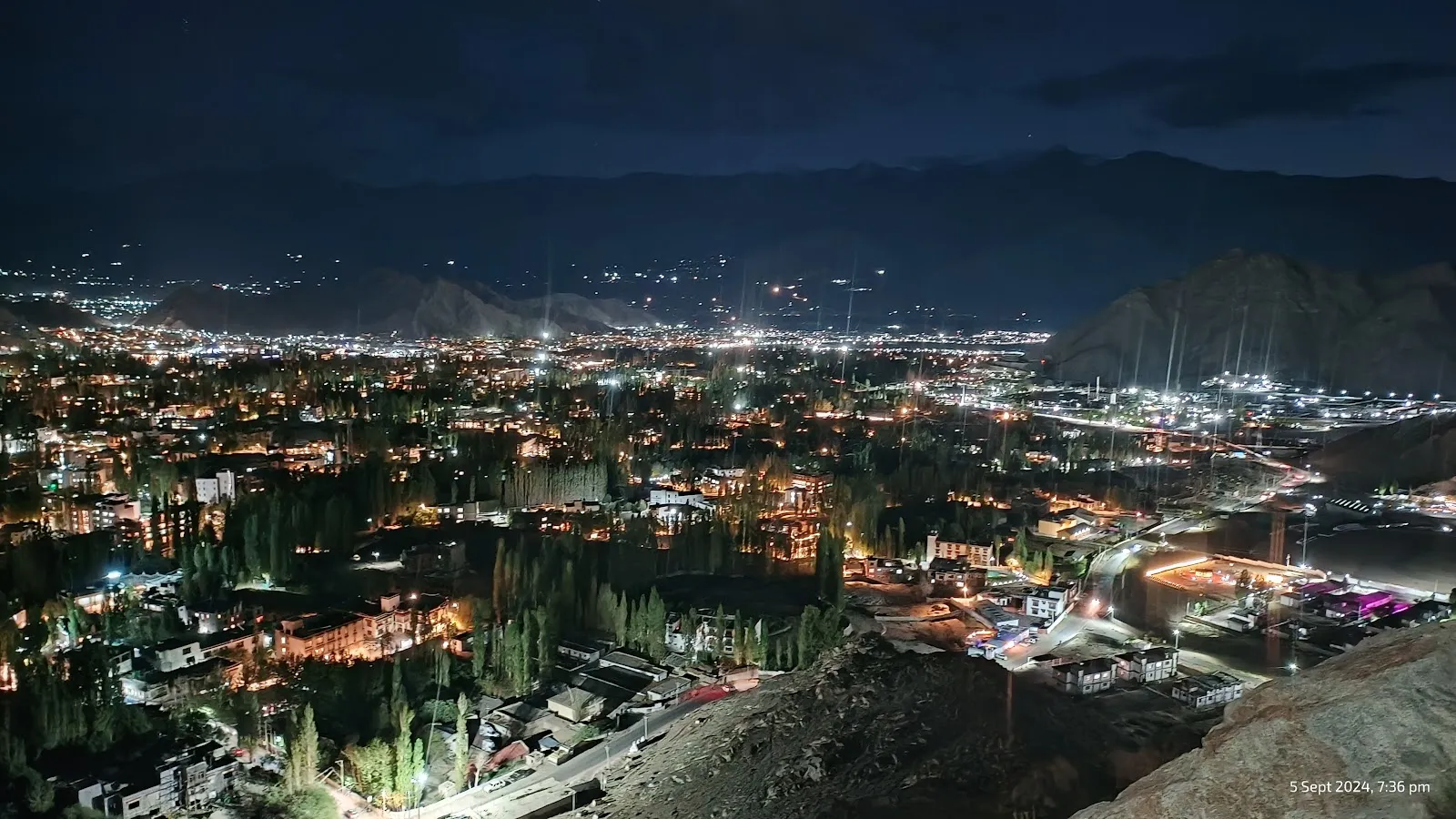
Storm clouds over the ranges can make the white dome stand out sharply. At night the stupa is lit, and it looks different against the dark Ladakhi sky.

Visiting with respect

Walk clockwise around the structure, as the tradition asks, and keep your voice low. People come here to pray and meditate, so keep your photographs respectful of them.

Remove your shoes on the upper levels and in the temple rooms. Spend time on the terrace, since the quiet there is part of the experience.

FAQ

Where is Shanti Stupa?

It sits on Changspa hill above Leh in Ladakh, about 5 km from the town.

Can you drive to Shanti Stupa?

Yes. A road runs from Leh to the top. You can also walk and climb around 500 steps from the Changspa side.

What should I wear?

Dress warmly, since the winds are cold at this altitude. Thick socks help, because you take off your shoes when you go into the temple rooms.

When is the best time to visit?

Sunrise and sunset give the best light and views. Early morning and late evening are also quieter.

Autres incontournables à Ladakh

Tout explorer