In Ibrahim Bagh, close to Golconda Fort in Hyderabad, the Qutub Shahi Tombs are the burial place of the rulers of the Qutb Shahi dynasty. Their domes rise above landscaped gardens, while arched corridors, carved stonework and stucco details reward a closer look. The tombs vary in scale: some have one storey and others two. Come to walk among the monuments, study their blend of Persian and Indian design, or take photographs in the softer light of morning or late afternoon.
The dynasty’s burial ground
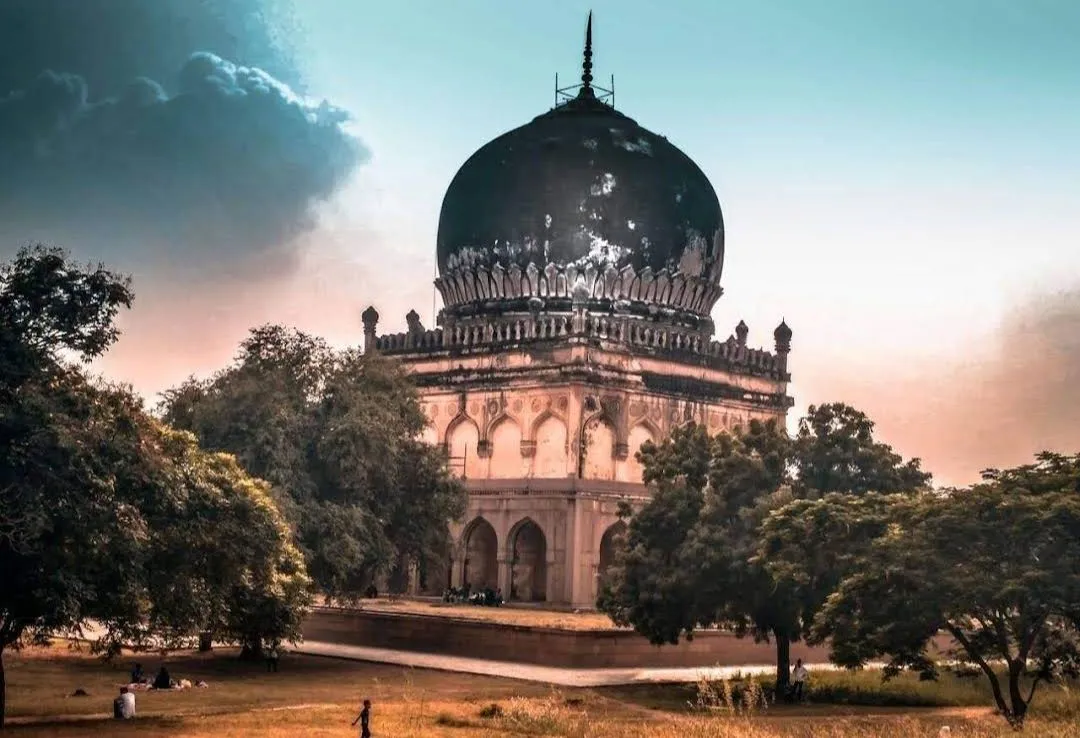
The Qutb Shahi Tombs lie within Ibrahim Bagh, close to Golconda Fort. The complex holds mausoleums and mosques built by rulers of the Qutb Shahi dynasty, which ruled the region for about 170 years. The dynasty’s period is given as 1518 to 1687, and the tombs date from the 16th and 17th centuries.
The site is often called the Seven Tombs, after the rulers buried here. The tombs also include members of the royal family and other people associated with the dynasty. The rulers are said to have planned their own tombs during their lifetimes. Their mausoleums were built as lasting memorials, rather than as a single uniform group, so their sizes and designs differ.
Domes, platforms and ornament
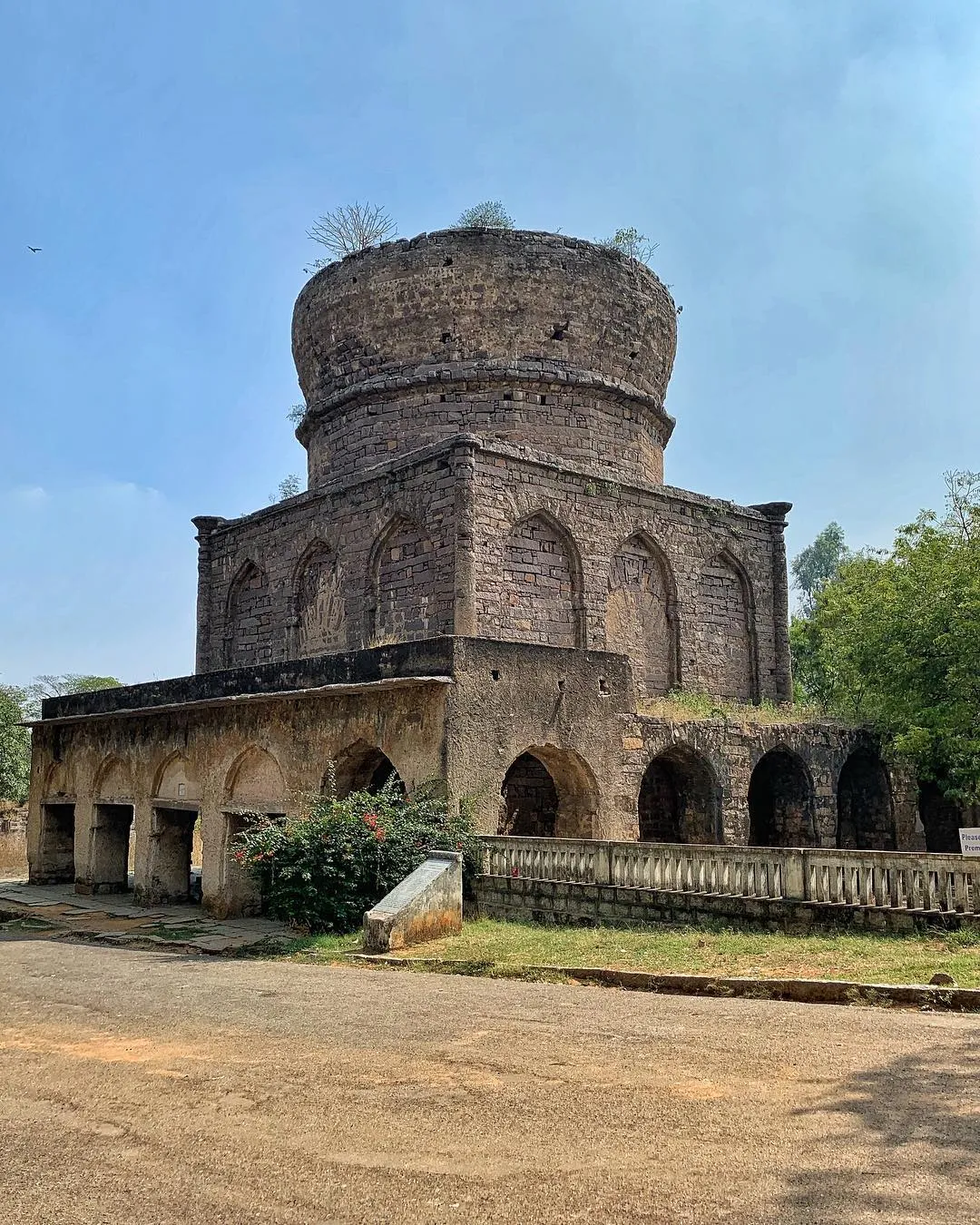
The tombs stand on raised platforms, with square bases supporting domed roofs. Smaller structures are generally single-storey, while larger ones have two levels. Some have arched corridors running around the base; others are more simply designed. This range makes it worth looking at individual buildings rather than viewing the complex only as one distant cluster.
The architecture brings together Persian, Indian and Pathan influences. Grey granite, carved stonework and stucco ornament appear across the structures, with arches and domes shaping their profiles. Some tombs once had blue-green tiles, though only a few remain. The central sarcophagus marks the burial chamber below, where the remains are interred.
The complex forms part of a wider archaeological park that includes mosques, a hammam and pavilions. Restoration work has been carried out across the site, including work associated with the Aga Khan Development Network. This ongoing care has helped restore parts of the historic grounds and buildings.
Walking through Ibrahim Bagh
Allow time to move between the tombs and look at the details from different angles. The landscaped gardens and walkways give the site room to explore at an unhurried pace, while the variety in the buildings offers subjects for both wide photographs and close shots of ornament. Morning and late afternoon are useful choices for softer light, and are also suggested as quieter times to visit.
A guide can add context about the dynasty and the purpose of individual structures. The tombs are close to Golconda Fort, so the two sites can be combined in a day of sightseeing. If you plan to stay on the grounds for a while, you can bring lunch. Check the current visit arrangements before setting out, as restoration work has taken place across the complex.
FAQ
Where are the Qutub Shahi Tombs?
They are in Ibrahim Bagh in Hyderabad, close to Golconda Fort.
Who is buried at the Qutub Shahi Tombs?
The complex is the burial place of rulers of the Qutb Shahi dynasty, as well as members of the royal family and other people associated with it.
How long should I allow for a visit?
Allow around 2 to 4 hours to walk among the tombs and gardens.
When is a good time to visit?
Early morning or late afternoon brings softer light and fewer crowds.