The Vijaya Vittala Temple sits on the northeastern edge of Hampi, near the Tungabhadra River. It belongs to the Vijayanagara period and is dedicated to Lord Vittala, a form of Vishnu. Visitors come for the stone chariot in the courtyard, whose image appears on the Indian ₹50 note, and for the musical pillars in the Ranga Mantapa, which produce notes when tapped. Plan for midday heat and a walk from the parking area.
Built in the Vijayanagara period
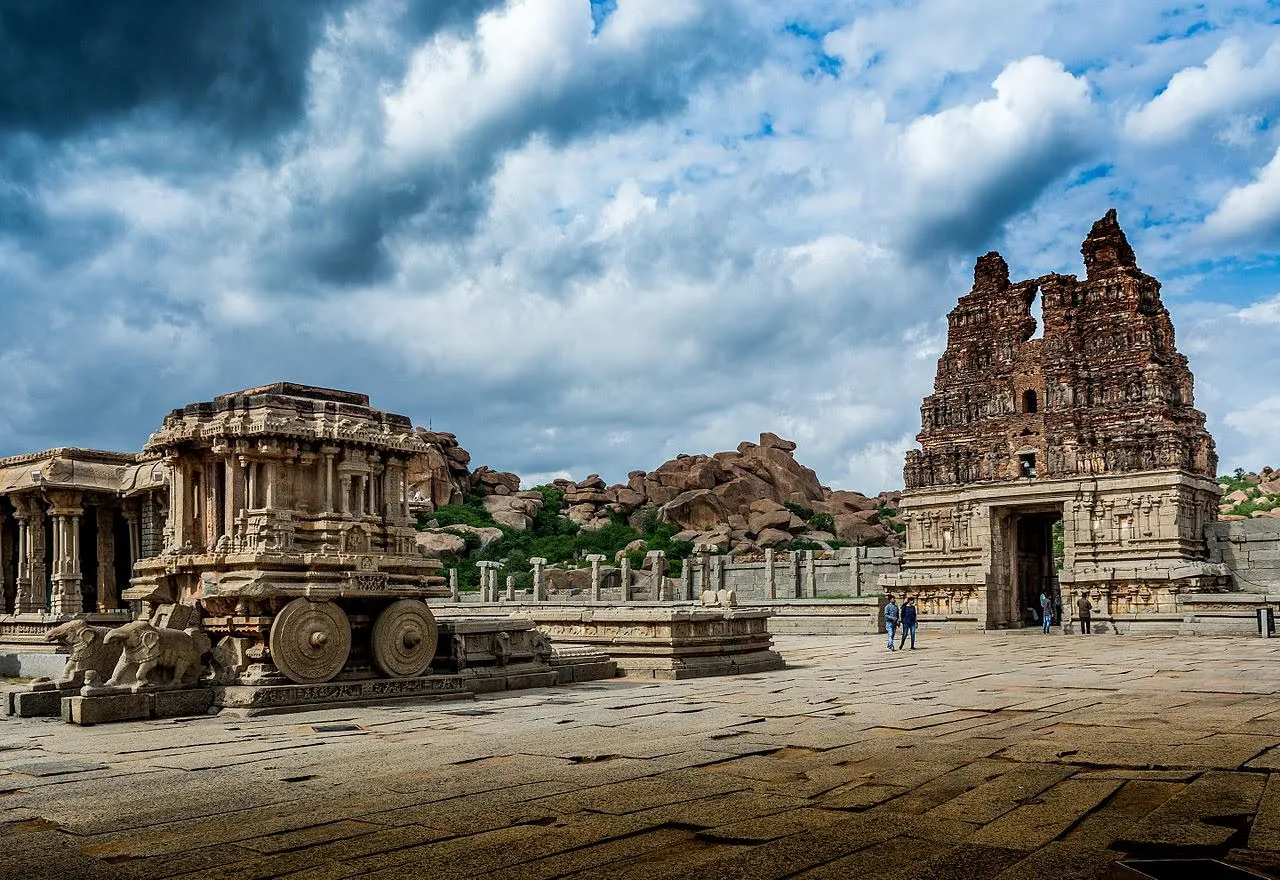
The temple belongs to the Vijayanagara Empire, whose ruins fill much of the Hampi area. Its core dates to the 15th century, when King Devaraya II began the complex. Later rulers, including Krishnadevaraya, added to the site, so it grew over time rather than being built in one phase.
The temple is dedicated to Vitthala, a form of Vishnu also known as Panduranga. The main shrine is empty today. The original idol was moved away during the destruction of the Vijayanagara Empire, and the shrine has remained without it since.
The stone chariot
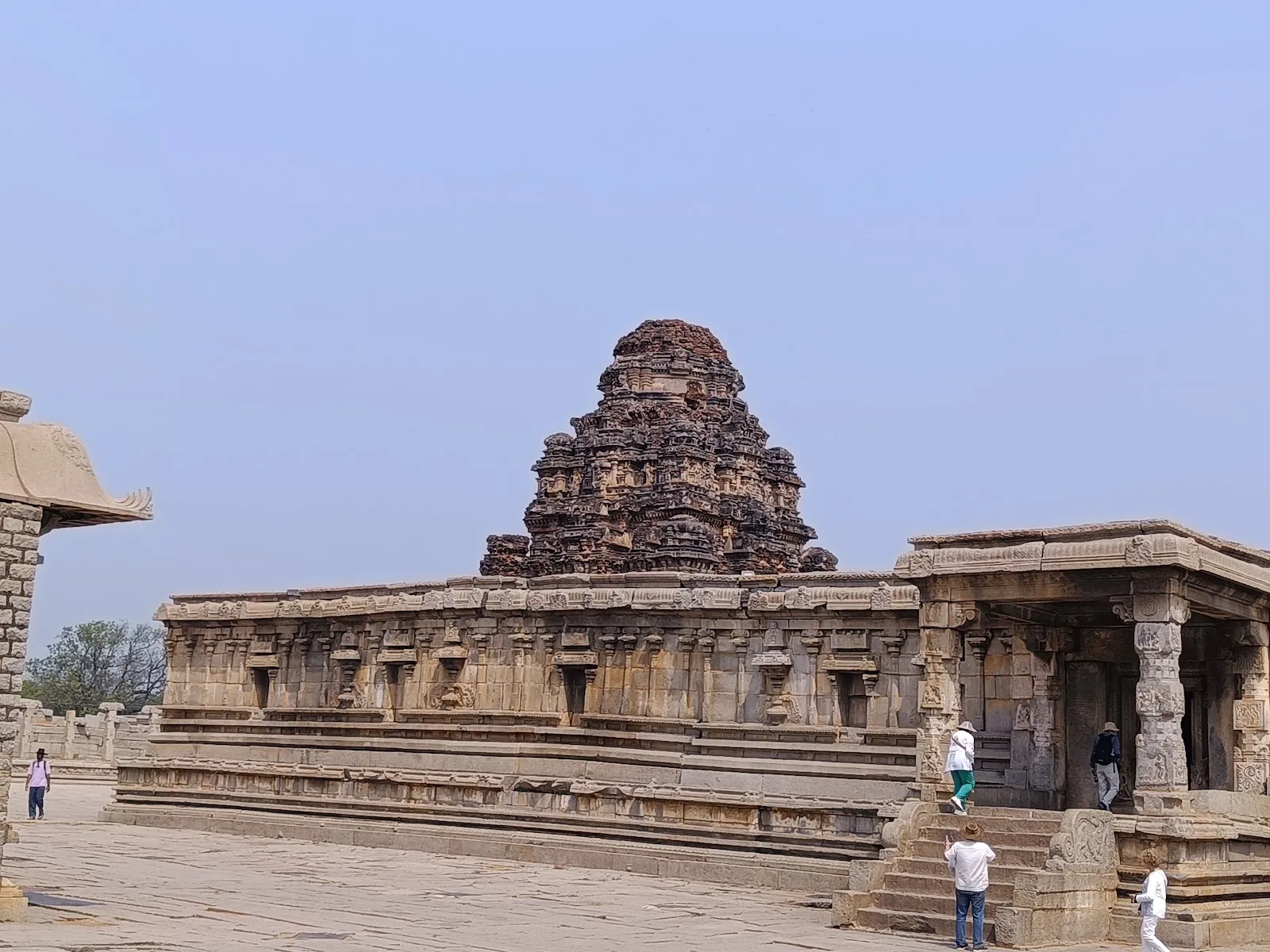
The stone chariot stands in the courtyard. It is dedicated to Garuda, the bird that carries Vishnu, and its shape copies a wheeled chariot. The stone wheels were designed to turn. The chariot is one of the most photographed monuments in India, and its image appears on the Indian ₹50 note, so many people recognise it before they arrive.
Musical pillars and halls
The Ranga Mantapa, also called the Dancing Hall, holds 56 musical pillars. When tapped, they produce notes that match the seven notes of the Indian musical scale and the sounds of several instruments. The pillars are now view-only, because touching them is prohibited to protect them.
Other structures include the Kalyana Mantapa, the marriage hall, and the Maha Mantapa, the main hall. The Sabha Mantapa has 100 pillars. The Utsav Mantapa served festival processions, and a shrine to the goddess stands within the complex. Each hall is a separate stop, so the walk between them takes time.
Carvings to look for
The walls and pillars carry dense carving. Look for soldiers and horses, floral patterns, dancers, royal processions and scenes from mythology. Some figures are carved on the sides of the pillars, and others run as long reliefs along the walls.
Spend time with one hall at a time rather than moving quickly through the site. Small carved details are easy to miss when walking fast.
Getting there and moving around
The temple stands near the banks of the Tungabhadra River, on the northeastern edge of Hampi. From central Hampi it is about 11 km by road, roughly half an hour. Some visitors reach it by coracle from the Anegundi jetty. Those staying in Hampi or on Hippie Island can take a ferry, which can save time compared with driving around.
Motorized vehicles are not allowed right up to the temple, which protects the ruins. The walk from the parking area is long, so use the battery-operated buggy. If you arrive by bicycle or are dropped at the road, the last stretch is about 1.5 km on foot. The entrance and the parking lot are wheelchair accessible.
Planning the visit
Entry requires a valid Hampi monuments ticket, which often covers other sites in the area. Buying tickets in advance is recommended. Some nearby monuments, such as the Lotus Mahal, can be visited on the same day with that ticket, so an early start gives you a fuller day.
Midday is very hot with little shade, so plan the visit for the morning or late afternoon. Modest dress is a sensible courtesy at a Hindu temple. Food options near the temple are limited, so plan lunch before or after your visit.
FAQ
Is there an entry fee?
Yes. Entry requires a valid Hampi monuments ticket, which often covers other local sites.
Should I buy tickets in advance?
Buying tickets in advance is recommended.
Can you drive up to the temple?
No. Motorized vehicles are not allowed right up to the temple. Use the battery-operated buggy from the parking area.
Can you touch the musical pillars?
No. The pillars are view-only now, and touching them is prohibited to protect them.
Is the temple wheelchair accessible?
The entrance and the parking lot are wheelchair accessible.