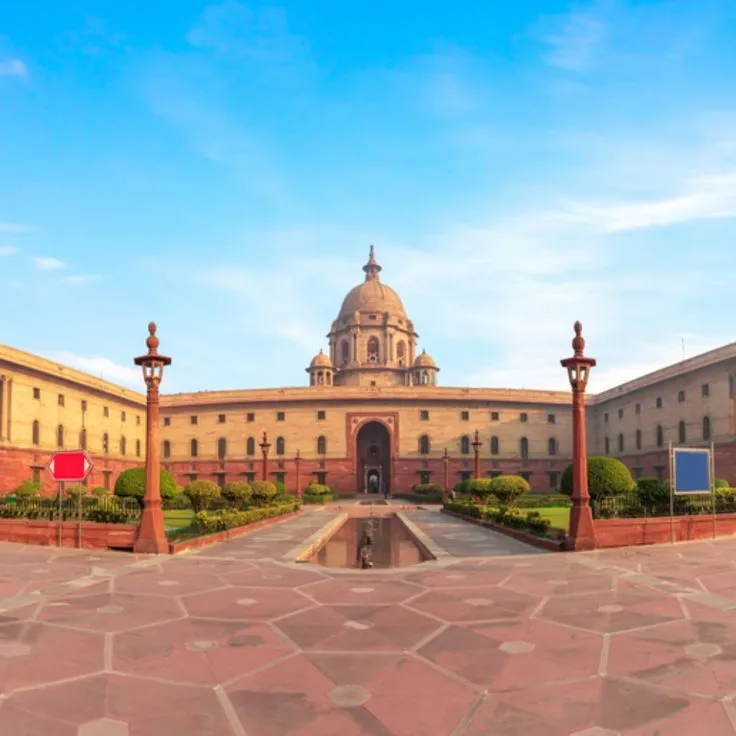
Rashtrapati Bhavan is the official residence and workplace of India’s president, set on Raisina Hill in New Delhi. Its grand dome, formal halls and broad estate make it a striking stop for architecture and modern Indian history. Book a guided tour to see areas such as Ashoka Hall and Durbar Hall, or visit the Bhavan Museum to explore the building’s story. In February and March, the gardens may be open to the public. After sunset, the illuminated exterior is another reason to pause nearby.
A former Viceroy’s residence
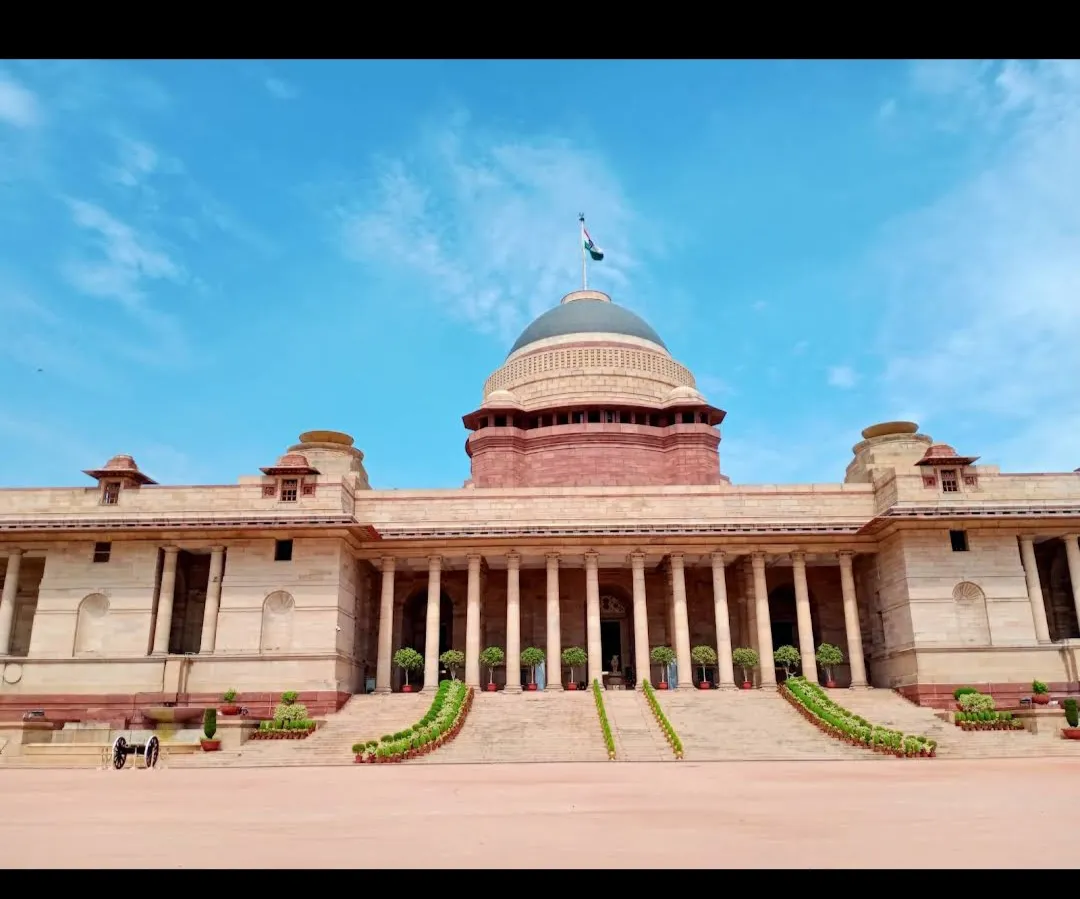
Rashtrapati Bhavan was first planned as the Viceroy’s House after the decision to move India’s capital from Calcutta to Delhi. Designed by British architects Edwin Lutyens and Herbert Baker, construction began in 1912 and the building was completed in 1929. It became the official residence of India’s president after independence.
The architecture brings Indian and European elements together. The large central dome is a defining feature, with two smaller domes beside it above the entrance. The estate extends far beyond the main building, encompassing gardens, open spaces and other buildings. Accounts of its size differ, so the most useful thing to know is that this is a large presidential complex, not a single hall or museum.
What a guided tour can include
Public tours provide access to selected parts of the complex. Depending on the tour circuit, visitors can see the main building, the central lawn, the Bhavan Museum and halls including Ashoka Hall and Durbar Hall. The museum presents the history of the building; the halls give a closer look at its formal interiors.
Tours are available in Hindi and English and must be booked online in advance. The estate remains an active presidential residence and workplace, so public access is limited to designated areas. Check the official website when planning to confirm which tour circuits are available for your dates.
Gardens and the Changing of Guard
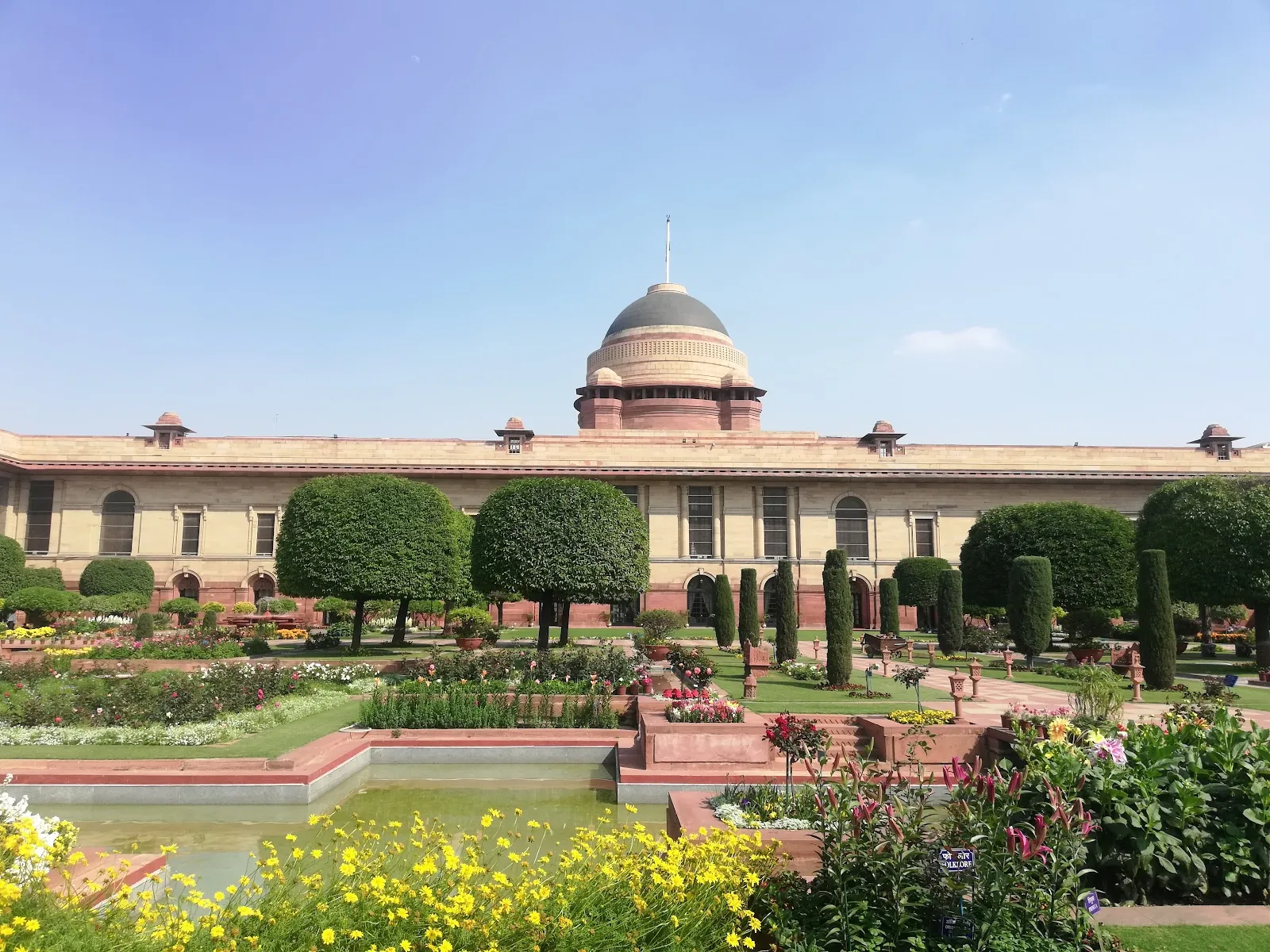
The estate’s gardens, formerly known as the Mughal Gardens and now called Amrit Udyan, open to the public during a seasonal period. February and March are the months associated with public access, though dates can vary. If the gardens are a priority, check the current visitor information before setting out.
The Changing of Guard ceremony takes place in the forecourt and includes a foot drill by the Army Guard Battalion and an equestrian display by the President’s Body Guard. It is held on Saturdays during February and March. Spectators need photo identification at entry, so bring it with you and check the official schedule before travelling.
FAQ
Can you visit Rashtrapati Bhavan?
Yes. Selected parts of the complex are open to the public through guided tours, and the gardens have seasonal public access.
Do you need to book a Rashtrapati Bhavan tour?
Yes. Guided tours should be booked online in advance through the official Rashtrapati Bhavan website.
What can you see on a tour?
Depending on the tour circuit, access can include the main building, central lawn, Bhavan Museum, Ashoka Hall and Durbar Hall.
When can you visit Amrit Udyan?
The gardens are open to the public seasonally, with February and March given as the usual period. Check the official visitor information for current dates.
What ID do you need for the Changing of Guard ceremony?
Bring photo identification for entry to the ceremony.