Agrasen ki Baoli is a historic stepwell on Hailey Road, close to Connaught Place in central Delhi. Its long staircase descends between stone walls, arches and alcoves, with the city’s modern buildings visible above. The original builder and date are uncertain; the structure is commonly associated with the medieval Tughlaq or Lodi period. You can walk down the steps, take in the repeating lines of the architecture and pause in the quieter space below street level. Entry is free, so it works well as a short stop while exploring central Delhi.
A stepwell on Hailey Road
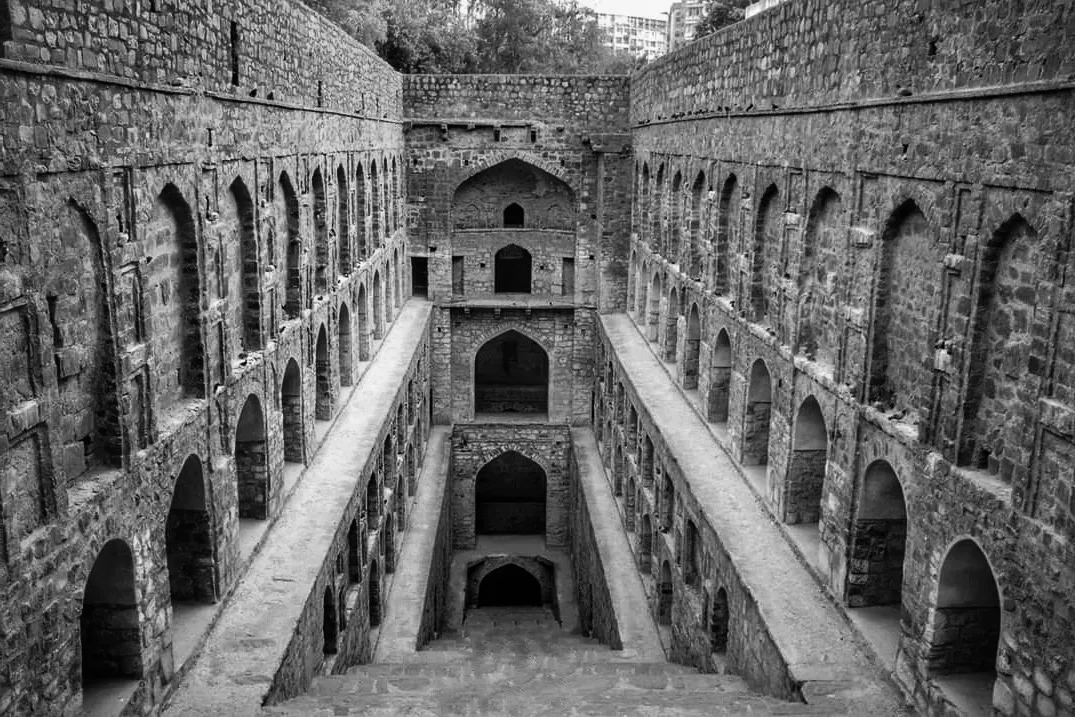
Agrasen ki Baoli, also called Ugrasen ki Baoli, stands on Hailey Road near Connaught Place. From the street, the monument sits among central Delhi’s offices and buildings. Its rectangular structure leads visitors down toward a former water reservoir, with the staircase set between high stone walls.
Stepwells stored water while allowing people to reach it as the level changed. Agrasen ki Baoli is now mostly dry. Its deep layout remains visible, from the upper landing to the lower steps and the sequence of arches along the walls.
What is known about its past
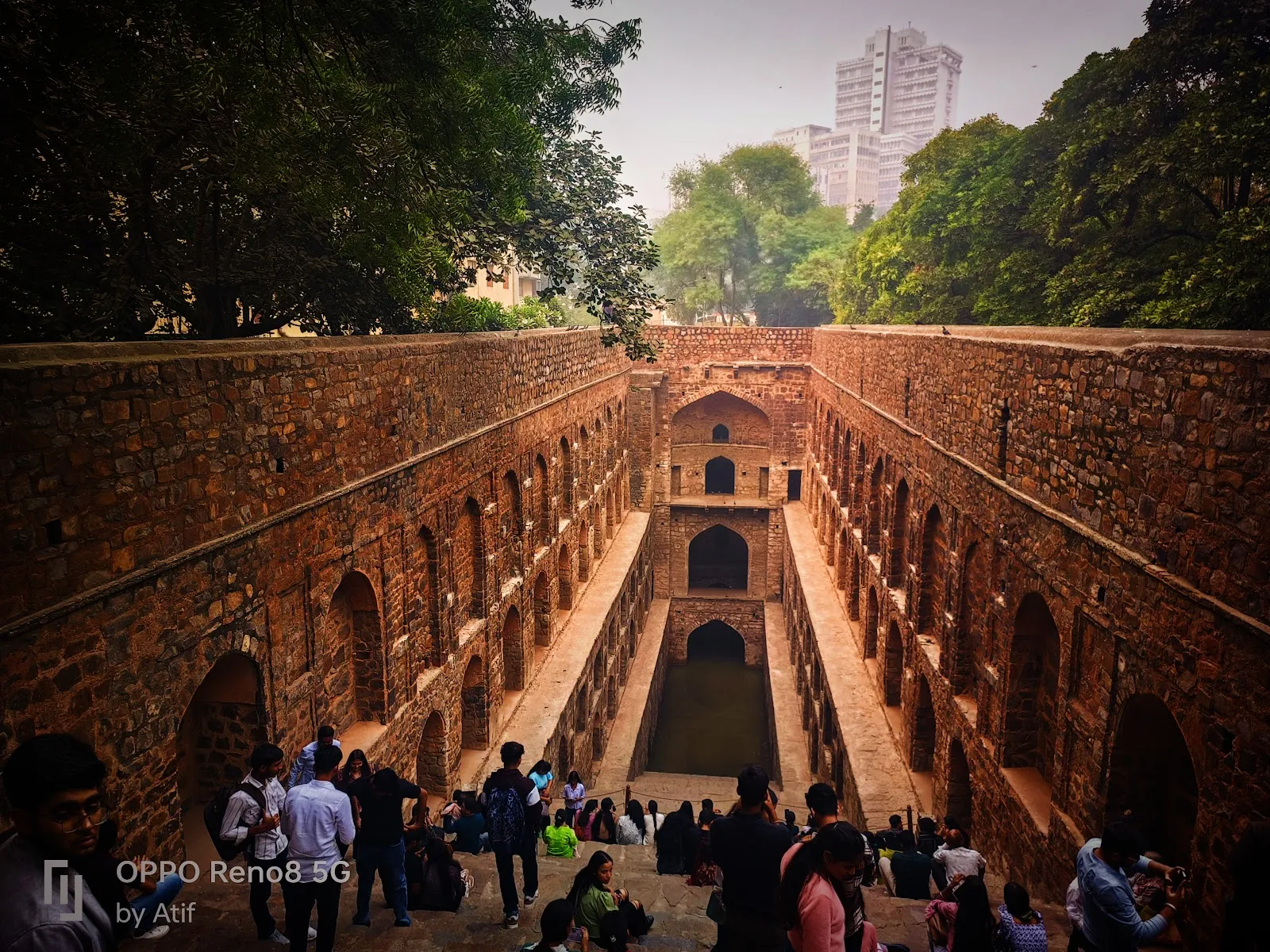
The baoli’s original construction date and builder are not confirmed. Tradition links it to King Agrasen, a legendary figure associated with the Mahabharata era, but there is no firm evidence establishing that origin. The structure seen today is generally thought to have been rebuilt in the 14th century, during the Tughlaq or Lodi period.
Accounts give slightly different totals for the steps, putting the number at just over 100. The monument is protected by the Archaeological Survey of India. Its present form is notable for the single descending staircase, repeated arches and several visible levels.
Looking closely at the architecture
The staircase is the main route through the baoli. As you descend, the view shifts from the open upper edge to the enclosed stone walls and archways. The repeated lines of the steps create a strong sense of symmetry, while the alcoves and carved stone details reward a slower look.
From below, the view back toward the entrance frames the stone structure against the buildings around it. Light and shadow change across the steps through the day, which is why the site attracts photographers. Move carefully on the stairs and along the walls.
A short stop in central Delhi
The visit is compact and can fit between other stops around Connaught Place. The quiet below street level feels distinct from the busy commercial area nearby. The baoli has also appeared in Hindi films, including PK and Sultan, though its architecture and history are the main reasons to explore it.
Entry is free. The site is open daily from 9 AM to 5:30 PM. There is no proper parking area nearby, so parking can be difficult. Barakhamba Road and Janpath are the nearest metro stations mentioned for reaching the area; autos and cabs can also take you to Hailey Road.
FAQ
Is Agrasen ki Baoli free to visit?
Yes. Entry is free.
How long do you need at Agrasen ki Baoli?
Plan for about 30 to 45 minutes to explore the steps, arches and stonework.
When is Agrasen ki Baoli open?
It is open daily from 9 AM to 5:30 PM.
Which metro stations are near Agrasen ki Baoli?
Barakhamba Road and Janpath are the nearest metro stations noted for the area.