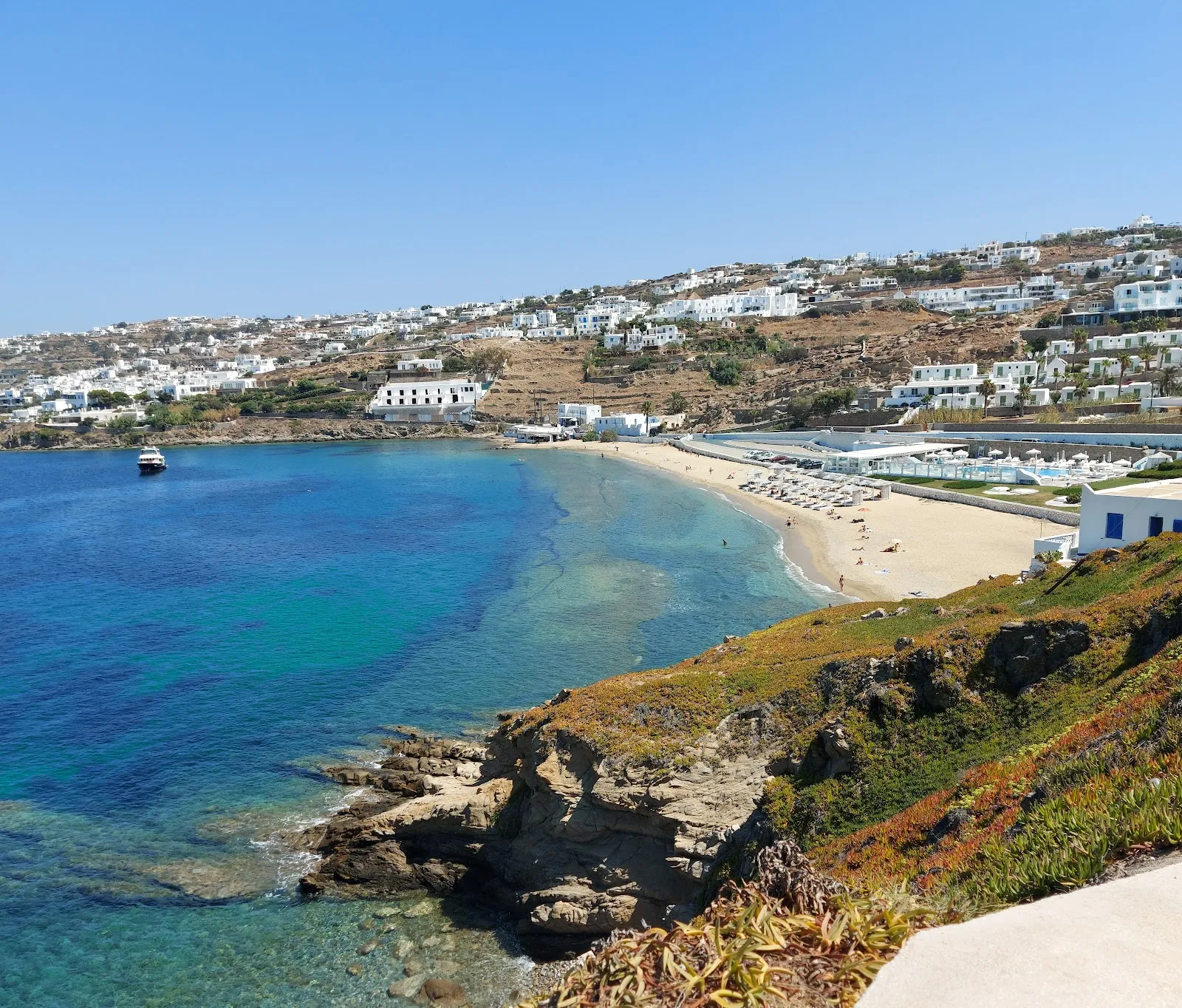
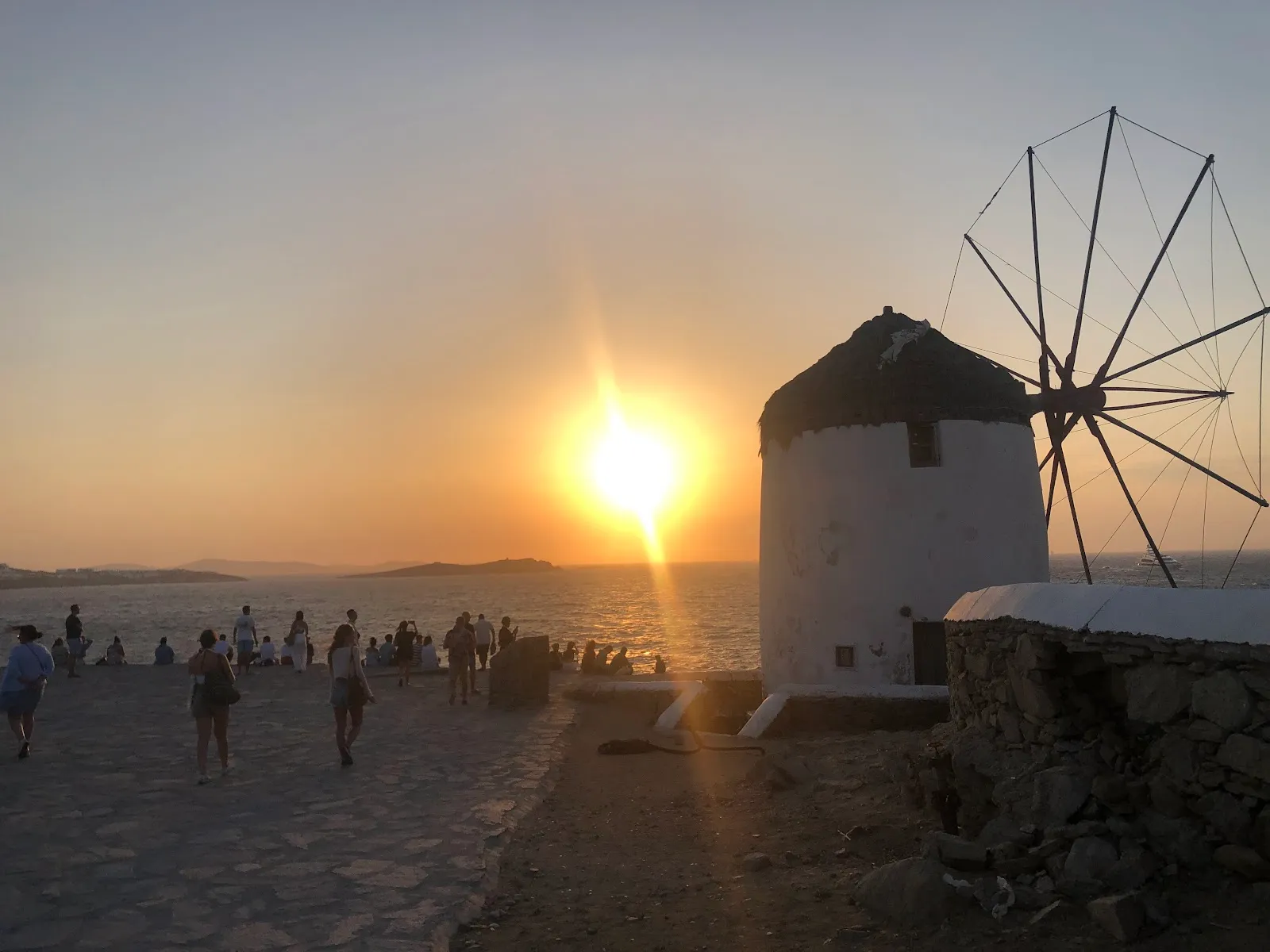
The Windmills of Mykonos stand on a hill above Chora, the island's main town, with the harbor and the Aegean spread out below. The Venetians built them in the 16th century to grind wheat and grain with the strong northern winds. The mills no longer turn, but they are the island's best-known landmark and a short walk from Little Venice. Go at sunset for golden light over the water, or come early in the morning when the paths are quieter. Bring a windbreaker, since the wind can be strong even on clear days.
Why the Venetians built them
The mills date from the 16th century. Mykonos sat on a major sea trade route that linked Venice with Asia, and ships needed grain ground and packed for their long journeys. The island had a steady supply of wind and a constant need for flour, and the Venetians put both to use. The mills were set to face north, where the prevailing winds blow, and their sails turned the millstones that crushed wheat and barley.
Most of the mills were placed in or around the main port, so that grain could reach them easily by boat and cart. At their peak, more than 20 mills worked on the island. They supplied flour to local families and to ships passing through. Some of the grain went to destinations offshore. The mills gradually lost their role as industrialization arrived, and they fell out of use.
The 16 windmills and where they stand
Sixteen windmills survive on Mykonos. Seven stand on the hill in Chora, also called Mykonos Town, overlooking the harbor. Five stand in Kato Mili, also called Kato Milli or Lower Windmills, a few metres from Little Venice. The rest are spread across the island. The Upper Mills near Chora and those in Ano Mera served the local community, while the Lower Mills were used more for grinding grain bound for other islands.
The mills are cylindrical, with white walls and thatched or straw-covered roofs. Many were restored in later years. Some are now homes, and others are kept as landmarks.
Inside the mills
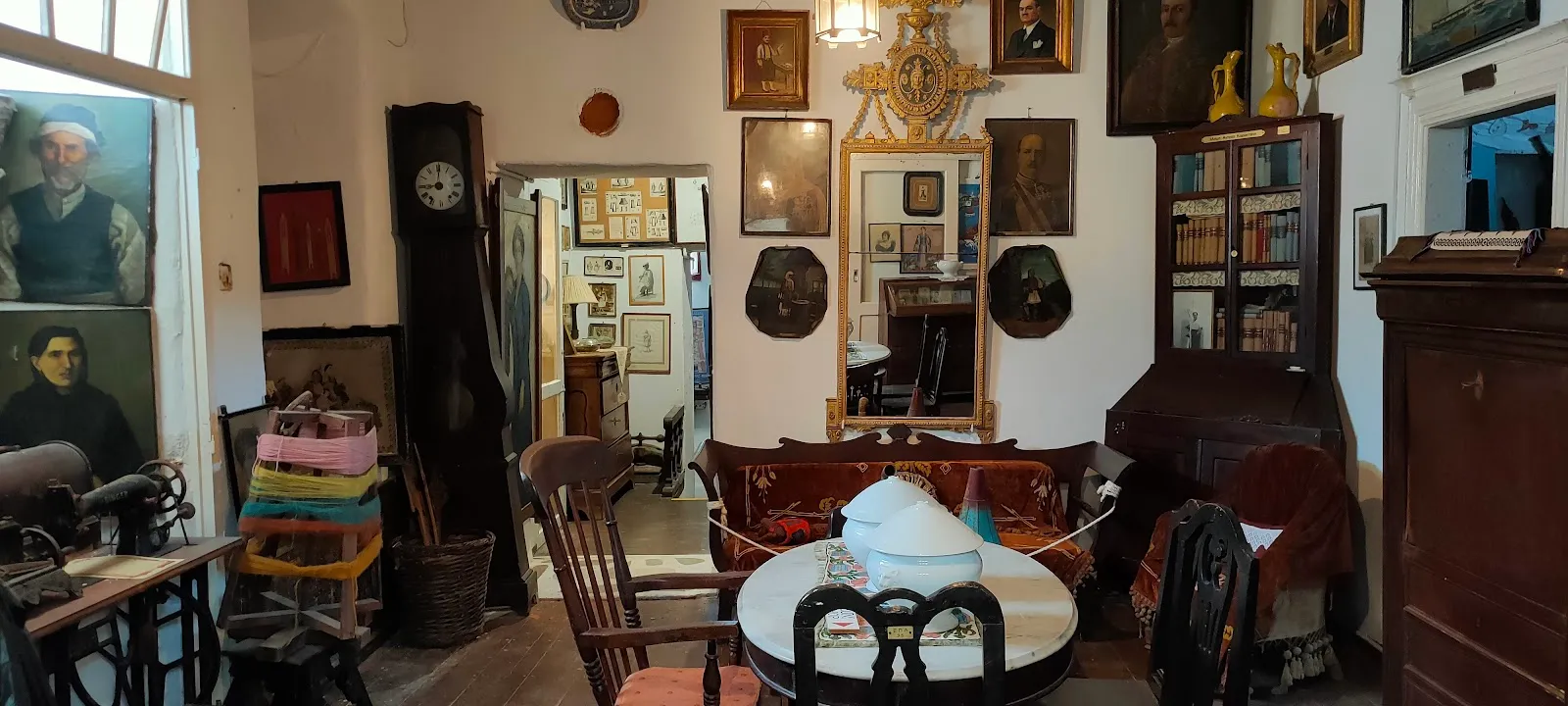
The Bonis Mill is open to the public and works as a small museum. Some of the mills at Kato Mili have been opened with their interiors preserved, so visitors can see how the space was laid out when wind power drove the island's economy. Other mills have been converted into private homes and are not open to visitors.
The mills no longer grind grain, so a visit is mostly about the structures, the view, and the history they hold.
Getting there and seeing them
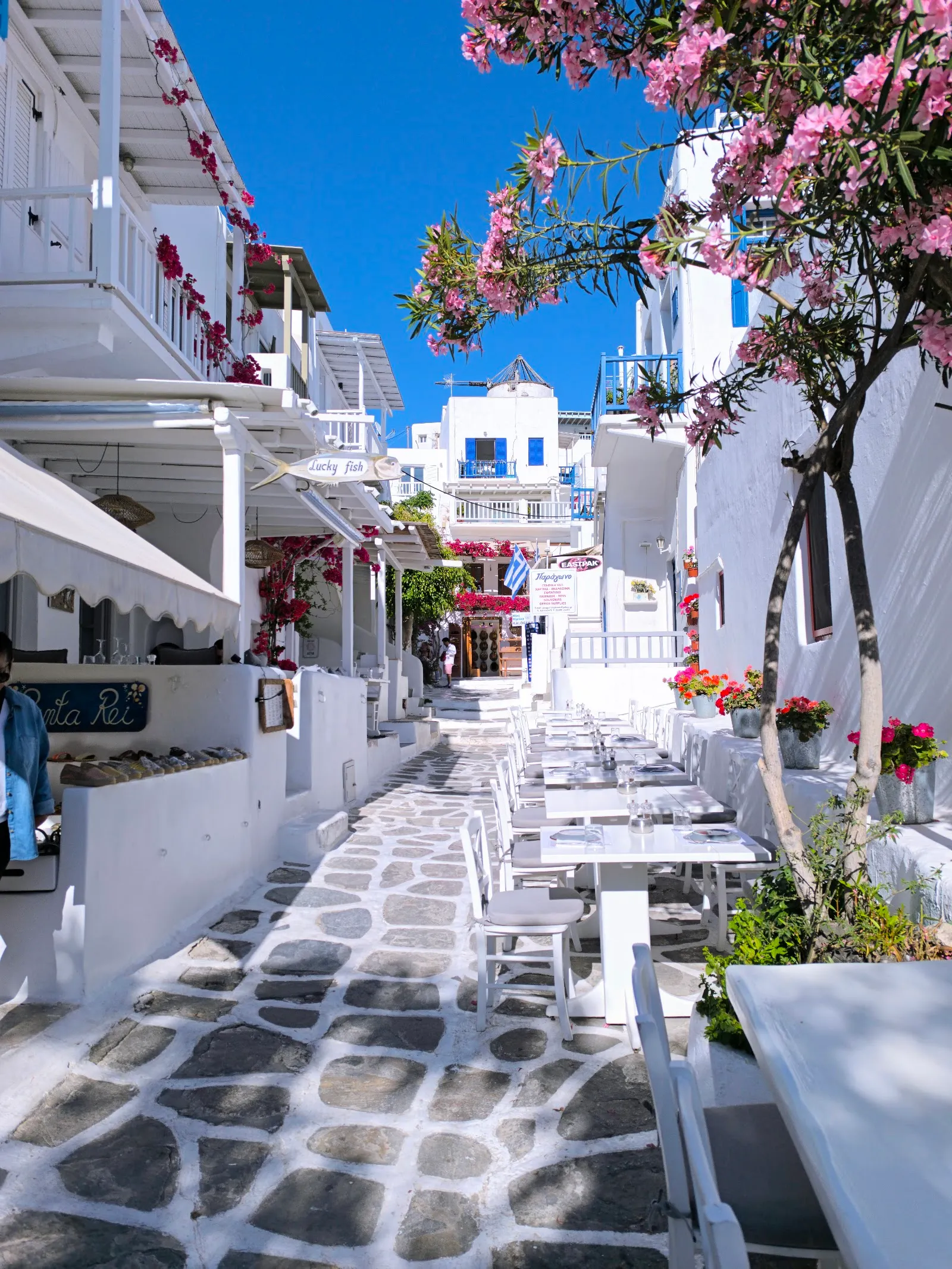
Little Venice is about 200 metres from the windmills, and the walk takes only a few minutes along the waterfront and up the slope. From the old town, the walk takes about 10 minutes through narrow streets. The path is easy to walk, but the roads in town are narrow, so take care with cars and scooters.
The Old Port and Matoyianni Street are close by, which makes the windmills an easy first stop after the harbor. A car park is near the mills, and the area has both free and paid parking. There is also a wheelchair accessible parking lot. Sunset is the busiest time, so plan a different hour if you want more room for photos.
FAQ
Can you go inside the windmills?
Some can. The Bonis Mill is open to the public as a small museum, and some mills at Kato Mili have preserved interiors open to visitors. Others have been converted into private homes.
How far are the windmills from Little Venice?
They are about 200 metres from Little Venice, a short walk along the waterfront and up the slope.
Where can I park near the windmills?
A car park is near the mills, and the area has both free and paid parking. There is also a wheelchair accessible parking lot.
When is the best time to visit?
Sunset gives the best light but brings the largest crowds. Early morning, when few people are around, is better for photos without a crowd.