In central Heraklion, this museum brings together finds from across Crete, with a collection especially strong in Minoan art. Its displays trace more than 5,500 years, from the Neolithic period to Roman times, through pottery, jewellery, sculptures and frescoes. Look for the Phaistos Disc, the Snake Goddess figures, the Bee Pendant of Malia and frescoes from Knossos. The clear, chronological and thematic layout helps put the objects into context. Visit Knossos before coming here if you want to connect the palace ruins with the artefacts found there.
A collection spanning Cretan history
The museum’s collections cover more than 5,500 years, from the Neolithic period to Roman times. Most of its best-known works come from the Minoan civilization, and many were excavated at sites across Crete, including Knossos, Phaistos and Malia.
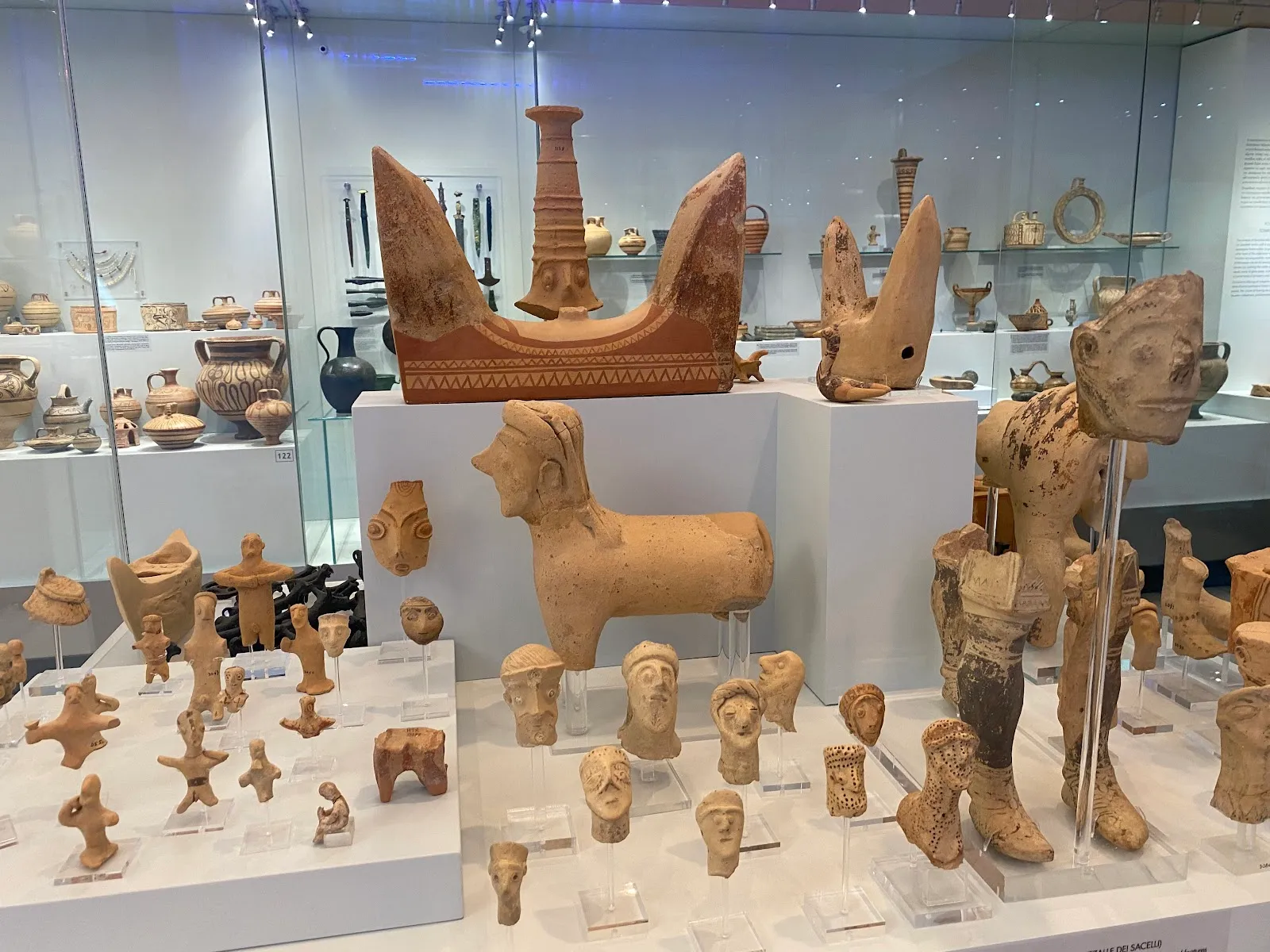
The objects range from pottery and jewellery to small sculptures, stonework and ritual figures. Together, they give a sense of the variety of material found at Cretan settlements, palaces, sanctuaries and funerary sites. Displays also include artefacts from later periods, so the visit follows the island’s history beyond the Minoan era.
Frescoes and signature objects
The fresco gallery includes works from Knossos, among them the Bull-Leaping fresco and Prince of the Lilies. These paintings survive in fragments, and some are presented as reconstructions that suggest the form of the larger artworks. Their colour and scale make them a natural focus of a visit.
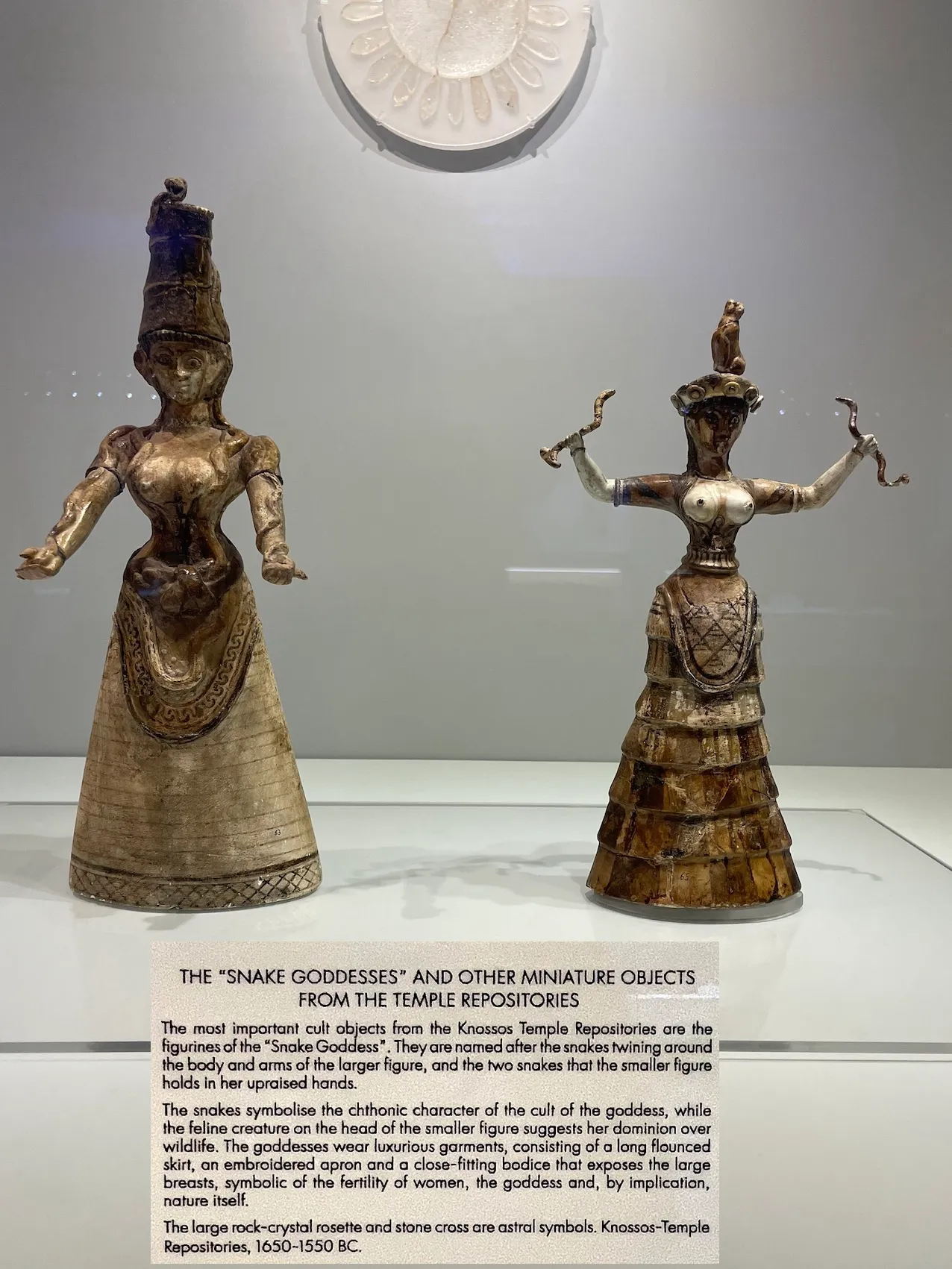
Other notable objects include the Phaistos Disc, a clay disc marked with symbols that remain undeciphered, and the Snake Goddess figures. The Bee Pendant of Malia is another highlight, with finely worked jewellery among the collection’s most distinctive pieces. Look out, too, for pottery decorated with marine motifs and the Bull’s Head rhyton associated with Knossos.
How the displays are arranged
The museum occupies a two-storey modernist building, and its galleries are arranged both chronologically and by theme. Colour-coded rooms and clear English-language text help explain the periods and objects on display. The arrangement makes it possible to follow the sequence of Cretan history while also pausing over particular kinds of work, such as frescoes, pottery or jewellery.
There are 27 galleries, as well as an audiovisual screening gallery. The collection is extensive, so a short visit will mean choosing a few rooms or highlights rather than reading every panel. Families can ask for the “Gods and Heroes at Heraklion Archaeological Museum” leaflet, which links exhibits with ancient myths.
Pairing the museum with Knossos
The museum is a useful companion to the archaeological site of Knossos. Seeing the palace first gives the objects a physical setting; coming here first provides background for the site. Either order works, but visitors who want to connect specific palace remains with their finds can plan Knossos before the museum.
Many artefacts from the palace are displayed here, including frescoes and objects associated with Minoan art and ritual. The museum’s broader collection adds finds from other parts of Crete, so the visit also helps distinguish Knossos from the island’s other archaeological centres.
FAQ
How long should I spend at Heraklion Archaeological Museum?
Allow at least two to three hours for a thorough visit. The museum has 27 galleries, and reading the exhibit information takes time.
What are the museum’s main highlights?
Look for the Phaistos Disc, Snake Goddess figures, the Bee Pendant of Malia and frescoes from Knossos, including the Bull-Leaping fresco.
Is there an admission fee?
Admission is €20 for adults over 25 and non-EU visitors over 18. EU visitors under 25 enter free.
Should I visit Knossos before the museum?
Visiting Knossos first can help you connect the palace remains with related finds displayed in the museum. Visiting the museum first is another way to get background before seeing the site.