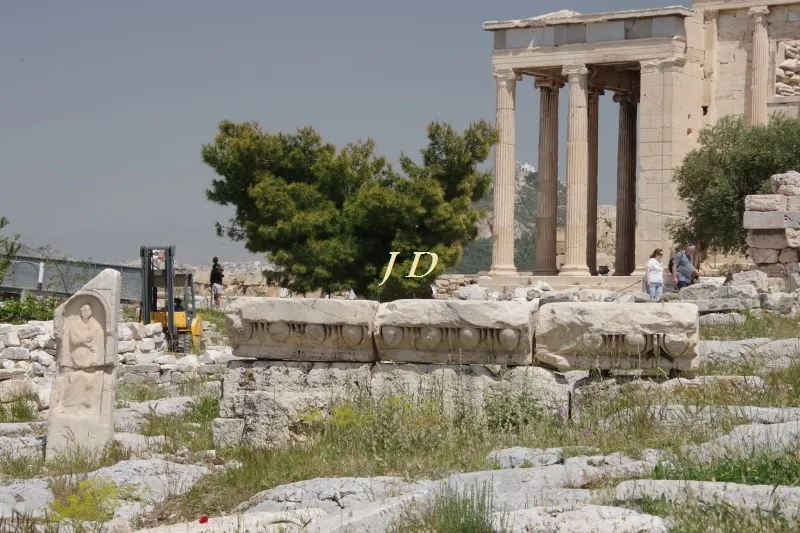
Kerameikos Archaeological Site in Athens brings together an ancient potters’ quarter, city walls and a cemetery used for centuries. Walk among tombs, carved grave markers, gates and the remains of pottery workshops; signs help explain what stood here. The small on-site museum displays original grave markers, sculptures and other finds, including objects from the site’s early history. The grounds are quieter than many central Athens archaeological sites, and tortoises and cats sometimes appear among the ruins. Set aside time for both the open-air site and the museum.
From potters’ quarter to cemetery
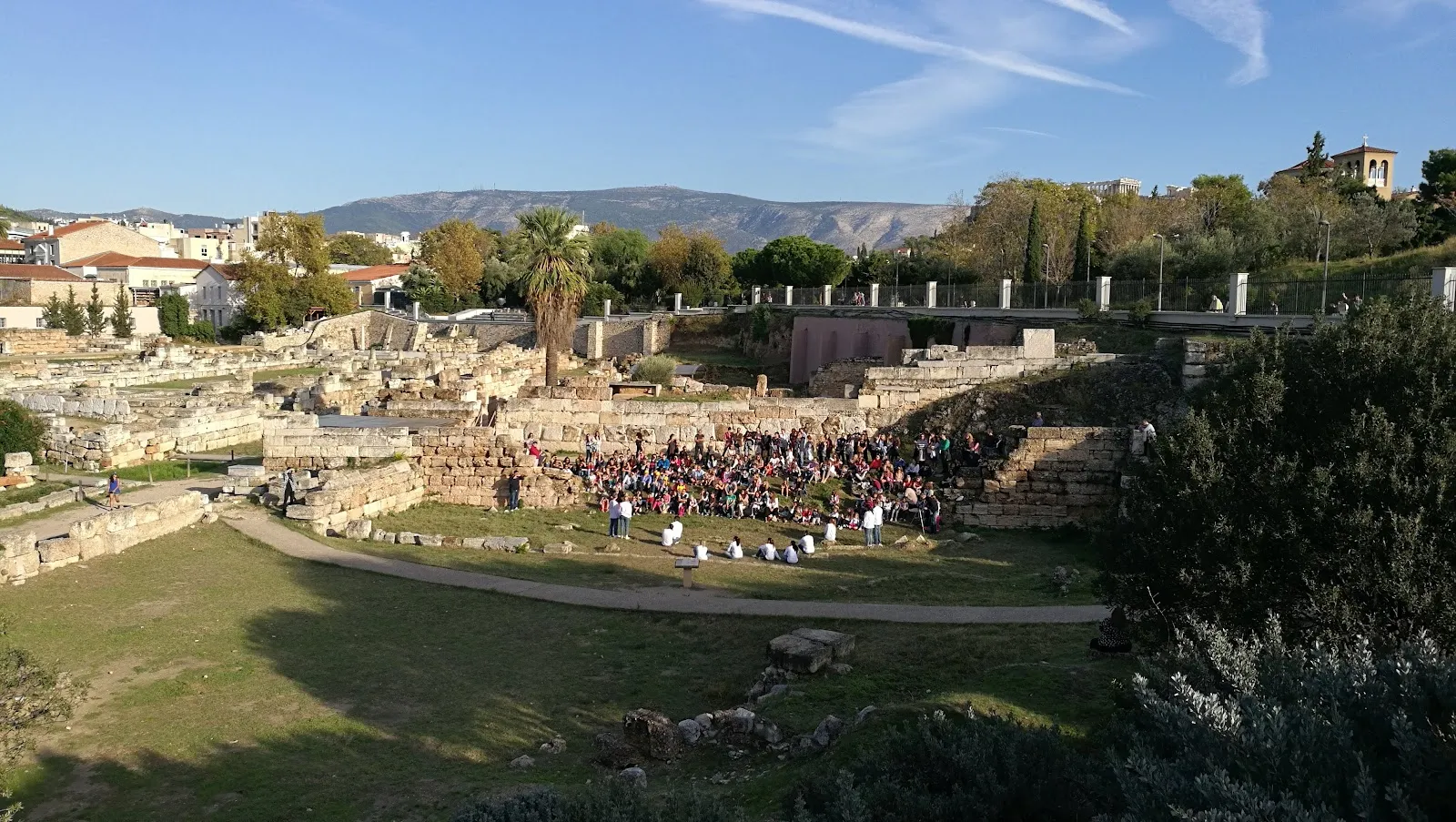
Kerameikos takes its name from the potters who worked in this part of ancient Athens. The district had clay-rich ground and became associated with pottery production; the word “ceramic” comes from Kerameikos. The site extended inside and outside the old city walls, with the potters’ quarter on the inner side and burial grounds beyond.
The cemetery was used for centuries, into the Roman period. Its position outside the walls and the remains of the ancient roads, gates and boundary walls help make sense of how this edge of the city was organized.
Walls, gates and burial monuments
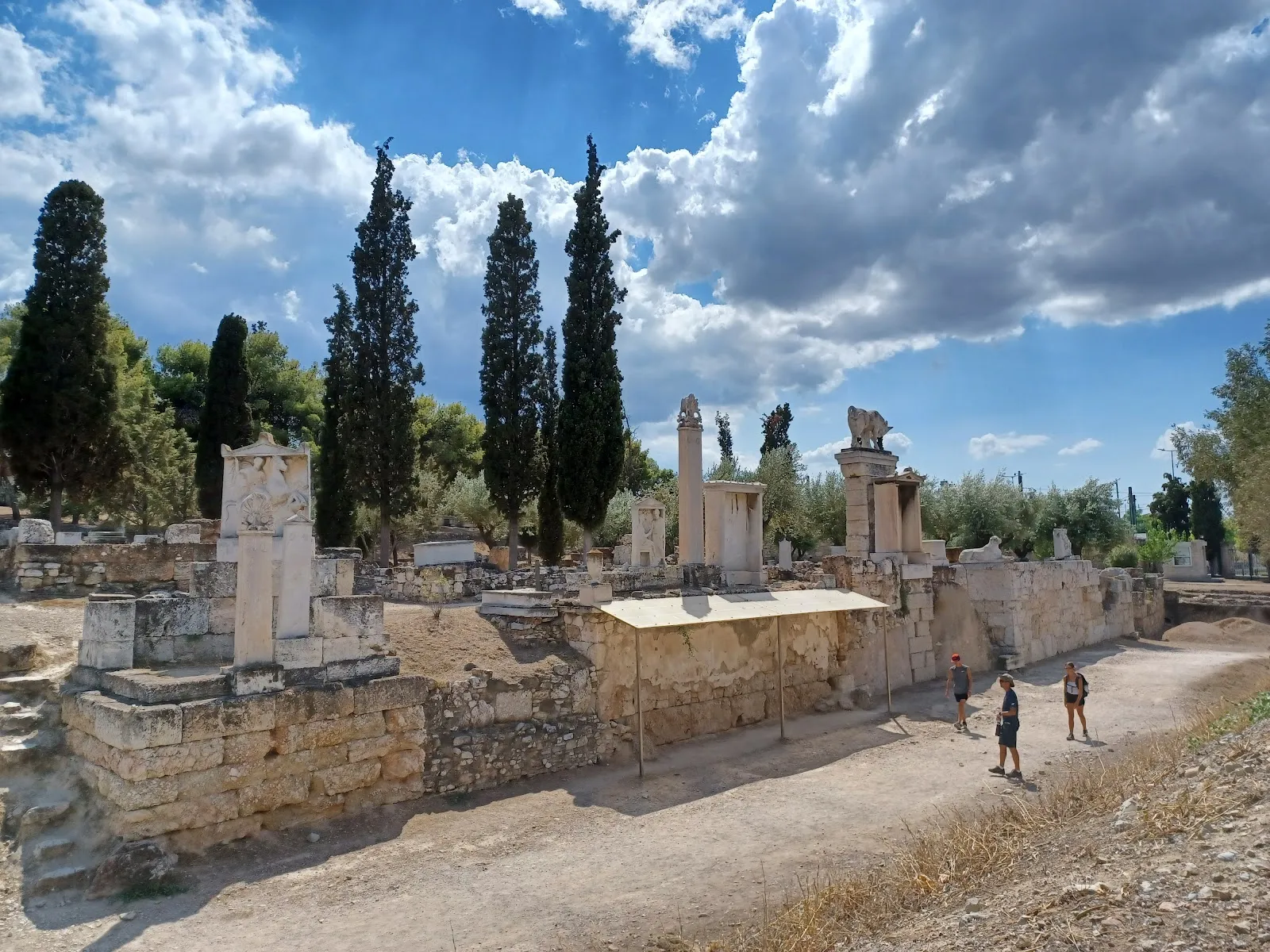
The remains include sections of the old Athenian walls and the Dipylon and Sacred Gates. The Sacred Way passed through the area, while ancient roads connect the surviving structures and cemetery grounds. Signs around the site identify features and help you picture how the ruins once fitted together.
Tombs and grave markers are among the most compelling details. Some markers are carved with portraits and scenes, offering glimpses of the people commemorated here. The open-air grounds also contain remains associated with the workshops and other structures of the district.
What to see in the museum
The small museum displays objects excavated at Kerameikos, including original grave markers and sculptures. Some pieces in the grounds are reproductions, with originals kept inside for their protection. The collection also includes early objects, among them Geometric art dating back to around 860 BC.
Visit the museum alongside the outdoor remains: it gives you a closer look at the carved details found among the cemetery monuments. The museum is on the site and does not require a separate admission according to the information provided.
Planning your visit
The grounds are a little farther from the Acropolis than some of Athens’ better-known ancient sites, but are accessible on foot from the Monastiraki area along Ermou Street. Their quieter atmosphere makes room for a slower walk among the ruins and tombs. Tortoises and cats can be found around the site; look carefully through the grass as you explore.
Allow around an hour or more if you want to see both the grounds and museum. In summer heat, bring water; potable water is available on site. Check the official website before visiting, since a temporary closure for renovation has been reported. WC facilities may also be out of service.
FAQ
How long should I spend at Kerameikos?
Plan for about 1 to 2 hours to walk through the archaeological site and visit the museum. A shorter walk through the ruins can take around 20 to 30 minutes.
What can you see at Kerameikos?
The site has ancient tombs, grave markers, city walls, gates, roads and remains of pottery workshops. Its museum displays original grave markers, sculptures and other excavated objects.
Is there a museum at Kerameikos?
Yes. A small museum on the site holds finds from the excavations, including original pieces whose outdoor counterparts are reproductions.
When is the best time to visit Kerameikos?
Early morning is a good time for a quieter visit. Bring water if you are visiting in hot weather.