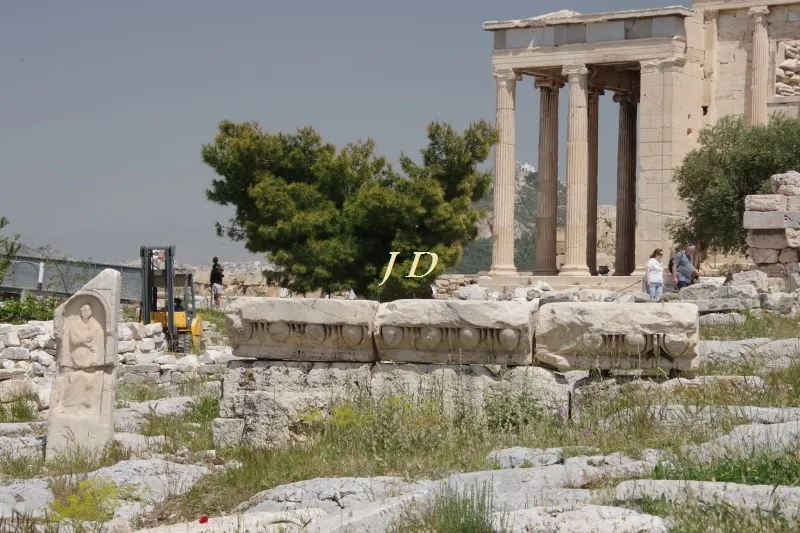
North of the Parthenon on the Acropolis, the Erechtheion is an ancient temple known for its unusual layout and the six sculpted figures of its Caryatid Porch. Built between 421 and 406 BC, it was associated with Athena, Poseidon and the mythical king Erechtheus. Look closely at the porch and the building’s Ionic details, then pause for views across Athens. The Caryatids on site are replicas; the originals are preserved in the nearby Acropolis Museum.
A temple on the Acropolis slope
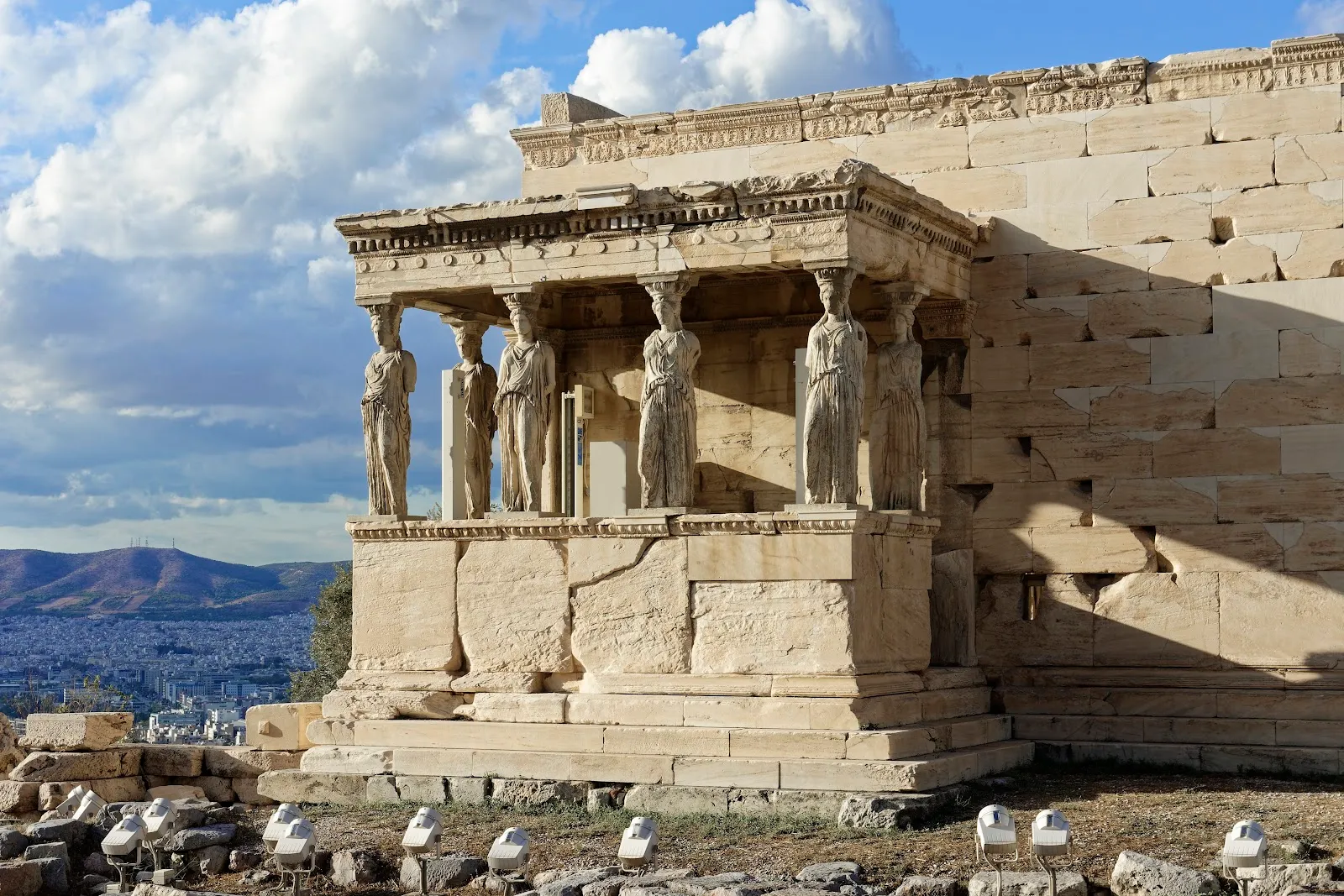
The Erechtheion stands on the northern side of the Acropolis, near the Parthenon and the Propylaea. It was built between 421 and 406 BC, on ground associated with important religious sites in Athenian mythology. Its form differs from the regular, symmetrical plan often associated with Greek temples: the building’s design responds to the uneven slope of the site.
The temple was connected with Athena, Poseidon and Erechtheus, the mythical king of Athens. Stories about Athena and Poseidon competing for the city’s favour are part of the place’s significance. The building’s importance came from these sacred associations as well as its architecture.
The Caryatid Porch
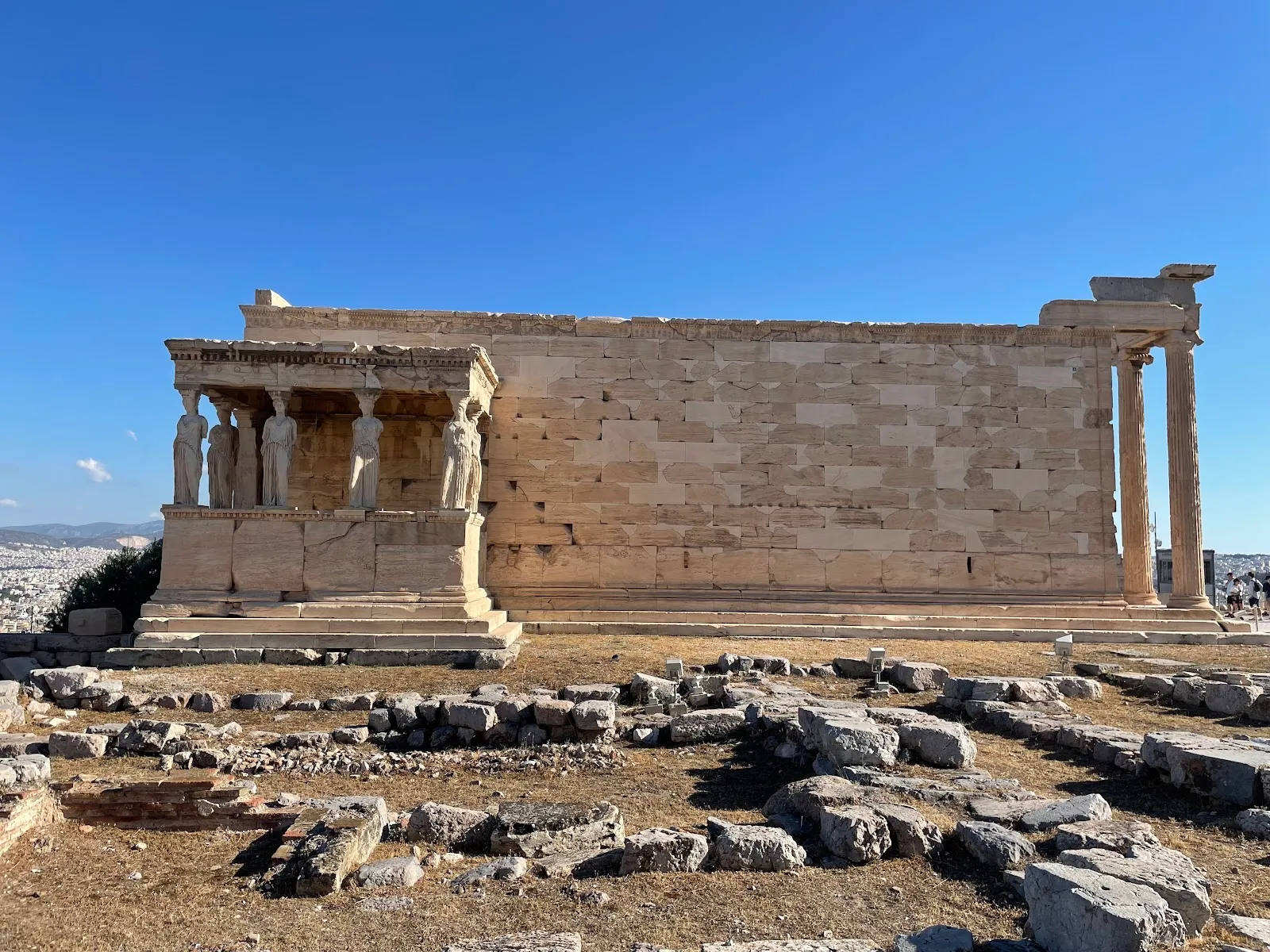
The Erechtheion’s best-known detail is the southern porch, where six sculpted female figures support the roof like columns. These figures are called Caryatids. Their draped forms and carved details make the porch distinct from the temple’s Ionic columns and give visitors a reason to stop and look closely rather than pass straight through the Acropolis.
The figures you see at the temple are replicas. The original Caryatids are kept in the nearby Acropolis Museum to protect them from weathering. One of the original statues was removed in the early nineteenth century by Lord Elgin and is now in London, leaving a complicated chapter in the monument’s cultural history.
What to look for during your visit
Take in the building from different sides to see how its structure fits the sloping ground. The Caryatid Porch is the main focus, but the temple’s Ionic elements and less regular outline also reward a closer look. Its combination of architecture and myth gives the Erechtheion a character distinct from the larger Parthenon nearby.
The Acropolis paths are uneven, so sturdy shoes are useful. Carry water in hot weather, and consider an early or later visit to avoid the strongest heat and busiest periods. The Acropolis ticket includes access to the Erechtheion, and booking ahead is recommended. Near sunset, the marble can take on a warm glow; allow time to pause for the views across Athens.
FAQ
Where is the Erechtheion?
It is on the northern side of the Acropolis in Athens, near the Parthenon and the Propylaea.
Are the Caryatids at the Erechtheion originals?
No. The figures on the porch are replicas. The originals are preserved in the nearby Acropolis Museum.
Is the Erechtheion included in the Acropolis ticket?
Yes. Access to the Erechtheion is included with an Acropolis ticket. Advance tickets are recommended.
When is a good time to visit the Erechtheion?
Early morning or later in the day can help you avoid the busiest periods and midday heat. Near sunset, the marble can glow in the light.