
Nymphenburg Palace, in Munich’s Neuhausen-Nymphenburg district, was built as a summer residence for the Wittelsbach rulers of Bavaria. Its central pavilion and royal rooms hold ornate decoration, paintings and preserved furnishings; the Stone Hall and Gallery of Beauties are among the interiors to look for. Outside, paths pass canals, gardens and smaller park palaces, including Amalienburg and Badenburg. Allow time for both the main building and grounds, or add the Marstallmuseum to see historic royal carriages and sleighs.
A summer residence for Bavaria’s rulers
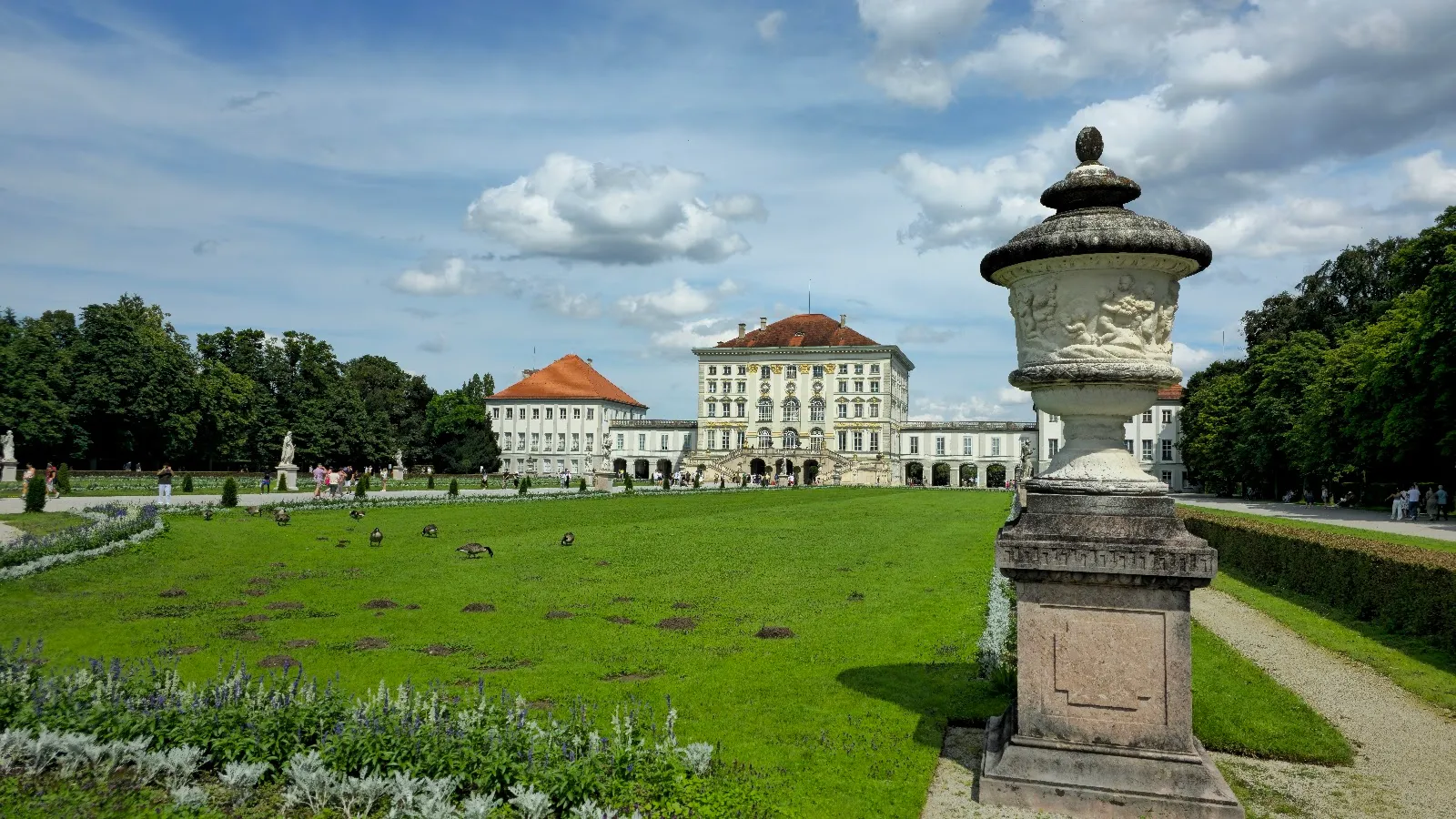
Construction began in 1664, after the birth of Max Emanuel, the heir of Elector Ferdinand Maria and Henriette Adelaide of Savoy. The palace was planned as a summer residence for the Wittelsbach family. Italian architect Agostino Barelli designed the first building, and later generations expanded the complex with wings, stables and orangeries. The ensemble was completed in 1730.
The palace grew over time, so its rooms reflect more than one decorative style. Baroque, Rococo and Neoclassical interiors sit within a complex whose long wings and central pavilion shape the approach. The palace’s scale is part of the visit, but the central rooms offer a closer look at the art and furnishings associated with court life.
Rooms to look for inside
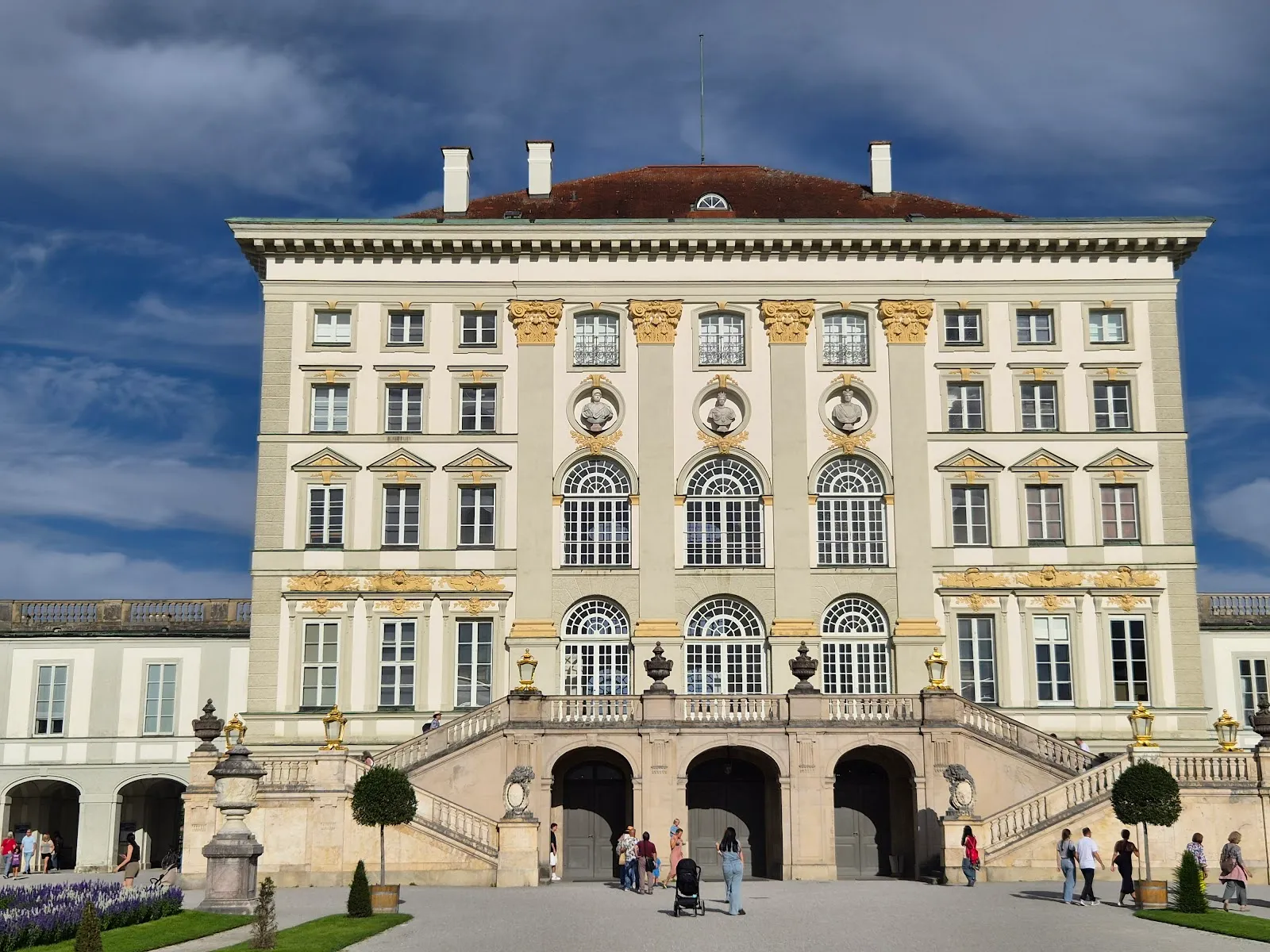
Start with the central pavilion and its Stone Hall, a grand space with a ceiling fresco and elaborate stucco decoration. Other rooms include royal apartments, sitting rooms and bedrooms, with paintings, furnishings and detailed ceilings. Some of the original furniture used by the ruling family remains on display. Not every room is open to visitors, so the accessible route may not include every part of the building.
The Gallery of Beauties contains portraits commissioned by King Ludwig I. The collection depicts women from different social backgrounds whom he considered beautiful. It gives the palace visit a personal dimension alongside its formal rooms and decorative arts. An audio guide can add context as you move through the rooms.
The park and its smaller palaces
The palace park covers about 200 hectares, with formal gardens giving way to meadows and wooded paths. Canals, ponds, fountains and bridges shape the grounds, and the park’s layout makes it possible to choose a short stroll or a longer walk. In winter, the canal is used for curling and ice skating.
Several small buildings are scattered through the park. Amalienburg is a hunting lodge; Badenburg is known for its baths, and Pagodenburg has Asian-inspired design. These pavilions add distinct stops to a walk beyond the main palace. The Marstallmuseum, housed in the palace complex, displays royal carriages and sleighs. To see the palace, museum and park buildings, plan a longer visit rather than treating the grounds as a quick add-on.
FAQ
How long do you need at Nymphenburg Palace?
Allow at least three hours to see the buildings across the grounds. A visit that includes the palace, Marstallmuseum and park palaces can take around four hours.
What should you see inside Nymphenburg Palace?
Look for the Stone Hall, the decorated royal rooms and the Gallery of Beauties. The rooms include paintings and preserved furnishings.
Is the Nymphenburg Palace park free to enter?
The park grounds have free admission. Entry to the palace and museums is separate.
What is in the Marstallmuseum?
The Marstallmuseum displays historic royal carriages and sleighs.


