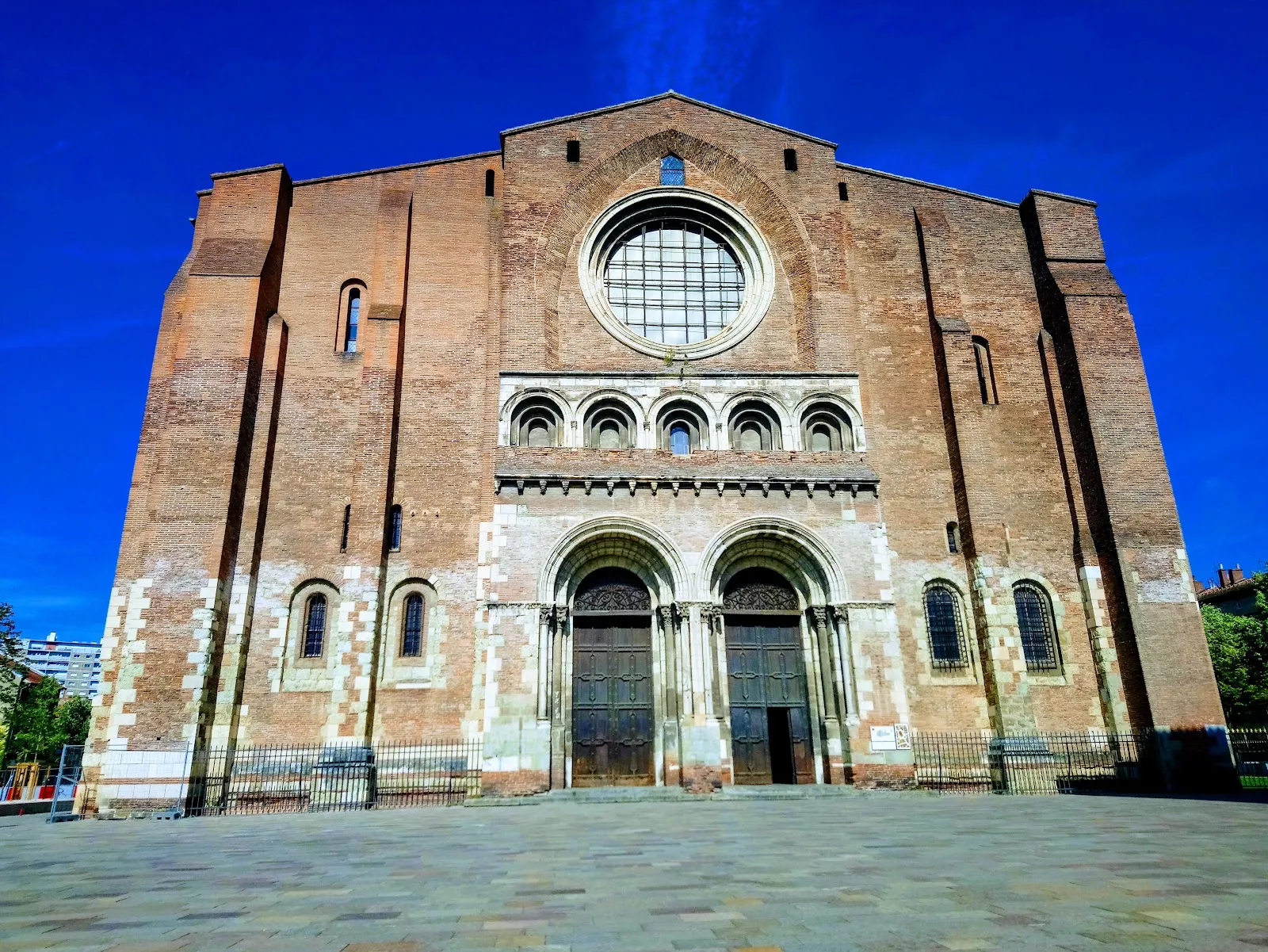
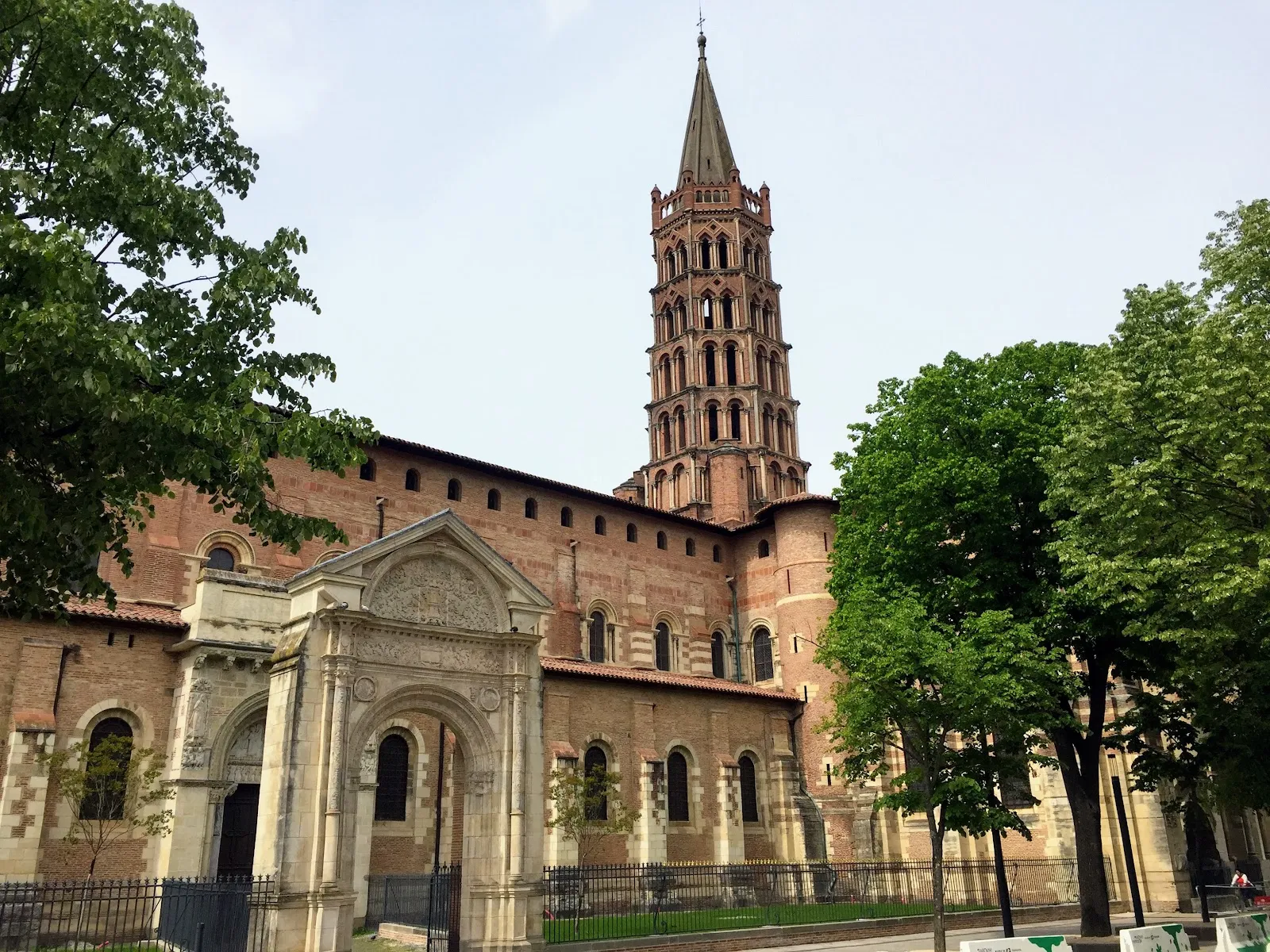
Basilique Saint-Sernin is a Romanesque basilica on Place Saint-Sernin in Toulouse, built mostly of brick. Its octagonal bell tower is easy to pick out from the square. Inside, high arches and warm stone make a calm space, and information boards explain the building's history. The crypt holds a large number of relics, so do not skip it. Even a short walk around the outside suits the square well.
A site tied to a bishop and a martyr
The basilica takes its name from Saint Sernin, the first bishop of Tolosa, the name the city had in the third century. A crowd murdered him here for refusing to pray to pagan gods. Tradition says he was tied by the legs to a bull and dragged through the streets, and that he died on what is now the rue du Taur, or Bull Street.
His burial place became a stop for pilgrims. An older basilica stood on the site as early as the fourth century, and the present church replaced it.
From abbey church to pilgrim church
The church was built for a Benedictine abbey that housed pilgrims on their way to Santiago de Compostela in Spain. The central apse was begun in 1080. A Romanesque church was consecrated on the site in 1096, and the altar was consecrated by Pope Urban II.
Building went on into the 1100s. The shape of the arches shows where work stopped and then restarted in the 1300s. Later centuries added Gothic and Baroque elements, and a bell tower dating from the 15th century rises above the crossing of the nave and transept.
Outside: brick, arches and the tower
Like many historic buildings in Toulouse, the basilica is built of brick in the Romanesque style. The octagonal bell tower is the feature to look for from the square. When it is lit at night, it glows red against the sky.
Look up at the walls and you can see the change in the arches where construction paused. The exterior is a good place for photographs, and the square suits a slow walk round the building.
Inside: the crypt, relics and decoration
The crypt holds a large number of relics, more than in many other churches in France. Many were given by Charlemagne to the abbey in the 800s. Tradition also links royal relics, including the Crown of Thorns, to the church.
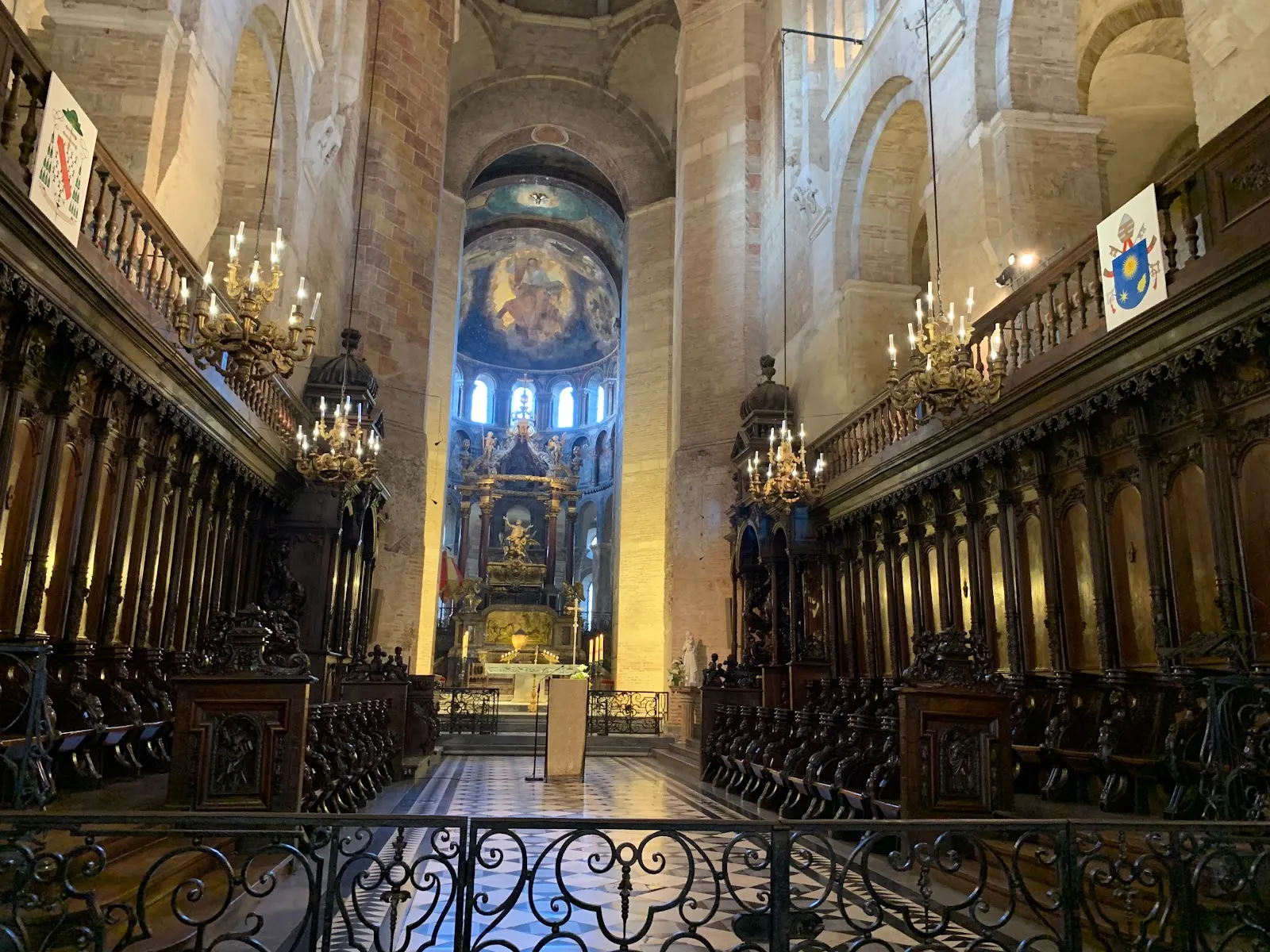
The apse ceiling is decorated with gilded frescoes from the 19th century. Tapestries hang from the pillars along the nave, and busts of saints line the sides of the church. The 19th-century organ is considered one of the most important in France.
Recent restoration has recovered the bell tower and the 12th-century mural paintings. Information boards are placed in several parts of the church, so you can read about its purpose and construction as you walk.
How a visit works
Entry is free. You can light a candle, and a shop sells jewellery, postcards and other items. The crypt is open to visitors, and you can walk the whole outside of the building.
The basilica is a working church as well as a historic site. Speak quietly, dress with respect, and check for religious ceremonies if you want a fuller experience. The entrance and the parking area are both wheelchair accessible.
FAQ
Is there an entry fee?
The entrance is free. Visitors can light a candle, and a shop sells jewellery, postcards and other items.
Is the basilica wheelchair accessible?
Yes. The entrance and the parking area are both wheelchair accessible.
Should I book tickets in advance?
Booking tickets in advance is recommended.
Can I see the crypt?
Yes. The crypt holds a large number of relics and is worth visiting as part of the trip.