Le Pont d'Arc is a natural limestone arch over the Ardèche River, about 5 km from Vallon-Pont-d'Arc, where the Ardèche Gorges begin. The river cut through the rock over a very long time, and the arch is now the emblem of the region. Small pebble beaches lie beneath and beside it, with shaded paths along the water, and kayaks pass under the span. It is free to visit. The site is calmest in the morning, before the swimmers and boats arrive around 11am.
How the river made the arch
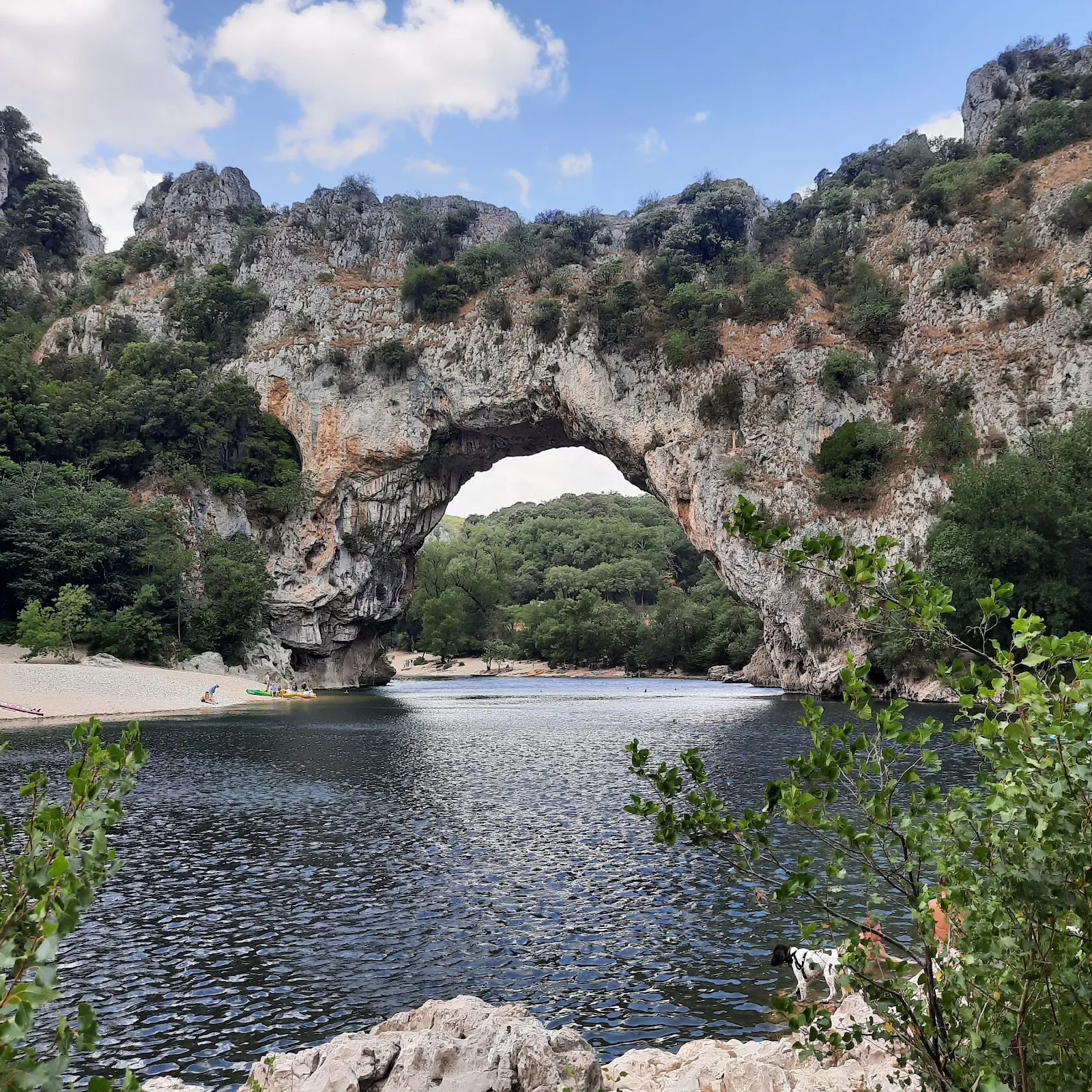
The Pont d'Arc was cut by the Ardèche itself. The river wound through the limestone in a meander, and over a very long time it broke through the rock and opened the arch. Before that happened, the Ardèche ran around the side of the rock, along the Combe d'Arc, where the road now runs.
The same process worked underground and left the base of many of the caves in the Ardèche Gorges. Geologists call this kind of formation rare but not unique, in France or elsewhere. The arch sits at the entrance to the gorges and is the point where many visitors begin to explore them.
Swimming, picnics and paddling
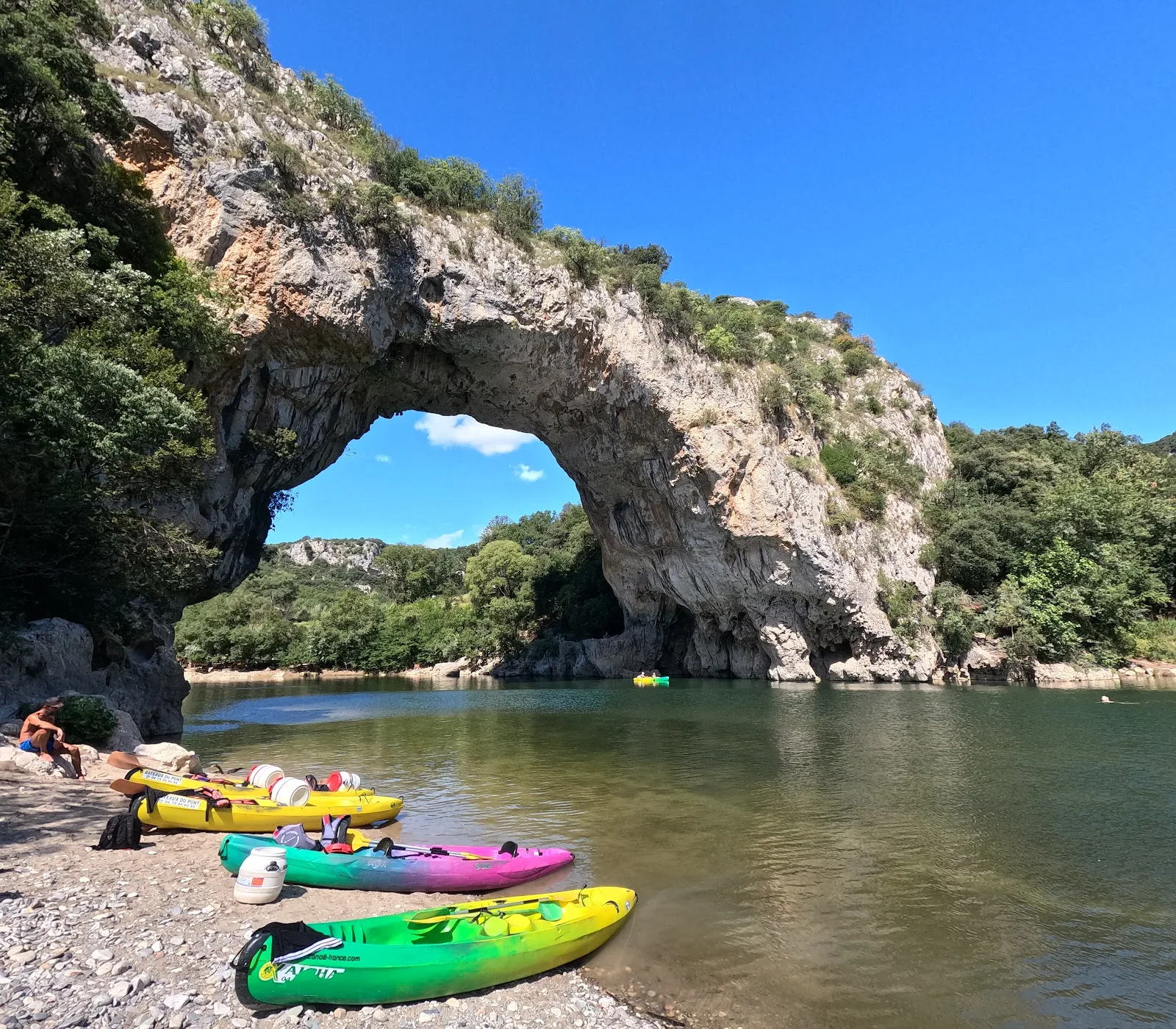
Several small beaches lie under the arch, and they are the usual meeting place for people who want to swim in the Ardèche. The pebble beach is kept clean, and the river water is cool. Shaded trees along the walking paths make a picnic easy, and the arch itself casts a little shade on hot summer days.
The river is calm at this point, which suits kayaking, canoeing and paddleboarding for beginners. Canoe descents on the Ardèche run from about 8 km for the shortest to 36 km for the longest, and the longer ones cover the whole 30 km canyon and pass the Pont d'Arc. Boats and swimmers fill the water by late morning, so the quiet hours are the best time to look at the arch itself.
Chauvet cave and the area nearby
The Pont d'Arc stands in a protected natural area. Close by is the cave known as Grotte Chauvet-Pont d'Arc, which holds well-preserved prehistoric drawings of human figures and animals. It was inscribed on the World Heritage list in 2014. The original cave is closed to the public. A replica, Chauvet II, is open a few kilometres to the south-east.
The village of Vallon-Pont-d'Arc is the main base for visitors and has many providers of water sports and other activities. The medieval village of Saint-Montan, with its 12th-century origins, is a short drive away through dry scrubland.
FAQ
Is there an entry fee for the Pont d'Arc?
No. Visiting the arch and its beach is free. Parking, boat hire and other activities are paid separately.
Can you swim at the Pont d'Arc?
Yes. Small pebble beaches lie beneath the arch, and the river is used for swimming. The water is cool, so expect a fresh start.
When is the best time to visit?
Early morning, before about 11am. The place gets busy around noon with swimmers, kayaks and pedal boats. July and August are the most crowded months.
How far is the Pont d'Arc from Vallon-Pont-d'Arc?
About 5 km. The arch sits at the entrance to the Ardèche Gorges.
Where do you park for the Pont d'Arc?
There are paid car parks and both free and paid street parking. The P3 car park is about a 15-minute walk from the arch and passes the viewpoint. Spaces fill early at peak times.