
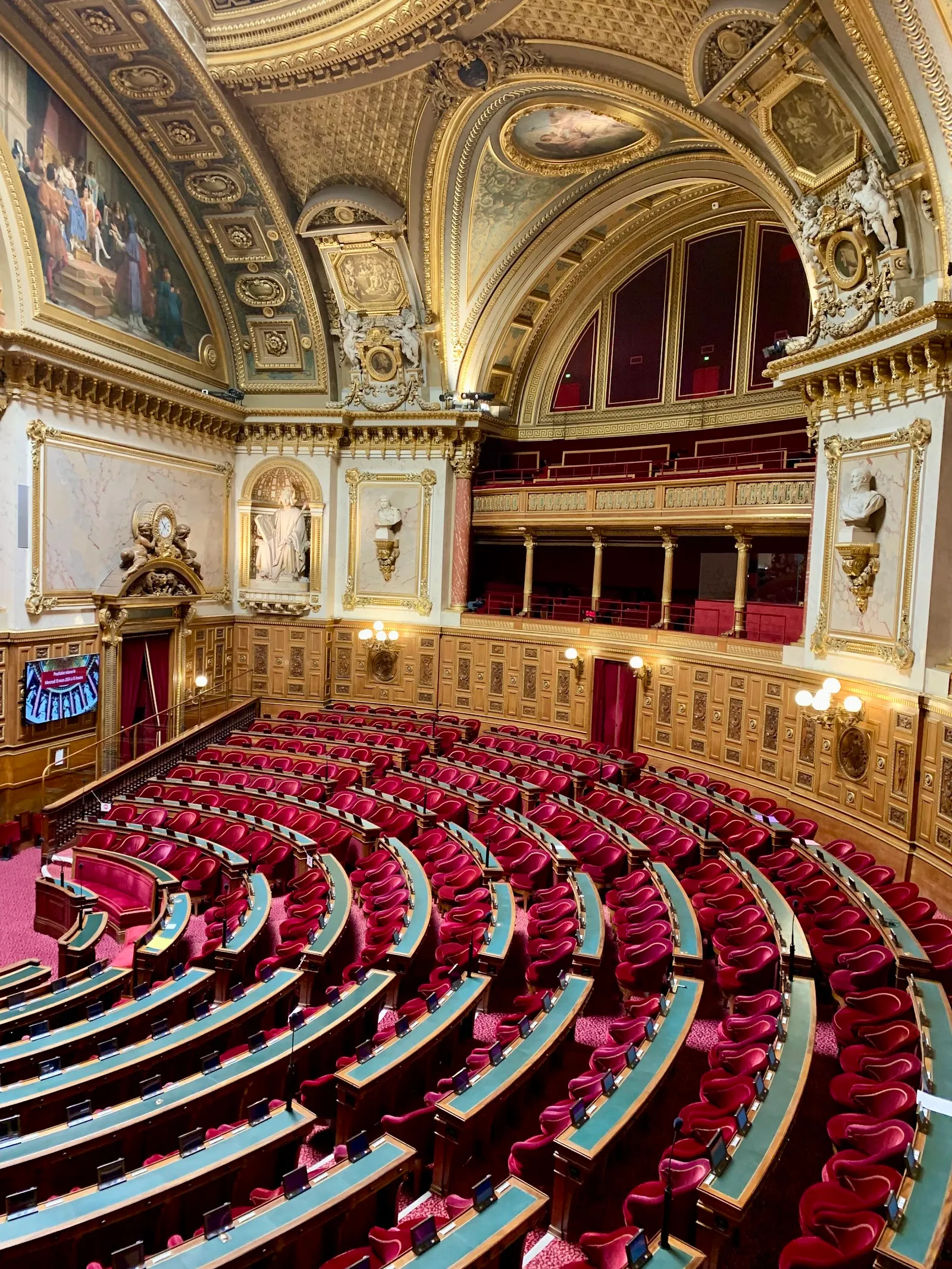
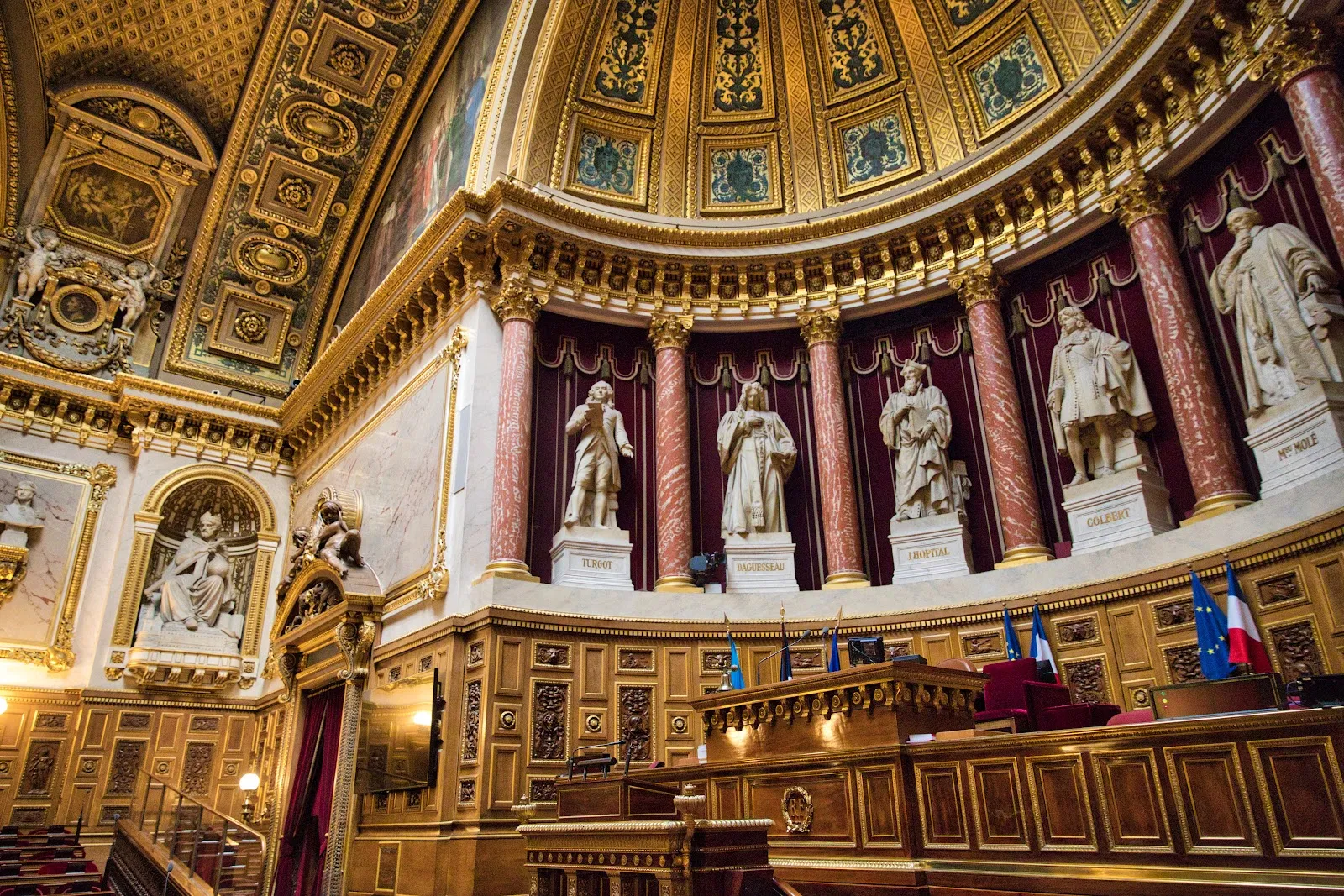
Luxembourg Palace stands in the Jardin du Luxembourg in Paris’s 6th arrondissement, between Saint-Germain-des-Prés and the Latin Quarter. Built for Marie de’ Medici in the 17th century, it is now the seat of the French Senate. Admire its classical façade, then walk the garden paths past fountains, flowerbeds and statues. The palace has served as a royal residence and a prison during the French Revolution. Interior visits are possible on special occasions; the gardens are the more accessible way to explore the grounds.
A palace built for Marie de’ Medici
Marie de’ Medici commissioned the palace in 1615, after the death of her husband, King Henry IV. Architect Salomon de Brosse designed it for the queen, who wanted a residence in Paris. Its design drew on the Pitti Palace in Florence, the city where Marie de’ Medici grew up, and combines French and Italian influences.
The building later took on very different roles. It served as a royal residence and, during the French Revolution, as a prison. It was also used as a royal art gallery before the collection moved to the Louvre. In the early 19th century, the palace became a legislative building. Today it is the seat of the French Senate.
The gardens and Medici Fountain
The Jardin du Luxembourg surrounds the palace and is known for its formal paths, fountains and sculptures. Tree-lined promenades run alongside flowerbeds, including rose and orchid plantings, as well as orange trees and orchards of pear and apple. More than 100 statues stand across the grounds, including figures of notable French people.
The Medici Fountain is a grotto-style landmark and a quiet place to pause in the garden. Another fountain is guarded by two lions. The grounds also include a large pond where visitors sail toy boats. The garden’s paths and lawns offer space to stroll or settle in for a picnic.
Planning a visit
The palace is at 15 Rue de Vaugirard in the 6th arrondissement, between Saint-Germain-des-Prés and the Latin Quarter. The gardens are the main part of the grounds to explore on a regular visit. Special events, including the Journées du Patrimoine, can provide an opportunity to see inside the palace; check for such events if the Senate building is your priority.
In spring and summer, the flowerbeds are in bloom. For a relaxed stop, bring food for a picnic or follow the garden paths at an unhurried pace. The setting is also associated with Victor Hugo’s Les Misérables, whose characters Marius and Cosette meet in the gardens.
FAQ
Can you go inside Luxembourg Palace?
Interior visits are available on special occasions, including events such as the Journées du Patrimoine. The palace is the seat of the French Senate.
What can you see in the Jardin du Luxembourg?
The gardens have tree-lined paths, flowerbeds, more than 100 statues, fountains and a pond where visitors sail toy boats. The Medici Fountain is one of the garden’s landmarks.
When is a good time to visit Luxembourg Palace and its gardens?
Spring and summer are good times to see the flowers in bloom.


