On College Green in central Bristol, this cathedral began as St Augustine’s Abbey, founded in 1140 and consecrated in 1148. Its defining feature is the hall-church design: the nave, aisles and choir reach the same height, creating an unusually open interior. Look up to the vaulted ceilings, then take time with the stained glass, stone screens, chapels and memorials. Entry is free, and the peaceful interior makes a worthwhile pause between city sights. There is also a garden outside, with a café inside the cathedral.
From abbey to cathedral
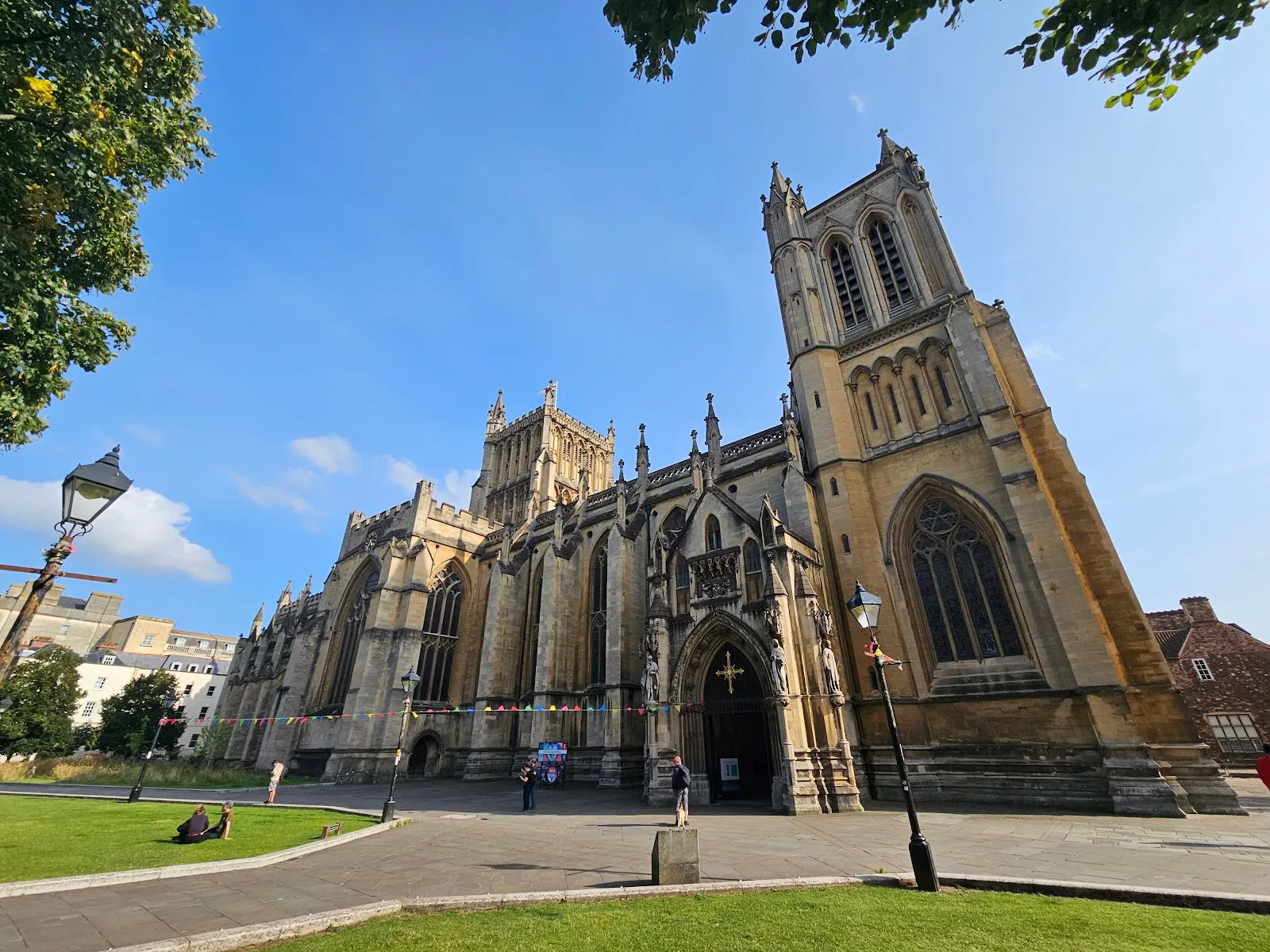
The site’s recorded history reaches back to 1140, when Robert Fitzharding founded St Augustine’s Abbey. The abbey church was consecrated in 1148. After the monasteries were dissolved in the 16th century, the building became Bristol’s cathedral in 1542.
The structure changed over several centuries, so not every part belongs to the same period. The Chapter House and Abbey Gatehouse are among the medieval remains that can still be seen. Later additions and rebuilding shaped the building visitors enter today.
A hall church in the city centre
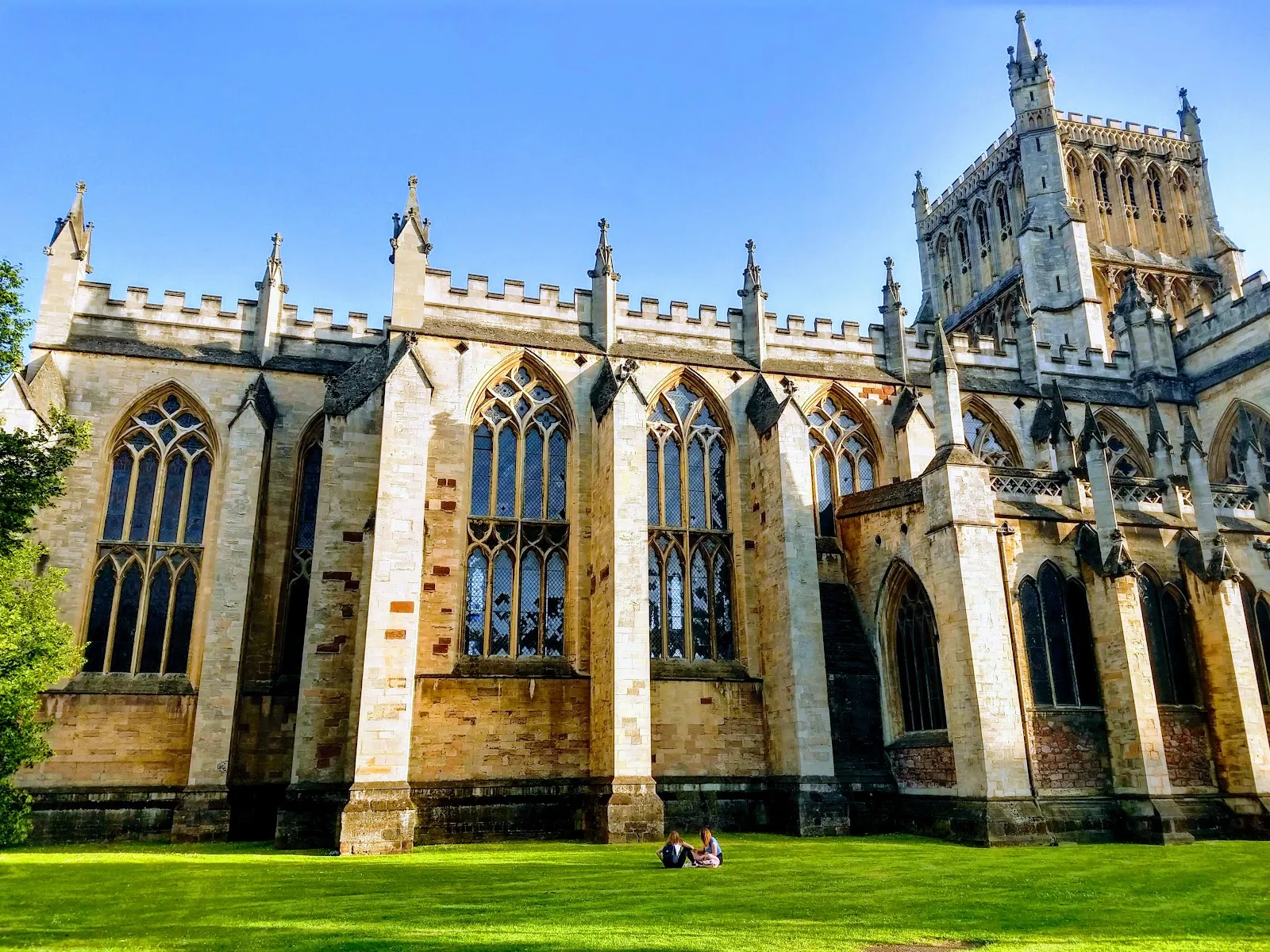
Bristol Cathedral is known for its hall-church plan. In the eastern part of the building, the aisles stand at the same height as the choir, unlike the stepped arrangement common in many English cathedrals. The level lines and vaulted ceilings give the interior a broad, open feel.
Take time to look across the stonework and screens, then notice how daylight falls through the stained-glass windows. Chapels, historic monuments and effigies reward a slower walk around the interior. The cathedral also has a historic organ. An exhibition about the instrument has been held alongside restoration work, with displays explaining its workings and history.
Planning a visit
The cathedral stands on College Green, at the end of Park Street in Bristol’s West End. Its setting makes it easy to combine an interior visit with time outside on the green. A garden is also located behind the cathedral, and a café serves simple snacks and lunches.
Entry is free, and guided tours are available. Special tower tours include 172 steps and give visitors a closer look at the building’s history. Check in advance whether a tour is running. Services can affect access to parts of the cathedral, so a weekday morning may suit visitors hoping to explore the interior. Photography is allowed outside services; a steady camera can help when photographing the stained glass.
FAQ
Is Bristol Cathedral free to visit?
Yes. Entry is free, and donations are welcome.
How long should I allow for Bristol Cathedral?
Allow about an hour to explore the interior and its historic features.
Can you climb the tower at Bristol Cathedral?
Special guided tower tours are available and involve 172 steps. Check with the cathedral about tour availability.
Can you take photos inside Bristol Cathedral?
Photography is permitted, except during services.