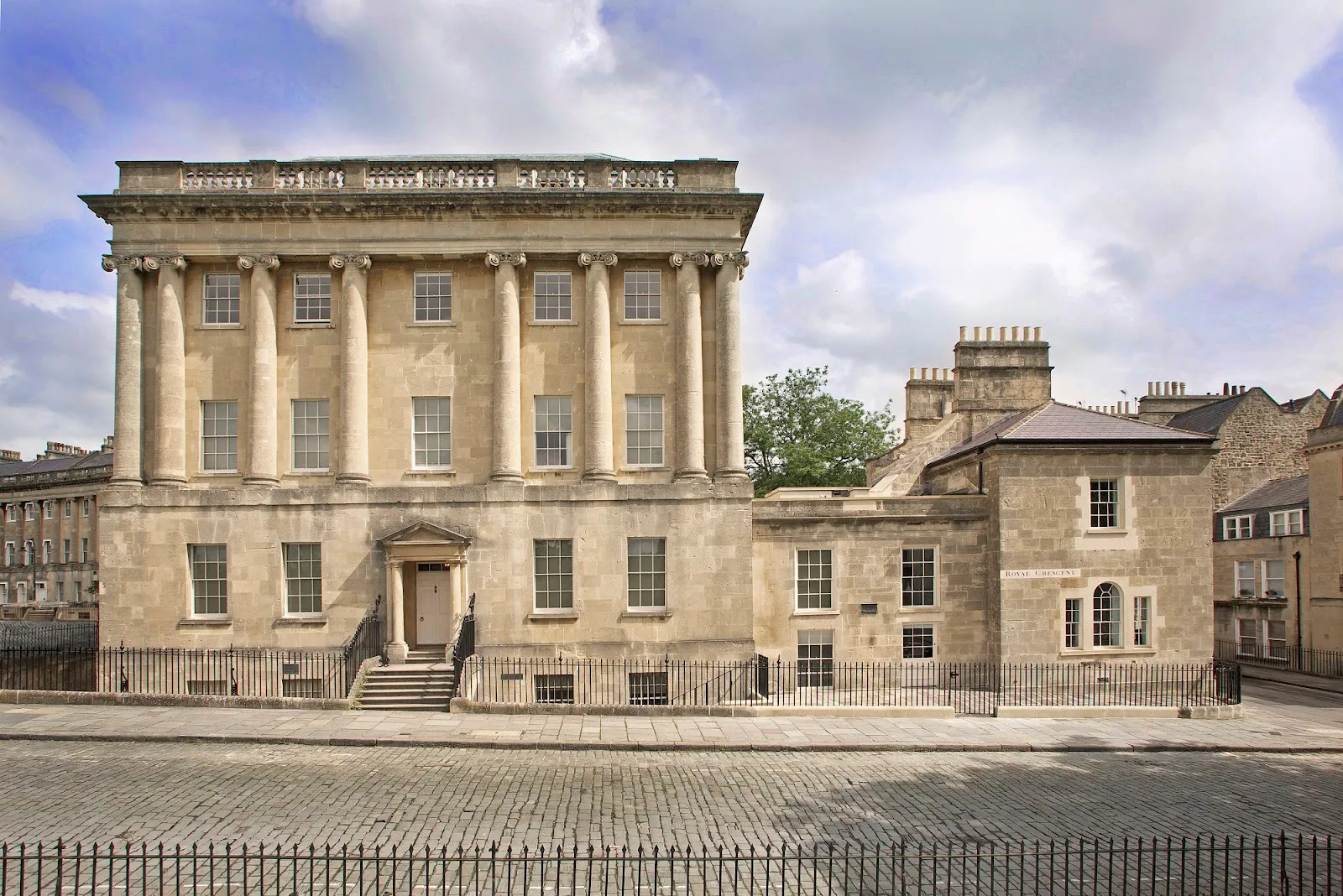
At the eastern end of Bath’s Royal Crescent, No. 1 is a Georgian townhouse turned museum, furnished to evoke life between 1776 and 1796. Its rooms trace the daily routines of a wealthy household and the servants who kept it running, with period objects, multimedia and stories to help you follow both sides of the house. Look for the drawing room, bedrooms and large kitchen, then take in the crescent from the upper rooms. The building’s Palladian exterior is a landmark in its own right.
The first house on the crescent
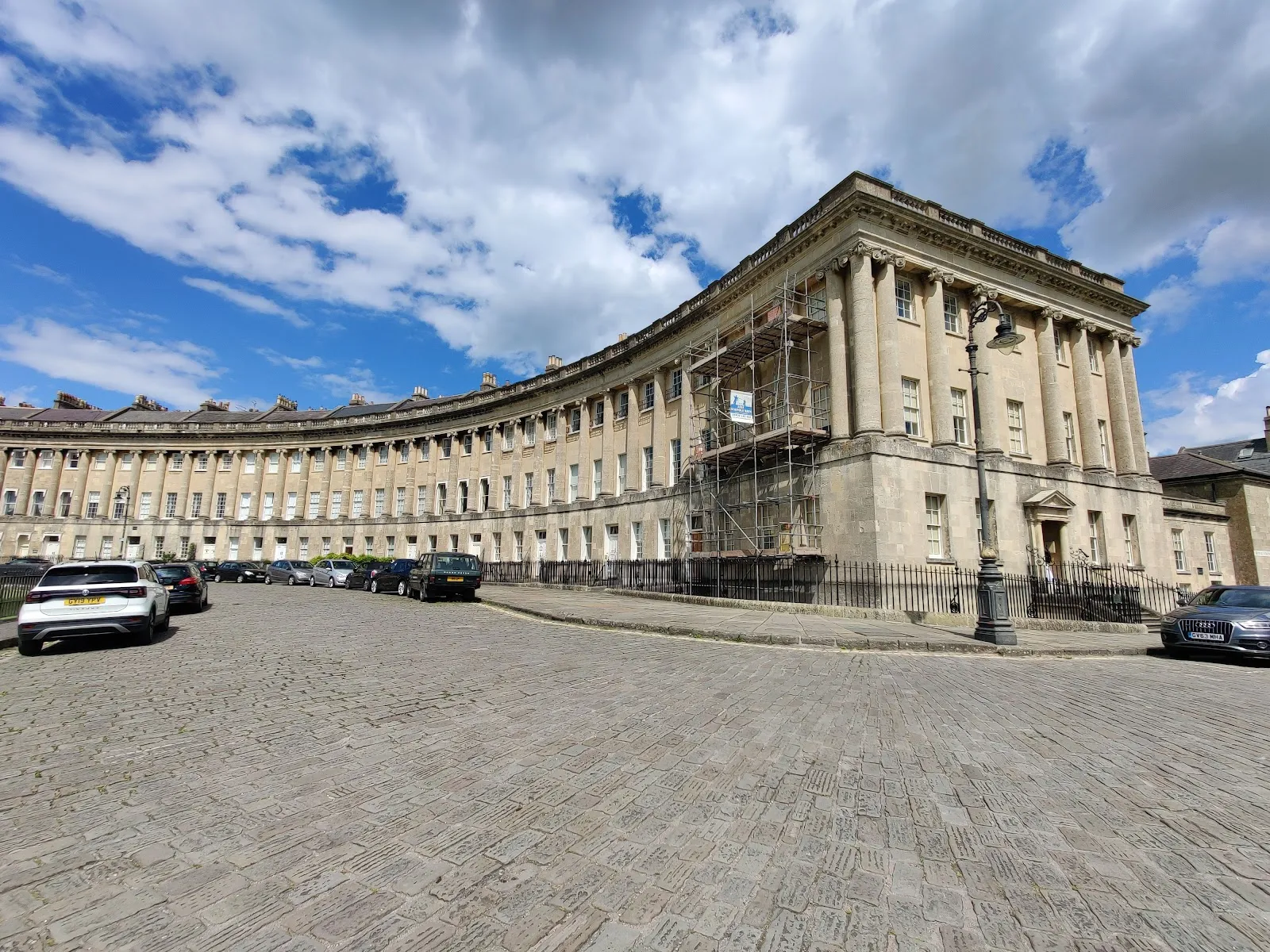
No. 1 occupies the eastern end of the Royal Crescent, where Brock Street meets the sweeping row of houses. It was the first house in the crescent to be built. John Wood the Younger designed the development, constructed between 1767 and 1774, as a sequence of homes for wealthy clients. The crescent’s Palladian architecture is visible from outside in its long curve and rows of columns; the museum gives you a chance to see how one of those grand façades worked as a home.
The house is presented as it might have appeared from 1776 to 1796, when Henry Sandford lived there. Its furnishings and household objects set out the style of domestic life among Bath’s affluent residents during the city’s fashionable season.
A household with an upstairs and downstairs
Move through rooms used for receiving guests and family life, including the drawing room, dining room and bedrooms. Period furniture, portraits and other objects help show how the rooms were arranged and used. The kitchen gives a different view of the work behind the household’s polished public rooms: it is a large space with a substantial hearth and roasting spit.
The museum also takes you into the servants’ quarters. These rooms make the contrast between the family’s lifestyle and the staff’s working lives part of the visit. Multimedia displays and a soundscape of imagined conversations connect objects in the house to the people who used them. One example is a fossilised mollusc, which prompts discussion of ideas about creation and evolution.
The wealth behind fashionable Georgian life
The house’s interpretation includes the wider systems that supported domestic comfort. A conversation about a rebellion in Jamaica links the household’s income to colonial products and slavery. Other stories address the labour of working people. These details place the objects and elegant rooms within the economic conditions of the period, rather than treating the house as a display of decoration alone.
The house also connects with Bath’s Regency-era associations. Jane Austen’s lifetime overlapped with the period represented here, and the rooms offer context for the society and domestic routines of the era. No. 1’s exterior and entrance hall have also appeared as the Featherington family home in Bridgerton.
Making the visit accessible to children
Children can explore the rooms with activities designed to encourage close observation. A learning backpack provides equipment for looking, listening, measuring and smelling; a history activity pack has also been described as including a magnifying glass and worksheet. In the scullery, children can dress up in period clothing. These hands-on elements give younger visitors ways to engage with the house beyond reading room information.
The visit is self-guided, with a digital audio guide included in the ticket. The house has a wheelchair-accessible entrance and restroom, as well as an assistive hearing loop. The gift shop sells locally themed books and souvenirs, including illustrated books, puzzles and children’s gifts. You can visit the shop without entering the museum.
FAQ
How long does a visit to No. 1 Royal Crescent take?
Allow around 60 to 90 minutes to explore the rooms and servants’ quarters.
What can you see inside No. 1 Royal Crescent?
The museum has period-furnished reception rooms, bedrooms, a large kitchen and servants’ quarters, along with household objects and multimedia interpretation.
Is No. 1 Royal Crescent suitable for children?
Yes. Children can use learning activities and a backpack with hands-on equipment, and dress up in period clothing in the scullery.
Is the house wheelchair accessible?
The entrance and restroom are wheelchair accessible. An assistive hearing loop is also available.