The Roman Baths sit beneath the streets at Abbey Churchyard in central Bath, around the hot springs that gave the city its name. Explore the Great Bath, the Sacred Spring and the remains of the temple to Sulis Minerva, then visit the museum displays of Roman objects and models. A handheld audio guide, with versions for adults and children, explains the site as you go at your own pace. The Great Bath is a highlight: its ancient stonework, statues and rising steam make the scale of the complex easy to picture.
Built around the hot spring
The Roman Baths occupy the site of a natural hot spring in the centre of Bath. The Romans built a temple and bathing complex here in the first century AD, and the settlement became known as Aquae Sulis, a name linking the waters with the goddess Sulis. The spring still feeds the site with hot water.
Bathing and worship were closely connected here. The remains include the Sacred Spring, the Roman Temple and the bathhouse, giving the visit a broader story than the pools alone. The complex sits below modern street level, with later buildings around its edges.
The Great Bath and the temple
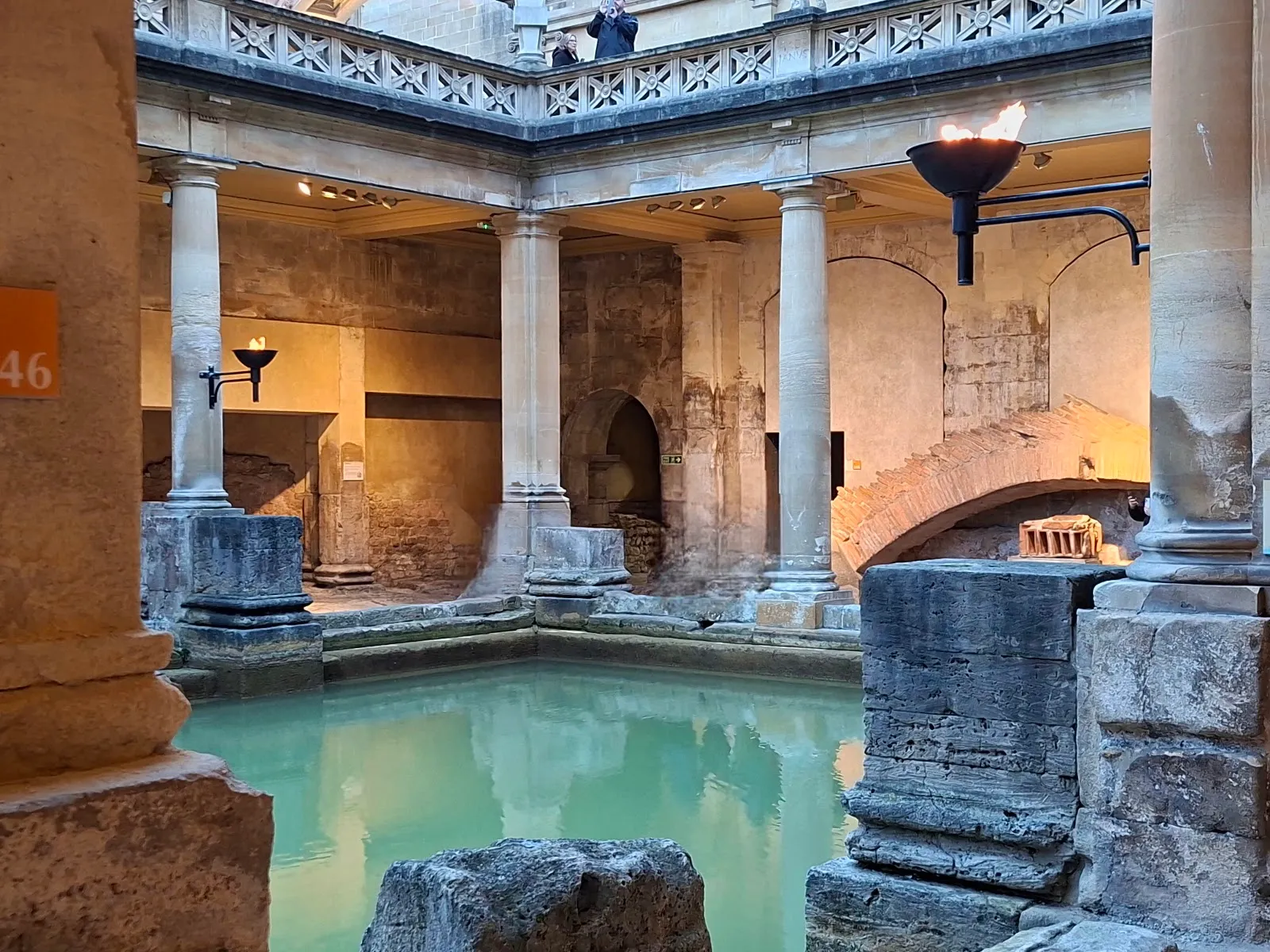
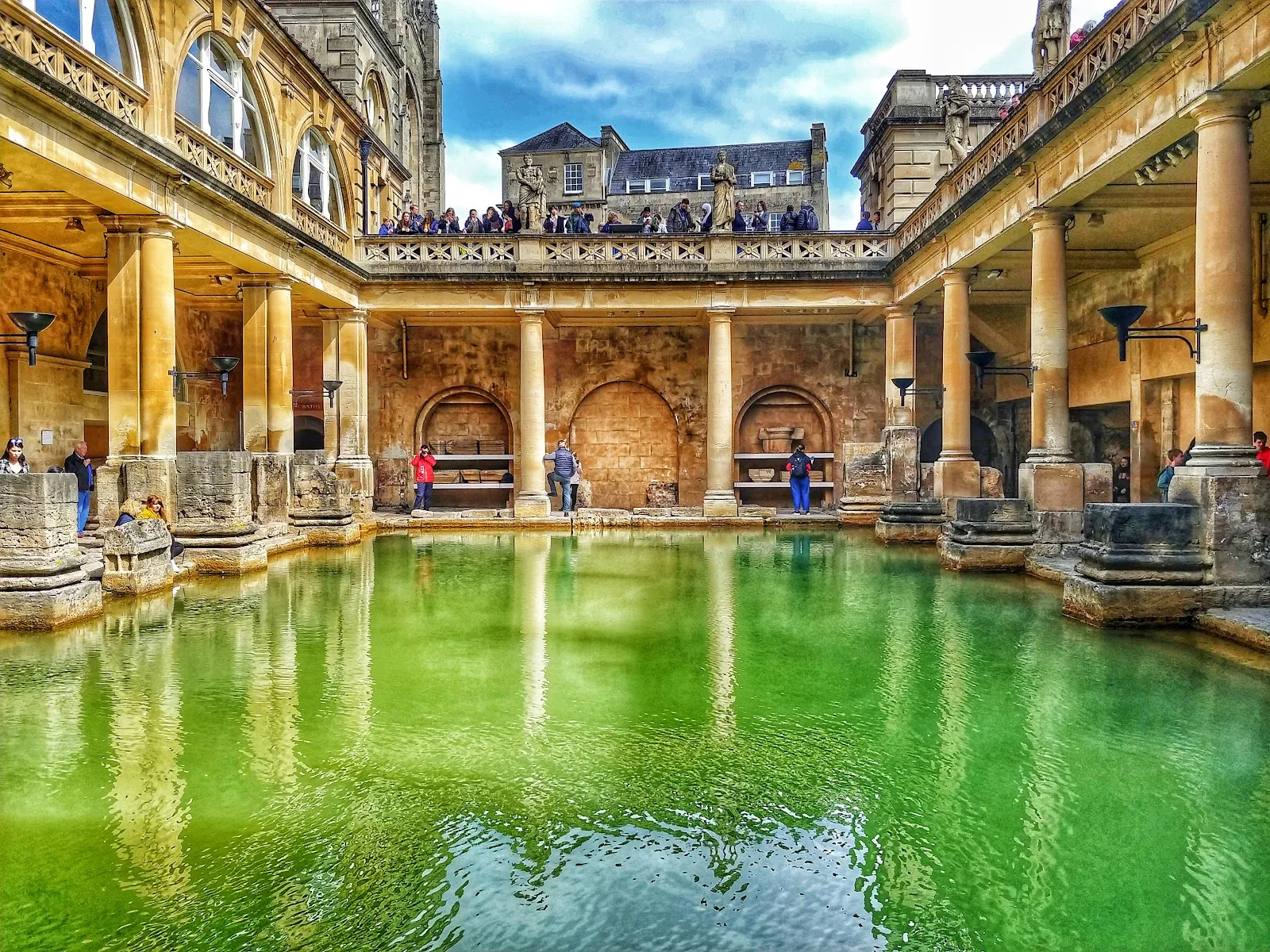
The Great Bath is the central scene: a large open pool enclosed by stonework and a terrace lined with statues. Steam rises from the water, and original Roman paving survives around the bathing area. The statues overlooking the pool were added in the Victorian period, so the setting brings together remains from different eras.
Look beyond the main pool for the Sacred Spring and the remains of the temple dedicated to Sulis Minerva. The site also contains evidence of the baths’ heating and water systems, including a hypocaust, the underfloor heating used in Roman buildings, and areas associated with hot and cold bathing.
Museum displays and exploring the site
The museum brings together objects found during excavations, including coins, jewellery and a bronze head of Sulis Minerva. Models and visual reconstructions help explain how the complex once looked and how people used it. Displays also cover Roman life and the history of the spring.
A handheld audio guide uses numbered stops around the site, so you can move through the different areas in your own order. It includes extra points for visitors who want more detail, alongside versions made for adults and children. Some exhibits use screens and reconstructions to show people and activity within the ancient complex.
Plan a visit
The entrance is at Abbey Churchyard, close to Bath Abbey and the city centre. The route takes in the bathing complex and museum spaces; plan around 90 minutes if you want to listen to most of the audio commentary.
The site can become busy, so booking ahead and choosing an earlier or later visit can help you avoid the busiest periods. The spring water is part of the historic site, not a bathing pool. The adjacent Pump Room is a separate place to stop for tea, coffee or a snack.
FAQ
How long do you need at the Roman Baths?
Allow about 90 minutes if you plan to listen to most of the audio guide and explore the museum displays.
Can you bathe in the Roman Baths?
No. The historic pools are not for bathing.
Is there an audio guide?
Yes. A handheld guide has numbered stops and versions for adults and children.
Should I book Roman Baths tickets in advance?
Advance booking is recommended because the entrance can get busy.