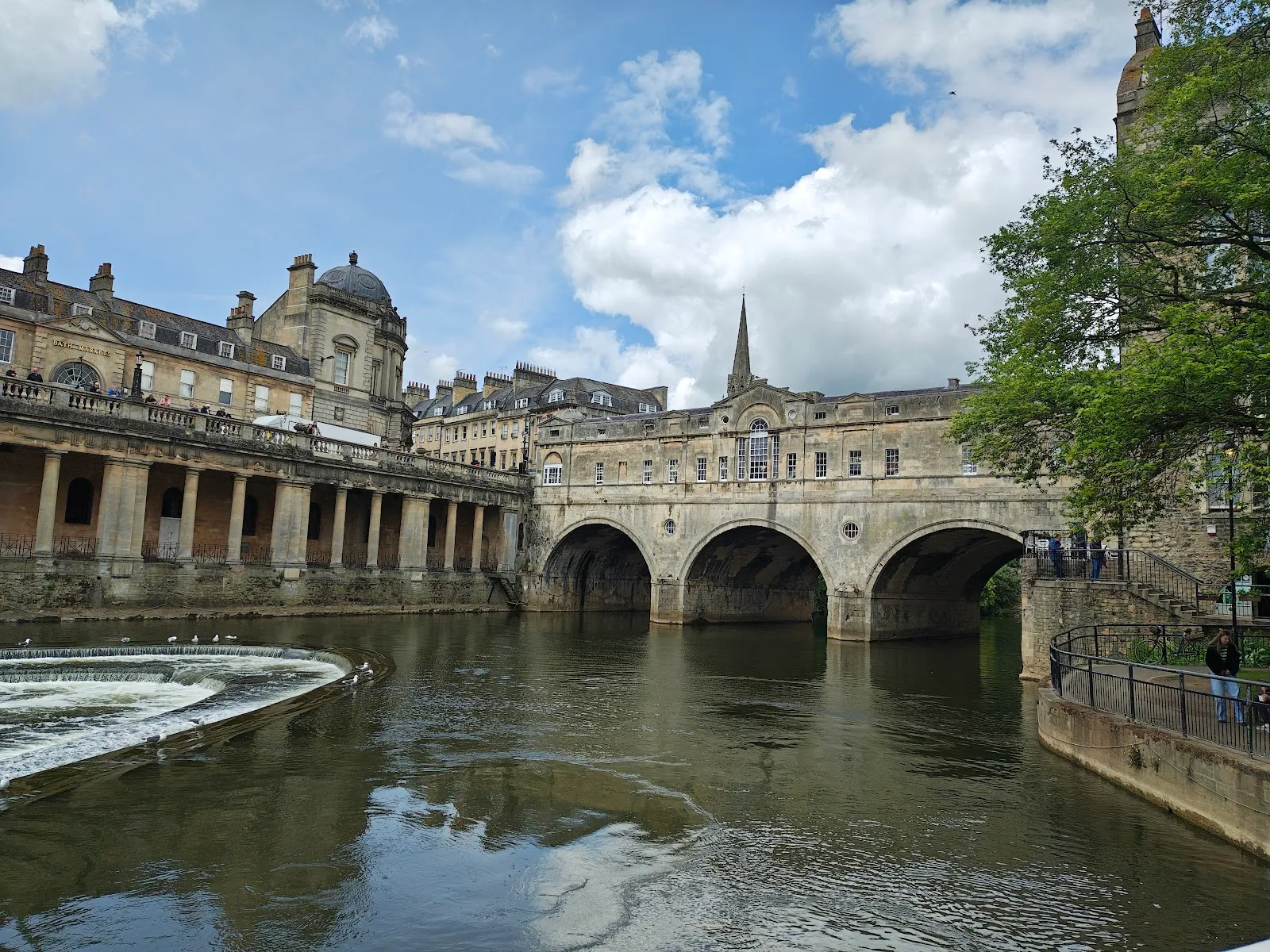
Pulteney Bridge crosses the River Avon in central Bath, linking the city with Bathwick. Designed by Robert Adam in the Palladian style and completed in 1774, it is known for shops built into both sides of its full span, giving the crossing the feel of a narrow shopping street. Look down to the curved weir below, then step back to the riverbank or Parade Gardens for a broader view of the bridge and Bath’s Georgian buildings. Small shops and cafés line the crossing.
A bridge designed for a growing Bath
Pulteney Bridge was designed by Scottish architect Robert Adam for William Johnstone Pulteney, whose family owned land across the River Avon. William planned to develop that land as a new part of Bath, and the bridge provided a direct link from the established city to Bathwick. The larger development plan was not completed, but the bridge remains a lasting connection between the two sides of the river.
Construction began in 1769, and the bridge was completed in 1774. Its Palladian design suited the Georgian architecture of Bath. The name comes from Frances Pulteney, William’s wife. Adam’s design was inspired by the Ponte Vecchio in Florence, and the unusual arrangement of shops along both sides makes this bridge one of only a few of its kind in the world.
Look closely at the shopfronts
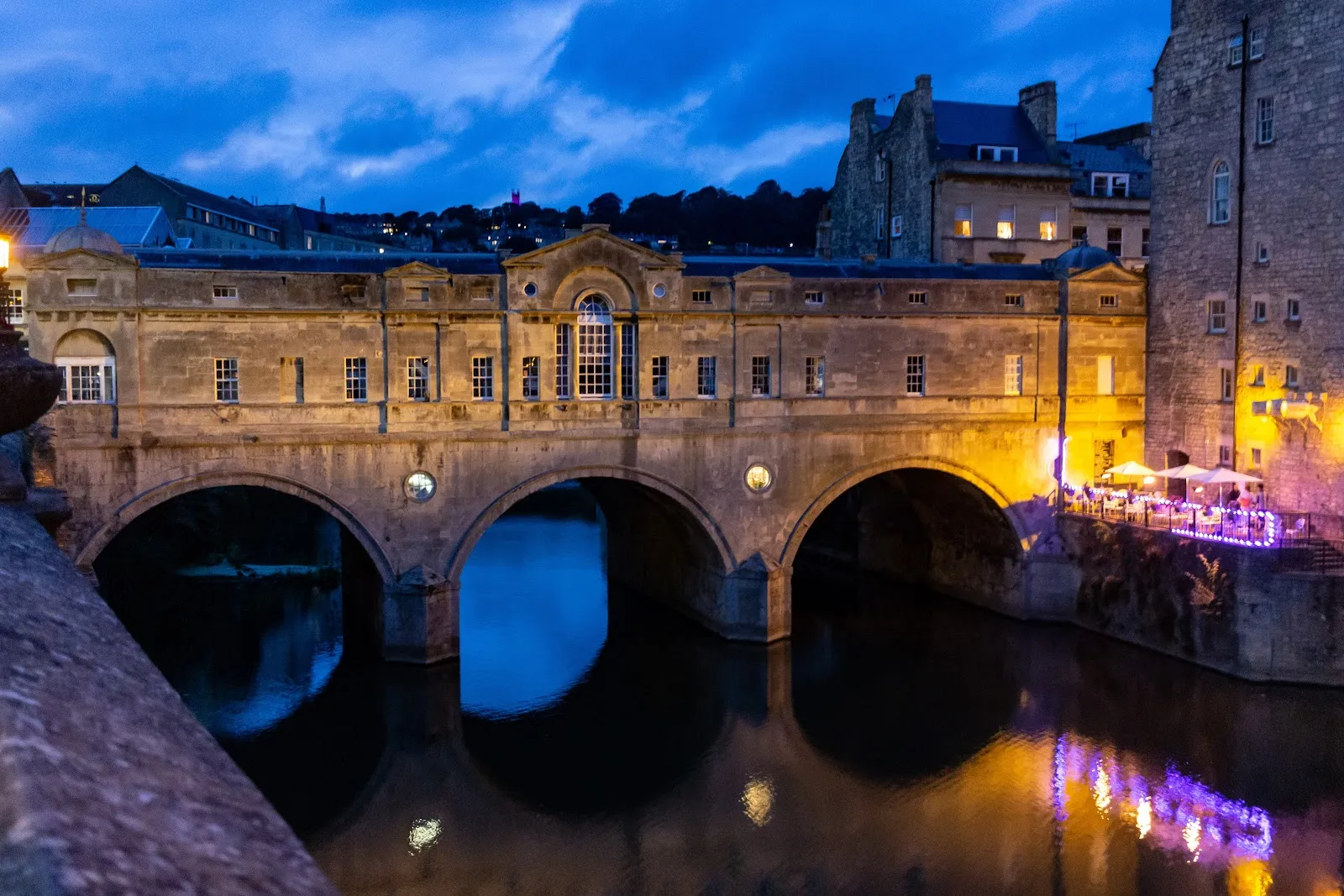
Crossing Pulteney Bridge feels more like walking along a compact shopping street than crossing open water. The shops are built into the bridge itself, with small premises on either side of the route. Browse as you go, or pause at a café for a drink with a view of the river. The shops have changed over time, and later alterations are visible in the different façades and extensions.
The bridge’s appearance shifts depending on which side you see. Its front has a balanced, orderly look associated with Georgian design. From the rear, later additions make the shopfronts appear less regular. Taking a moment to compare both sides gives a clearer sense of how the structure has been adapted over the years.
Views of the River Avon and weir
The curved weir beneath the bridge is a key part of the riverside scene. Water flows over its stepped stone form, creating a striking contrast with the arches above. From the bridge, look down at the river and weir; for a view that takes in more of the structure, step away to the riverbanks or Parade Gardens.
The bridge and weir are among Bath’s most photographed scenes. Early morning brings fewer people to the crossing, while sunset can cast warm light on the surrounding buildings. In autumn, falling leaves add colour around the waterways. The views change with the season and the angle, so it can be worth seeing the bridge both from the crossing and from the water’s edge.
A useful stop while exploring Bath
Pulteney Bridge sits close to the city centre’s other historic sights and shopping streets, making it straightforward to include in a walk around Bath. Cross to Bathwick, browse the shops, then return to the riverbank for a view of the bridge from outside. Nearby river walks offer another way to enjoy the Avon after leaving the crossing.
The bridge remains part of the city’s everyday route as well as a notable piece of Georgian architecture. It is open around the clock, but the crossing can get busy with people stopping to take photographs and look into the shops. If you want more space to see the details, choose a quieter time and take your photographs from the riverbank.
FAQ
Where is Pulteney Bridge?
It crosses the River Avon in central Bath and connects the city with Bathwick.
What is unusual about Pulteney Bridge?
Shops are built along both sides of its full span, making the crossing feel like a narrow shopping street.
Who designed Pulteney Bridge, and when was it completed?
Architect Robert Adam designed it. Construction began in 1769, and the bridge was completed in 1774.
Where can you get a view of Pulteney Bridge and the weir?
You can see the weir from the bridge itself, or get a broader view from the riverbanks and Parade Gardens.