Planifier un voyage
Langue: Français
Planificateur de voyagePlanifiez votre voyage sur une carte

Destinations incontournables

EnglishDeutschFrançaisEspañolPortuguêsPortuguês (BR)Italiano
Avis aux voyageurs · ÉquateurGuayaquil se trouve dans ou près d'une zone où les gouvernements déconseillent tout voyage sauf essentiel : El Fortín, Flor de Bastión, Ville de Guayaquil, Guayaquil au sud de l'avenue Portete de Tarquí, Province du Guayas, Monte Sinaï, Nueva Prosperina, Paraíso de la Flor, Pascuales.Les conseils dépendent de votre passeport. Consultez ceux de votre propre gouvernement avant de réserver.Conseils officiels
Zones signalées
  • Bande de 20 km le long de la frontière colombienne · éviter tout voyage · Canada, Espagne, France, Italie, Nouvelle-Zélande, Royaume-Uni
  • Durán · éviter tout voyage · Canada, Allemagne, Espagne, Nouvelle-Zélande, États-Unis
  • Ville d'Esmeraldas et le nord · éviter tout voyage · Allemagne, États-Unis
  • El Fortín · éviter les voyages non essentiels · Canada, Nouvelle-Zélande
  • Province d'El Oro · éviter les voyages non essentiels · Espagne, France, Royaume-Uni
  • Province d'Esmeraldas · éviter les voyages non essentiels · Canada, Espagne, France, Italie, Nouvelle-Zélande, Royaume-Uni
  • Flor de Bastión · éviter les voyages non essentiels · Canada, Nouvelle-Zélande
  • Ville de Guayaquil · éviter les voyages non essentiels · France, Nouvelle-Zélande
  • Guayaquil au sud de l'avenue Portete de Tarquí · éviter les voyages non essentiels · Allemagne, États-Unis
  • Province du Guayas · éviter les voyages non essentiels · Espagne, France, Royaume-Uni
  • Huaquillas et Arenillas · éviter les voyages non essentiels · Canada, États-Unis
  • province de Los Ríos · éviter les voyages non essentiels · Espagne, France, Royaume-Uni
  • province de Manabí · éviter les voyages non essentiels · Espagne, France, Royaume-Uni
  • Monte Sinaï · éviter les voyages non essentiels · Canada, Nouvelle-Zélande
  • Nueva Prosperina · éviter les voyages non essentiels · Canada, États-Unis
  • Paraíso de la Flor · éviter les voyages non essentiels · Canada, Nouvelle-Zélande
  • Pascuales · éviter les voyages non essentiels · Canada, États-Unis
  • Quevedo · éviter les voyages non essentiels · Canada, États-Unis
  • province de Santa Elena · éviter les voyages non essentiels · Espagne, France, Royaume-Uni
  • province de Santo Domingo de los Tsáchilas · éviter les voyages non essentiels · Espagne, France, Royaume-Uni
  • province de Sucumbíos · éviter les voyages non essentiels · Espagne, Nouvelle-Zélande

Également signalé par un seul gouvernement : Chinchipe (Canada), Ciudad de Dios (Nouvelle-Zélande), El Pangui (Canada), Entrada de la 8 (Nouvelle-Zélande), Nangaritza (Canada), Pueblo Viejo (États-Unis), Quinsaloma (États-Unis), Socio Vivienda (Nouvelle-Zélande), Yantzaza (Canada), Babahoyo (Canada), Bastión Popular (Canada), Esteros (Canada), La Florida (Canada), Las Orquídeas (Canada), Machala (Canada), Milagro (Canada), Monte Bello (Canada), Mucho Lote (Canada), Nueva Loja (Lago Agrio) (France), province d'Orellana (Espagne), Portete (Canada), sud et ouest de Guayaquil (Espagne), Sur (Canada)

GouvernementConseilsMis à jourLire les conseils
Royaume-Uni (FCDO)No advice against the whole country (regional advisories)–Lire les conseils
États-Unis (State Dept)Exercise increased caution (regional advisories)18 août 2026Lire les conseils
Canada (Affaires mondiales)Exercise a high degree of caution (regional advisories)–Lire les conseils
Allemagne (Auswärtiges Amt)No advice against the whole country (regional advisories)13 oct. 2026Lire les conseils
Nouvelle-Zélande (SafeTravel)Exercise increased caution (regional advisories)–Lire les conseils
France (ministère de l'Europe et des Affaires étrangères)Zone de vigilance renforcée (reste du pays) (regional advisories)–Lire les conseils

Vérifié quotidiennement d'après les conseils publiés par les gouvernements ; dernière vérification le 2 nov. 2026.RoamLedger résume les conseils officiels ; il ne s'agit pas de conseils émanant d'un gouvernement.

aerial view of city buildings during daytime
Parc

Malecón del Salado

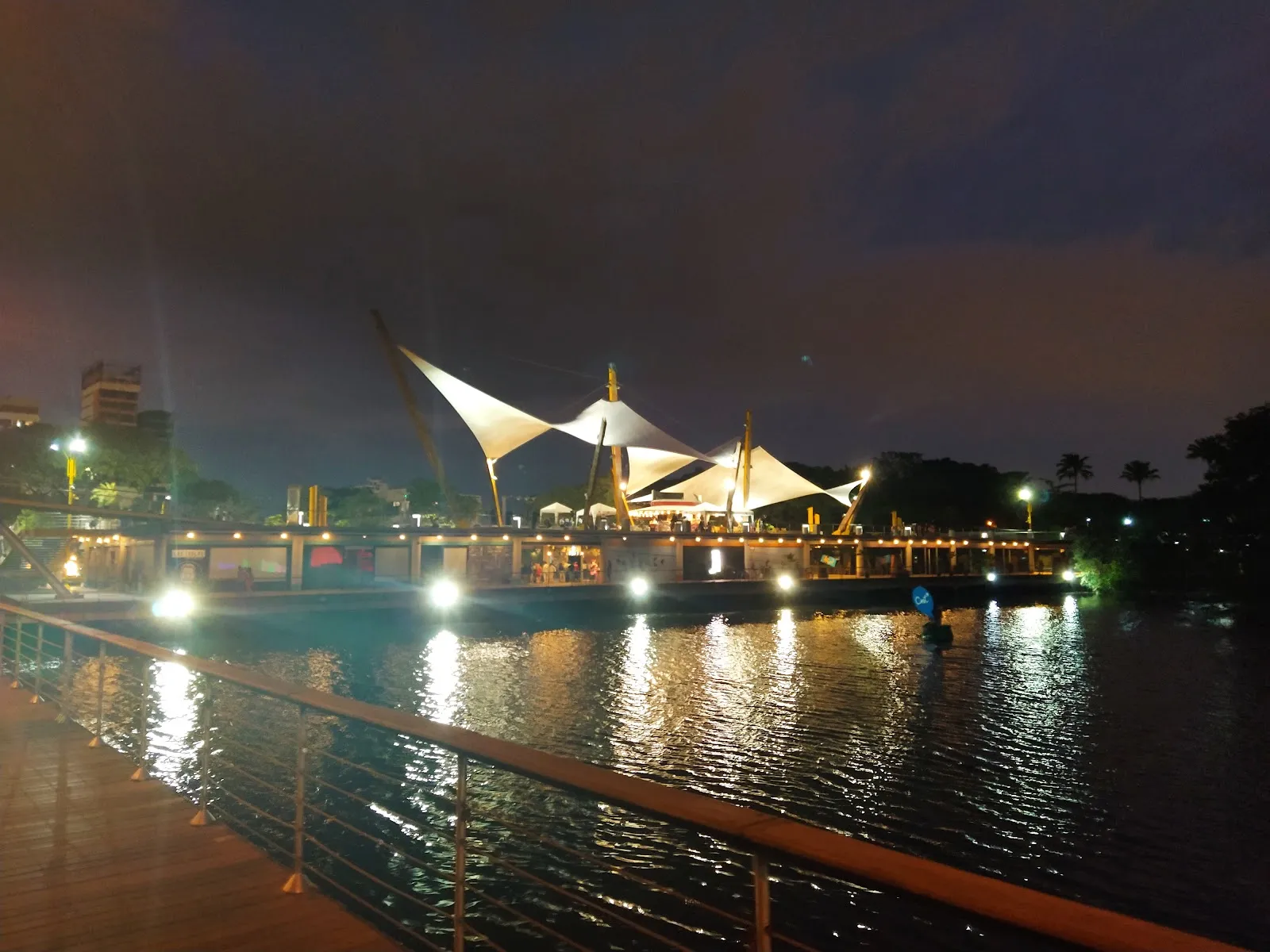
Malecón del Salado is a waterfront promenade along the Estero Salado, an estuary on the western side of Guayaquil, Ecuador.

Malecón del Salado is a waterfront promenade along the Estero Salado, an estuary on the western side of Guayaquil, Ecuador. It is a quieter alternative to the larger Malecón 2000. The walk passes shaded paths, small plazas, benches and art installations, with pedestrian bridges over the water. Families use the playgrounds, and many people come for an evening stroll and the sunset over the estuary. Seafood restaurants, bars and music venues line the route, so you can end the walk with a meal.

From a former resort to a public promenade
Malecón del Salado
Malecón del Salado

The Malecón del Salado runs along the Estero Salado, an arm of the sea on the western side of downtown Guayaquil. The promenade was built in 2009 as part of the city's urban regeneration, on the site of a former seaside resort. It takes its name from the estuary it straddles, which is a tributary of the Guayas river.

The project turned an old waterfront into a planned public walkway. The result is a space designed for walking, sitting and spending time outdoors rather than a stretch of leftover riverbank.

Along the promenade
Malecón del Salado
Malecón del Salado

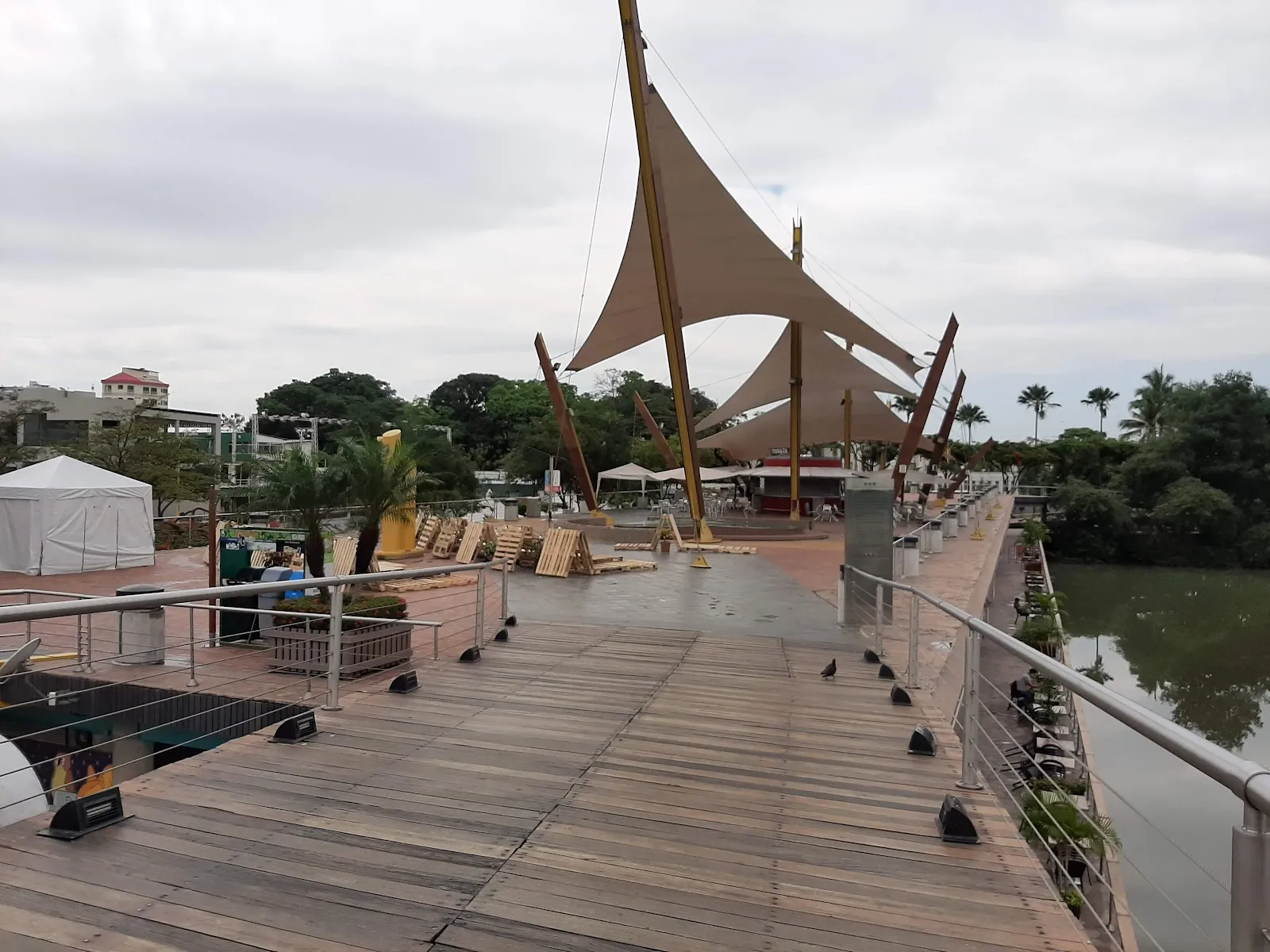
The walkway is a little under 400 meters long. It rises and dips over pedestrian bridges, so the route feels more like a stroll than a flat path. Small plazas, benches and green patches break it up at regular intervals.

Art installations appear along the boardwalk, and the shaded stretches keep the path cool even on hot afternoons. Cycling lanes run through the area, and the site has a basketball court, a volleyball court and a tennis court.

Wildlife and views from the viewpoint

A viewpoint over the estuary is the spot for watching birds. Herons, curlews and cormorants are among the species you can see from it.

Because the promenade faces west, it is well placed for watching the sun go down over the water. Many visitors time their walk for this.

Food and evenings

The far end of the walkway has a cluster of seafood restaurants. Along the rest of the route you will find eateries, bars and music venues, along with food stalls and vendors selling local goods.

A path leads on to Guayarte, a spot that combines gastronomy and urban art. Dance and music performances sometimes take place on the promenade on weekends. Evening is the time to come if you want to combine the walk, the view and a meal.

Nearby on foot

The boardwalk is the gateway to Urdesa, a popular restaurant and bar district reached on foot from 9 de Octubre Avenue. Other places in the area include La Bota Theater, Rodolfo Baquerizo Plaza and Paseo de los Escritores.

Malecón 2000, the larger riverside promenade, sits at the opposite end of 9 de Octubre Avenue. Malecón del Salado is the quieter of the two.

Facilities and getting there

The site has swings, playgrounds, a public restroom and a barbecue grill. It is listed as good for children, and dogs are allowed. The entrance and the parking lot are wheelchair accessible.

Parking costs $1.50 per hour. Paid, guarded lots are available. Trash cans are placed along the walk, though some are full at times, and some resting areas need upkeep.

FAQ

How much is parking at Malecón del Salado?

Parking costs $1.50 per hour. Paid, guarded parking is also available.

Is Malecón del Salado good for children?

Yes. The promenade has swings and playgrounds, and it is listed as good for kids.

Is the promenade wheelchair accessible?

The entrance and the parking lot are wheelchair accessible.

Can I bring my dog?

Dogs are allowed on the promenade.

Autres incontournables à Guayaquil

Tout explorer