Malecon 2000 is a 2.5 km riverside promenade on the Guayas River in Guayaquil, also known as Malecón Simón Bolívar. It was built as an urban renewal project and is now the city's best-known public space. The walk passes gardens, monuments, playgrounds, a museum, a cinema and a Ferris wheel, with boats leaving for river tours. Police and security staff are present at the entrances, and there is shade along much of the route. Families come in the early morning and late afternoon, and the views over the water are good at sunset.
A 2.5 km promenade on the Guayas River
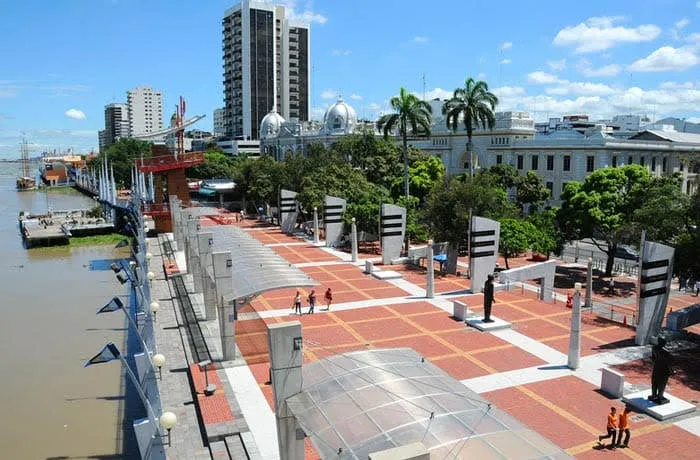
Malecon 2000 runs for about 2.5 km along the western bank of the Guayas River, across from Isla Santay. It replaced the old Malecón Simón Bolívar as part of an urban renewal project. The Fundación Malecón 2000, a private-law body made up of public and private institutions of the city, was set up to design, build and run it.
The area is gated and patrolled. Police and private security staff are posted at the entrances, which is one reason families make up much of the crowd. Trees and covered stretches give shade along much of the walk, and the river side catches a breeze, especially in the evening.
The promenade is also the departure point for boats that sail down the river, and it sits close to the city centre, Las Peñas and Cerro Santa Ana.
Monuments and landmarks along the walk
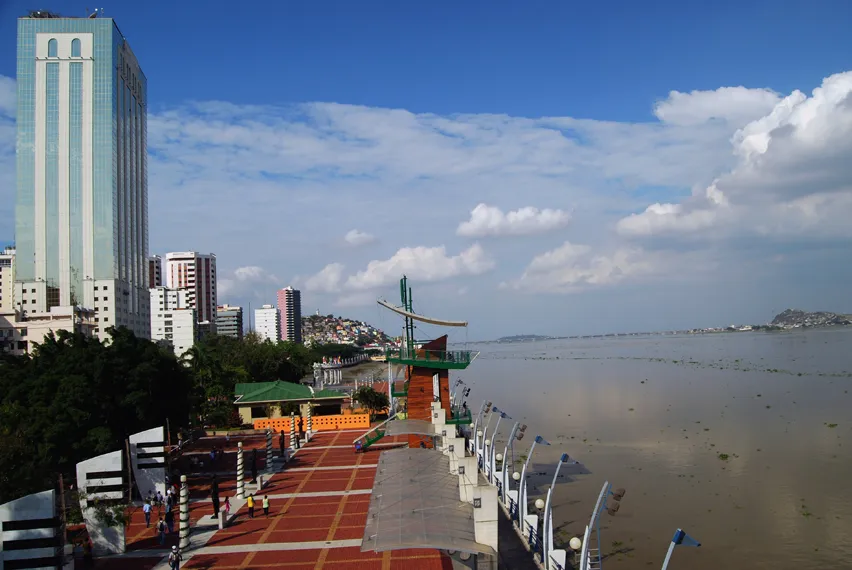
La Rotonda stands in the middle of the promenade. This monument commemorates the meeting of Simón Bolívar and José de San Martín, who discussed South American independence. Statues of both men are among the most photographed spots on the walk.
The Torre Morisca, or Moorish Clock Tower, is another fixed point on the route. One account describes it as a gift from London. Near the water you will also find the Plaza Cívica, Olmedo Plaza, the Palacio de Cristal and the Mercado del Río. Close by are the Municipal Palace and the Governorate Palace.
A large Guayaquil sign, with each letter about 1.8 m tall and painted in the sky blue and white of the city flag, is the usual place for a souvenir photo.
The gardens are part of the design. Some of the tropical plantings aim to bring back the primary forest that grew here before the city was founded.
Museums, cinema and rides
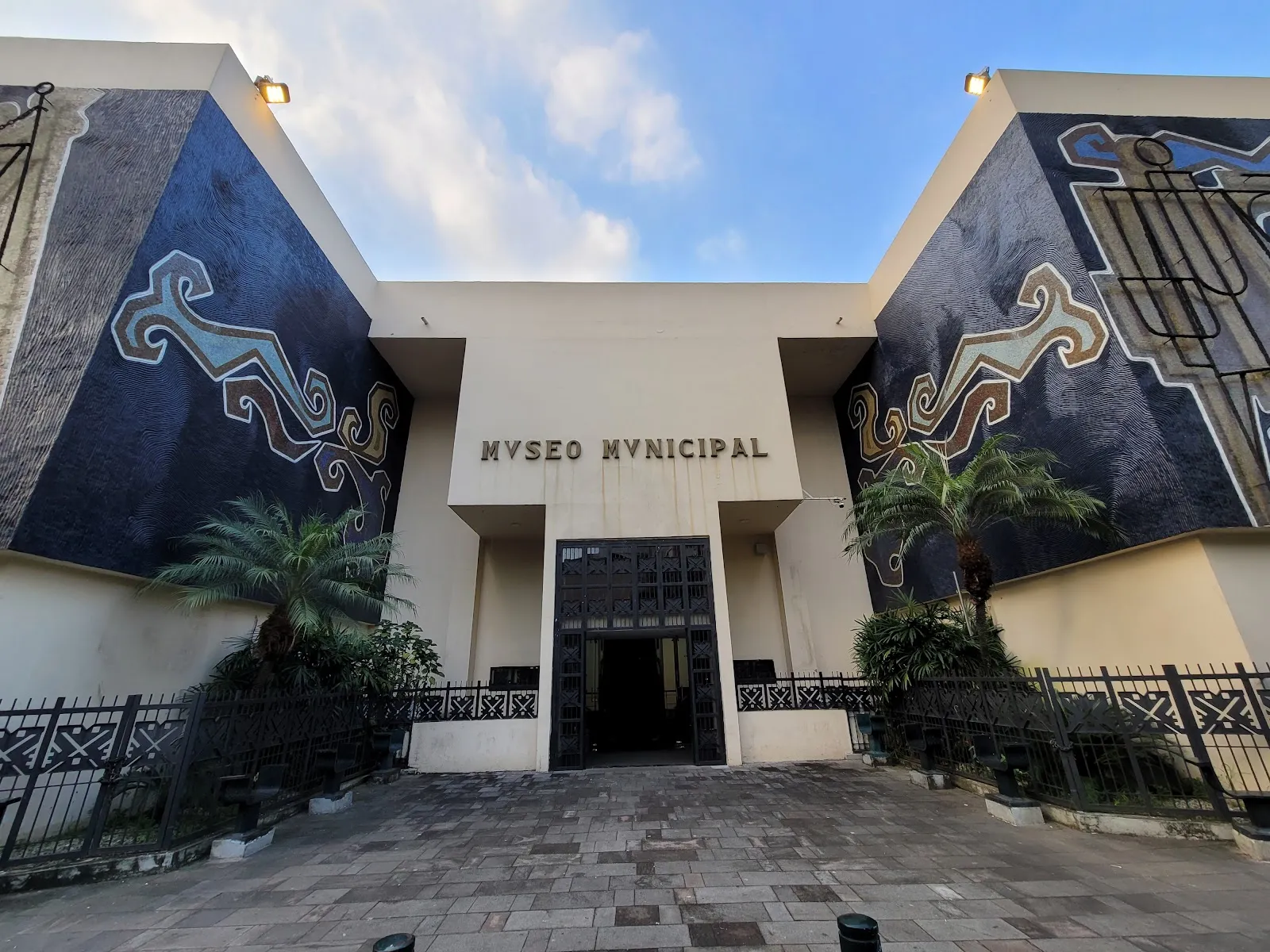
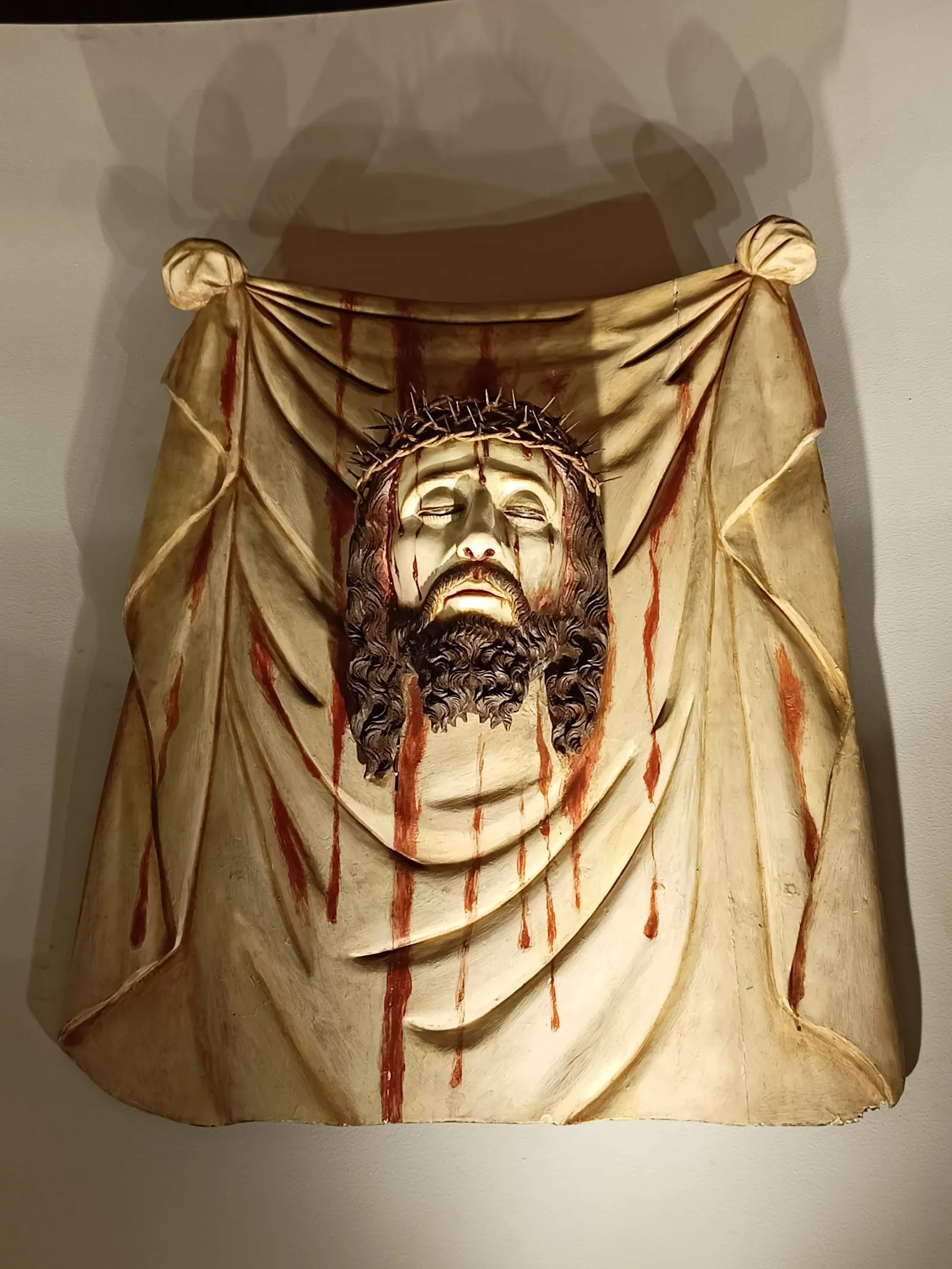
Several museums are located along the route, among them the contemporary art museum MAAC. A museum on the promenade shows modern art and installations. Its last room holds a collection of pre-Columbian ceramics, which need little explanation.
The promenade also has a cinema, described as the first IMAX theatre of its kind in South America, and a planetarium. La Perla is a large Ferris wheel with enclosed, air-conditioned cars, and it gives a view over the river and the skyline. Playgrounds and open-air spaces make the area practical for children. An open-air theatre and outdoor concerts add to the programme. A Sunday street fair is held here as well.
Food, shopping and boat trips
Food is easy to find. Small stands sell snacks, ice cream and water, and the mall and food courts serve Ecuadorian, Italian and Chinese dishes. Restaurants with river views are on the more upscale side. Cafés and bars along the way suit a coffee or a drink mid-walk, and souvenir shops and boutiques are also on the route.
Boats leave from the promenade for river tours. One two-hour cruise sails past Parque Histórico, the Santa Ana port, Malecon 2000, La Perla and the Samborondón Bridge. An evening trip shows the lit-up city from the water. Bikes can be rented for the length of the promenade.
Combining it with the rest of the city
Malecon 2000 works well as a first stop in Guayaquil. From its northern end you can reach Las Peñas, a historic district with colourful wooden houses and cobbled lanes, and Cerro Santa Ana, where 444 steps lead up to the Fortín del Cerro and a city viewpoint. Many half-day city tours include the promenade together with Parque de las Iguanas, the cathedral and Las Peñas.
FAQ
How long is Malecon 2000?
The promenade is about 2.5 km long and follows the Guayas River. It is also known as Malecón Simón Bolívar.
Is Malecon 2000 safe?
Police and security staff are present at the entrances and along the promenade, and many families walk here during the day. After dark, stay in the busier, well-lit sections and watch your belongings.
How long do you need at Malecon 2000?
A quick walk takes about an hour. Allow up to half a day if you plan to visit a museum, ride the Ferris wheel, take a boat trip or eat there.
What is there to see at Malecon 2000?
The main sights are La Rotonda, the Moorish Clock Tower, the Guayaquil sign, the gardens, museums, a cinema, the La Perla Ferris wheel and playgrounds. Boats for river tours also leave from here.
Is Malecon 2000 good for children?
Yes. There are playgrounds, rides, shaded paths and a Ferris wheel, and many local families come here.