At the centre of Beijing’s Forbidden City, the Hall of Supreme Harmony is its largest and tallest building, set on a three-tiered marble terrace. Known in Chinese as Taihe Dian and also called the Jinluan Hall, it was the ceremonial centre of the imperial palace, where emperors held major state events. Look for the golden ornamentation, dragon motifs and carved woodwork; the hall’s scale is part of the experience. Entry inside is restricted, but you can view the interior from the stairs and continue through the surrounding palace complex.
The ceremonial centre of the palace
The Hall of Supreme Harmony, or Taihe Dian, stands at the centre of the Forbidden City in Beijing. It is also known as the Jinluan Hall. As the largest and tallest building in the complex, it has a strong presence among the palace’s many courtyards and structures.
The Forbidden City served as the imperial palace during the Ming and Qing dynasties, from 1420 to 1911. The Hall of Supreme Harmony was its principal ceremonial space. Emperors held major state ceremonies here, connecting the building with the formal rituals of imperial rule. Its position and scale made it a focal point of the palace, as well as a place where the emperor’s authority was expressed through ceremony.
Architecture and details to look for
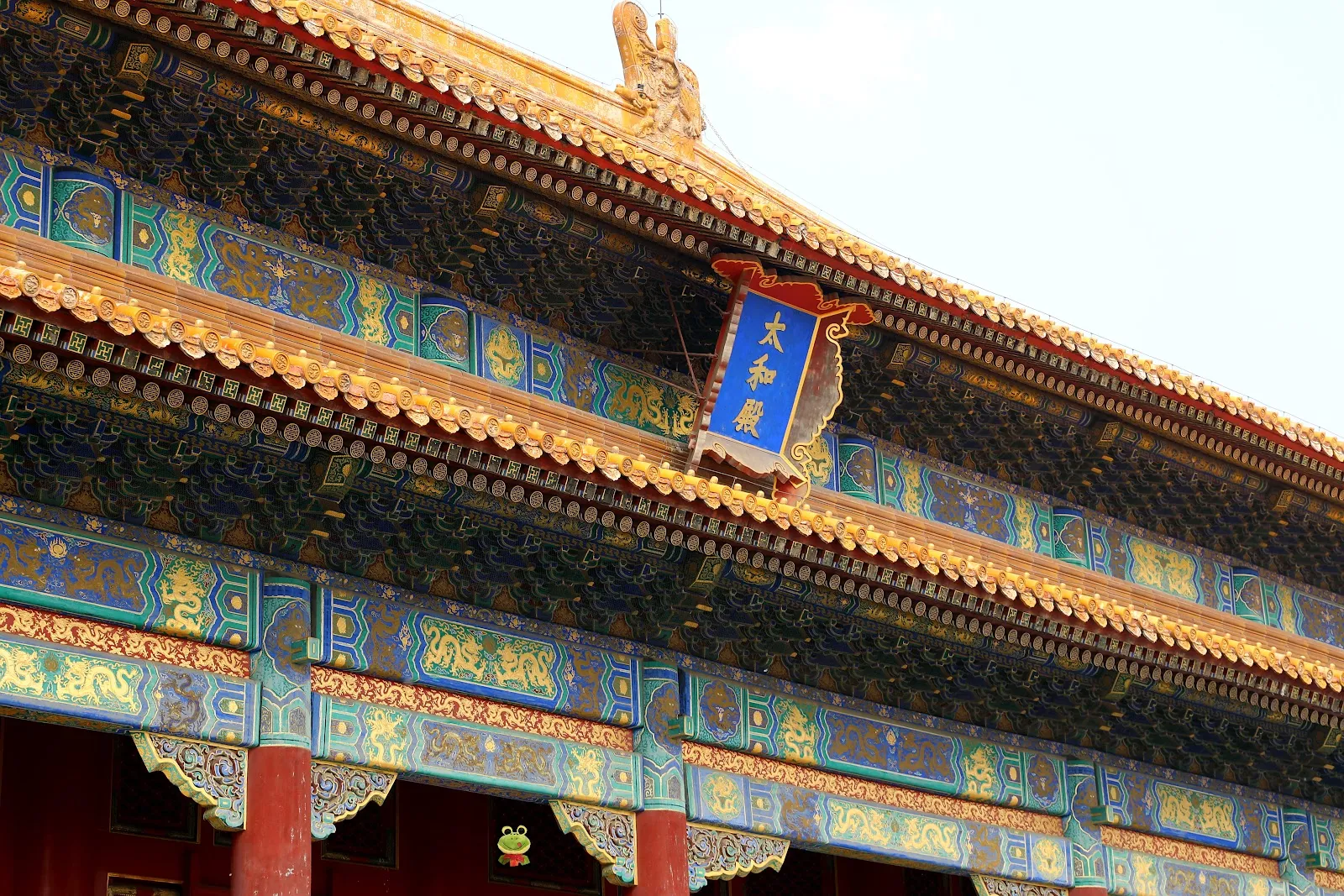
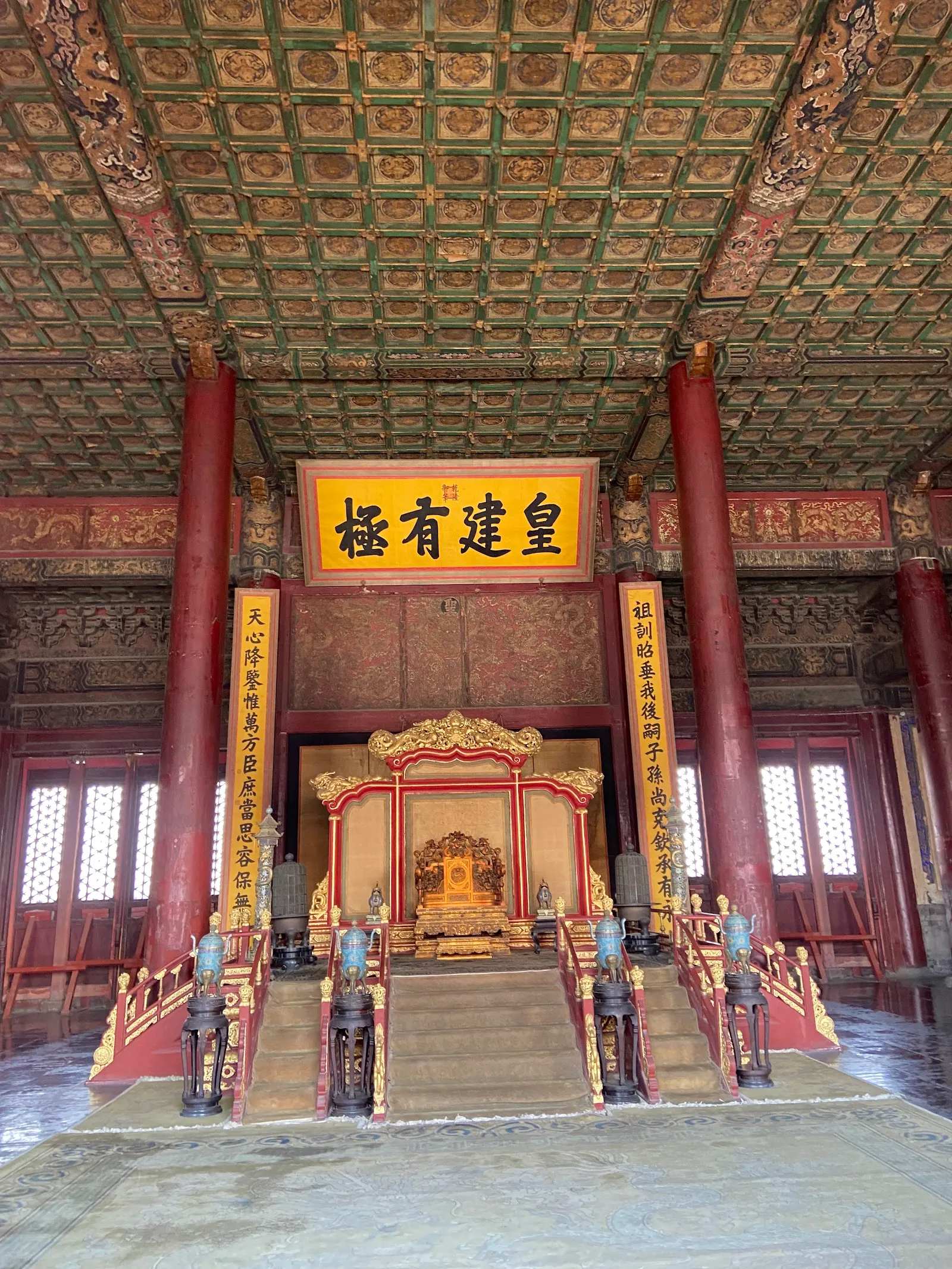
The hall rises above a three-tiered marble terrace. Its imposing form and golden ornamentation draw the eye, while dragon motifs and carved wooden details reward a closer look. The throne platform inside was the focus of important rituals, placing the emperor at the centre of the hall’s ceremonial arrangement.
Take in the building as a whole before concentrating on the details. The terrace sets it apart from the surrounding spaces, and the ornamentation carries the imperial imagery into the structure. Although you cannot enter the hall, you can go up the stairs and peer inside. This gives you a view of the interior without access to the rooms themselves.
Planning a visit within the Forbidden City
The Hall is one stop within a very large palace complex, with more than 8,700 rooms. Plan to leave time for the surrounding areas rather than treating the hall as a quick standalone visit. Exploring on your own gives you more freedom to pause at places beyond the central route; the northeastern part of the complex is one area to consider.
An early start can make it easier to take in the architecture before the crowds build. A little reading on the Ming and Qing dynasties, and on the history of the Forbidden City, can also help put the hall’s ceremonial role in context. The visit involves substantial walking across the broader complex, so pace your route around the other areas you want to see.
FAQ
Can you go inside the Hall of Supreme Harmony?
Entry inside is restricted. You can climb the stairs and look into the interior.
Where is the Hall of Supreme Harmony?
It is at the centre of the Forbidden City in Beijing.
When is a good time to visit?
Go early in the morning, when the crowds are more manageable.
How much time should you allow?
The input gives no visit duration for the hall. The Forbidden City is a large complex with more than 8,700 rooms, so allow time to explore beyond this one building.