On McGill University’s campus at 859 Sherbrooke Street West, the Redpath Museum brings natural history and world cultures together in a compact, historic building. Its displays range from dinosaur skeletons, fossils, minerals and seashells to taxidermied animals and Egyptian antiquities. Look for specimens connected to Canadian wildlife and extinct species, then take time to notice the museum’s architectural details and display cases. Admission is by voluntary donation, so you can decide what to contribute. Allow about an hour, or longer if you like reading the exhibits closely.
A natural history museum at McGill
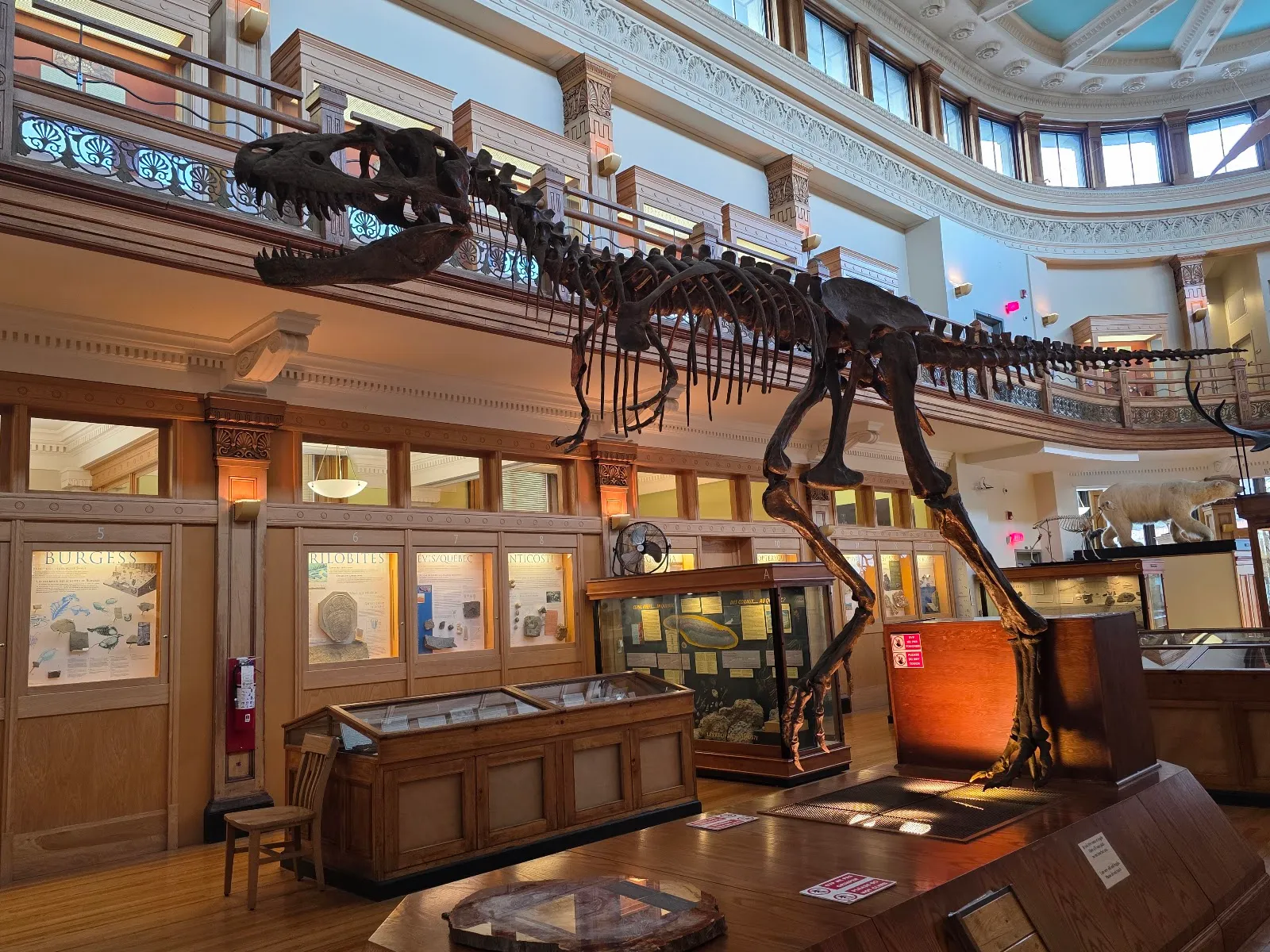
The Redpath Museum is at 859 Sherbrooke Street West on the McGill University campus. Opened in 1882, it was named for Peter Redpath, the sugar magnate who supported its creation. The museum’s historic architecture is part of the visit: look at the building itself as well as the objects in its cases.
Its collections cover several fields, including palaeontology, mineralogy, zoology and ethnology. Displays bring together natural history specimens and objects from human cultures, so you can move from fossils and animal remains to antiquities and other cultural collections. The scale is manageable for a short visit, but there is plenty to pause over if you enjoy reading exhibit details.
Dinosaurs, minerals and animal specimens
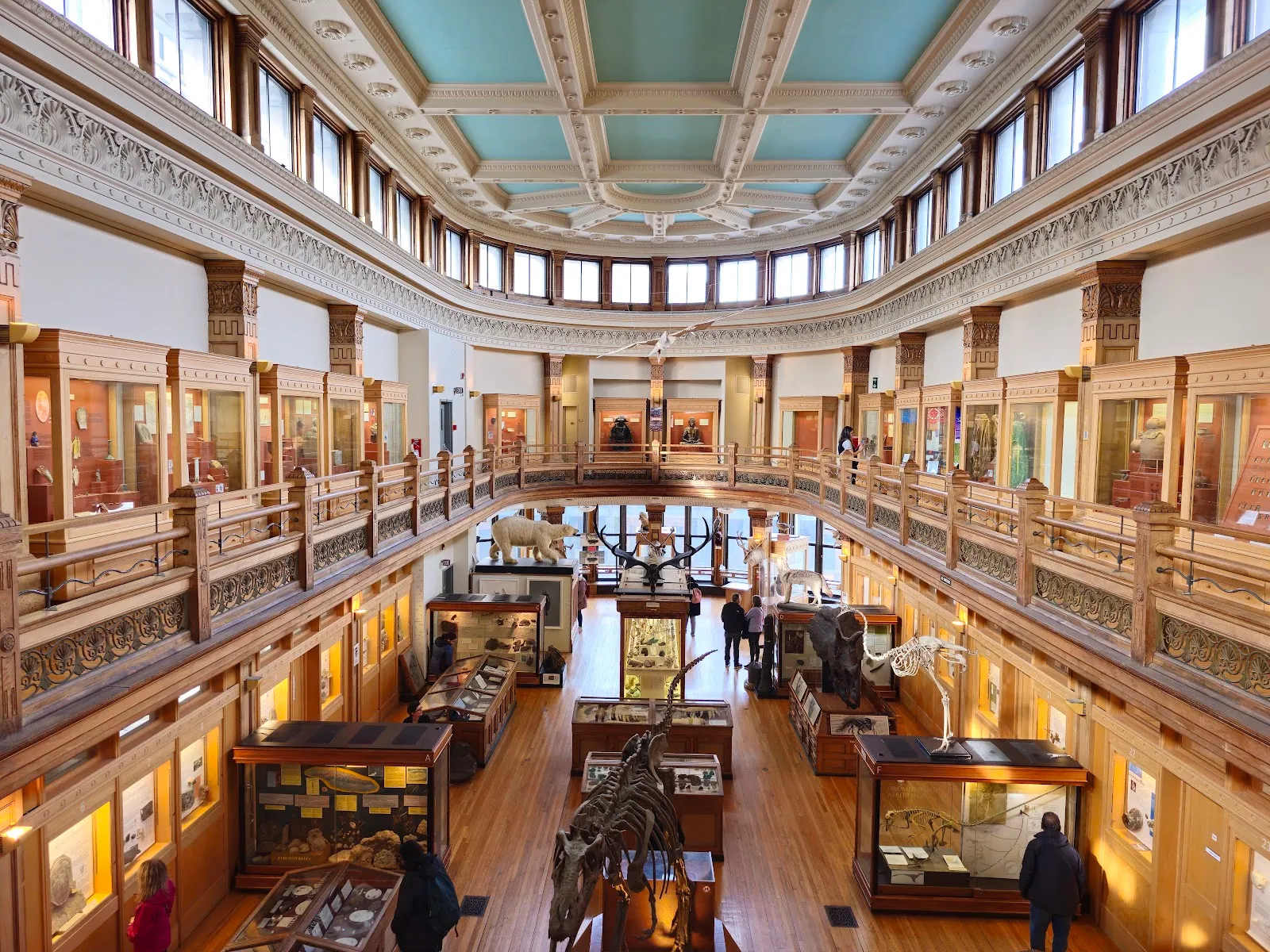
Dinosaur skeletons and fossils are among the most prominent sights. The collection also includes skeleton casts, taxidermied animals, seashells and minerals, with material connected to Canadian wildlife and extinct species. Look for the Gorgosaurus skeleton in the main gallery and displays about animals that lived in Canada, including species from Québec.
The museum’s natural history collections extend beyond land animals. Exhibits include marine vertebrates such as whales, sea turtles and seals, represented through specimens and skeletal remains. Minerals and gems offer a different kind of close-up viewing, while the taxidermy displays include birds and other animals. The range makes this a useful stop if your interests stretch from fossils to biodiversity.
World cultures and Egyptian antiquities
The museum also holds collections related to cultures around the world. Egyptian antiquities and mummies are among the displays visitors may encounter, alongside objects from other periods and places. The museum’s exhibits combine these cultural collections with its natural history holdings, giving the visit a broader scope than fossils and specimens alone.
A handwritten letter from Charles Darwin is another notable object cited in material about the museum. As you move through the galleries, take time to look at the display cases and the building’s interior details. Admission is by voluntary donation, and a relaxed visit takes about an hour; allow longer if you want to read more of the exhibits.
FAQ
How long do you need at the Redpath Museum?
Plan for about an hour. Allow longer if you want to read the exhibit details closely.
Is admission to the Redpath Museum free?
Admission is by voluntary donation, so you can choose whether and how much to contribute.
What can you see at the Redpath Museum?
Displays include dinosaur skeletons, fossils, minerals, seashells, animal specimens, Canadian wildlife and Egyptian antiquities.
Is the Redpath Museum suitable for children?
The exhibits include dinosaurs and extinct animals, which can interest children. The entrance has stairs, so plan ahead if you are bringing a stroller.