Planifier un voyage
Langue: Français
Planificateur de voyagePlanifiez votre voyage sur une carte

Destinations incontournables

EnglishDeutschFrançaisEspañolPortuguêsPortuguês (BR)Italiano
Avis aux voyageurs · BrésilSalvador se trouve dans ou près d'une zone où les gouvernements déconseillent tout voyage sauf essentiel : Favelas et habitats informels dans les grandes villes.Les conseils dépendent de votre passeport. Consultez ceux de votre propre gouvernement avant de réserver.Conseils officiels
Zones signalées
  • Ceilândia · éviter les voyages non essentiels · Italie, États-Unis
  • Favelas et habitats informels dans les grandes villes · éviter les voyages non essentiels · Espagne, Nouvelle-Zélande, États-Unis
  • Paranoá · éviter les voyages non essentiels · Italie, États-Unis
  • Santa Maria · éviter les voyages non essentiels · Italie, États-Unis
  • São Sebastião · éviter les voyages non essentiels · Italie, États-Unis
  • Zone frontalière avec le Venezuela · éviter les voyages non essentiels · Allemagne, France

Également signalé par un seul gouvernement : Bande de 160 km le long de toutes les frontières terrestres (États-Unis), Complexo da Maré (Canada), Complexo da Penha (Canada), Bande de 20 km le long de la frontière bolivienne (hors parc national du Pantanal) (Canada), Bande de 20 km le long de la frontière colombienne (Canada), Bande de 20 km le long de la frontière avec la Guyane française (Canada), Bande de 20 km le long de la frontière avec le Guyana (Canada), Bande de 20 km le long de la frontière paraguayenne (Canada), Bande de 20 km le long de la frontière péruvienne (Canada), Bande de 20 km le long de la frontière avec le Suriname (Canada), Bande de 50 km le long de la frontière vénézuélienne (Canada), Fleuve Amazone et ses affluents entre Codajás et Belém do Solimões (État d'Amazonas) (Royaume-Uni), Zones frontalières (non précisées) (France), Parc national de la Chapada Diamantina (Trilha do 21) (Espagne), Planaltina (Italie), Favelas de Rio de Janeiro (Allemagne), Samambaia (Italie)

GouvernementConseilsMis à jourLire les conseils
Royaume-Uni (FCDO)No advice against the whole country (regional advisories)–Lire les conseils
États-Unis (State Dept)Exercise increased caution (regional advisories)31 août 2026Lire les conseils
Canada (Affaires mondiales)Exercise a high degree of caution (regional advisories)–Lire les conseils
Allemagne (Auswärtiges Amt)No advice against the whole country (regional advisories)27 oct. 2026Lire les conseils
Nouvelle-Zélande (SafeTravel)Exercise increased caution due to high crime rates (regional advisories)–Lire les conseils
France (ministère de l'Europe et des Affaires étrangères)Vigilance renforcée (pays à risque) (regional advisories)–Lire les conseils

Vérifié quotidiennement d'après les conseils publiés par les gouvernements ; dernière vérification le 3 nov. 2026.RoamLedger résume les conseils officiels ; il ne s'agit pas de conseils émanant d'un gouvernement.

An aerial view of a city with a large body of water
Église

Igreja do Nosso Senhor do Bonfim

Igreja do Nosso Senhor do Bonfim is an 18th-century Catholic church on Salvador’s Itapagipe Peninsula, a few kilometres north of Comércio.

Igreja do Nosso Senhor do Bonfim is an 18th-century Catholic church on Salvador’s Itapagipe Peninsula, a few kilometres north of Comércio. Its colorful fitinhas, tied to the gates and wrists across Brazil, have their roots here. Inside, the Sala dos Milagres holds wax body parts and photographs left as offerings by people who credit Senhor do Bonfim with their healing. The church brings Catholic devotion and Afro-Brazilian Candomblé traditions together. Visit for the sacred space, the ribbons and a closer look at one of Salvador’s best-known pilgrimage sites.

The church and its traditions
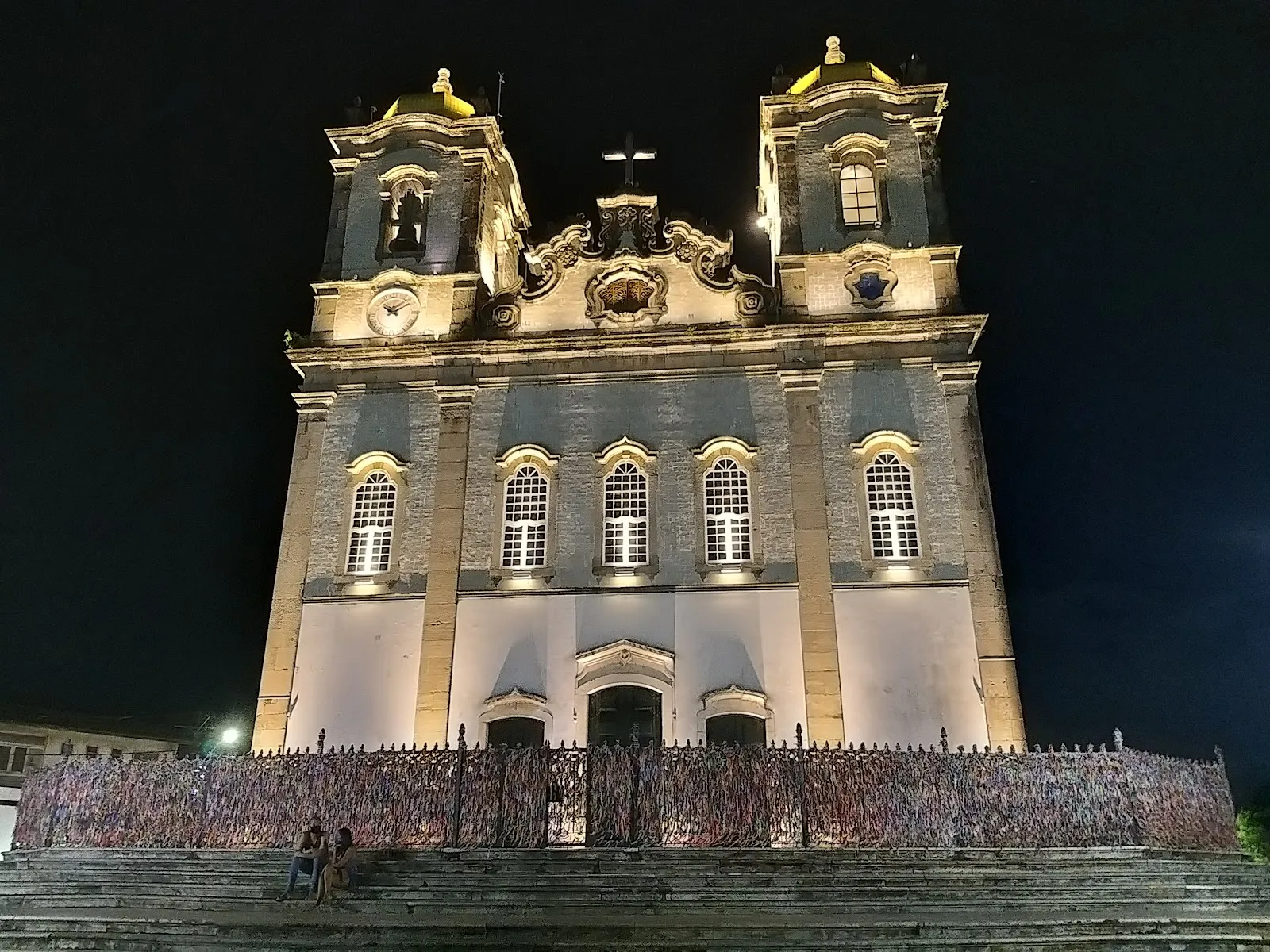
Igreja do Nosso Senhor do Bonfim

Igreja do Nosso Senhor do Bonfim is on the Itapagipe Peninsula, north of Salvador’s Comércio district. The 18th-century church is a pilgrimage site and a place of devotion to Senhor do Bonfim. Its religious life connects Catholic practice with Afro-Brazilian Candomblé traditions.

The church is also closely associated with the fitas do Bonfim, the colored ribbons tied to its gates and worn on wrists throughout Brazil. These ribbons began here and have become a familiar symbol of Bahia. If you take part in tying one at the gate, the custom is associated with prayer and requests for blessings.

Sala dos Milagres
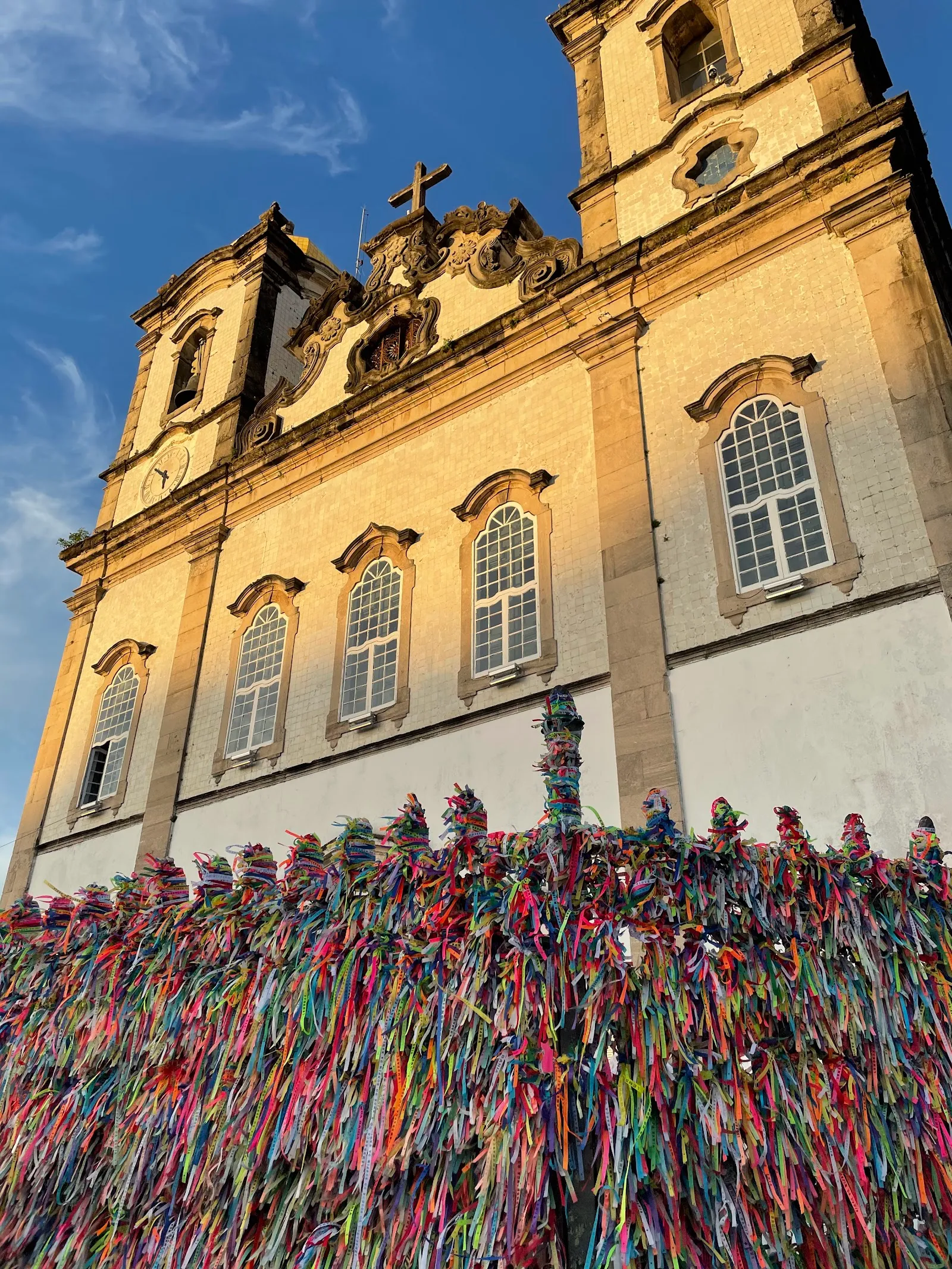
Igreja do Nosso Senhor do Bonfim

The Room of Miracles, or Sala dos Milagres, contains photographs and wax body parts left as offerings. People bring these objects in gratitude for healing they attribute to Senhor do Bonfim. The offerings make the room a direct expression of personal faith, so visit it with care and respect.

The Lavagem celebration

During the Lavagem, devotees and celebrants dressed in white walk an eight-kilometre route from Comércio to the church for the washing of its steps. The celebration honors Senhor do Bonfim, who is associated with the Candomblé orixá Oxalá, whose color is white. Blessed water and perfume are part of the event, followed by festivities that continue into the night.

FAQ

Where is Igreja do Nosso Senhor do Bonfim?

It is on the Itapagipe Peninsula in Salvador, a few kilometres north of the Comércio district.

What can you see inside the church?

The Sala dos Milagres contains photographs and wax body parts left as offerings by people who credit Senhor do Bonfim with their healing.

What are the fitinhas do Bonfim?

They are colored ribbons associated with the church, tied to its gates and worn on wrists. The custom began here.

What is the Lavagem?

It is a celebration in which devotees and celebrants walk eight kilometres from Comércio to the church for the washing of its steps.

Autres incontournables à Salvador

Tout explorer