
Casa do Carnaval da Bahia is a four-floor museum in Salvador’s historic centre, behind the Cathedral Basilica. Its exhibits trace the city’s Carnival through costumes, masks, photographs, instruments and historical documents, with videos and interactive displays that bring the music and street celebrations into focus. Headphones help you follow the audiovisual exhibits, some of which are available in English. After exploring the galleries, head to the rooftop restaurant for food or a drink and views over Pelourinho and the bay.
Four floors of Carnival history
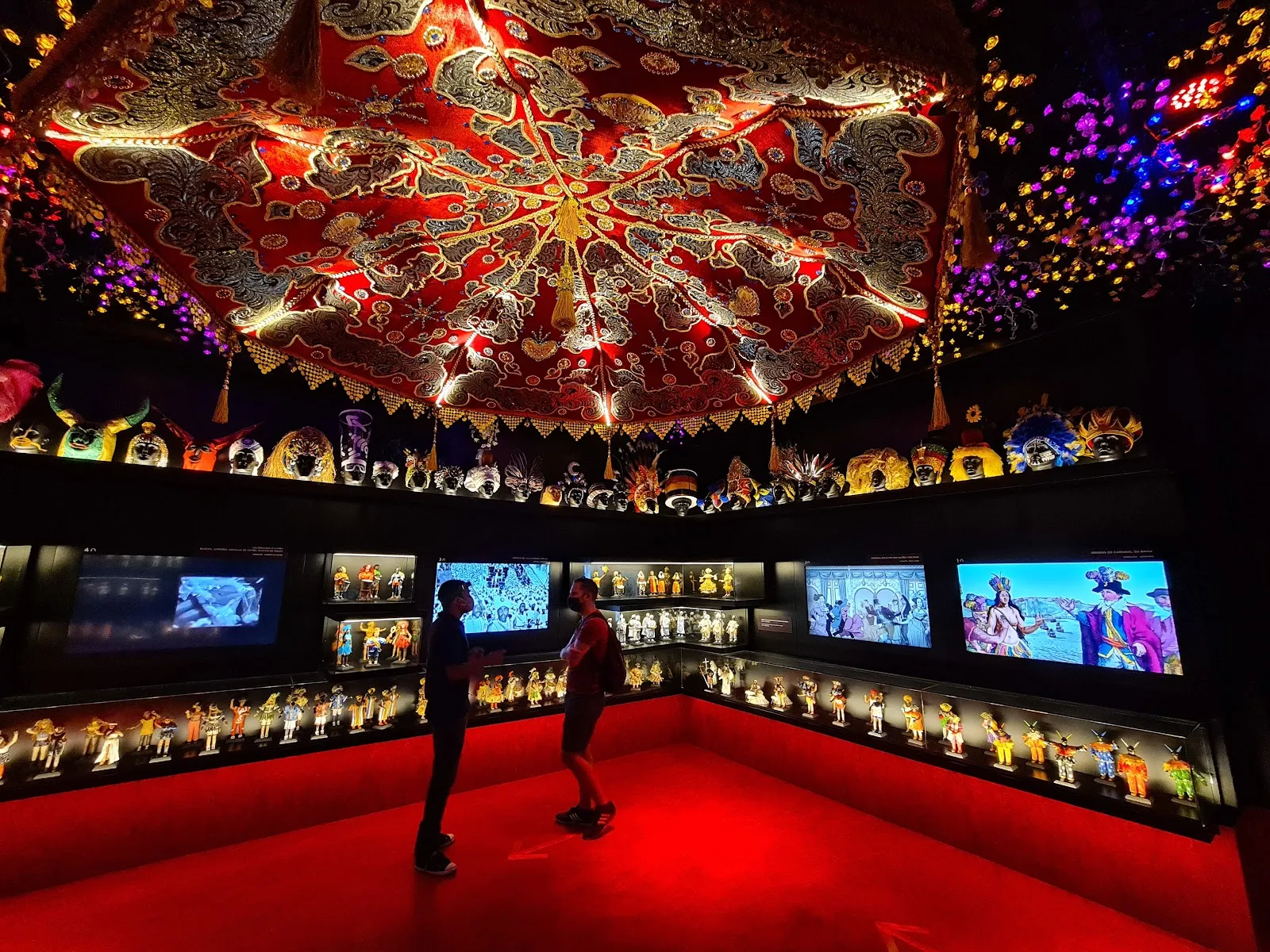
Casa do Carnaval da Bahia opened in 2018 in a historic building in Salvador’s Pelourinho district. The museum uses four levels, including a basement and terrace, to tell the story of the city’s Carnival through objects, images and audiovisual displays.
The collection includes costumes, musical instruments, photographs and historical documents connected with the celebrations. Ceramic figures represent Carnival styles and costumes across different periods. The displays also introduce the trio elétrico, the sound-system trucks that became part of Salvador’s street festivities in the 1950s.
The museum connects the festival’s history with the music and movement that shape its public celebrations. Its exhibits trace influences on the culture of Carnival, including Afro-Brazilian roots, and explain how the street party developed into a defining event in Salvador.
Videos and interactive displays
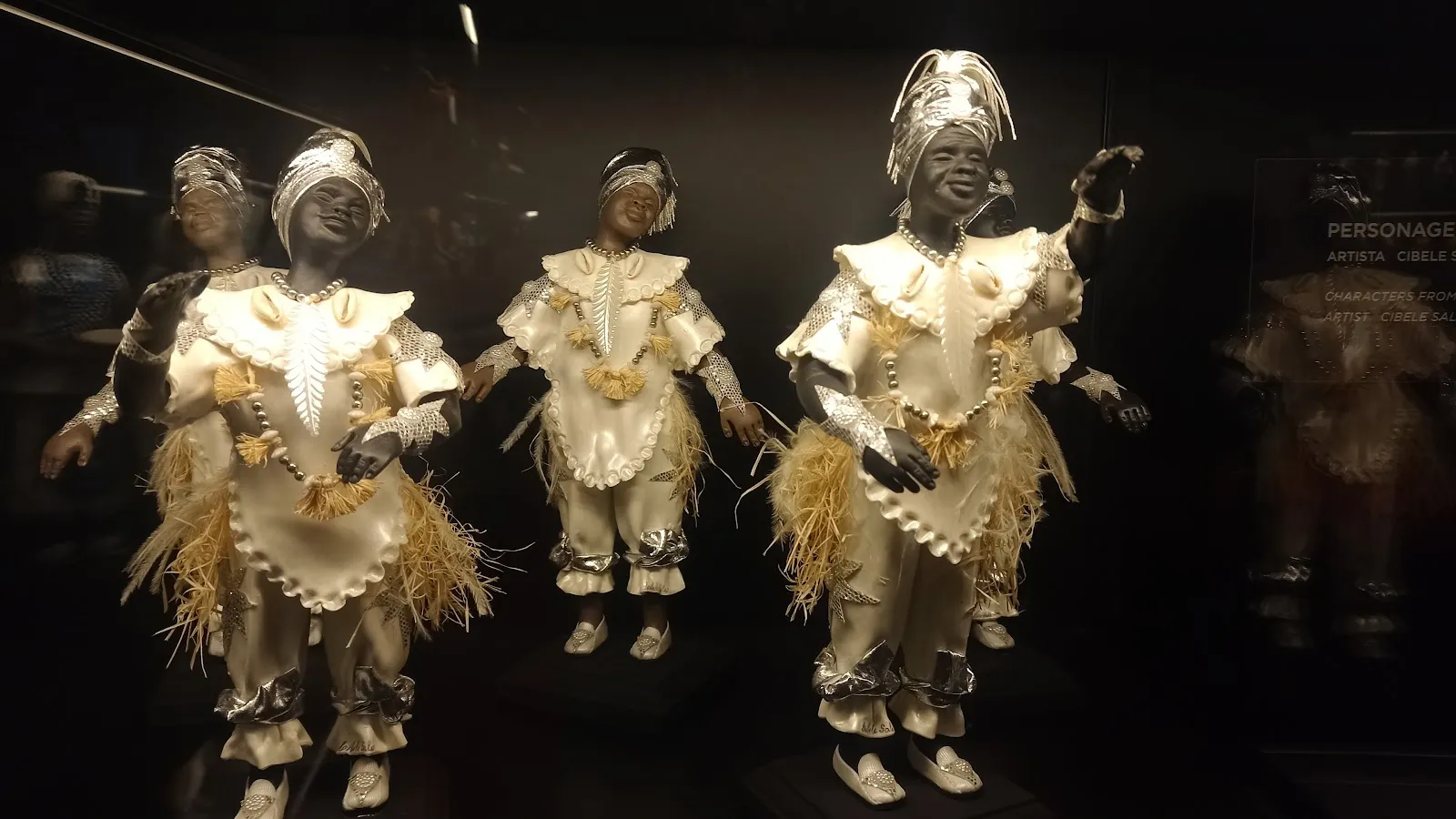
Headphones are provided at the entrance for the museum’s audio material. Several screens show historical footage and explanations, and some videos are available in English. The exhibits are arranged as a self-guided journey, so you can move through the displays at your own pace.
There are also two cinema spaces and a room with dance instructions on screen. In the dance room, you can dress up and follow the movements. The audiovisual content is detailed, so allow time to listen and watch rather than trying to rush through every screen.
Internet access inside may be limited, so download any information you want to consult before arriving. Check whether exhibition rooms are open on the day of your visit, as temporary closures have been reported.
The terrace and restaurant
The terrace has a restaurant where you can stop for a meal, coffee, snacks or drinks after the galleries. The setting looks out towards Pelourinho and Baía de Todos os Santos. Bobó de camarão is one dish served there.
The terrace makes it possible to end the visit with a pause above the historic centre. If you plan to eat, check what is available when you arrive; the menu details provided here are limited.
FAQ
Is Casa do Carnaval da Bahia free to visit?
Admission is free on Wednesdays. The museum charges admission on other days, but the available information does not specify the fee.
Are the videos available in English?
Some of the museum’s videos are available in English. Headphones are provided at the entrance for the audio material.
What can you see at Casa do Carnaval da Bahia?
The exhibits include Carnival costumes, masks, photographs, instruments and historical documents, alongside videos and interactive displays. There is also a dance-instruction room.
Is there a restaurant at the museum?
Yes. The rooftop restaurant serves food and drinks, with views over Pelourinho and Baía de Todos os Santos.


