Planifier un voyage
Langue: Français
Planificateur de voyagePlanifiez votre voyage sur une carte

Destinations incontournables

EnglishDeutschFrançaisEspañolPortuguêsPortuguês (BR)Italiano
Avis aux voyageurs · BrésilBrasília se trouve dans ou près d'une zone où les gouvernements déconseillent tout voyage sauf essentiel : Favelas.Les conseils dépendent de votre passeport. Consultez ceux de votre propre gouvernement avant de réserver.Conseils officiels
Zones signalées
  • Ceilândia · éviter les voyages non essentiels · Italie, États-Unis
  • Favelas · éviter les voyages non essentiels · Allemagne, Espagne, Nouvelle-Zélande, États-Unis
  • Paranoá · éviter les voyages non essentiels · Italie, États-Unis
  • Santa Maria · éviter les voyages non essentiels · Italie, États-Unis
  • São Sebastião · éviter les voyages non essentiels · Italie, États-Unis
  • Zone frontalière avec le Venezuela · éviter les voyages non essentiels · Allemagne, France

Également signalé par un seul gouvernement : Bande de 160 km le long des frontières terrestres du Brésil (États-Unis), Complexo da Maré (Canada), Complexo da Penha (Canada), Bande de 20 km le long de la frontière bolivienne (hors parc national du Pantanal) (Canada), Bande de 20 km le long de la frontière colombienne (Canada), Bande de 20 km le long de la frontière avec la Guyane française (Canada), Bande de 20 km le long de la frontière avec le Guyana (Canada), Bande de 20 km le long de la frontière paraguayenne (Canada), Bande de 20 km le long de la frontière péruvienne (Canada), Bande de 20 km le long de la frontière avec le Suriname (Canada), Bande de 50 km le long de la frontière vénézuélienne (Canada), Rio Amazonas et affluents, État d'Amazonas (entre Codajás et Belém do Solimões) (Royaume-Uni), Zones frontalières (non précisées) (France), Parc national de Chapada Diamantina (Trilha do 21) (Espagne), Planaltina (Italie), Samambaia (Italie)

GouvernementConseilsMis à jourLire les conseils
Royaume-Uni (FCDO)No advice against the whole country (regional advisories)–Lire les conseils
États-Unis (State Dept)Exercise increased caution (regional advisories)31 août 2026Lire les conseils
Canada (Affaires mondiales)Exercise a high degree of caution (regional advisories)–Lire les conseils
Allemagne (Auswärtiges Amt)No advice against the whole country (regional advisories)27 oct. 2026Lire les conseils
Nouvelle-Zélande (SafeTravel)Exercise increased caution due to high crime rates (regional advisories)–Lire les conseils
France (ministère de l'Europe et des Affaires étrangères)Vigilance renforcée (pays à risque) (regional advisories)–Lire les conseils

Vérifié quotidiennement d'après les conseils publiés par les gouvernements ; dernière vérification le 2 nov. 2026.RoamLedger résume les conseils officiels ; il ne s'agit pas de conseils émanant d'un gouvernement.

Palácio da Alvorada
Monument emblématique

Palácio da Alvorada

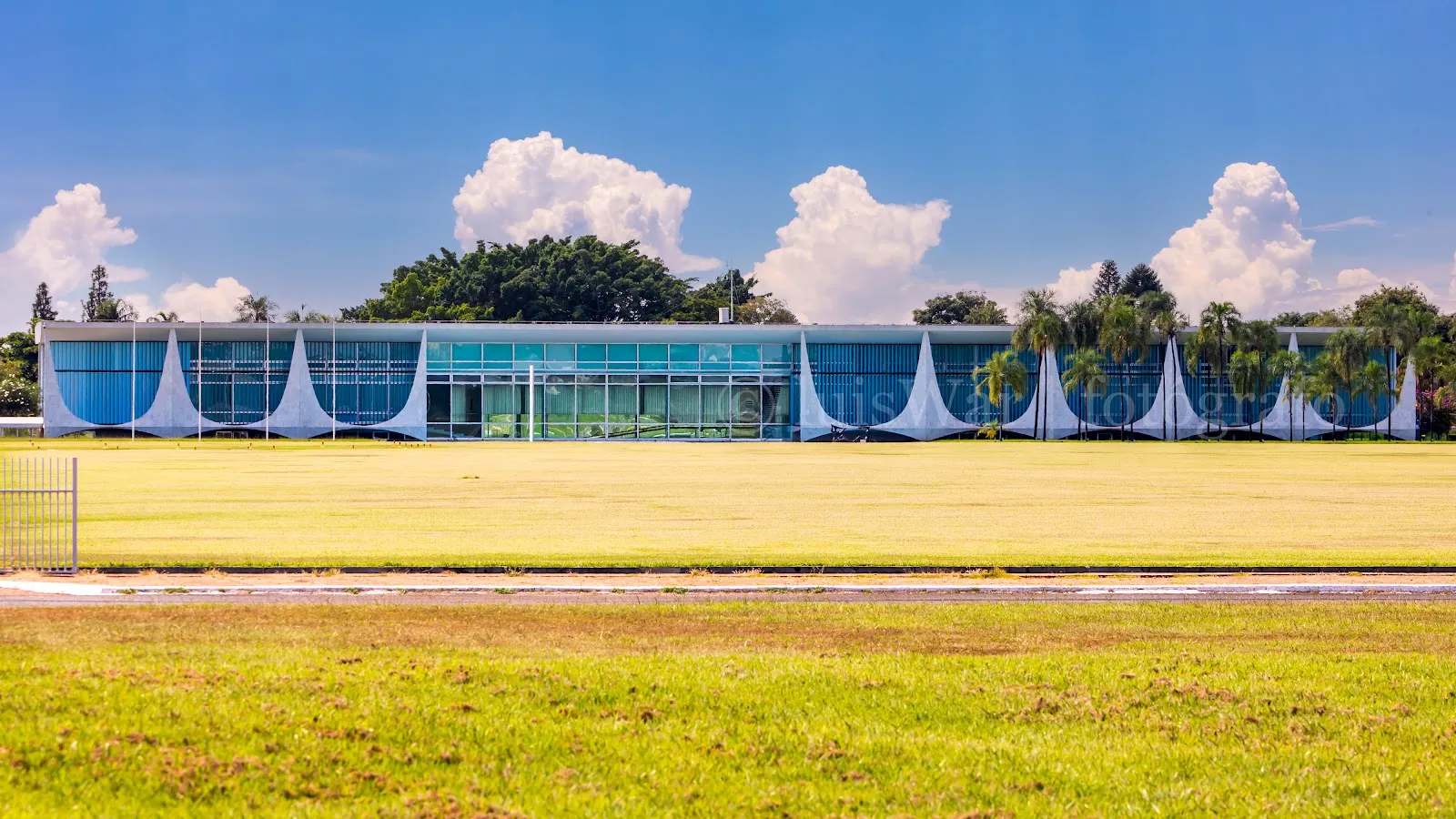
Palácio da Alvorada is the official residence of Brazil’s president, set beside Lake Paranoá in Brasília.

Palácio da Alvorada is the official residence of Brazil’s president, set beside Lake Paranoá in Brasília. Oscar Niemeyer designed the modernist building, completed in 1958, with broad glass surfaces and distinctive curved columns. Its white exterior and landscaped grounds make it a worthwhile stop for anyone interested in Brasília’s architecture. The palace is a working residence, so access to the interior is not assured; plan to appreciate the building from outside and check current visitor arrangements before setting out.

A residence built for the new capital
Palácio da Alvorada
Palácio da Alvorada

Palácio da Alvorada is the official residence of Brazil’s president. Oscar Niemeyer designed it in 1957, and it was completed in 1958, while Brasília was still under construction. The palace was among the capital’s earliest major buildings and opened two years before the city’s inauguration.

Its name means “Palace of Dawn.” It refers to the idea of Brasília as a new beginning in Brazilian history, an association linked to President Juscelino Kubitschek. The building is also listed as part of Brazil’s National Historic Heritage.

Niemeyer’s glass and curves
Palácio da Alvorada
Palácio da Alvorada

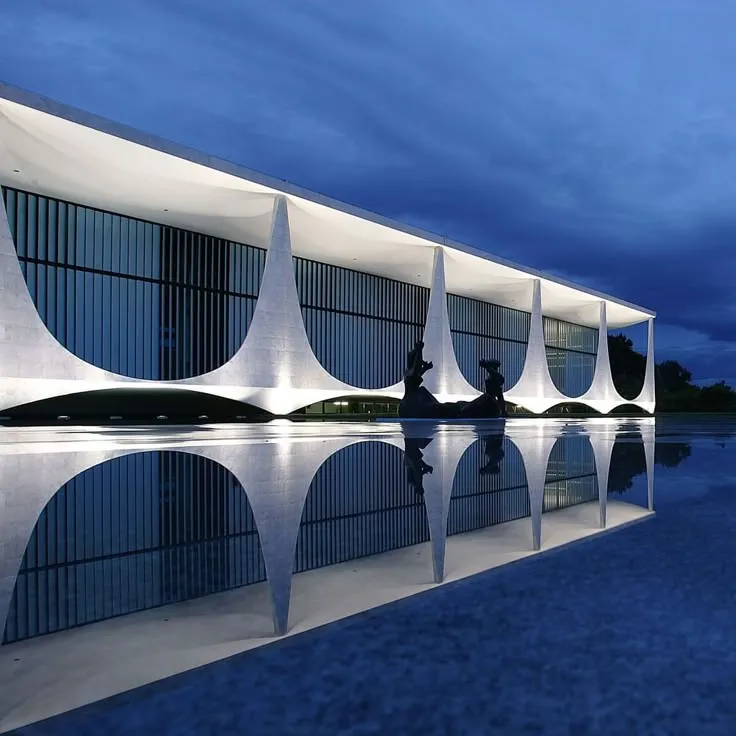
The palace’s design is a clear example of modernist architecture. Broad expanses of glass give the exterior a light, open appearance, set against a pale structure and a line of curved columns. Niemeyer’s forms make the building recognisable even from outside, so an exterior visit still gives architecture enthusiasts plenty to examine.

The columns also carry a reference to older Brazilian architecture. Their shape has been compared with hammocks stretched across the balconies of colonial mansions. This detail links the palace’s modern lines to an earlier architectural tradition without copying the older buildings’ forms.

What to expect from a visit

The palace stands on the shore of Lake Paranoá, amid gardens and grounds that frame its exterior. It remains the president’s official home, so public access can depend on visitor arrangements. Information about guided tours appears in the available material, but accounts of interior access differ. Check the official palace website before travelling if a tour or entry inside is important to your plans.

For an exterior-focused stop, take time to view the columns, glass surfaces and the building’s position by the lake. A weekday other than Wednesday is the suggested choice, though it is sensible to confirm access before making the trip. The palace’s gardens and architecture are the main reasons to include it in a Brasília itinerary.

FAQ

Is Palácio da Alvorada open to visitors?

The palace is the president’s official residence, and visitor access may depend on current arrangements. Check the official website before you go; interior access is not assured.

Who designed Palácio da Alvorada?

Brazilian architect Oscar Niemeyer designed the palace in 1957. It was completed in 1958.

Where is Palácio da Alvorada?

It is in Brasília, beside Lake Paranoá.

What does the name Palácio da Alvorada mean?

The name translates as “Palace of Dawn” and refers to the idea of Brasília as a new dawn in Brazilian history.

Autres incontournables à Brasília

Tout explorer