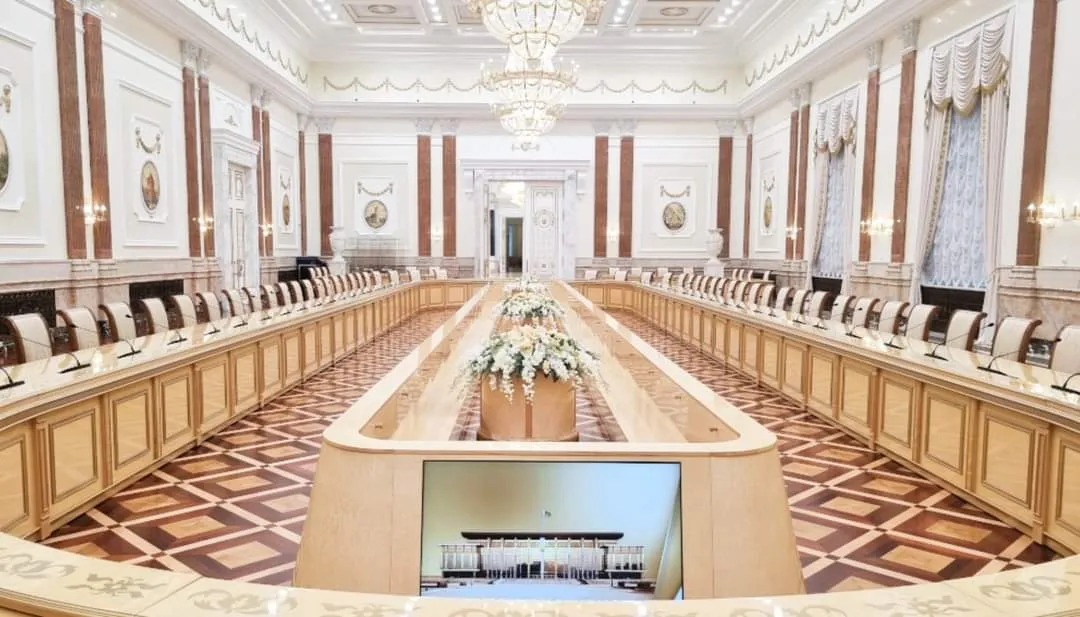
The Belarusian State Museum of the History of the Great Patriotic War sits in Pobeda Park in central Minsk, beside the Minsk Hero City obelisk. It covers World War II from a Belarusian perspective, with tanks, artillery, planes, uniforms and documents. Dioramas recreate scenes such as a partisan camp and the Battle of the Dnieper, and interactive screens show battle reconstructions. Save time for the stained glass hall of heroes and the outdoor display of military vehicles.
Founded during the war
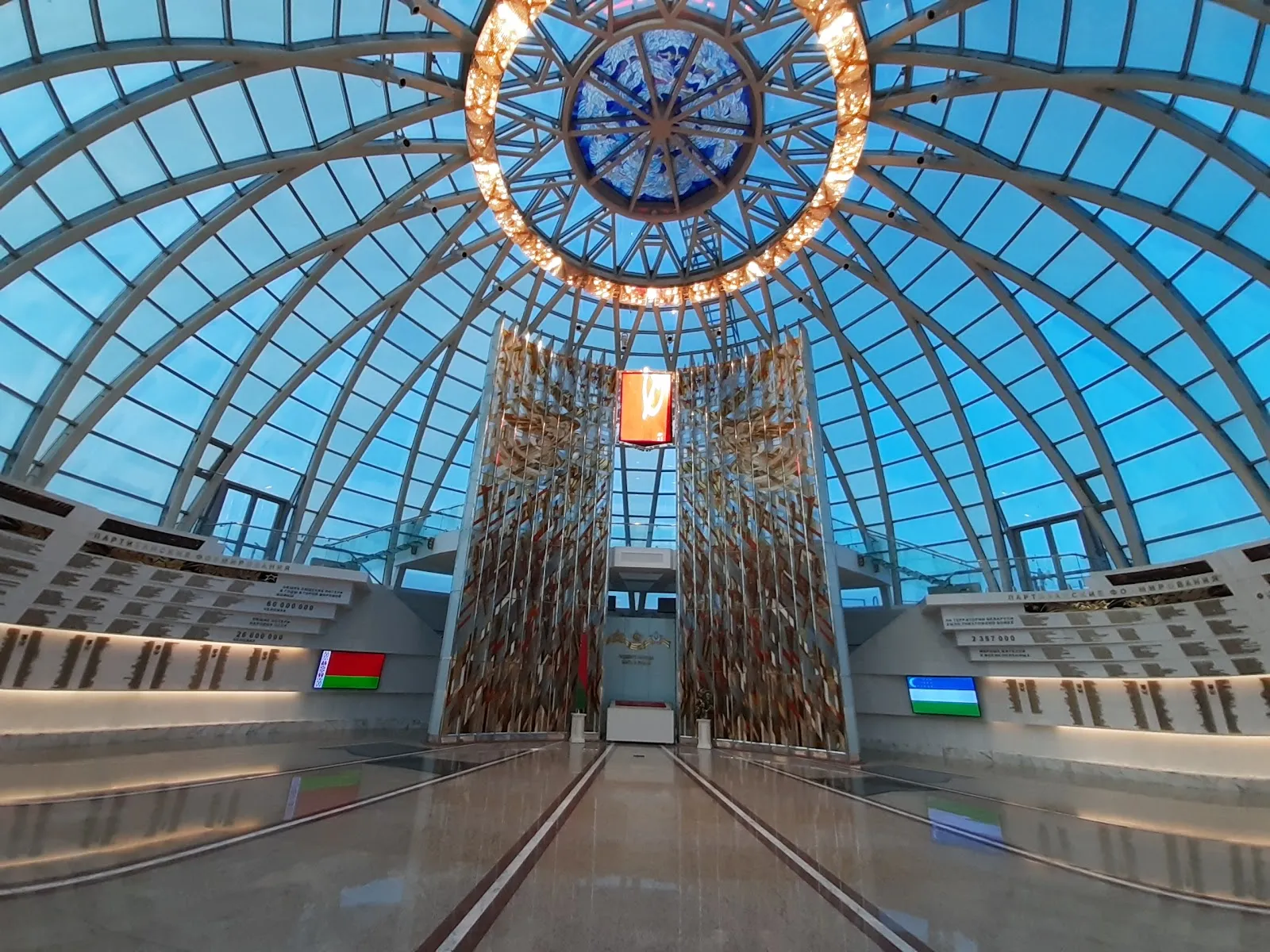
The museum opened in 1944, shortly after Minsk was freed from Nazi occupation on 25 October 1944. It was the first museum in the world to focus on the Second World War, and its first collection was gathered while the fighting was still going on.
In the former Soviet Union the conflict was called the Great Patriotic War, and that name is used in the museum's title. The war cost Belarus millions of lives. The exhibits cover that loss and follow soldiers and civilians alike.
The building and its halls
The collection moved to its current building in Pobeda Park in 2014. The building is modern, with a glass exterior that lets daylight into the halls. Before that, the collection was housed on Oktyabrskaya Square.
The halls are arranged by theme and follow the war in order, from the events before it began through the fighting to the final victory. The route runs from the defence of the Brest Fortress to the raising of the Victory Banner over the Reichstag, so a visit reads like a timeline.
What to see inside
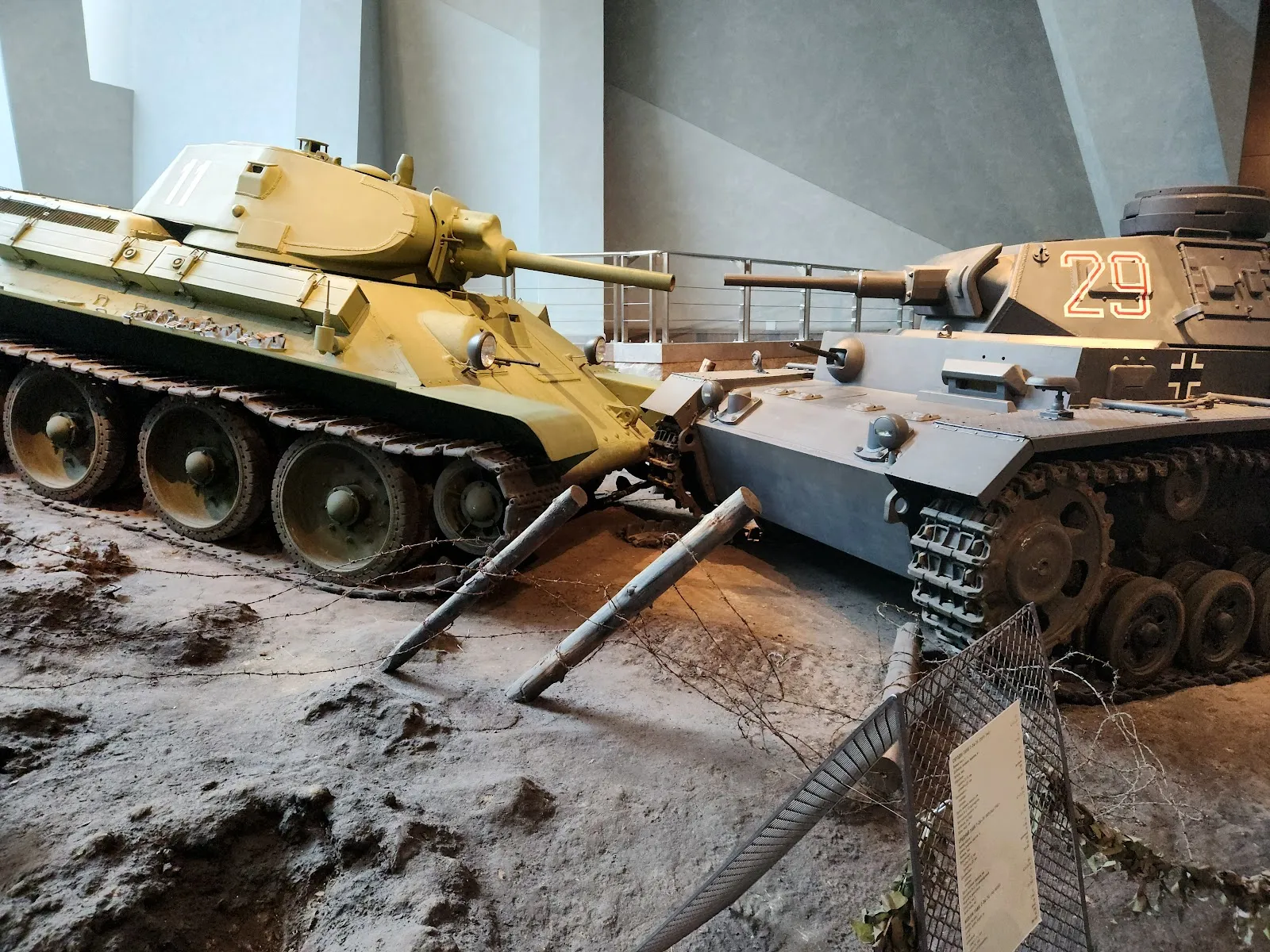
The dioramas are among the strongest exhibits. They recreate a partisan camp, the Battle of the Dnieper, an air battle and a tank battle. Tanks, planes, artillery pieces and cars stand among the displays, and the cases hold uniforms, weapons, documents and partisan papers.
Several interactive screens show short videos of battle reconstructions. Visitors can also piece together weapons used in the war. Newer displays use spherical screens, holograms and 3D installations to tell the story.
Two exhibits are worth a slower look. One is The Burnt Book, which records Belarusian villages destroyed by the Nazi invaders. The other is the story of a tank crewed by three Belarusian brothers, all of whom were killed together.
The park and the obelisk
The museum sits in the Victory park complex, next to the Minsk Hero City obelisk. The obelisk is about 45 metres tall and was opened in 1985 to mark the 40th anniversary of the victory.
Outdoors, military machinery is on display in the grounds, and this part of the visit is best in spring and summer. A walk around the park fits well before or after the halls, and the park is especially pleasant on a sunny day.
Planning the visit
Advance tickets are recommended. Weekday visits are quieter and calmer. The museum has a restaurant, a coat check and restrooms.
The entrance, lift, restroom and parking area are wheelchair accessible, and assisted listening devices are available. Photos and videos are allowed.
English text is not always on the labels, so a translation app on your phone helps. The museum suits older children, and parents can decide which exhibits fit their children, since some are intense.
FAQ
Is there an entry fee?
The museum charges admission. The surrounding park and several of the outdoor exhibits can be visited without charge.
Do I need to buy tickets in advance?
Advance tickets are recommended, so buying ahead is the safer choice.
How long do you need?
Plan 2 to 3 hours for the halls and the outdoor displays.
Is the museum suitable for children?
The museum suits older children. Parents can decide which exhibits fit their children, since some are intense.
Is the museum wheelchair accessible?
Yes. The entrance, lift, restroom and parking area are wheelchair accessible.