The Immigration Museum is at 400 Flinders Street, inside Melbourne’s Old Customs House, a heritage building that once handled arrivals to the city. Its exhibitions trace migration to Victoria through personal accounts, family photographs, letters, objects, film and interactive displays. Stories of arrival, hardship, identity and belonging give context to the many communities that have shaped Australia. Allow time for the galleries on migration history and identity, and look out for the building’s grand Long Room. The museum also includes accessible facilities and sensory supports.
Inside the Old Customs House
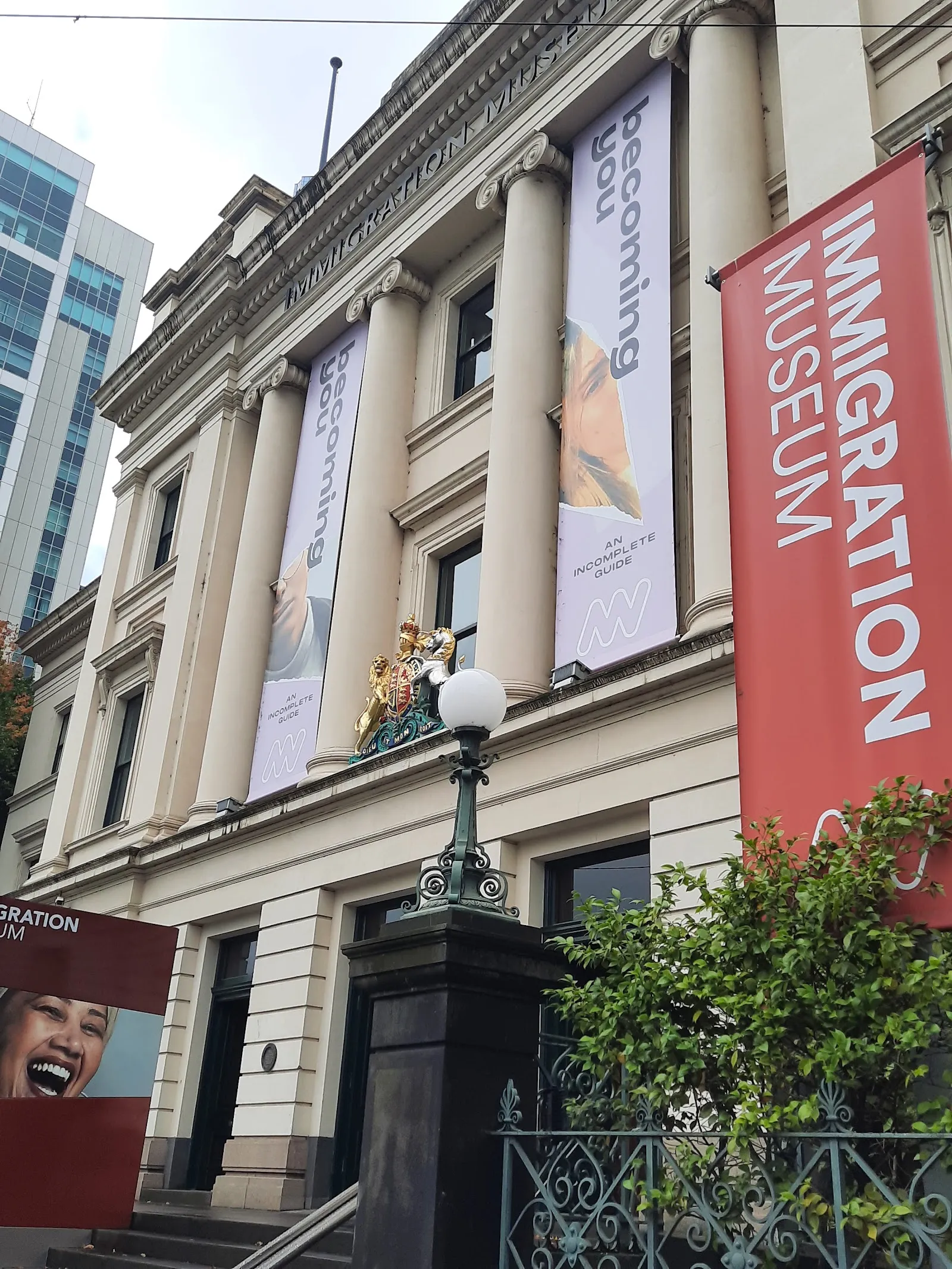
The Immigration Museum occupies the Old Customs House at 400 Flinders Street. The building dates to Melbourne’s colonial period and is known for its Long Room, a striking example of neo-Renaissance architecture. Its former role as a customs house connects the site to the movement of people and goods through the city.
The museum opened in 1998. Restored heritage spaces sit alongside contemporary exhibition displays, giving visitors a chance to consider the building’s past as well as the lives represented in its galleries.
Migration stories in Victoria
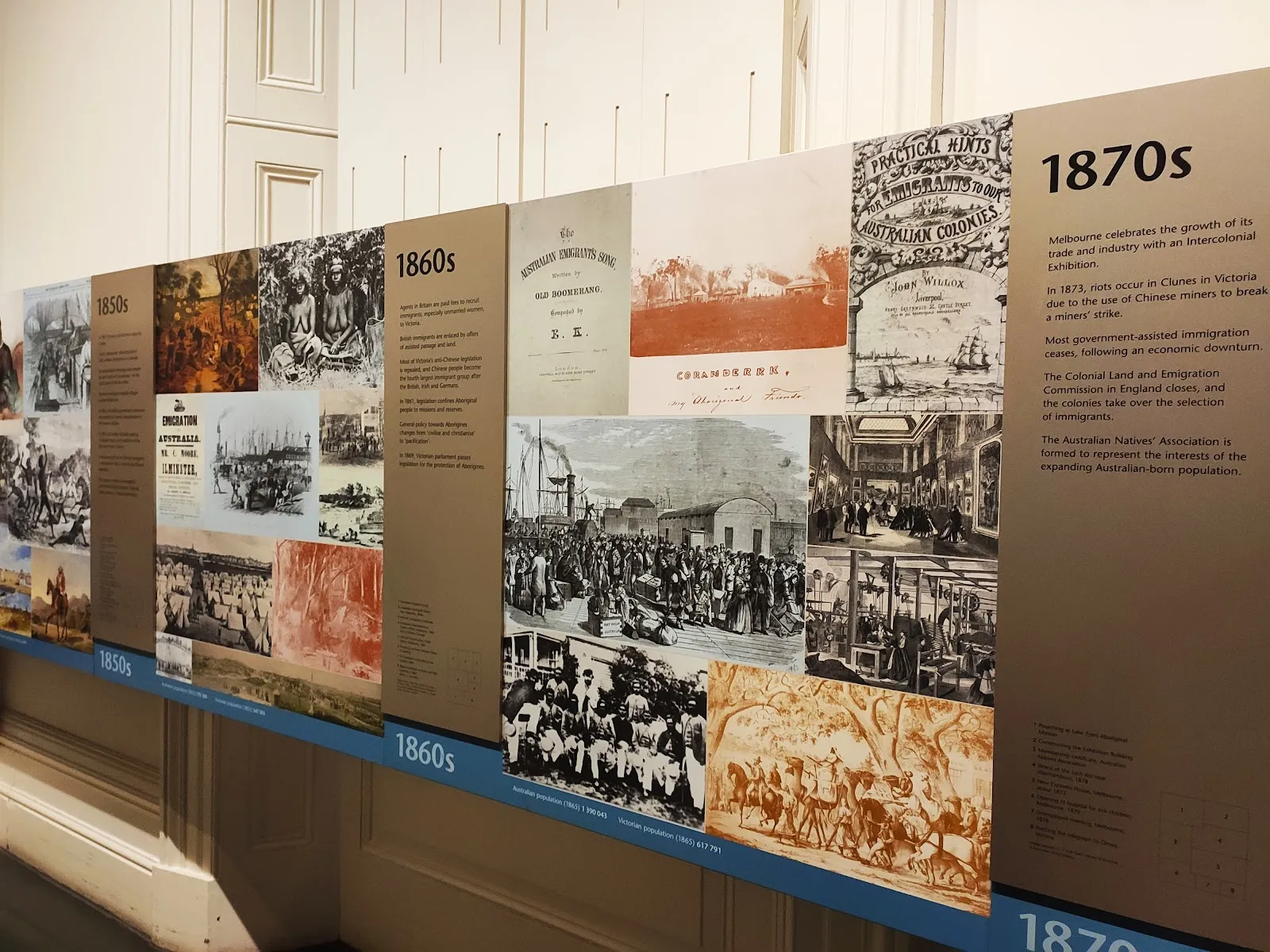
The exhibitions follow people who came to Victoria from different parts of the world, from the 1800s to the present. Personal accounts, photographs, letters, diaries, memorabilia and archival material show the reasons people left, the journeys they made and the challenges of settling in a new country.
Displays also examine immigration policies and how they changed over time. They address the experiences of different communities, including discrimination faced by Chinese people and First Nations Australians. The stories bring individual lives into view while showing how migration has shaped the state’s communities and culture.
Identity, objects and interactive displays
Film, audio-visual material and interactive exhibits complement the historical objects and personal testimony. A gallery on the third floor explores identity, while the museum’s displays invite visitors to think about how people understand home and belonging.
The Immigration Discovery Centre includes a feature for exploring family migration stories. The Tribute Garden honours immigrants from more than 80 countries. Together, these spaces add personal and community perspectives to the broader history in the galleries.
First Nations history is addressed in some parts of the museum, including through the story of the building. It is not a complete account of that history, so visitors seeking a fuller perspective can also look to other sources and institutions in Melbourne.
FAQ
How long should I spend at the Immigration Museum?
Plan for about one to two hours to explore the galleries.
Where is the Immigration Museum?
It is at 400 Flinders Street, Melbourne, inside the Old Customs House.
Are guided tours available?
Guided tours are suggested for visitors who want more context. Check the museum’s website for tour options.
Does the museum cover First Nations history?
Some aspects are covered, including through the history of the building, but the museum’s account is partial.