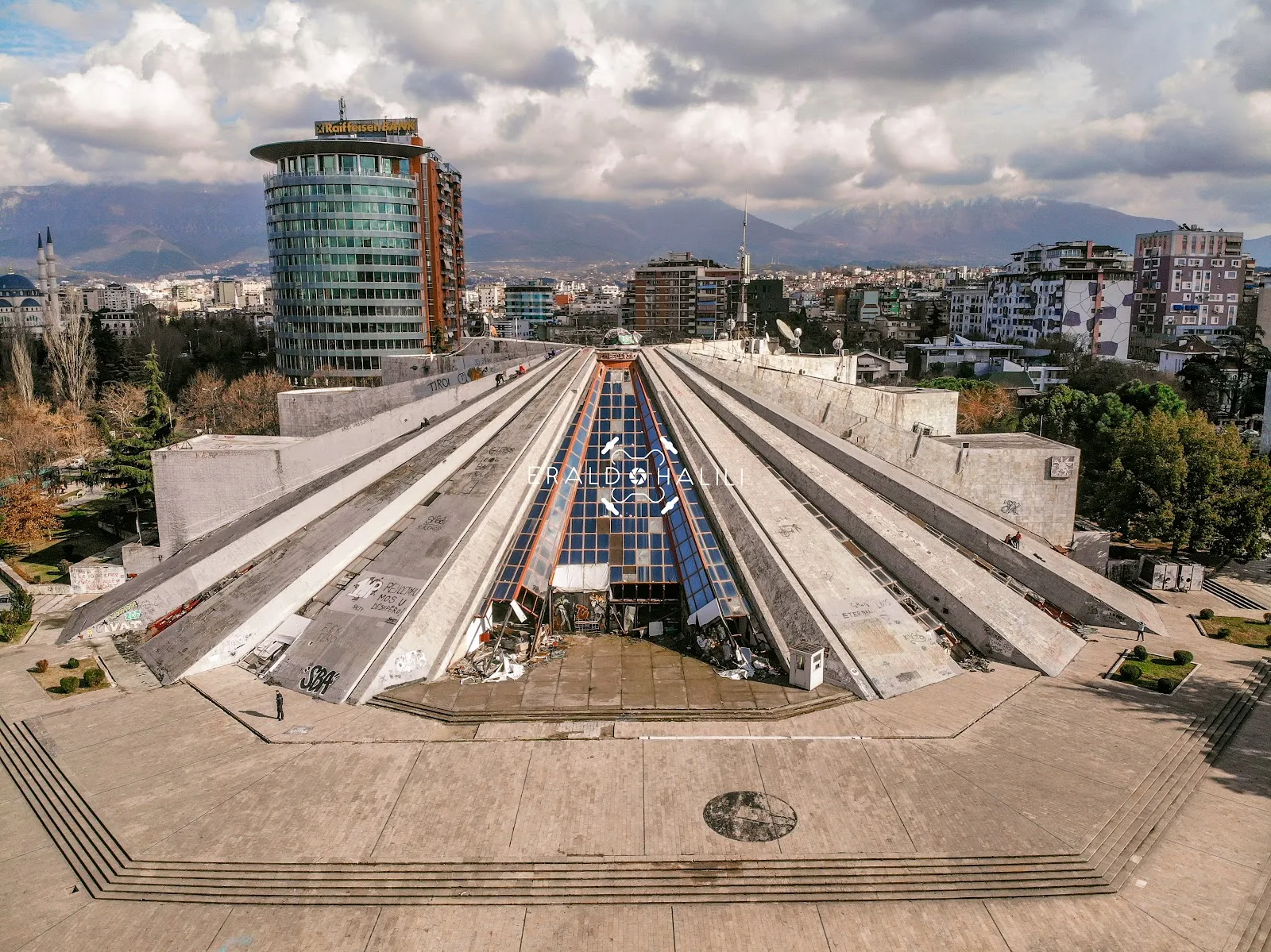
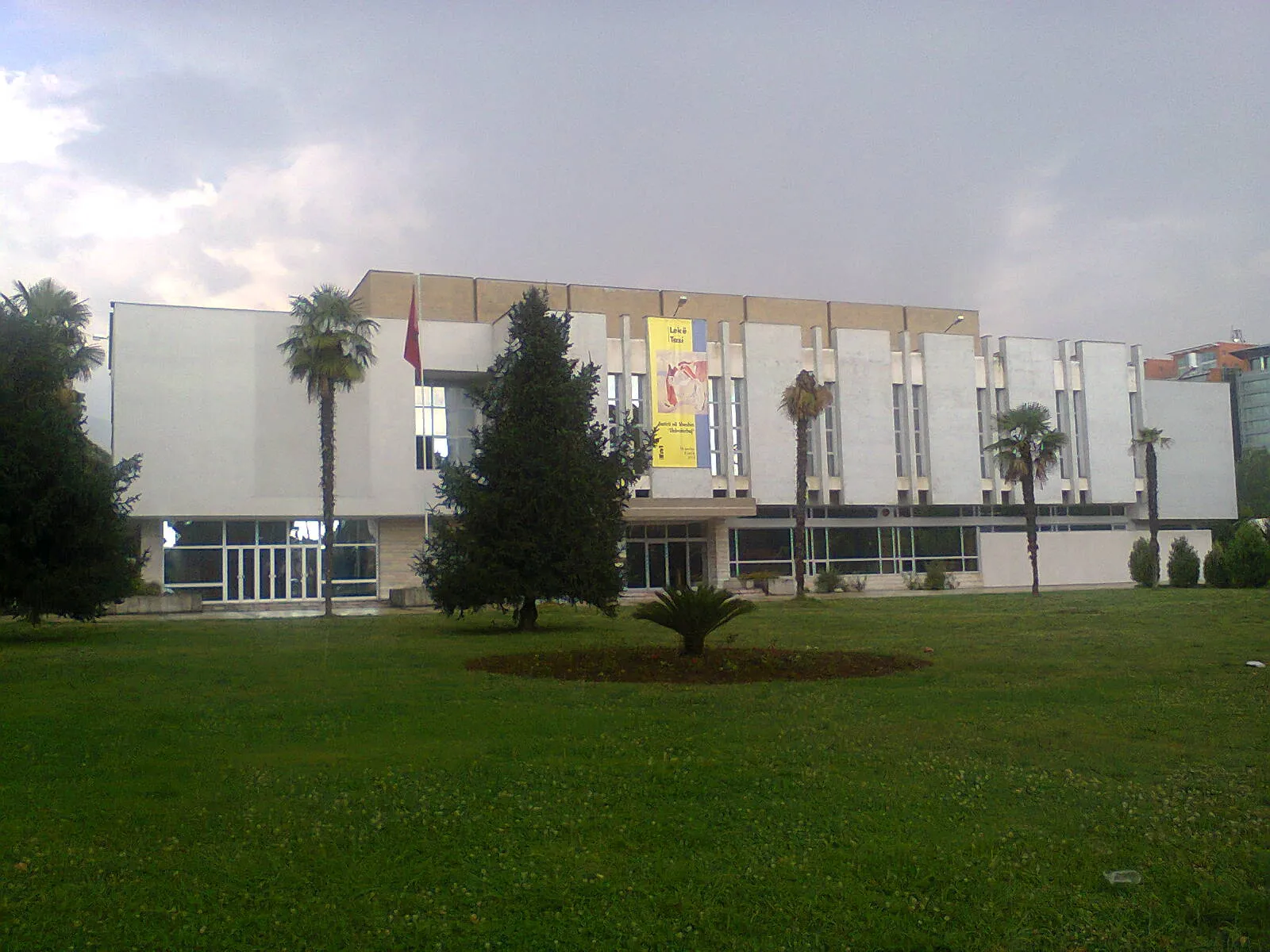
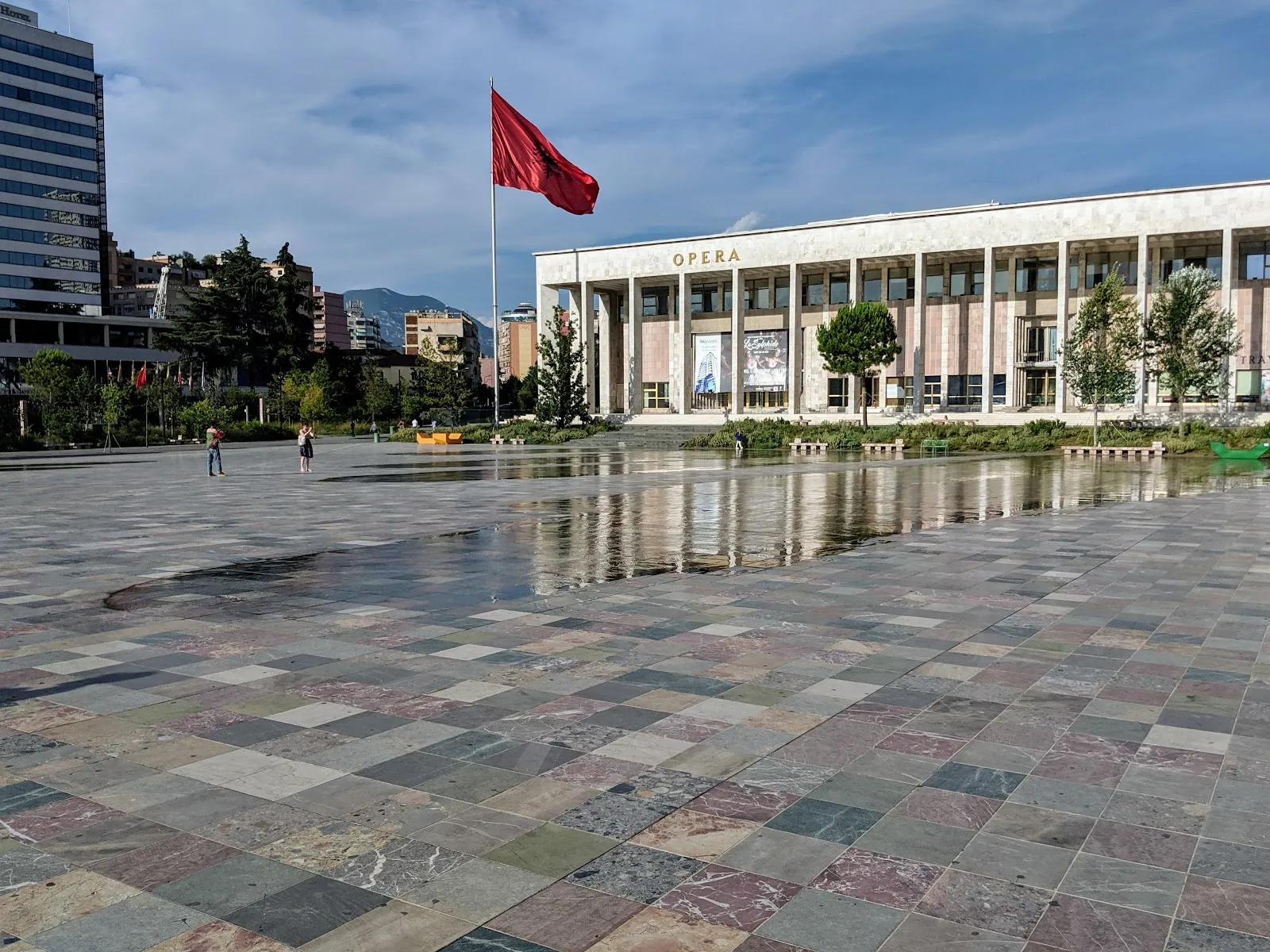
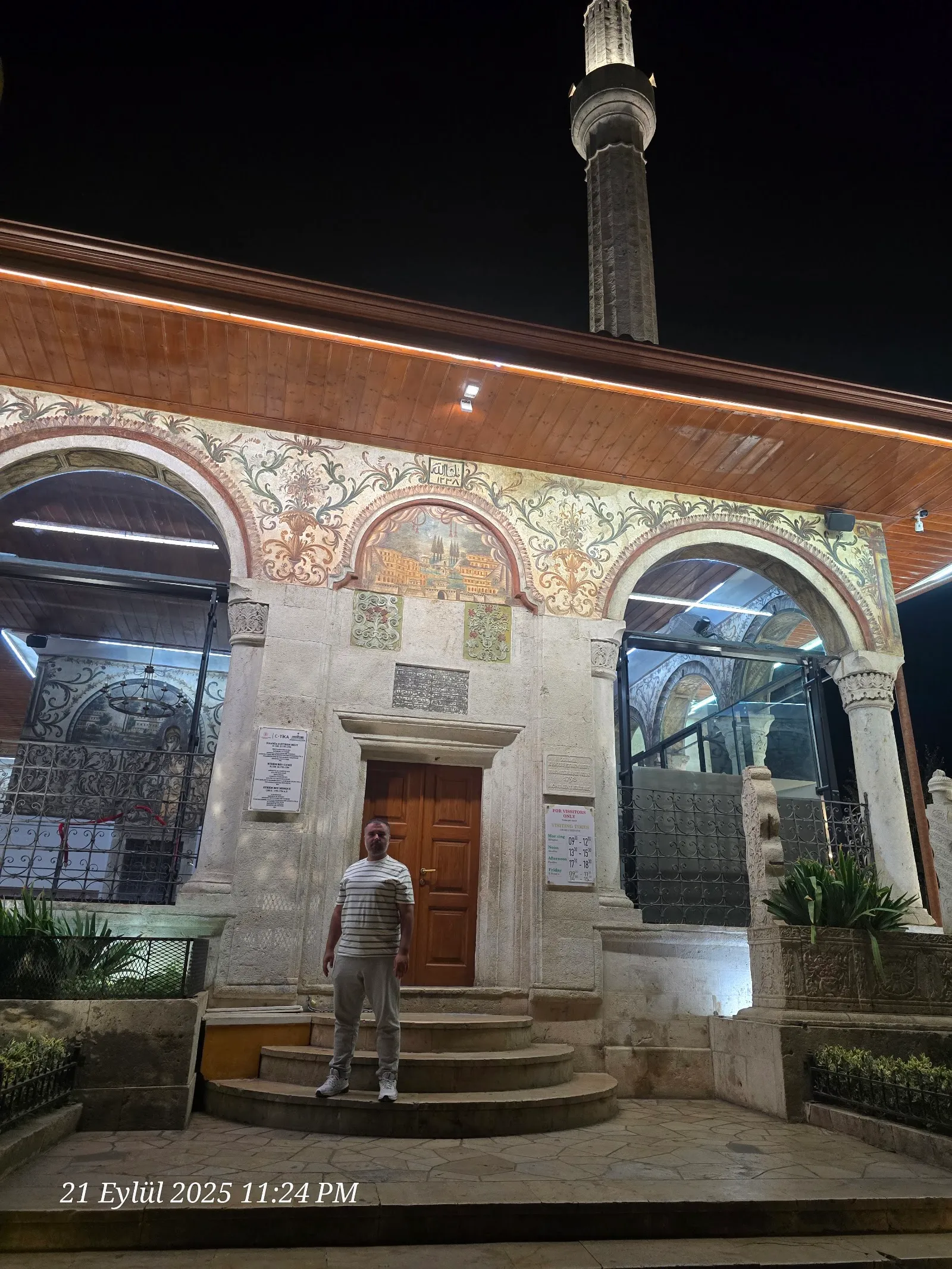
Skanderbeg Square is the main public square of Tirana, Albania's capital, and most of the city's streets lead to it. A statue of Skanderbeg, the 15th-century national hero who resisted the Ottoman Empire, stands in the centre. Around the edges are the Clock Tower, the Et'hem Bey Mosque, the National History Museum and the Opera and Ballet Theatre. Visit by day to see the layout and the statue, then return after dark, when families and locals gather on the square.
From the centre of trade to the government quarter
Until the 1920s, when Tirana became the capital, the square was the centre of the city's commercial, social and religious life. The market, the shops and the cafes gave way to large administrative buildings.
The square and its boulevard were built in 1928 and 1929, and the Boulevard of the Martyrs of the Nation followed in 1930. The boulevard cut through the square and was used for large parades under the communist regime.
The Italian architect Brasini designed New Tirana, including the square and its boulevard. He aimed to limit demolition, and he spared the Et'hem Bey Mosque and the Vlach church of Saint Procopius. He could not save the old church of Saint Prokop or Karapici's Mosque.
The name and the statue
The square was renamed Skanderbeg Square on 26 November 1937. Skanderbeg, also known as Gjergj Kastrioti, led a rebellion against the Ottoman Empire from 1443 to 1468. His campaign gave rise to the idea of an independent Albanian state, which came in November 1912.
A monument to Skanderbeg was unveiled in the square in 1968, on the 500th anniversary of his death. Twenty years later, a monument to Enver Hoxha was added to the square.
The square is named after him across the country, and you will see his name on streets and buildings in many places.
Buildings around the square
The Et'hem Bey Mosque is an 18th-century Ottoman mosque with decorated walls. The National History Museum covers Albania's past from antiquity to the communist period.
Other buildings on or near the square include the National Library, the National Bank, the Opera and Ballet Theatre and the Palace of Culture. Bunk'Art 2 is in the square itself and occupies a former underground bunker used by the ministry of internal affairs.
Nearby streets and areas include Pazari i Ri for local food, Tanner's Bridge, Rinia Park and Murat Toptanı Pedestrian Street, which has boutiques and cafes.
Visiting the square
The square was recently renovated with stone from across Albania. Vehicles are not allowed on the paths, so you can walk across the whole space.
The square hosts celebrations, concerts, fairs and exhibitions. On New Year's Eve and during national celebrations, it hosts live music, fireworks and food trucks.
The entrance, restroom and parking lot are wheelchair accessible. The square also has a playground, karting, a restaurant and bicycle rental.
FAQ
Is Skanderbeg Square open around the clock?
Yes. The square is open at all hours, so you can visit day or night.
Are cars allowed on Skanderbeg Square?
No. The square is for pedestrians only, and no vehicles are allowed on the paths.
Is Skanderbeg Square wheelchair accessible?
The entrance, restroom and parking lot are wheelchair accessible.
Who is Skanderbeg Square named after?
It is named after Skanderbeg, a 15th-century Albanian national hero who resisted the Ottoman Empire for almost 25 years.