Across from the Temple of Literature at 66 Nguyễn Thái Học Street, the Vietnam National Fine Arts Museum traces Vietnamese art from early periods to contemporary work. Its galleries bring together Champa carvings, Buddhist sculpture, folk art, silk paintings, lacquer works and wartime art. Look closely at the wooden figure of Avalokiteshvara, the bodhisattva of compassion, with a thousand arms, and watch the short film explaining how lacquer paintings are made. English labels help you follow the collection through the museum’s historic building.
A former school turned art museum
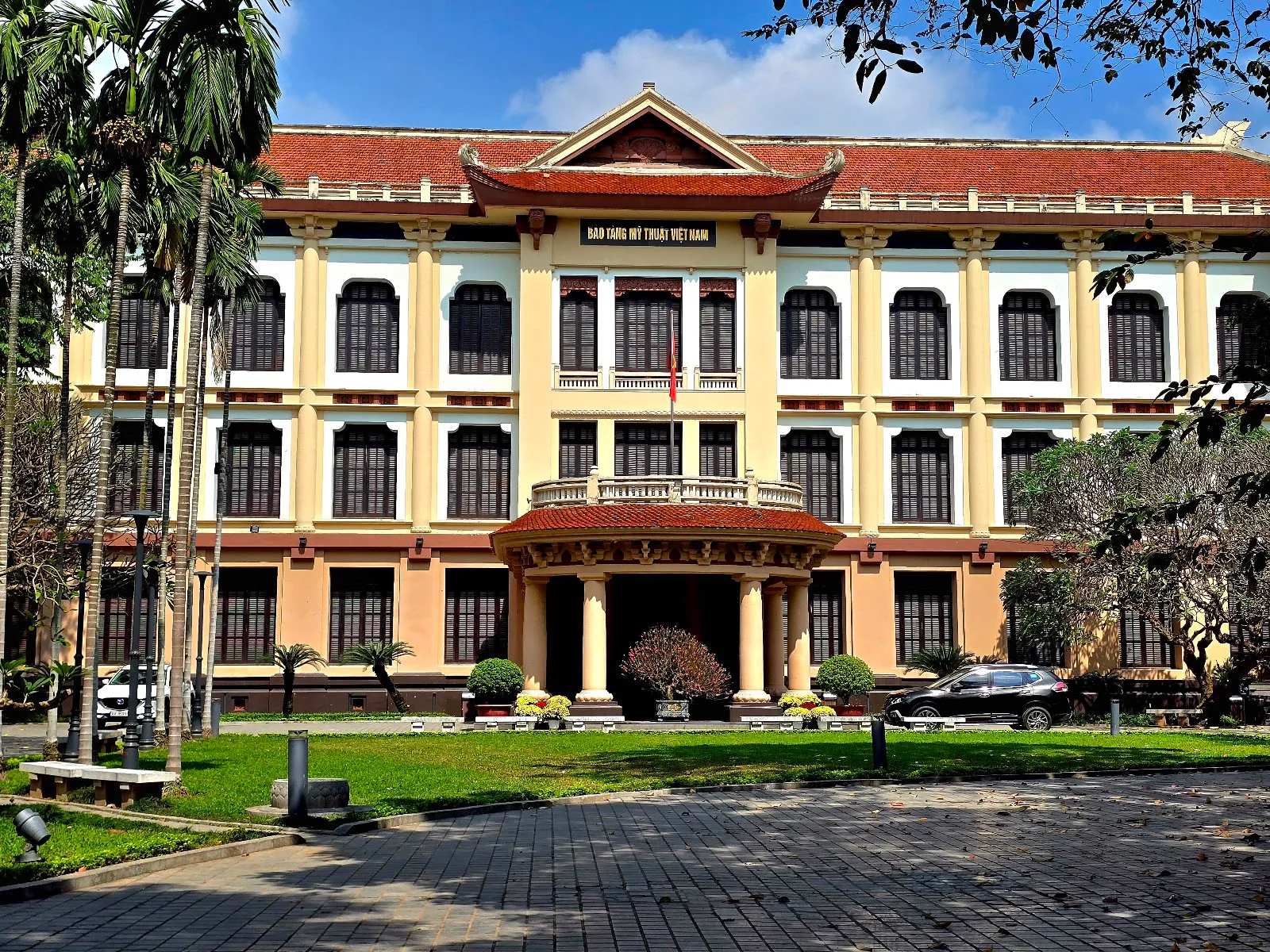
The museum occupies a building constructed in 1937 as a school for the daughters of French officials studying in Hanoi. Its architecture combines European and Vietnamese elements, including a curved tiled roof. The Vietnam National Fine Arts Museum was established in 1966 to research, collect, preserve and exhibit Vietnamese art.
The galleries are arranged to take you through different periods and forms of artistic expression. Paintings, sculpture, ceramics, lacquerware and folk art sit alongside objects from earlier eras. English explanations accompany many works, giving you context as you move through the collection.
Sculpture, lacquer and silk
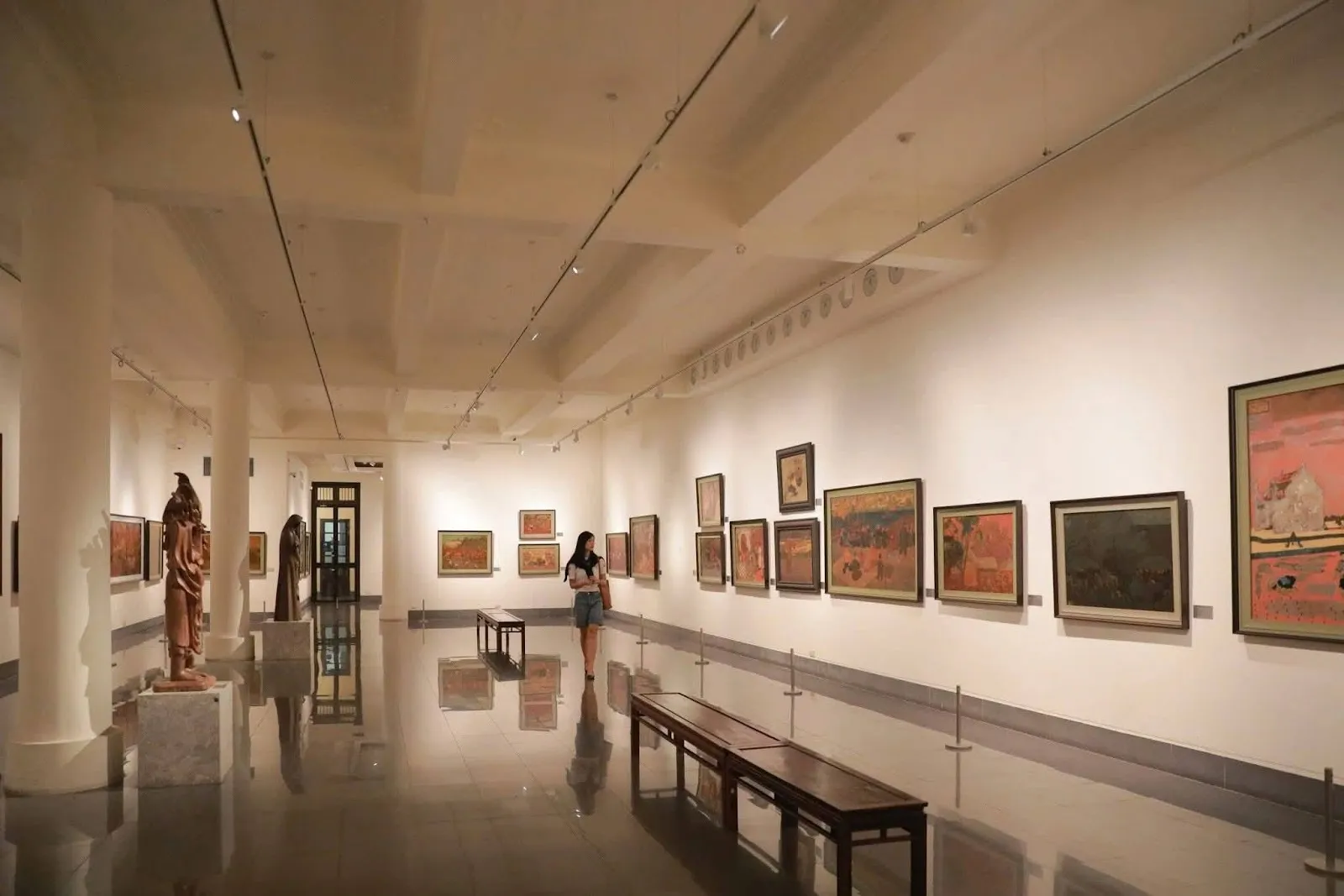
Among the works to look for are Champa carvings and Buddhist sculptures. One prominent piece is a wooden Avalokiteshvara, the bodhisattva of compassion, represented with a thousand arms. The collection also includes religious art and carved wooden panels.
The lacquer and silk painting galleries show two art forms closely associated with Vietnam. A short film explains the process behind lacquer painting, including its layers and polishing. It gives useful context before you look at the finished works. Folk paintings, ceramics and other traditional pieces add further materials and subjects to explore.
From wartime art to contemporary work
The museum’s collection continues into the 20th century and the present. Wartime paintings and posters include works shaped by themes of national defence and sacrifice. Contemporary galleries bring a different range of styles, including abstract works.
Moving between these rooms gives you a view of how Vietnamese art has changed across periods. If you have limited time, choose the areas that interest you most: the collection spans several floors, and there is more to see than a quick circuit allows.
Planning your visit
The museum is at 66 Nguyễn Thái Học Street, opposite the Temple of Literature, so the two visits can fit into the same outing. Its address is also listed as 66 P. Nguyễn Thái Học in Ba Đình.
You can use an audio guide on your phone; bring earphones if you want to listen. A film about lacquer painting is another useful stop inside the galleries. Give yourself around 1.5 to 2 hours to explore. The museum closes at 5 pm, so plan to retrieve any stored belongings before the end of the day.
FAQ
Where is the Vietnam National Fine Arts Museum?
It is at 66 Nguyễn Thái Học Street in Ba Đình, across from the Temple of Literature.
How long should you spend at the museum?
Allow about 1.5 to 2 hours to explore the galleries.
Can you use an audio guide?
An audio guide is available to use on your phone. Bring your own earphones.
What can you see at the museum?
The collection includes Champa carvings, Buddhist sculpture, folk art, lacquer and silk paintings, wartime art and contemporary works.