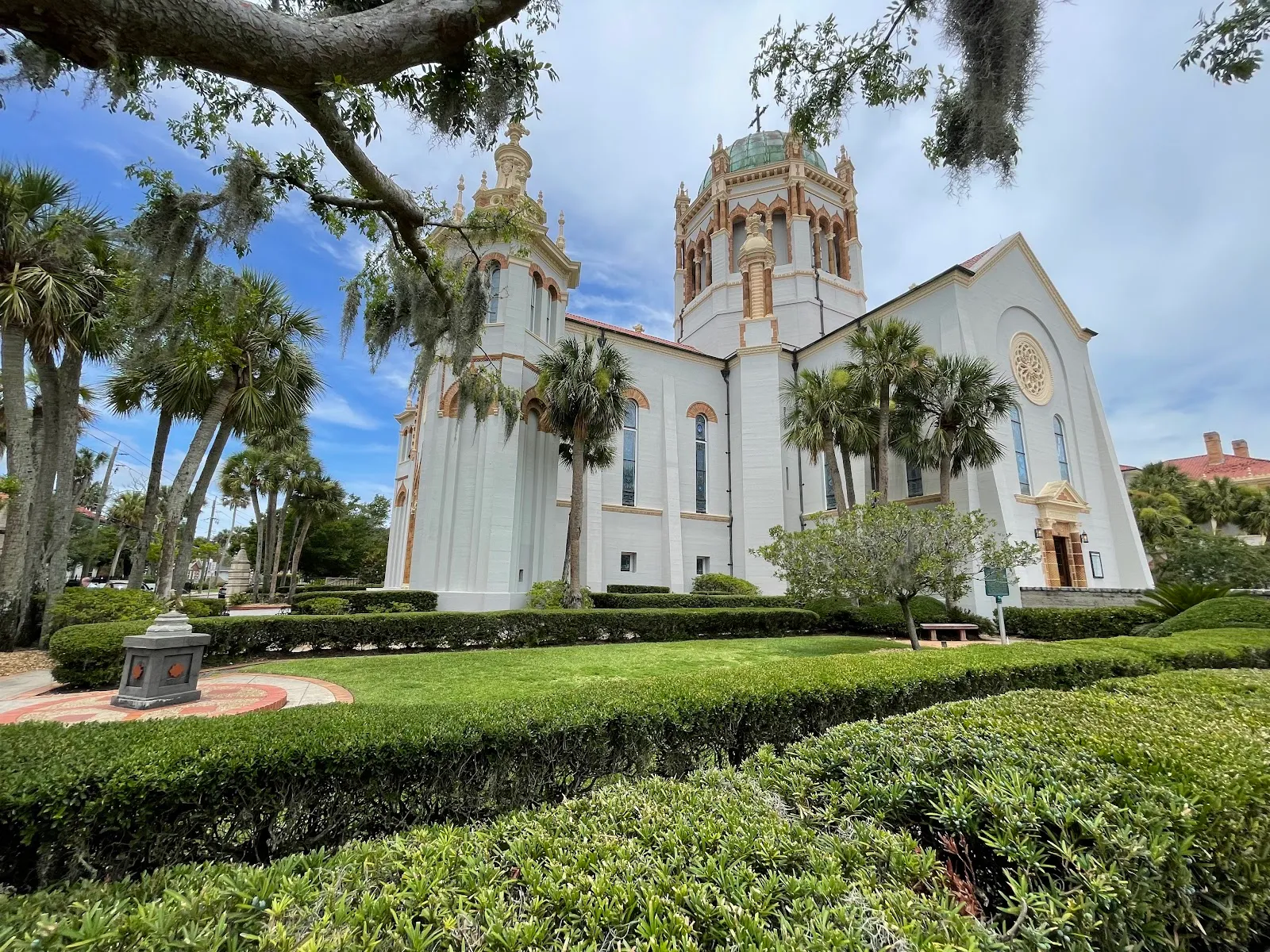
Castillo de San Marcos is a Spanish-built 17th-century fort on the western shore of Matanzas Bay in St. Augustine. Made from coquina, a local stone of shell and limestone, its thick walls, gun deck and interior rooms show how the fortress was built and used to defend the city. Explore at your own pace, read the exhibits and look out over the water from the ramparts. Live historical demonstrations add context when they are scheduled, and the fort is easy to combine with a walk around the nearby historic district.
A Spanish fort on Matanzas Bay
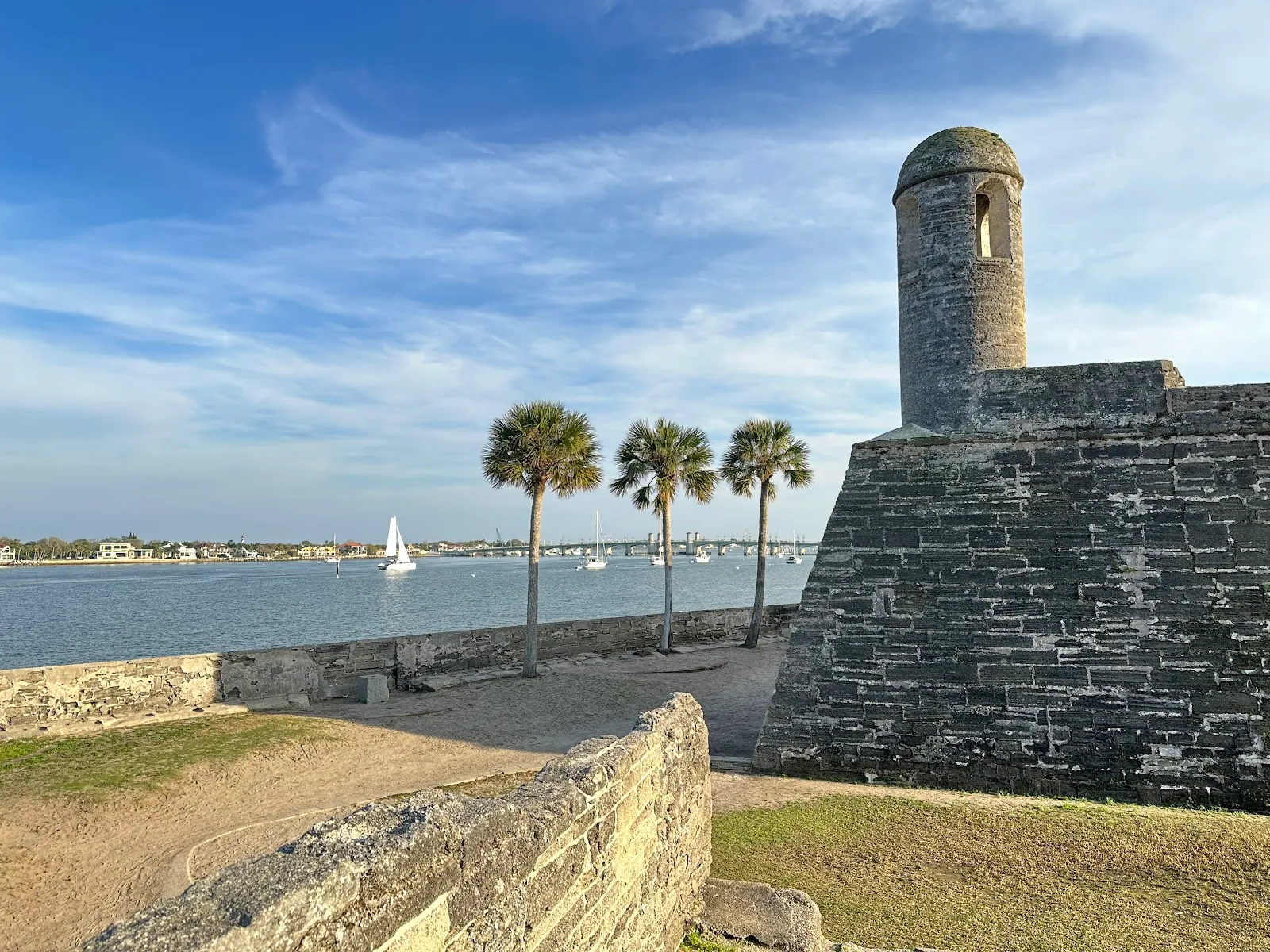
The Castillo de San Marcos was built by the Spanish between 1672 and 1695 to defend St. Augustine and its trade routes. It stands on the western shore of Matanzas Bay, near the north end of the historic district.
The Castillo is the oldest masonry fort in the continental United States. Its stone construction replaced earlier wooden defenses, and the fortress remained unconquered by force. Over time, control of the fort changed between Spain, Britain, the United States and the Confederacy.
Coquina walls and defensive design
The fort is built from coquina, a stone made from shell fragments and limestone. The material was quarried on nearby Anastasia Island and cut into blocks for construction. Unlike harder stone, coquina could absorb the impact of cannon fire without shattering as readily.
The fort’s thick walls, ramparts and gun deck were designed for defense. The interior casemates and the remains of a moat help explain how the site worked as a military stronghold. As you explore, look for the contrast between the rough stone surfaces and the carved details in the structure.
Explore the rooms and exhibits
A self-guided visit takes you through interior rooms once used by soldiers and prisoners, as well as the gun deck and upper walls. Exhibits explain the fort’s construction and history, so there is plenty to see beyond the waterfront views.
You can move through the site at your own pace. Park rangers give historical explanations, and live demonstrations on selected days bring military routines into view. Check the schedule if a demonstration is an important part of your visit.
Views from the ramparts
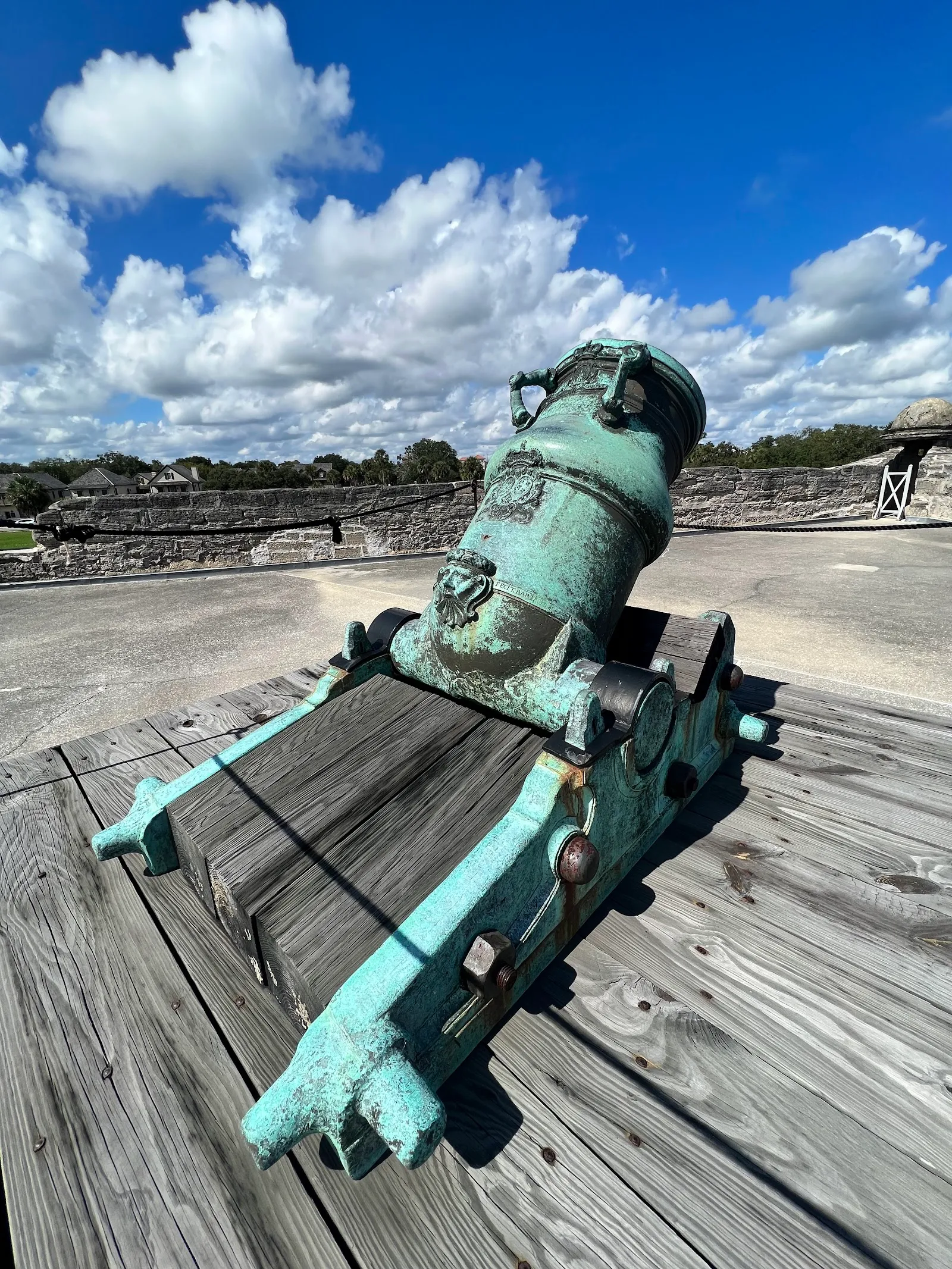
From the upper level, you can look over Matanzas Bay and toward St. Augustine. Sentry posts and cannons provide a closer look at the fort’s defensive features, while benches on the upper level give you a place to pause.
The ramparts are exposed to the sun, so bring water and sun protection on clear, hot days. Early morning and late afternoon are suggested for photographs and waterfront views.
FAQ
How long do you need at Castillo de San Marcos?
Plan for about one to two hours to explore the rooms, exhibits and upper walls. A shorter visit can work if you want to walk through the main fort and see the views.
What is Castillo de San Marcos made of?
The fort is made from coquina, a local stone formed from shell fragments and limestone. It was quarried on nearby Anastasia Island.
Are there live demonstrations at the fort?
Historical demonstrations take place on selected days. Check the schedule before your visit if you want to see one.
Is parking available at Castillo de San Marcos?
Paid parking is available nearby, including a paid lot and street parking. Parking can be difficult to find, so allow extra time.