
Haydarpaşa Train Station stands on the Kadıköy waterfront, where Istanbul’s rail history meets the sea. Opened in 1908 as the terminal linking the city with Anatolia, it is known for its German-designed architecture, stone façade and place in the city’s transport history. Train services are not currently operating, and construction and archaeological work have restricted access to the surrounding area. If you can view the station from the waterfront or a ferry, look for its distinctive roofline against the coast.
A railway gateway on the Kadıköy shore
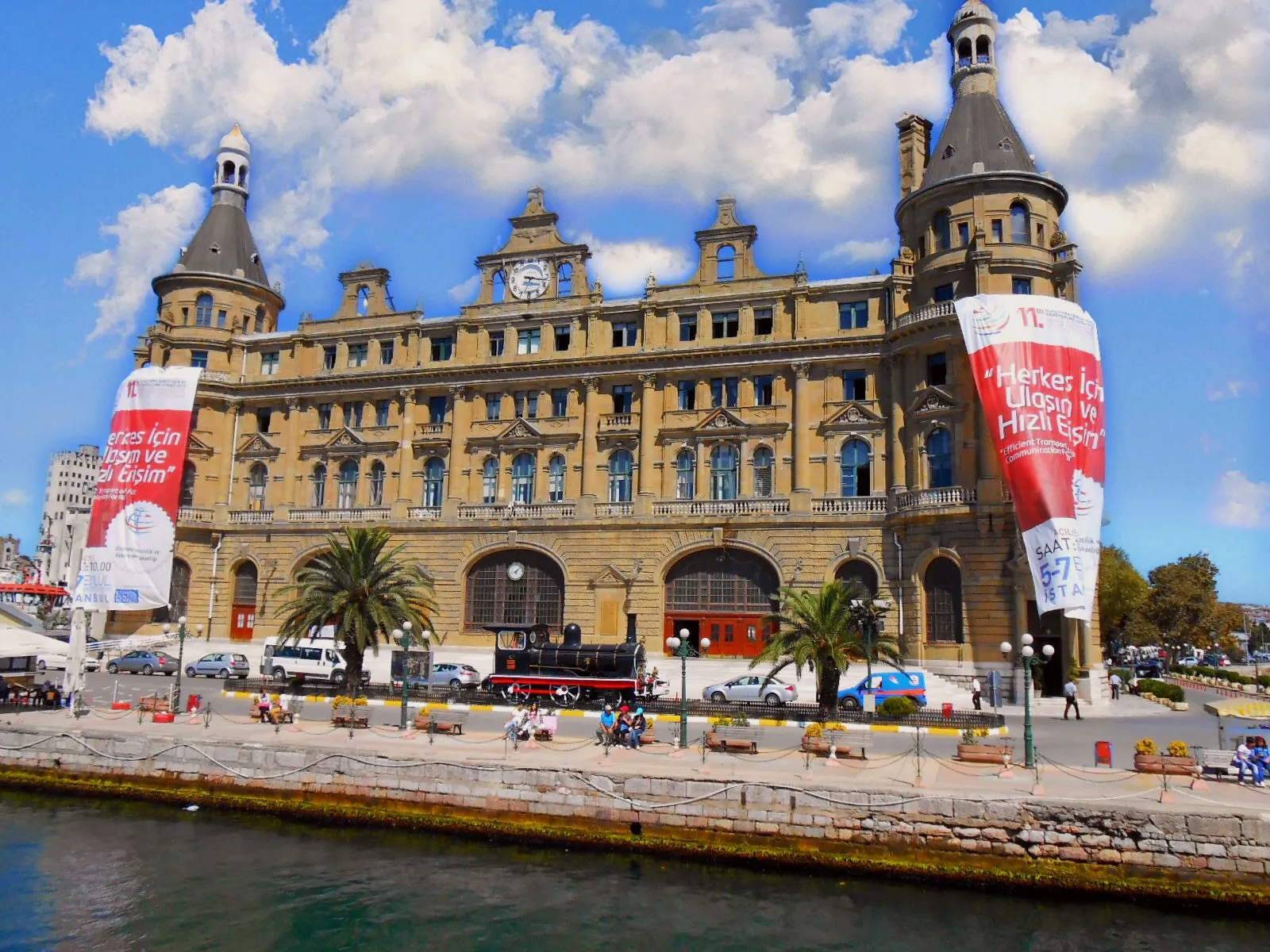
Haydarpaşa was built as the Istanbul terminal of a railway connecting the city with Anatolia. The station opened in 1908, after construction began in 1906 during the reign of Sultan Abdülhamid II. German architects designed the building, and Italian stonemasons worked on its construction.
The site’s connection with transport began before the station was complete. An early railway to İzmit relied on piers and sea routes. Port works carried out between 1900 and 1903 brought freight, passengers and waterfront activity together. When the station opened, rail and harbour traffic shared this part of the shore. Haydarpaşa later became associated with routes towards Baghdad and the Hejaz as well as journeys into Anatolia.
Architecture and waterfront views
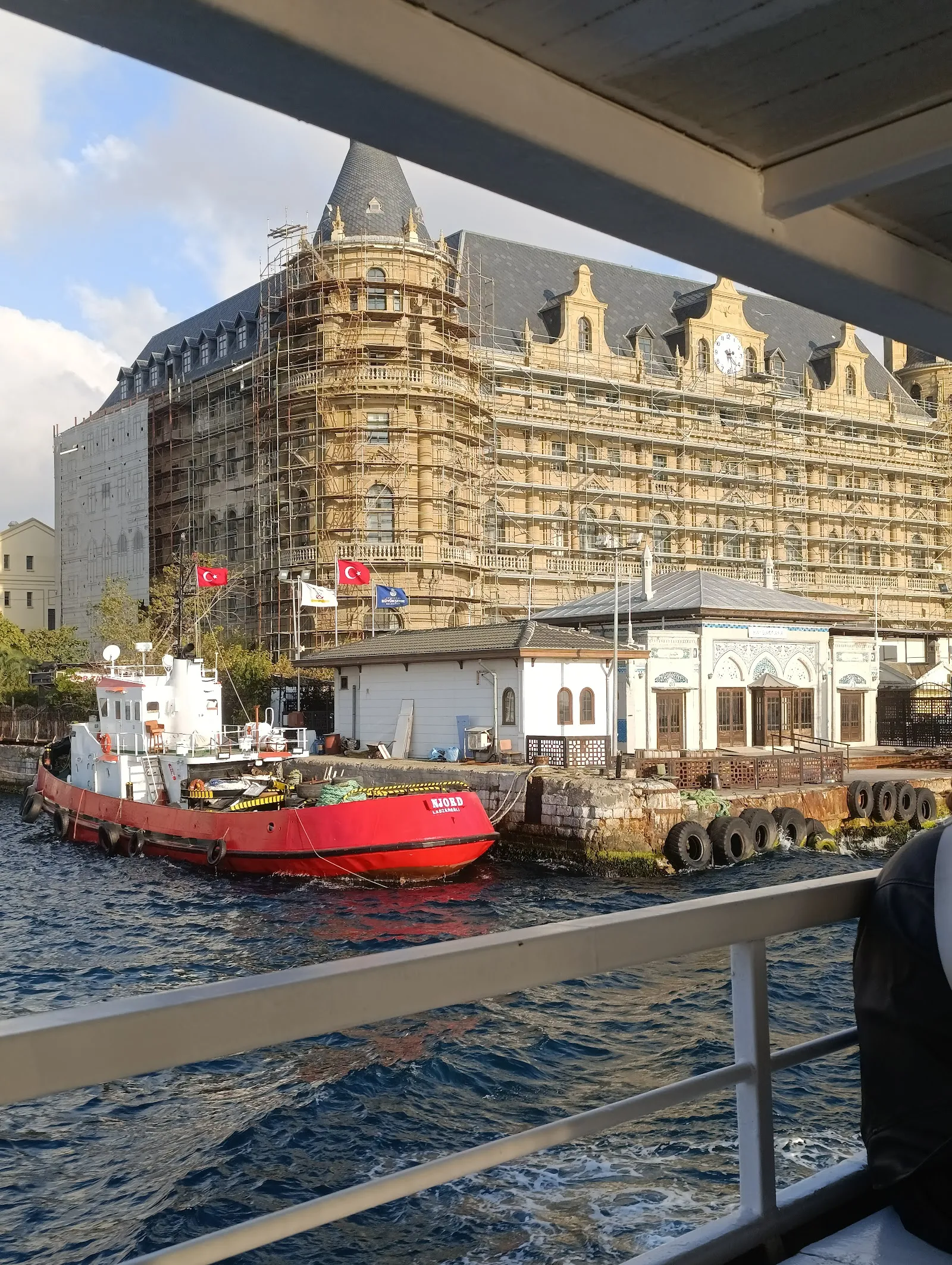
The station’s stone exterior and its position beside the water make it a distinctive landmark on Istanbul’s Asian side. Descriptions of the building note its high, spacious interior rooms, though access inside is restricted. From the shore, the building’s roofline and clock tower are among the details to look for. The sea-facing setting is also a reason to view the station from a ferry or boat.
The station once received trains from different cities and served as a major point of departure for journeys across Anatolia. Its history also reflects changes in railway ownership: after nationalisation, the Anatolian Railway and Haydarpaşa Port became part of the state railway system. The building’s transport role has changed over time, but its location continues to connect its story to both rail and sea.
Access and what to check before you go
Long-distance train services stopped in 2012, when engineering work began on Istanbul’s railway approaches. Later rail work and the Marmaray commuter line also affected services. The station is not currently operating as a regular train terminal. Construction, restoration and archaeological excavations have also affected access around the site, so check local access information before planning to walk up to the building.
Excavations begun in 2018 uncovered layers associated with ancient Khalkedon beneath the station area. This adds an archaeological dimension to a site already shaped by railway and port history. If the immediate surroundings are closed, a ferry crossing or boat trip may still let you see the station from the water. Avoid assuming that the building itself is open to enter.
FAQ
Is Haydarpaşa Train Station operating?
It is not currently operating as a regular train station. Long-distance services stopped in 2012, and later rail work affected services.
Can you go inside Haydarpaşa Train Station?
Access has been restricted by construction and archaeological work around the site. Check local access information before visiting, as the building may not be open to enter.
Where is Haydarpaşa Train Station?
It is on the waterfront in Kadıköy, on Istanbul’s Asian side.
Can you see Haydarpaşa Train Station from a ferry?
Yes. A ferry crossing or boat trip can provide a view of the station from the water.


