
Eyüp Sultan Mosque stands in Istanbul’s Eyüpsultan district, near the Golden Horn. Built after the Ottoman conquest of Constantinople, it is closely associated with Abu Ayyub al-Ansari, a companion of the Prophet Muhammad whose tomb is within the complex. The mosque’s domes and decorated interiors reward a quiet look, while the courtyard gives you space to pause before entering. Walk through the nearby streets to see the area’s tea gardens and local shops, too.
A mosque built after the conquest
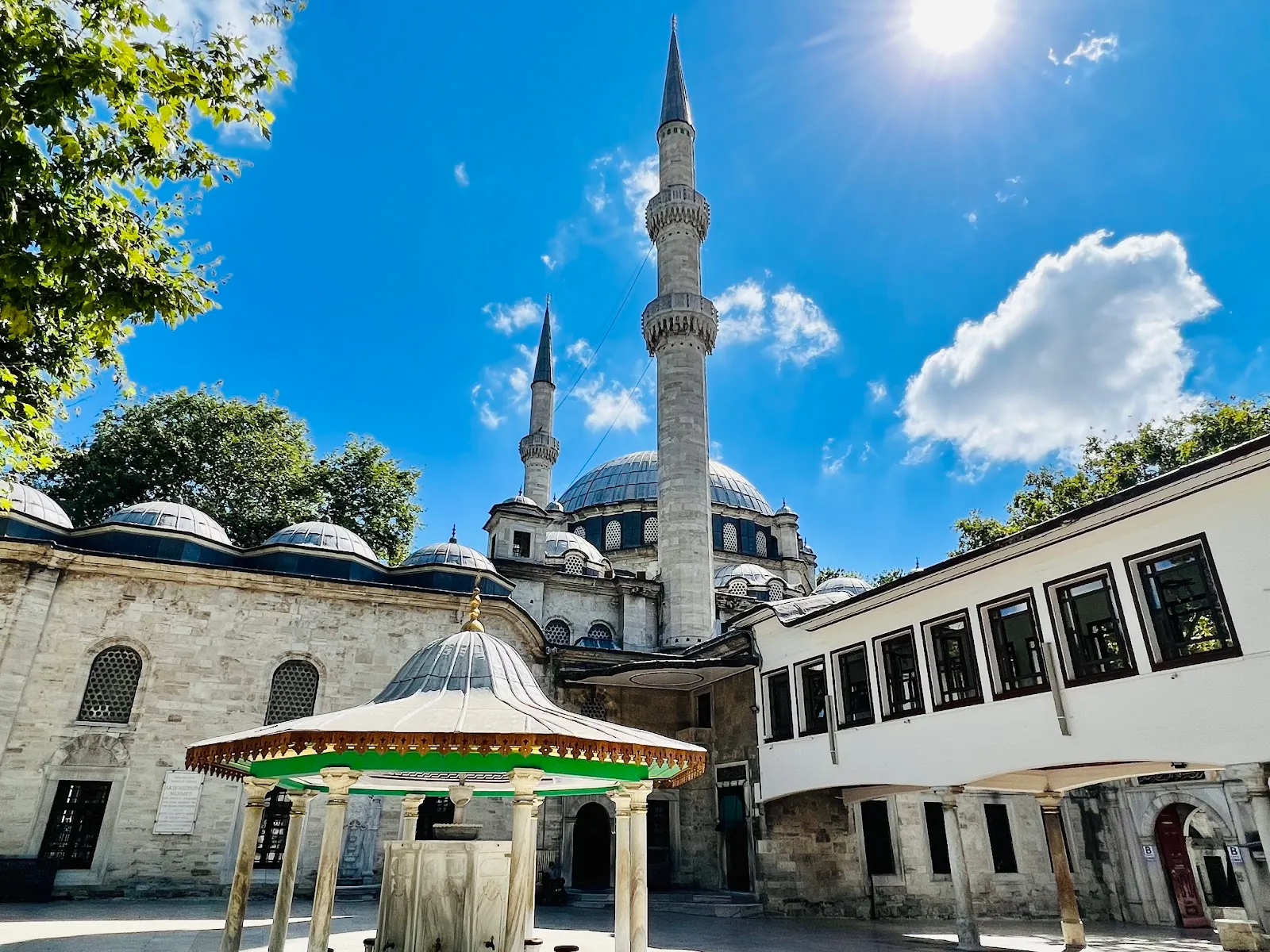
The mosque was commissioned after the Ottoman conquest of Constantinople and completed in 1458. It was built in the Eyüpsultan district, near the Golden Horn, at a site associated with Abu Ayyub al-Ansari. Known as a companion and standard-bearer of the Prophet Muhammad, he is believed to be buried here.
The complex grew over time and included a madrasa, a bathhouse and other buildings. The mosque was badly damaged and underwent rebuilding under Sultan Selim III. Work on the structure was completed around 1800, when its design took on Baroque elements. The present building therefore reflects more than one period of Ottoman architecture.
The tomb and the mosque interior
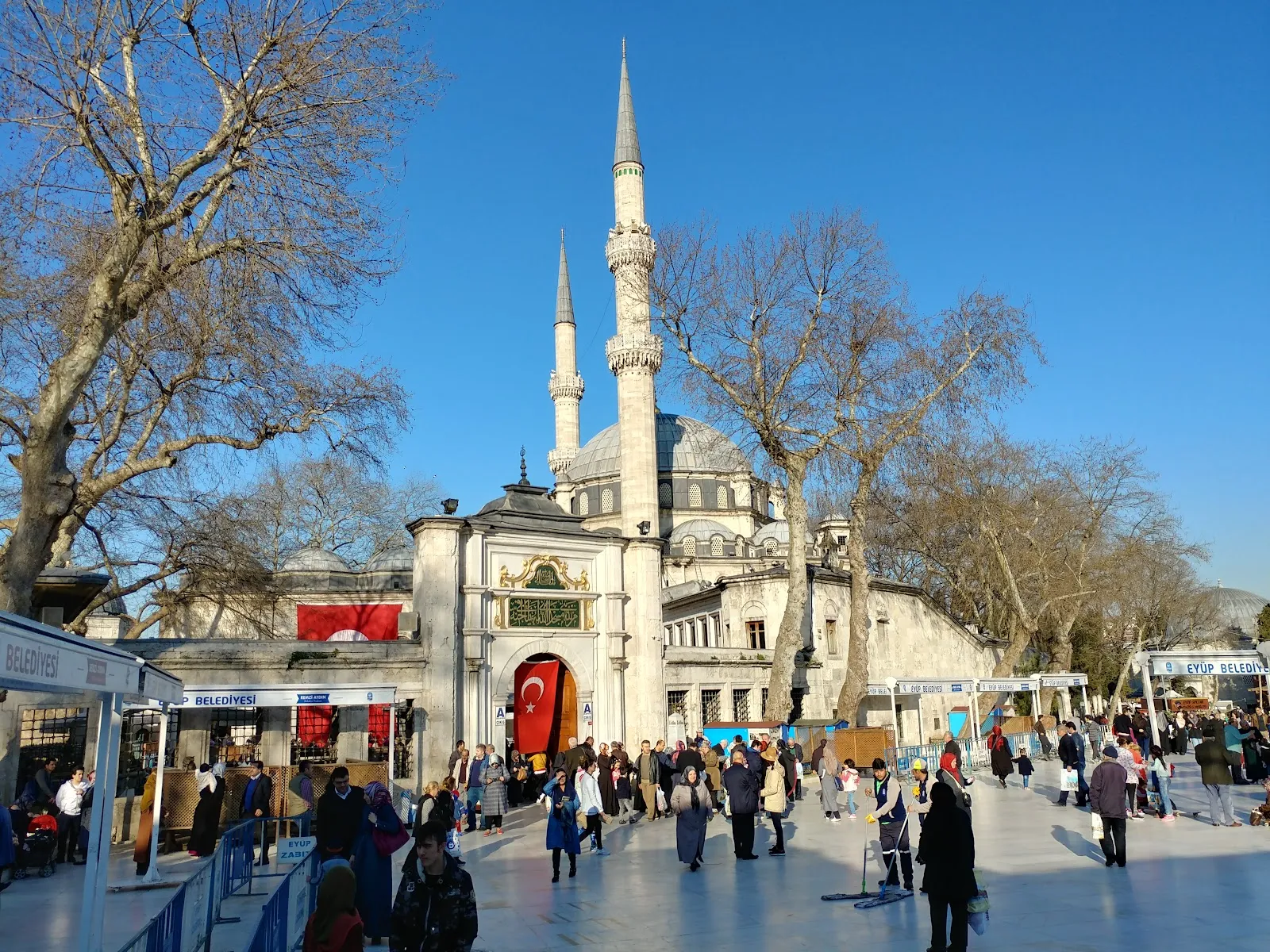
The tomb of Abu Ayyub al-Ansari is within the mosque complex and draws Muslim pilgrims. Its brightly colored tiles are a focal point, with Iznik tilework noted around the tomb. The mosque itself has a large central dome supported by two half domes. Chandeliers and interior decoration add detail to the prayer space.
The tomb is a place of devotion, so keep your movements calm and follow the route through the area. Visitors describe a one-way path in and out; avoid stopping in the narrow passage or blocking people behind you. Remove your footwear before entering the mosque. You can carry it with you in a shoe bag provided at the entrance.
The courtyard and nearby streets
Take a short walk through the courtyard before going inside. The open space is a useful place to orient yourself and see the mosque complex from outside. The surrounding area has narrow streets, tea gardens, shops and food stalls, with a local feel distinct from Istanbul’s main tourist districts.
The mosque is an active place of worship as well as a historic site. Treat the prayer spaces and the people using them with care, and dress appropriately for a mosque visit. Arriving early can give you a more peaceful visit; the site is especially busy on Fridays and during Ramadan. If you have time to continue uphill, a cable car near the Golden Horn connects the area with Pierre Loti, known for views over Istanbul.
FAQ
Who is buried at Eyüp Sultan Mosque?
The complex contains the tomb of Abu Ayyub al-Ansari, a companion of the Prophet Muhammad. His burial at this site is a central reason for the mosque’s religious importance.
What should I wear to Eyüp Sultan Mosque?
Dress appropriately for a place of worship. Remove your shoes before entering; socks are suitable.
When is Eyüp Sultan Mosque busiest?
It is especially busy on Fridays and during Ramadan. An early visit can be quieter.
How long should I allow for a visit?
The input does not give a typical visit duration. The tomb area is compact, and you can add time to explore the courtyard and nearby streets.


