
Bioparc Fuengirola is a zoo in the centre of Fuengirola, a short distance from the Mediterranean. The animals live without cages in planted settings built to resemble tropical forests, and the park is divided into four regions: Madagascar, Equatorial Africa, Southeast Asia and the Indo-Pacific islands. You can see lemurs, gorillas, chimpanzees, Sumatran tigers, orangutans, red pandas and Komodo dragons, and there is an indoor aquarium area too. The park is compact and easy to walk, with shade and places to sit. It also takes part in breeding programmes for endangered species.
A zoo without cages, in the middle of town
Bioparc Fuengirola stands on Calle Camilo José Cela, in the city centre and only a few metres from the Mediterranean. It is next to the bullring and the Parque del Sol. The park was called a zoo until 2010, when it took the name Bioparc because it no longer fitted the ordinary idea of an animal park.
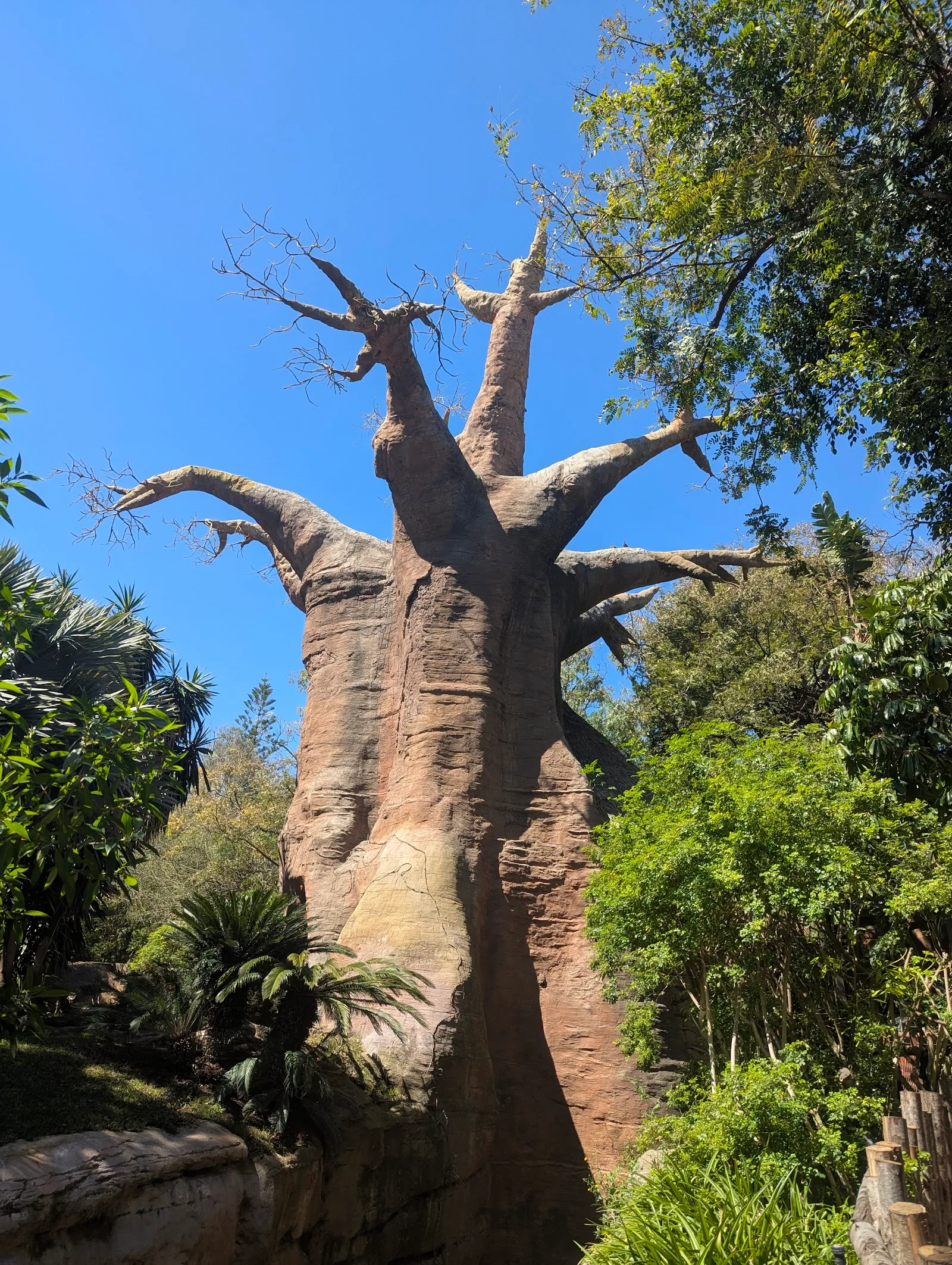
The approach is known as zoo immersion. Instead of looking at animals through bars, you walk through planted landscapes of jungle trees, rock and water, designed to resemble where the animals come from. A giant baobab tree just inside the entrance is the park's emblem. Paths wind between the habitats, and the layout is easy to follow on foot.
Four regions, from Madagascar to Southeast Asia
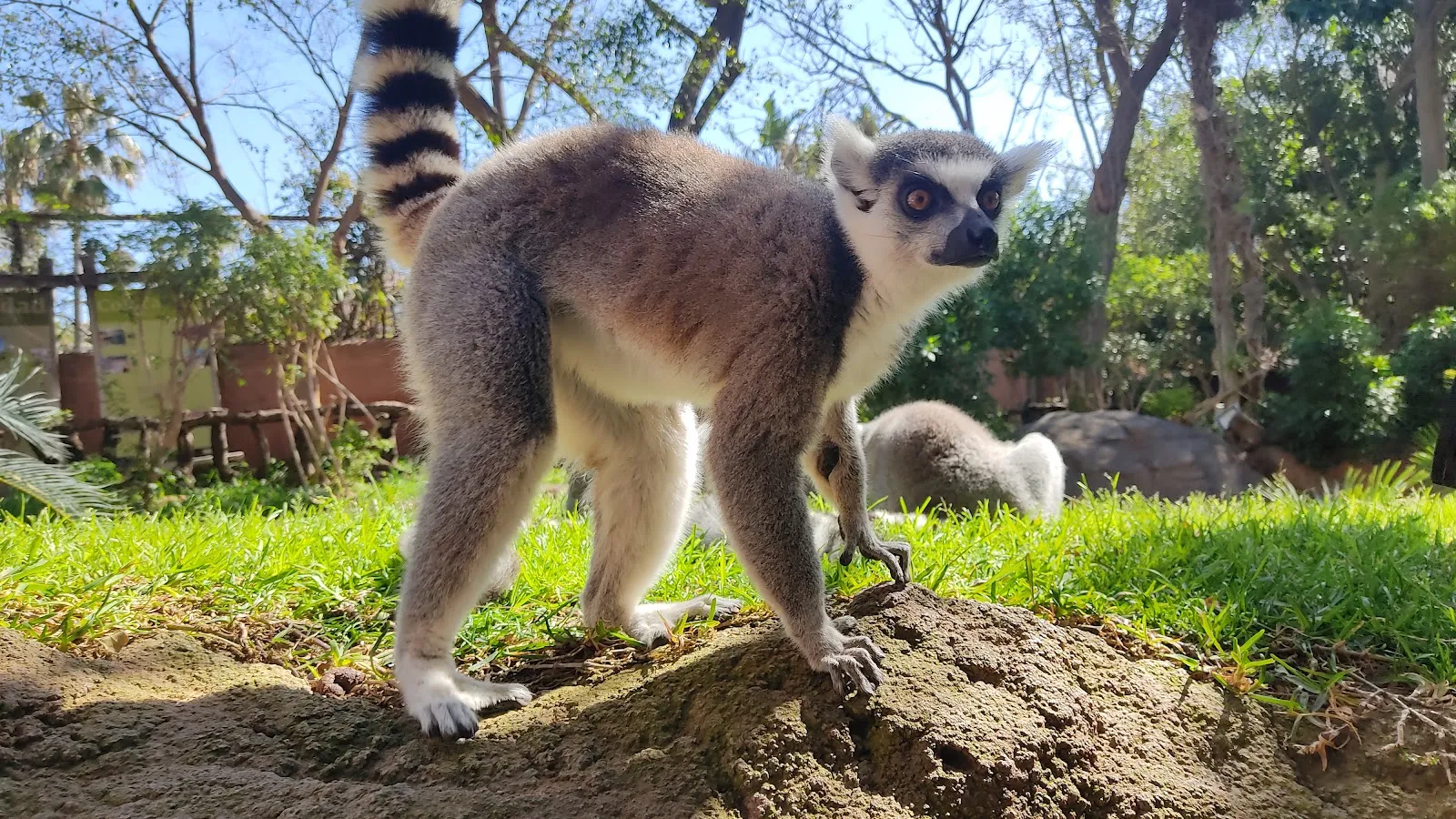
The park is organised by region. Madagascar comes first, with four species of lemur. Equatorial Africa has gorillas, chimpanzees, meerkats, hippos and crocodiles, and its gorilla area, known as the Congo Valley, sits among recreated swamp scenery. Southeast Asia brings tigers, orangutans, leopards, red pandas, turtles and snakes. The fourth region covers the Indo-Pacific islands.
Other animals are spread through the park, including Komodo dragons, pygmy hippos, flamingos, macaws and an Oriental pelican. Axolotls are also on show. The newer indoor area is devoted to fish, with detailed theming and educational displays that reward a slow walk, and a second pass if you want to catch everything.
Animals here can move out of view, and the park lets them. If a gorilla or tiger is out of sight, come back later. Visits at different times of day can show different animals active.
Conservation and education
Bioparc takes part in almost 50 international breeding programmes for endangered species and supports conservation projects in Africa. Rain Forest S.L., the company that manages each Bioparc, set up the Bioparc Foundation in 2007 to promote the protection of biodiversity and the education that goes with it. Today the park is home to around 200 species and more than 1,400 individual animals.
The teaching side shows in the park itself. Boards give information on each type of animal, and there are exhibits on the history of world discovery and Spain's part in it, which suit older children and adults.
Planning the visit
Adult tickets cost roughly €19 to €25 and children's tickets €12 to €18, with discounts available. Check the park's website for current prices. Buying online is recommended, and the online meal-deal ticket is the cheaper way to eat inside.
On site there is a restaurant, a cafe, a snack bar and vending machines for drinks and snacks. Choice at the cafe is limited, so anyone on a special diet should bring their own food, which is permitted. There is a playground and a petting zoo for children, and shaded seating throughout.
In summer the park extends its hours, with evening sessions and special shows, and nocturnal visits are held in July and August. A free lemur tour has been offered at 4 PM, so ask at the entrance whether it is running on your day.
The entrance and restrooms are wheelchair accessible, and so is the car park. There is a free car park as well as paid parking, and a parking garage close to the park.
FAQ
How much does Bioparc Fuengirola cost?
Adult tickets are roughly €19 to €25 and children's tickets €12 to €18, and discounts are available. Prices change, so check the park's website before you go.
How long do you need at Bioparc Fuengirola?
Plan on 2 to 3 hours. The park is compact, but visitors regularly spend more than two hours, and a morning is enough for most.
Can you bring your own food?
Yes, outside food is allowed. The park also has a restaurant, a cafe, a snack bar and vending machines.
Is Bioparc Fuengirola good for children?
Yes. There is a playground, a petting zoo and information boards on each species. Shade and seating make it easy to rest with small children.
Is there parking and is the park wheelchair accessible?
There is a free car park and paid parking, and a parking garage close by. The entrance, restrooms and car park are wheelchair accessible.
Does Bioparc open in the evening?
In summer the park extends its hours with evening sessions and special shows. Nocturnal visits are held in July and August.