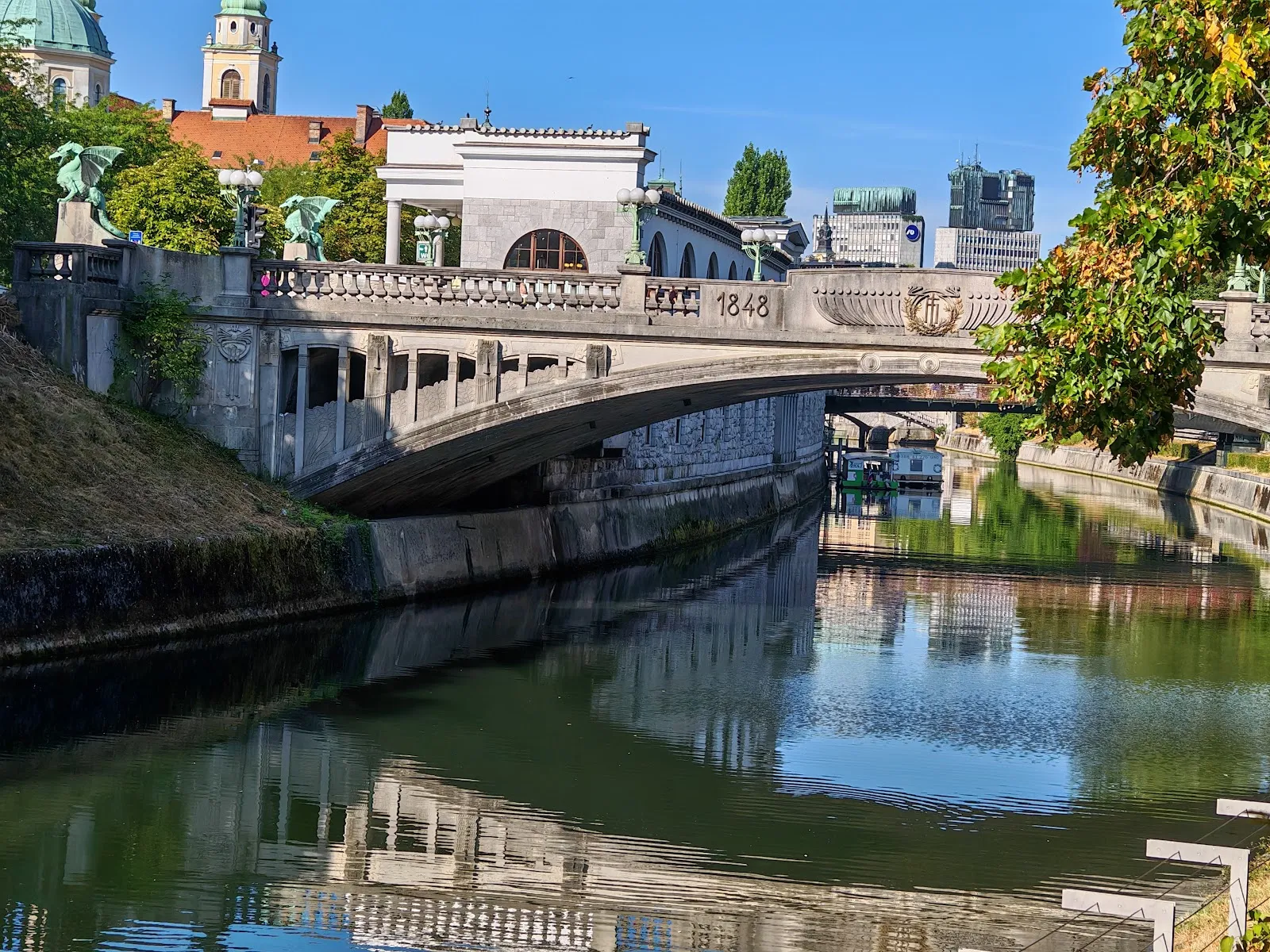
Dragon Bridge crosses the Ljubljanica River in central Ljubljana, close to the Central Market and the Old Town. Four copper dragons guard its corners, with smaller dragon ornaments and griffin figures adding detail along the bridge. Opened in 1901, it was one of Europe’s early reinforced-concrete bridges and is a distinctive example of Art Nouveau and Vienna Secession design. Take time to look beyond the large statues, then continue to the market or follow the river to other central bridges.
The dragons and the city’s legend
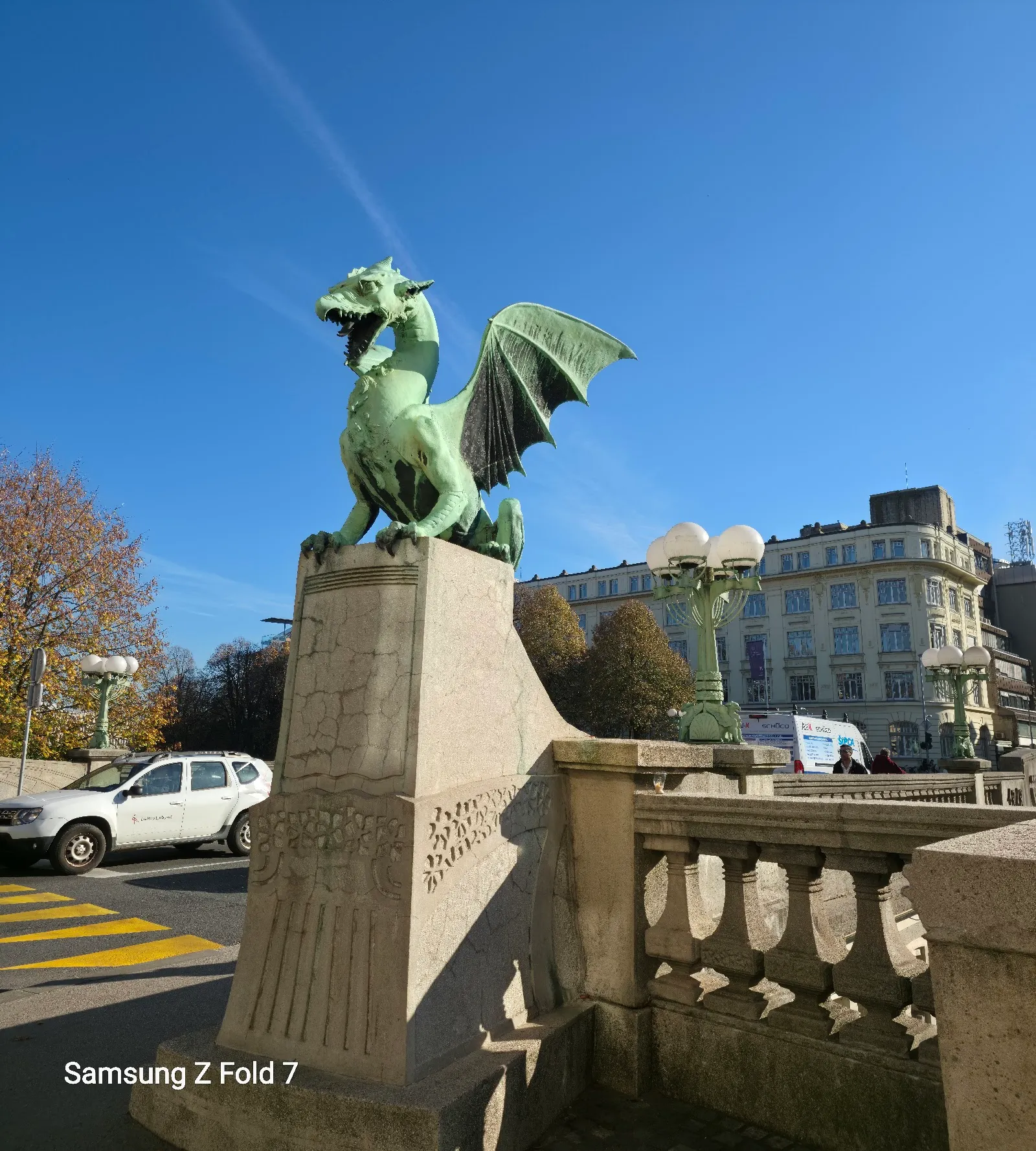
Four large copper dragons stand at the corners of the bridge, facing the river and the approaches. Their open mouths and carefully shaped bodies give them a stern appearance. Look along the railings and lamp posts, too, for smaller dragon ornaments and griffin figures.
Dragons are a familiar symbol in Ljubljana, appearing in the city’s coat of arms and elsewhere around town. One local legend links the city’s beginnings to Jason and the Argonauts. After taking the Golden Fleece, Jason and his companions are said to have travelled through the region and encountered a dragon. The story is one explanation for the creature’s place in Ljubljana’s identity.
An early reinforced-concrete bridge
The bridge opened in 1901 and is known for its Art Nouveau and Vienna Secession design. Its reinforced-concrete construction was an early example of the material in European bridge building, and it was Ljubljana’s first reinforced-concrete structure. The engineering achievement sits alongside the sculptural decoration: this is a working city crossing as well as a prominent landmark.
Architect Jurij Zaninović designed the bridge and its dragon figures. The statues were made from sheet copper in Vienna. Their placement at the four corners gives the bridge a strong outline from the riverbanks, while the smaller details reward a closer look from the walkway.
Adding the bridge to a central Ljubljana walk
Dragon Bridge is near the Central Market, making the two easy to combine on foot. After looking at the sculptures, continue towards the market or follow the Ljubljanica to see other bridges in the city centre. Ljubljana Castle is another nearby landmark to add to a longer day of sightseeing.
The bridge is open around the clock and vehicles use it, so stay aware of traffic as you cross or pause for photographs. It is a brief stop on its own; give yourself a little longer if you want to examine the metalwork and take pictures from more than one angle. Sunrise, sunset and twilight are suggested times to visit for softer light and a less busy feel.
FAQ
Where is Dragon Bridge in Ljubljana?
It crosses the Ljubljanica River in central Ljubljana, near the Central Market and the Old Town.
What is Dragon Bridge known for?
Four copper dragon statues stand at its corners. The 1901 bridge is also known for its Art Nouveau design and early use of reinforced concrete.
How long do you need at Dragon Bridge?
Allow about 10 to 20 minutes to cross, look at the details and take photos.
When is a good time to visit Dragon Bridge?
Sunrise, sunset and twilight are suggested for softer light and a quieter visit.