Belfast Botanic Gardens is a public park beside Queen’s University in the city’s Queen’s Quarter. Its flower beds, rose garden and mature trees make a restful place to walk or picnic, while the Palm House and Tropical Ravine bring tropical plants into historic glasshouses. The grounds are free to enter and have paths suited to a range of visitors. Pair a stroll with the nearby Ulster Museum or Queen’s University, or set aside extra time to explore the glasshouses at an unhurried pace.
A garden founded for botany
The Belfast Botanic and Horticultural Society established the gardens in 1828, responding to local interest in horticulture and botany. The grounds began as a private garden, with exotic trees and plant collections that included species from the Southern Hemisphere. Belfast Corporation bought the site in 1895, and it became a public park.
The gardens sit beside Queen’s University in south Belfast. Their role has long extended beyond plant collections: lawns and paths provide space for everyday walks, picnics and gatherings, and the grounds also host concerts and festivals.
The Palm House
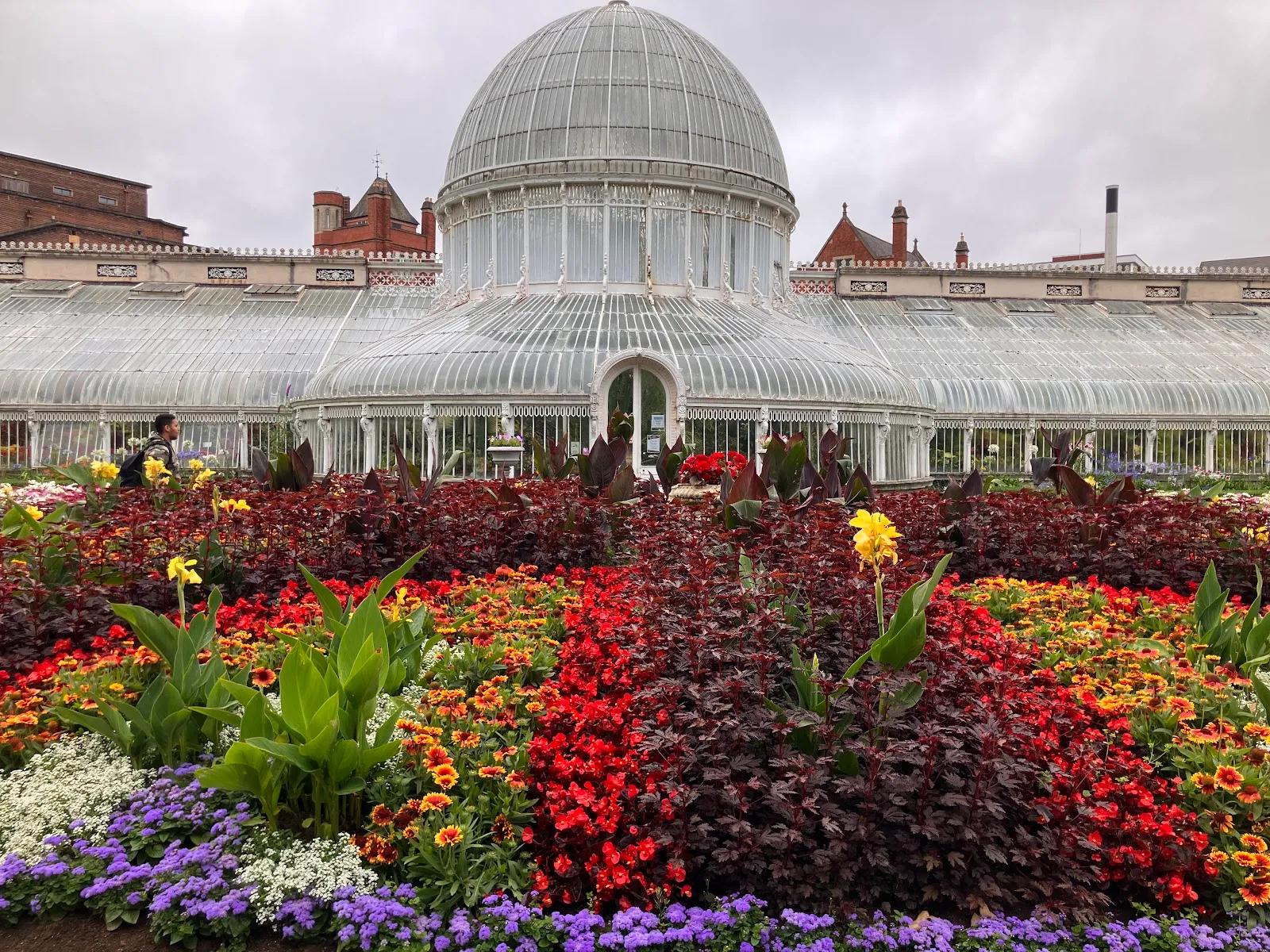
The Palm House is the gardens’ best-known glasshouse. Designed by Charles Lanyon, it was built from curved iron and glass, an early example of this kind of construction. Its birdcage-shaped dome gives the building a distinctive profile among the surrounding trees and flower beds.
Inside, tropical plants grow alongside seasonal displays. Birds of paradise are among the plants associated with the collection. The glasshouse combines Victorian engineering with a setting for species that would not grow outdoors in Belfast’s climate.
The Tropical Ravine
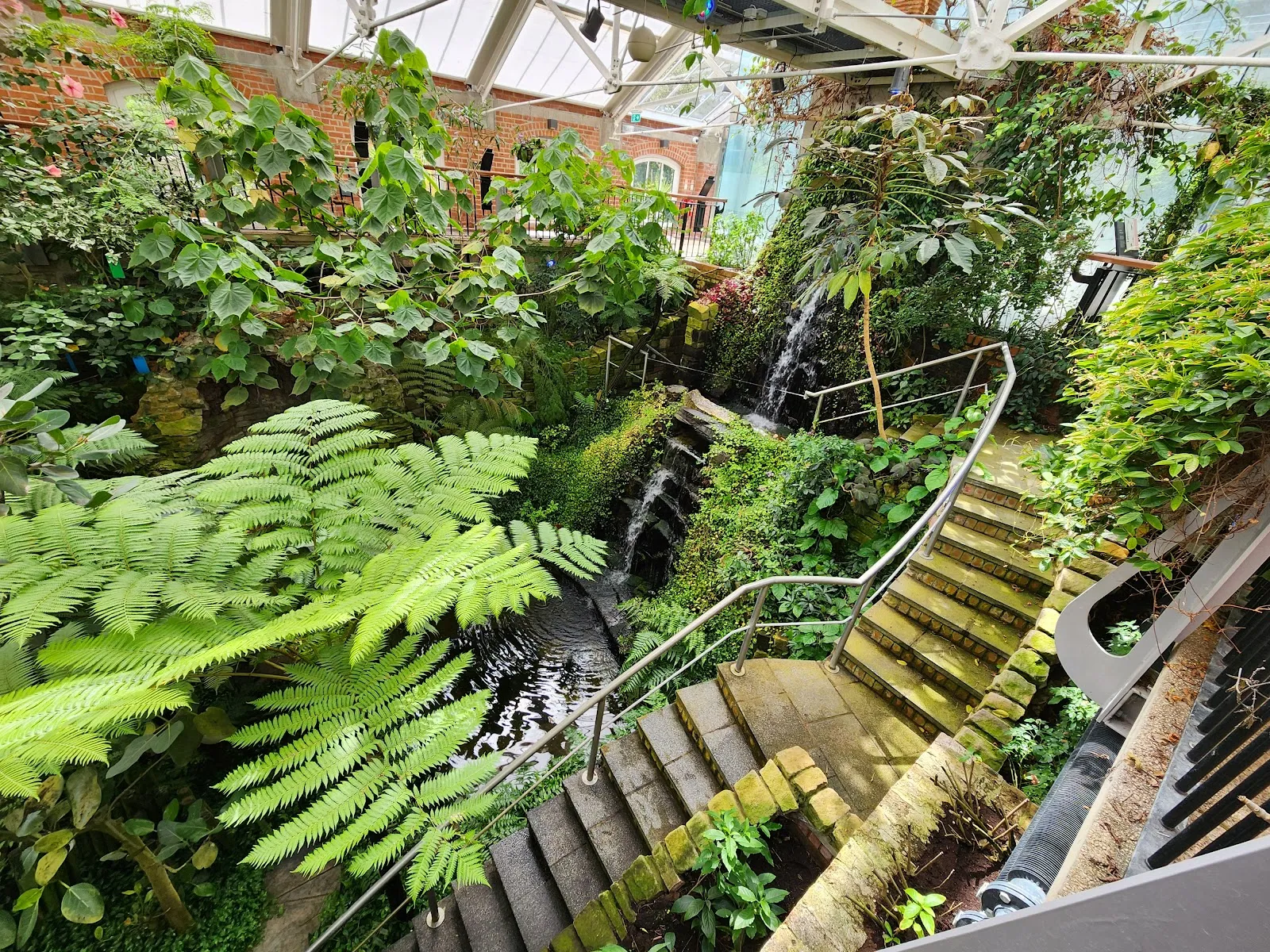
The Tropical Ravine occupies a red-brick Victorian building designed by garden curator Charles McKimm. Its sunken planting area creates a different experience from the open lawns and formal beds outside. A raised walkway looks down over tropical ferns, orchids, lilies and banana plants.
The ravine’s collection includes tropical and native plants, with some species associated with the Southern Hemisphere. Its enclosed setting helps explain the contrast between the plants inside and the mature trees and flower borders around the park.
Paths, flowers and nearby stops
Outside the glasshouses, the gardens include a rose garden, seasonal flower displays, lawns, sculptures and established trees. Paths connect these areas, with benches and open spaces for a slower visit. The gardens are also a practical stop alongside the Ulster Museum, which is next door, or Queen’s University, whose Lanyon Building is nearby.
The gardens are free to enter. If the glasshouses are a priority, check their access times before setting out, as they may not follow the same schedule as the grounds. In spring and through the growing season, flower displays bring more colour to the outdoor paths and beds.
FAQ
Is entry to Belfast Botanic Gardens free?
Yes. Entry to the gardens is free.
How long should I allow for a visit?
Allow around 1 to 3 hours for the gardens and glasshouses. Add time if you are also visiting the Ulster Museum.
What are the main things to see?
The Palm House, Tropical Ravine and rose garden are key stops. The grounds also have flower beds, mature trees, lawns and sculptures.
Are the glasshouses open at the same times as the gardens?
Their access times can differ from those of the grounds. Check before your visit if you want to see a particular glasshouse.