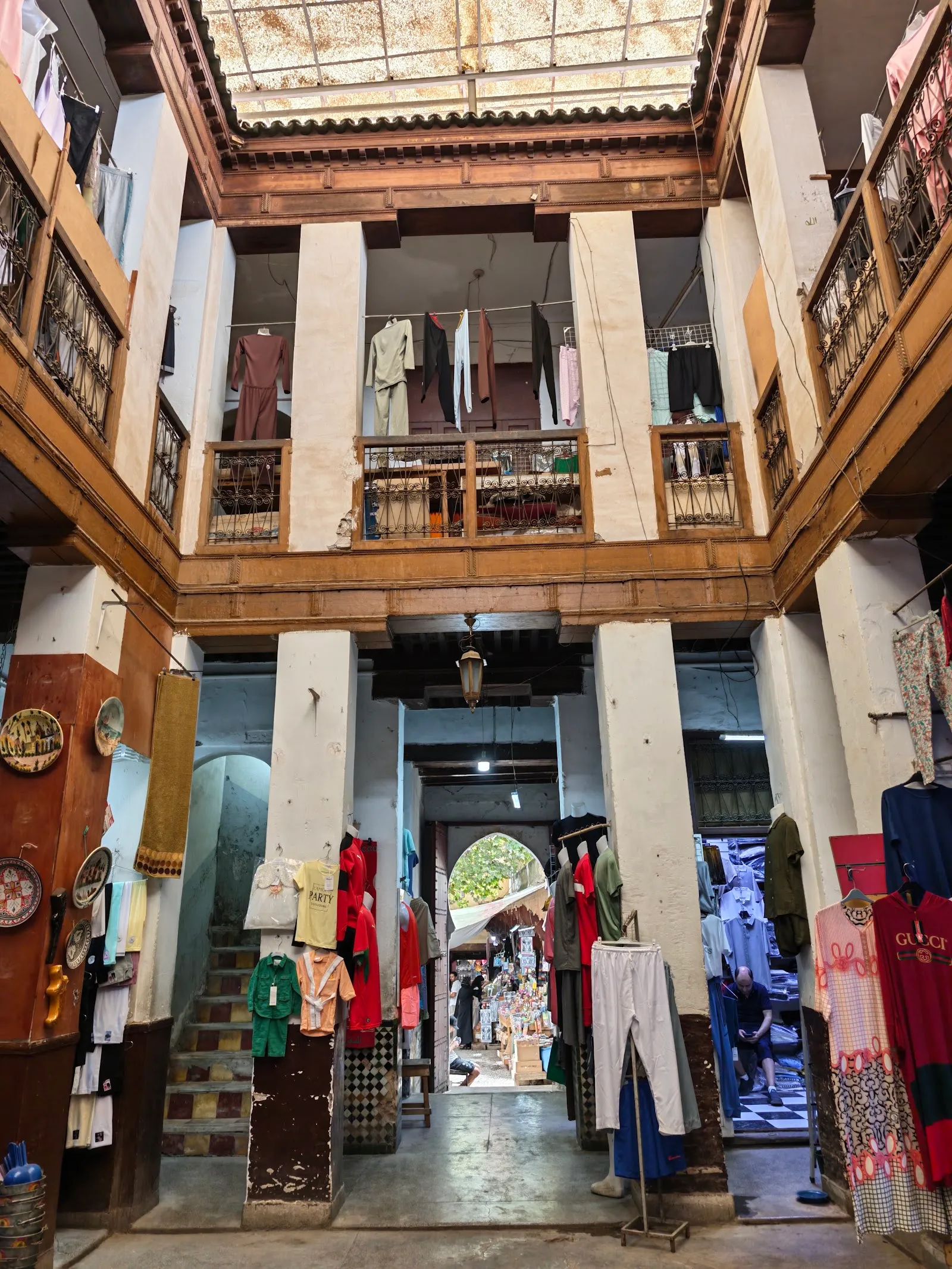
Bab Boujloud, known as the Blue Gate, is the main western entrance to the old medina of Fes. Its outer face is cobalt blue and its inner face is mostly green, both covered in mosaic tiles. The gate is a common meeting point and a photo stop. Beyond it, Talaa Kebira runs through the medina toward the Karaouine Mosque, lined with cafés, shops and souks.
Built in 1913 on an older gateway
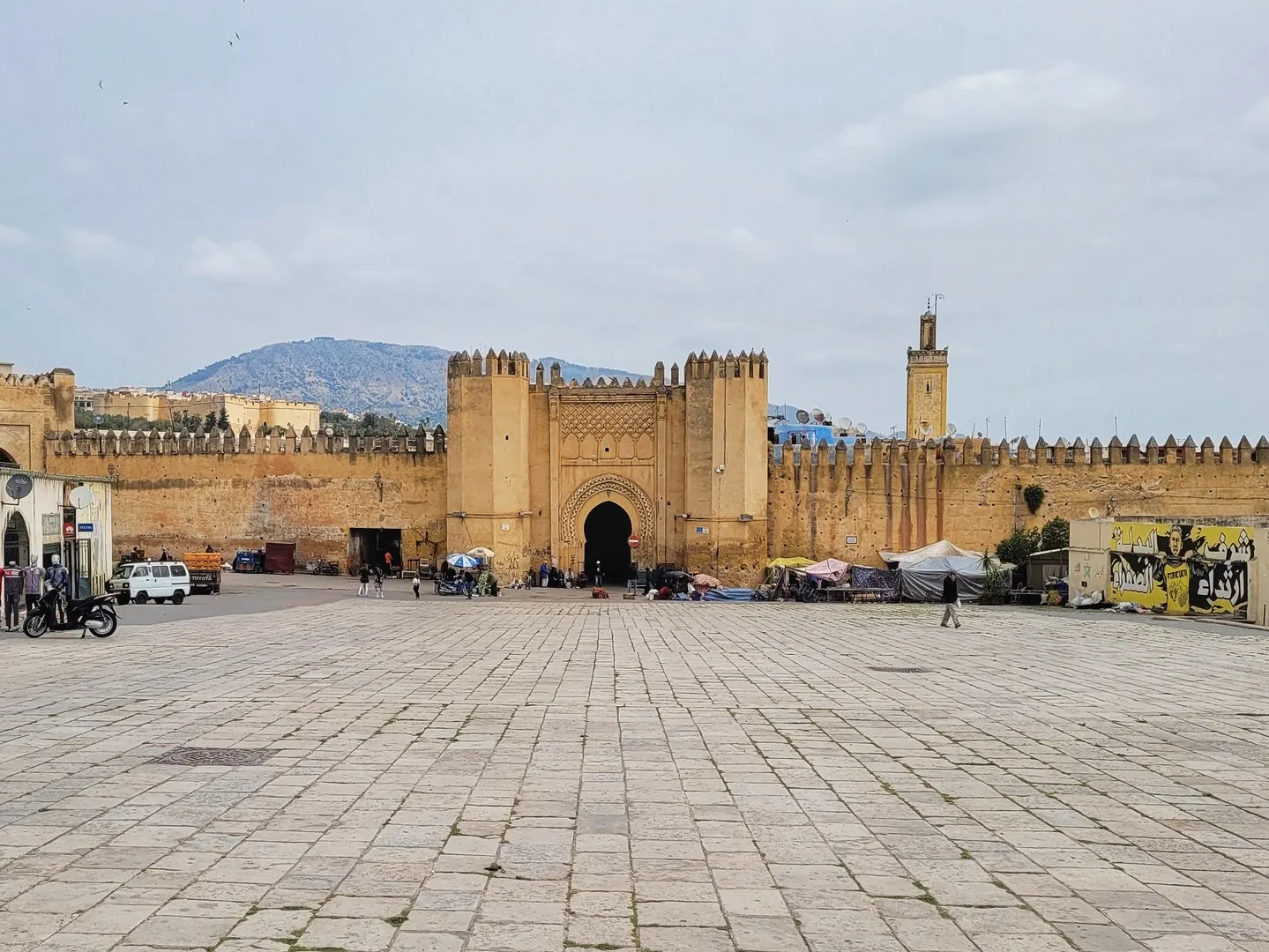
Bab Boujloud was built in 1913, during the French protectorate, when the French colonial administration commissioned a new gate in traditional Moorish style.
The current gate replaced an older one. Some sources date that earlier structure to the 12th century, and one account says it was set at an angle so that herds of rams could not pass straight through.
Today the gate is the entrance most tours use to reach the old city, Fes el-Bali, which is one of the largest surviving medieval cities in the world.
Blue outside, green inside
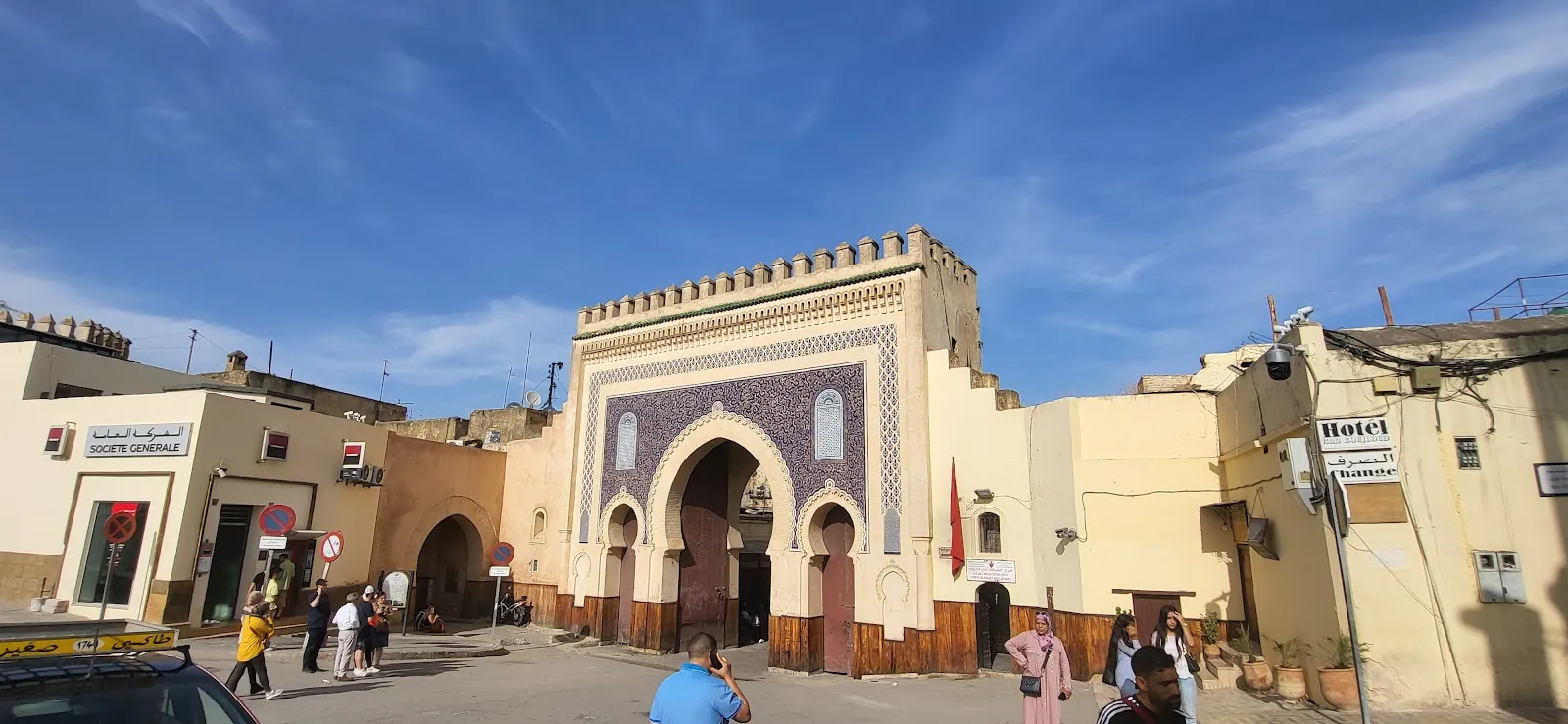
The outer face of the gate is cobalt blue, and the inner face is mostly green. Both faces are covered in polychrome tiles with arabesque and geometric motifs.
The blue on the outside is linked to the city's pottery, and the green on the inside is tied to Islam. The tiles were set by hand, which is visible when you stand close to the arch.
The colour change is easy to miss on the way in, so look back as you pass through to see the green side.
Walking from the gate
Two main streets, Talaa Kebira and Talaa Seghira, run from the gate to the Karaouine Mosque. They are the easiest reference points for finding your way.
Street signs in the medina are in Arabic only. Small coloured signs posted by ADER-Fès, the organisation that looks after the city's architecture and heritage, mark walking circuits and neighbourhoods. The Fez Guide booklet, widely available in the medina, describes these circuits.
Another option is to enter from Bab R'cif on the far side and walk uphill back to the Blue Gate. Signs in the medina point to Bab Boujloud, so you can cross the whole medina and leave by the other side.
Sights close to the gate
The Chouara Tannery is a short walk away. Climb to the tannery terraces to see the dyeing vats from above, which keeps you away from the smell at street level.
The Nejjarine Museum of Wooden Arts and Crafts, the Medersa Bou Inania and the Karaouine Mosque and University are also on the route through the medina.
Some religious schools in the medina are closed to non-Muslims, so check before you try to enter one. Many visitors spend their time walking, shopping and eating in the lanes instead.
Rooftop views, evenings and renovation
Rooftop cafés just inside the medina overlook the streets. Order a tea and watch the lanes from above, which also helps you see how this part of the medina is laid out.
In the evening the gate is lit up, and the area near it fills with people, cafés and transport. Restaurants just beyond the gate make it easy to eat soon after you arrive.
Renovation work is underway at the site. The plans include a garden and parking underneath the gate area.
FAQ
Why is Bab Boujloud blue and green?
The outer face is blue and the inner face is green. The blue is linked to the city's pottery, and the green is tied to Islam.
When was Bab Boujloud built?
The current gate was built in 1913 by the French colonial administration. Some sources date the older gate that stood before it to the 12th century.
Is there parking near Bab Boujloud?
Yes, there is a paid parking lot and paid street parking nearby. The parking lot is wheelchair accessible.
Is Bab Boujloud wheelchair accessible?
The entrance and the seating are wheelchair accessible.