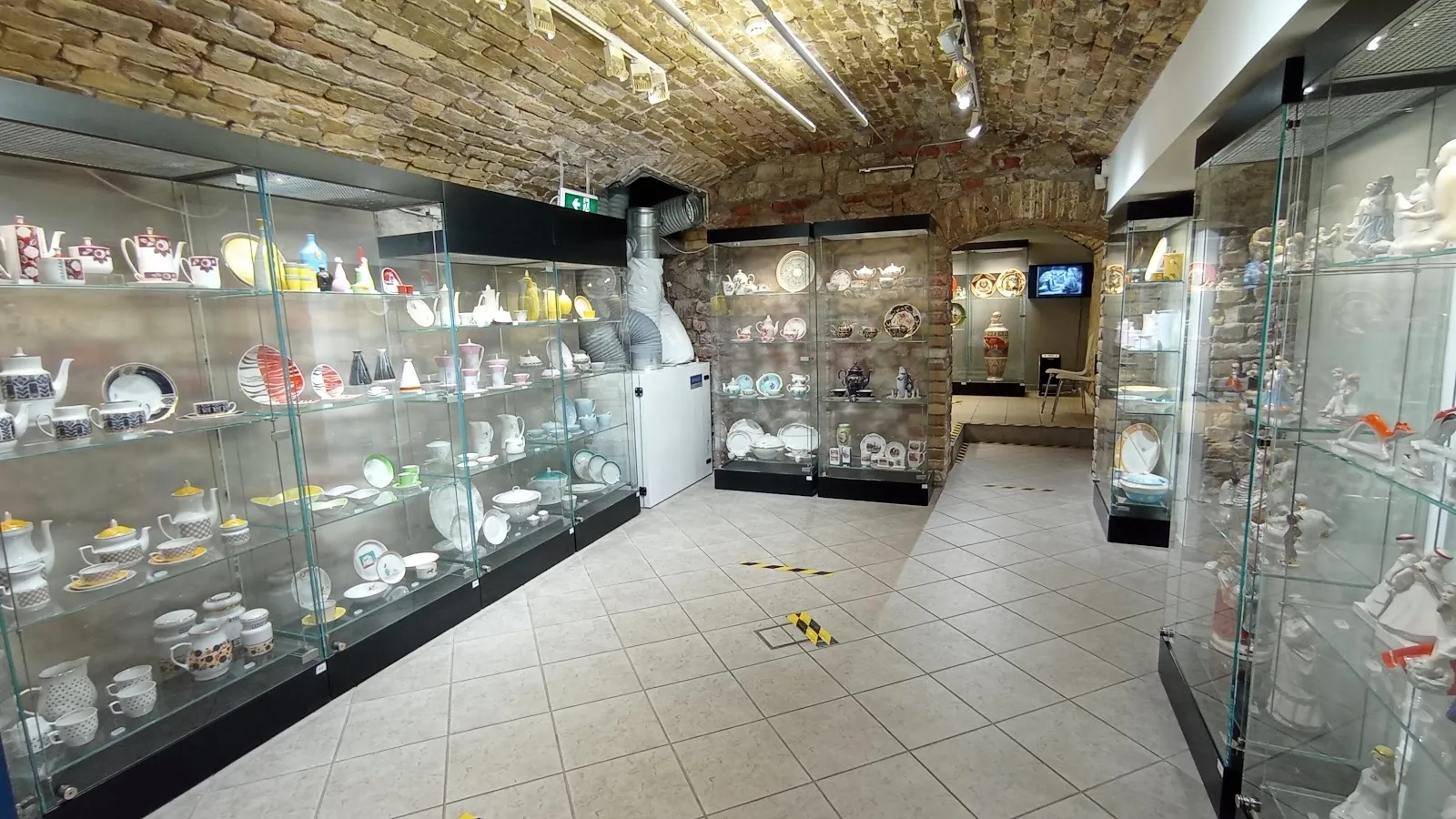
In Konventa Sēta in Rīga’s Old Town, the Riga Porcelain Museum traces local porcelain design from the 19th century to the present. Its compact display includes everyday tableware, hand-painted pieces, collector items and porcelain produced in the Soviet era. Look for the large red-and-gold vase made for Rīga’s 700th anniversary in 1901, and use the laminated catalogues to identify objects and their makers. You can also join a porcelain-painting workshop. The museum is underground, with stairs and no lift.
Porcelain made in Rīga
The museum’s collection follows the development of manufactured porcelain in the Latvian capital. Rīga’s porcelain industry took shape in the 19th century, when the Kuznetsov factory opened in 1841. The Jessen factory later joined it, and the two operated as competitors until the Second World War. After the war, both were nationalized and eventually brought together as the Rīga Porcelain Factory, which continued until 1997.
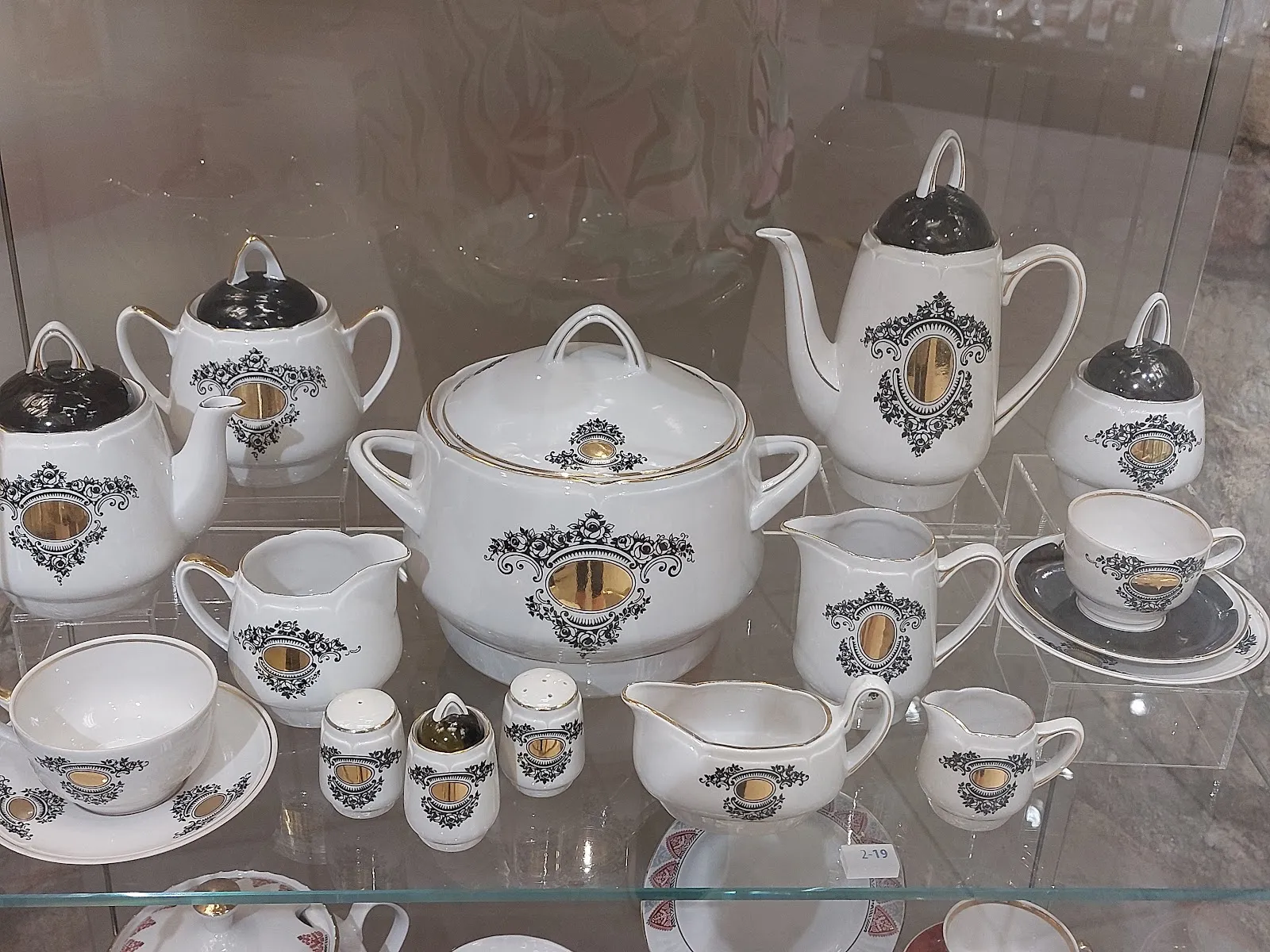
Much of the museum’s collection comes from the Rīga Porcelain Factory’s production in the 1950s to 1990s. Its services and other household pieces give a sense of how factory-made tableware changed over those decades. Displays also include decorative and special-occasion objects, collector pieces and work by contemporary Latvian porcelain artists.
Objects to look for
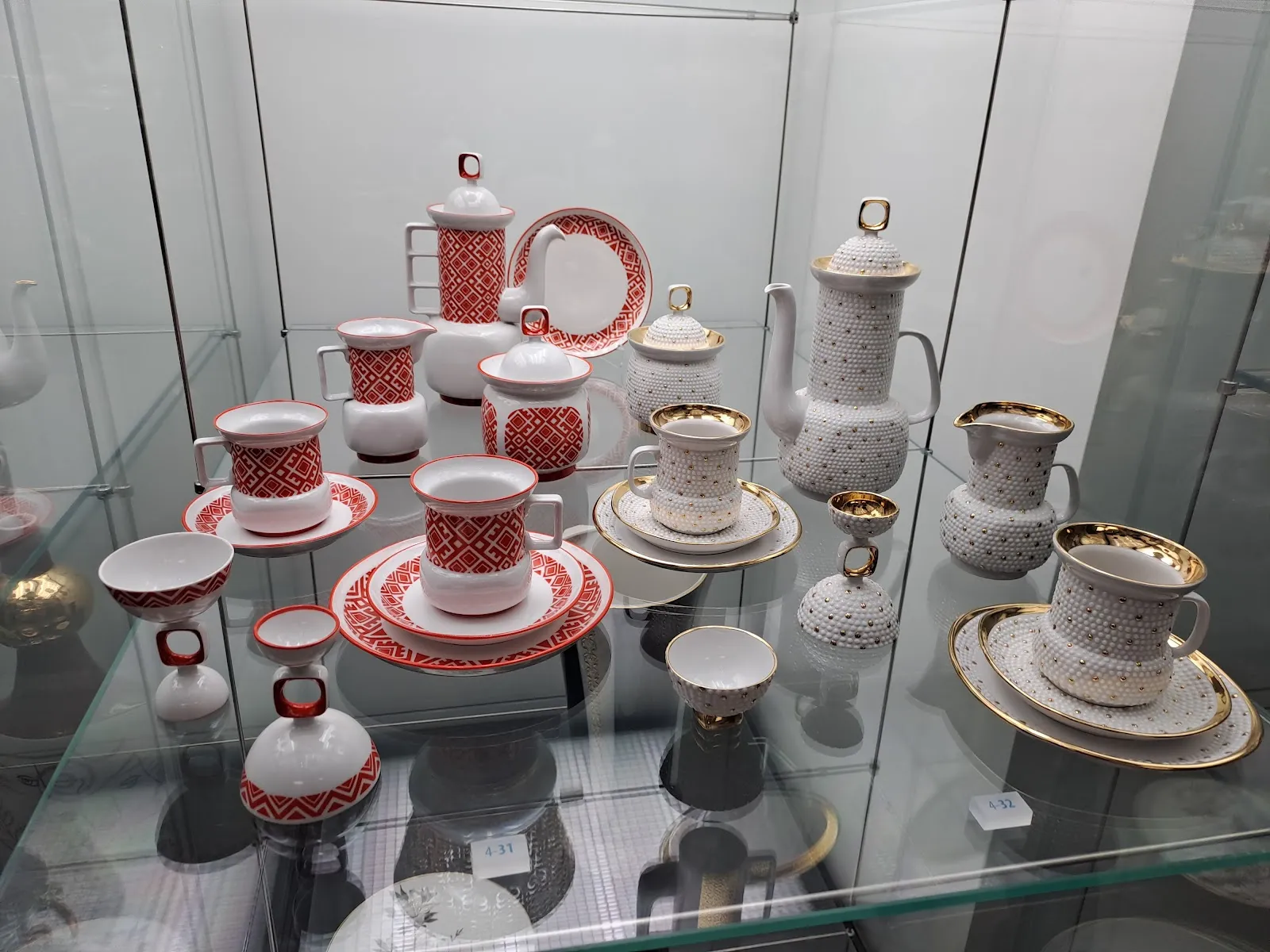
The display ranges from cups and other everyday items to painted tea trays and sculptural porcelain. One prominent piece is a large red-and-gold vase made for Rīga’s 700th anniversary in 1901. The collection also includes unusual objects and designs associated with different periods, including ideological porcelain from the Soviet era.
Laminated catalogues provide details about displayed pieces, including information such as the designer or manufacturer and the date of production. Pick one up if you want to look beyond the shape and decoration of an object and learn when it was made.
Painting workshop
The museum runs porcelain-painting workshops where participants can decorate porcelain items. It is a practical way to engage with the material and its decoration, rather than only viewing finished objects. Workshop activities are optional; ask the museum about taking part when planning your visit.
The exhibition is small and arranged in underground rooms at Konventa Sēta. There is no lift, so visitors need to use the stairs. Its central Old Town location also makes it easy to combine with a walk among Rīga’s nearby historic sights.
FAQ
Where is the Riga Porcelain Museum?
It is at Konventa Sēta, Kalēju iela 9-11, in Rīga’s Old Town.
Can you paint porcelain at the museum?
Yes. The museum has porcelain-painting workshops where you can decorate an item.
Is the museum accessible without stairs?
No. The museum is underground and has no lift, so access involves stairs.
What can you see at the museum?
The collection includes Rīga-made porcelain from different periods, including everyday tableware, decorative pieces and Soviet-era designs. A large red-and-gold vase made for the city’s 700th anniversary in 1901 is one notable object.