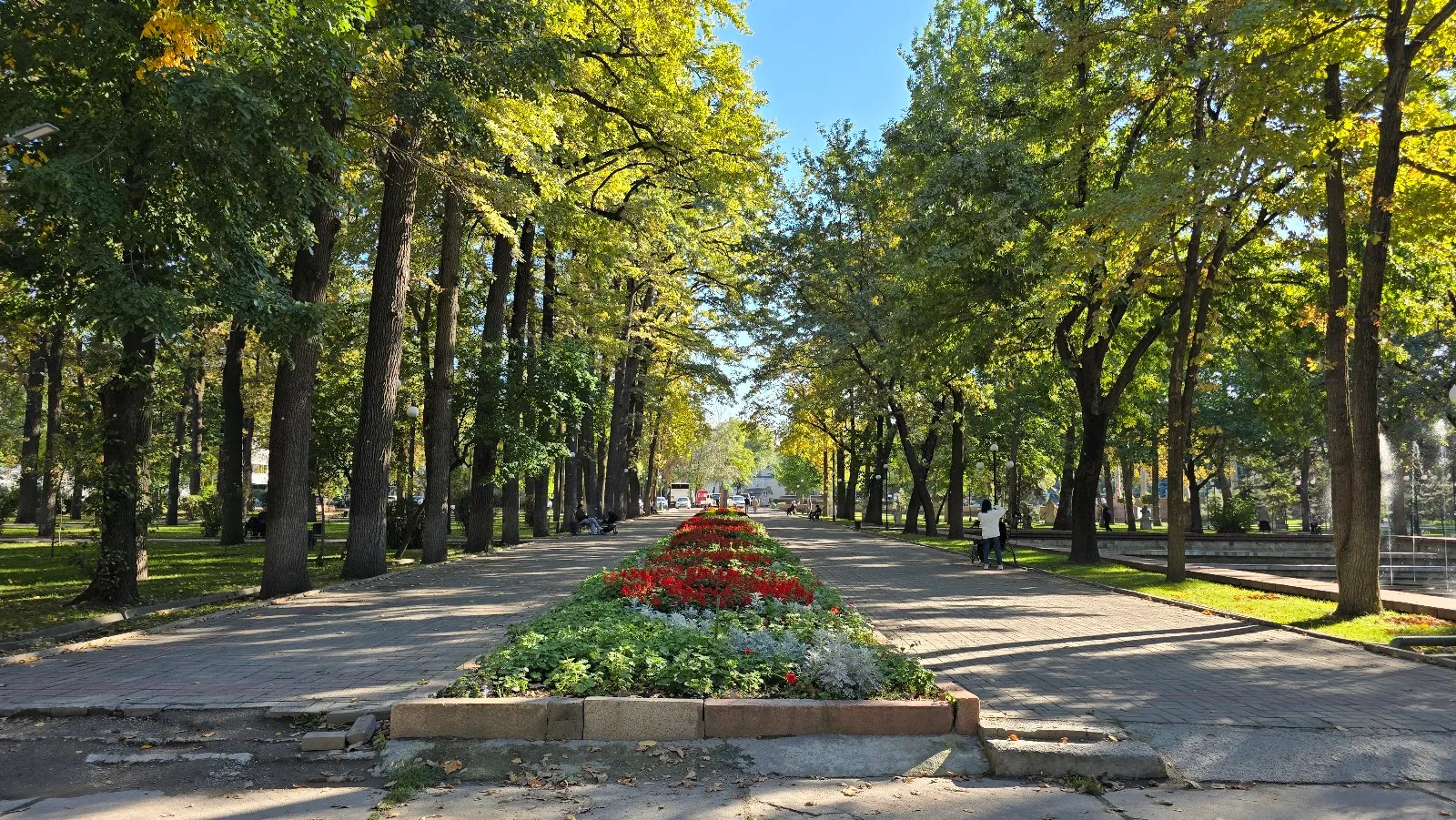
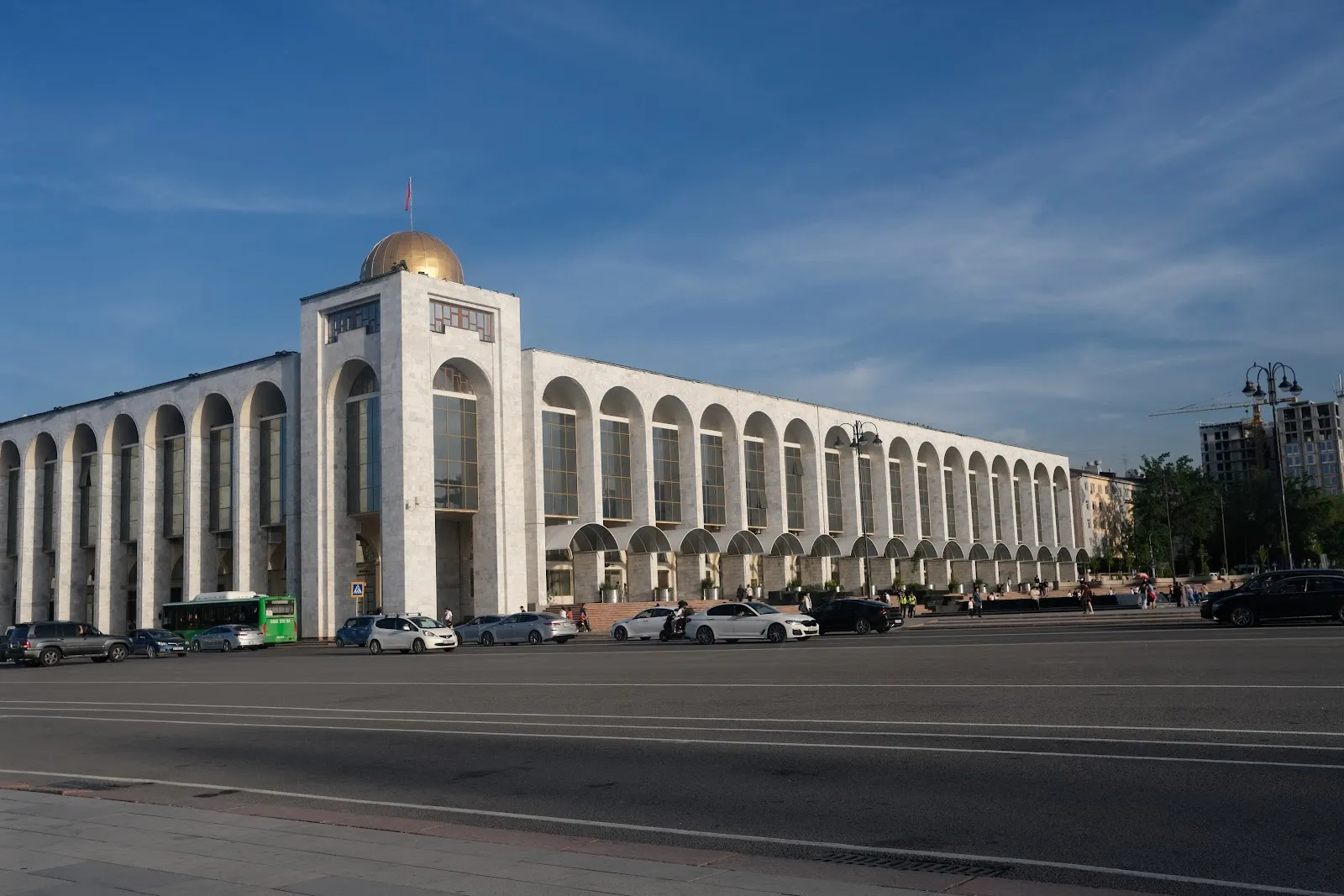
Ala-Too Square is the main public square of Bishkek, built in 1984 and still carrying its Soviet design of marble paving, fountains and flowerbeds. A 45-meter state flag stands at its centre, guarded by soldiers who change duty every hour. The Manas monument is close by, and the State History Museum closes one side. Locals walk here, families gather around the fountains, and the square hosts parades, concerts and national holidays. It is also the easiest place to get your bearings before heading to the museums, parks and cathedral within a few blocks.
From Lenin Square to Ala-Too
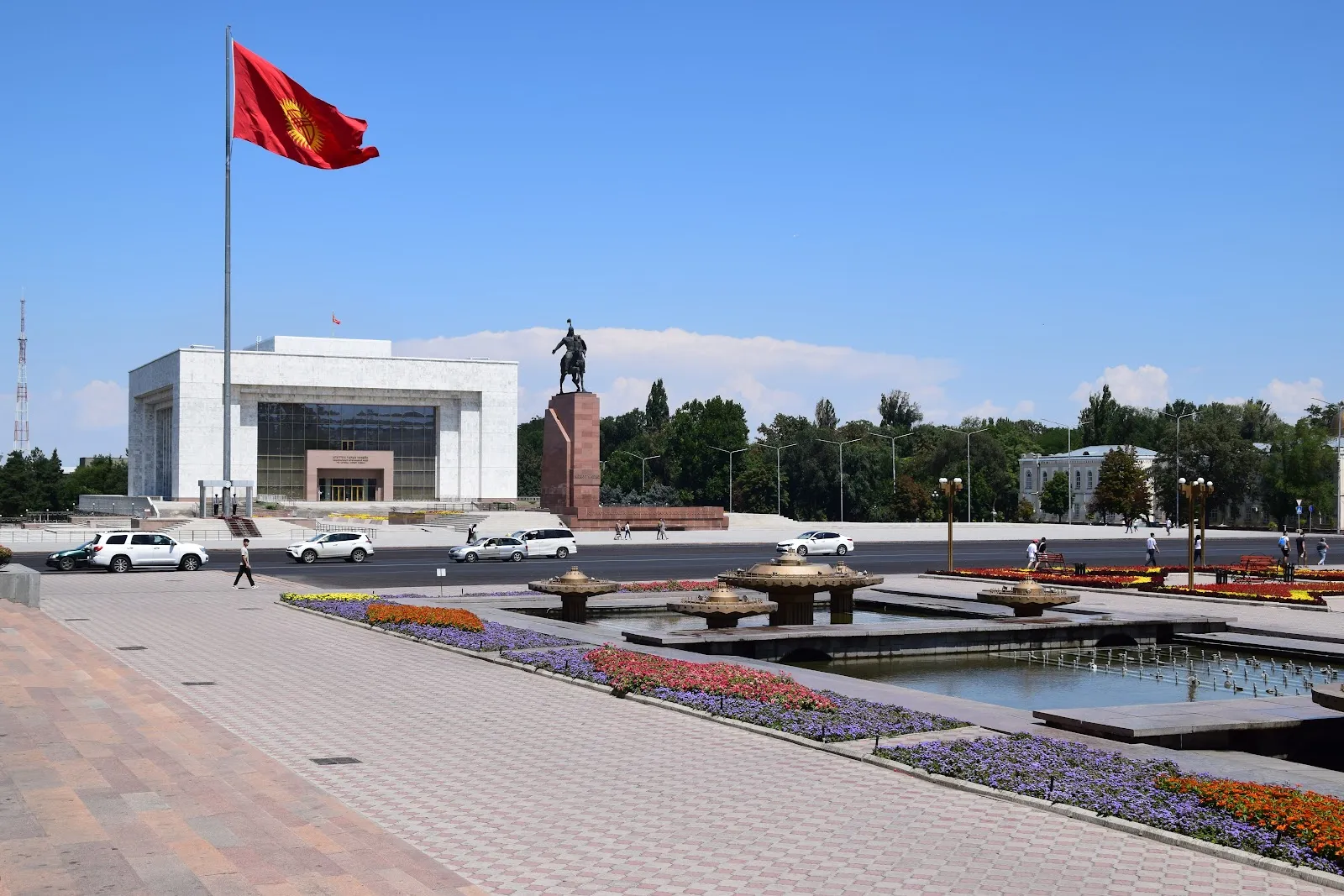
The square was built in 1984 to mark the 60th anniversary of the Kyrgyz Soviet republic. A large statue of Lenin stood at its centre, and the place was called Lenin Square until Kyrgyzstan became independent from the USSR in 1991.
In 2003 the Lenin statue was moved to a smaller square behind the State History Museum. A new statue called Erkindik, meaning freedom, was installed in its place. The square is named after the Ala-Too mountain range that surrounds Bishkek, and the range can be seen from the second floor of the museum.
The Soviet layout is still clear. The white arched buildings around the square date from the 1980s, the paving is marble, and the design is plainly brutalist. Softer touches break it up: fountains, benches, and flowerbeds planted with traditional Kyrgyz ornaments.
The flag, the guard and Manas
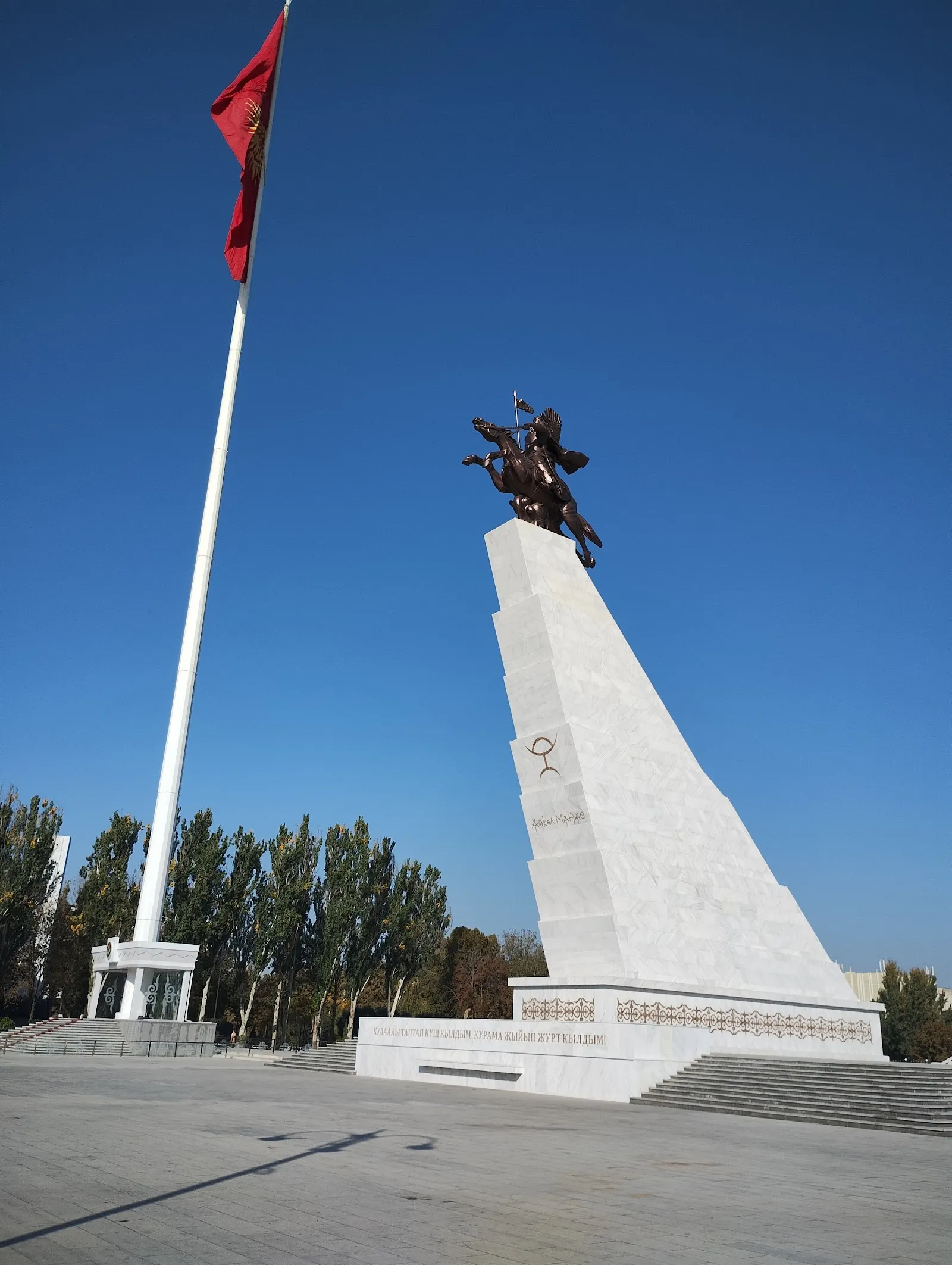
The state flag of Kyrgyzstan flies from a 45-meter flagpole in the middle of the square. Two soldiers stand beside it, and the guard is changed every hour. Many walking tours of the city begin at this spot.
Not far from the flag is the equestrian statue of Manas, about 10 meters high. Manas is the hero of the Kyrgyz epic that bears his name, and he is the best-known national figure in the country. His monument now holds the place of honour that Lenin once had on the square.
The State History Museum faces the square. Around it you will see the White House and other government buildings, and golden domes rise from some of the neighbouring roofs.
The State History Museum and what is nearby
The State History Museum reopened in 2022 after seven years of renovation. The displays run from the earliest history of Kyrgyzstan to modern times, and you move through them from the ground floor upward. Exhibits include an archaeological collection, Soviet murals, material on Kyrgyz and Soviet history, and Cold War propaganda.
Several other sights are within a few blocks of the square. The Museum of Fine Arts has two floors of mostly Soviet-era art and regional woven crafts. The Frunze Museum covers Soviet military history and the life of Mikhail Frunze, after whom the capital was once named. The Russian Orthodox Holy Resurrection Cathedral has been renovated recently. In front of the Presidential Palace stands the Monument to Those Who Died for Freedom.
For green space, Oak Park and a rose garden are close. Panfilov Park, near the Zoological Museum (1926), has a Soviet-era amusement park. The TSUM shopping mall is also within walking distance.
Events, fountains and daily use
The square is the setting for national occasions. The Victory Day military parade is held here, and concerts and festivals mark Nowruz and Independence Day. A memorial ceremony for the writer Chingiz Aitmatov took place here in 2008. It is also where political rallies and public demonstrations have been held, and it is often crowded during the day and in the evening.
On ordinary days the square is a place to walk and meet. In summer the fountains run in the evening with music and coloured lights, and children play in the water. Families stroll, and locals sit on the marble benches as the light fades.
There are no cafes on the square itself, only takeaway drink and snack stands. A road crosses the area, and the open paving offers little shade, so on a hot day the nearby parks are the better place to sit.
FAQ
How long do you need at Ala-Too Square?
Plan 20 to 30 minutes for the square itself. Add time if you visit the State History Museum or walk on to Oak Park and the other sights nearby.
How often is the changing of the guard?
The guard at the flagpole is changed every hour. Arrive a few minutes early to find a spot near the flag.
When is the best time to visit Ala-Too Square?
Evening is the best time. The fountains run with music and coloured lights in summer, the mountains can glow pink at sunset, and traffic is lighter.
Why is it called Ala-Too Square?
It is named after the Ala-Too mountain range around Bishkek. Until independence in 1991 the square was known as Lenin Square.
Is Ala-Too Square good for children?
Yes. The fountains are the main draw in summer, there is open space to run around, and the entrance is wheelchair accessible.
Can you sit down and eat at Ala-Too Square?
There are benches, but little shade and only takeaway drink and snack stands. For a proper meal or a rest out of the sun, go to the surrounding streets or the nearby parks.