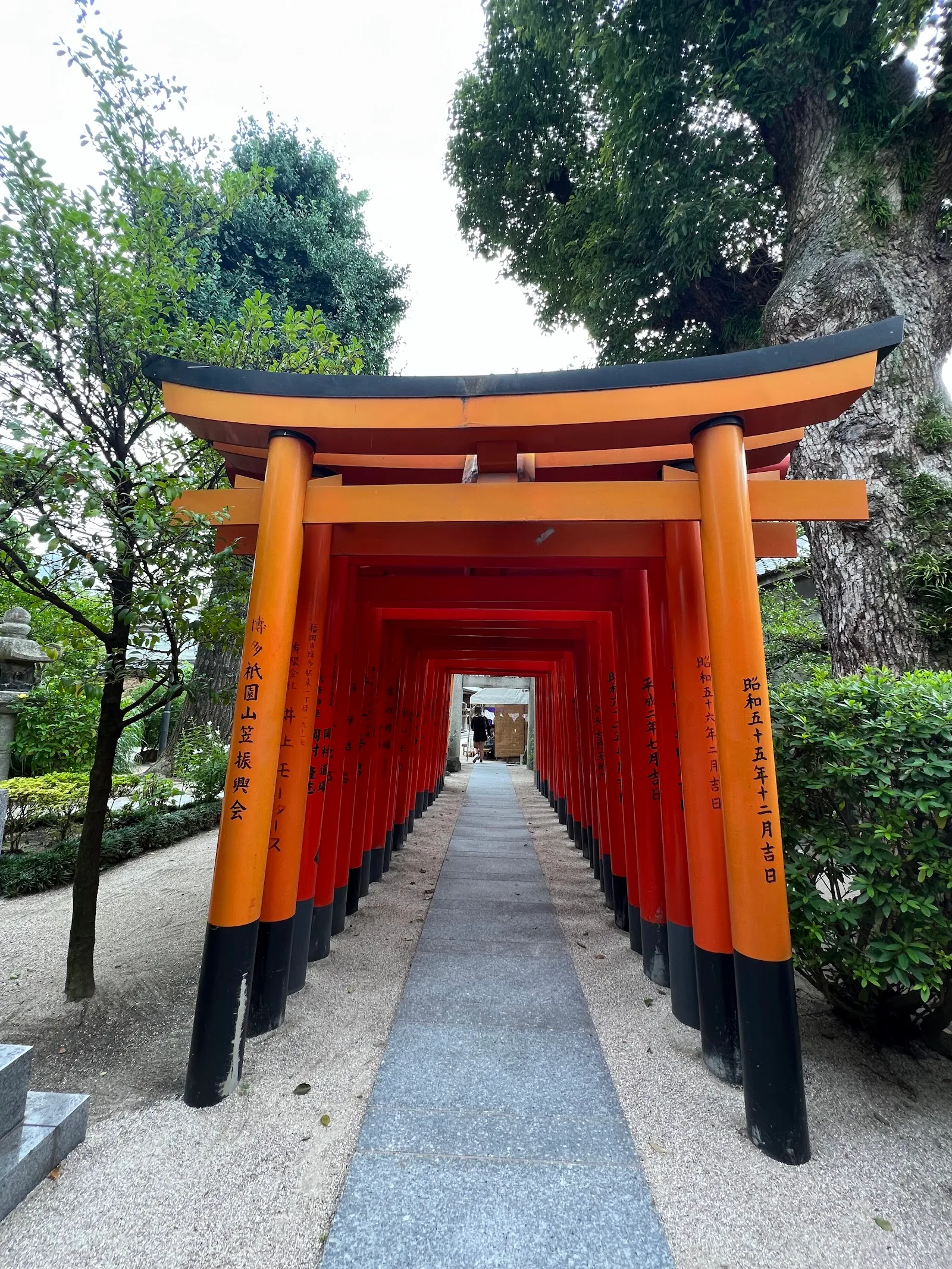
Kushida Shrine sits in Hakata, a few minutes' walk from Canal City and the Kawabata shopping arcade. Founded in 757, it is the oldest Shinto shrine in Fukuoka and the guardian shrine of the area. Locals often call it Okushida-san. Its best-known event is the Hakata Gion Yamakasa festival, held every July, when teams carry decorated floats through the streets. The floats are on display on the grounds for most of the year. The shrine also has a well said to bring long life, stone weights for testing your strength, and a ginkgo tree said to be more than 1,000 years old.
From 757 to the festival
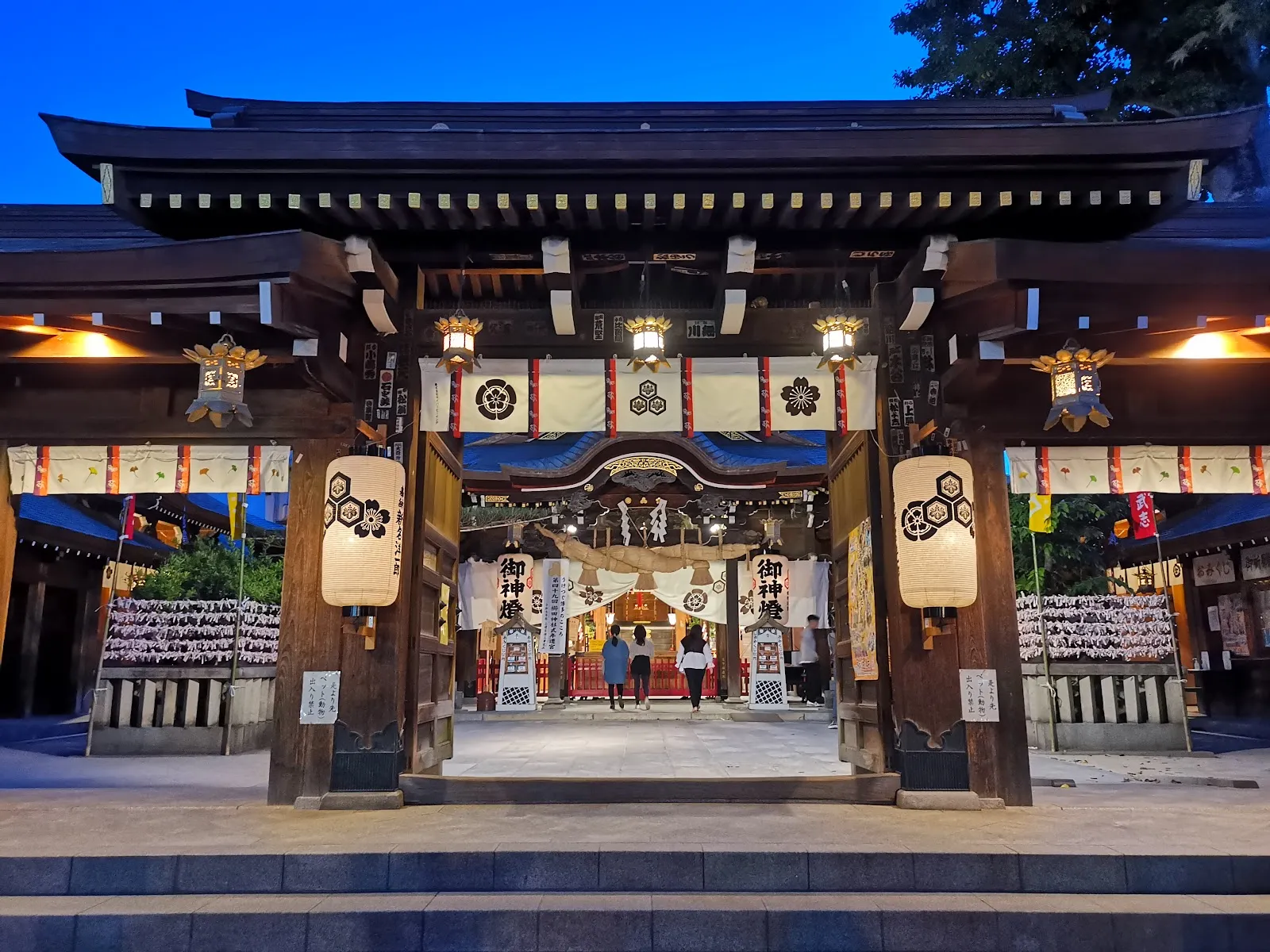
The shrine was founded in 757, when Hakata was a busy port for trade between Korea, China and Japan. It enshrines several deities, among them Amaterasu, the sun goddess, and her brother Susanoo, god of thunder.
The shrine is the guardian shrine of the area. Merchants have long come here to pray for good health, business and long life.
The Hakata Gion Yamakasa is the main event linked to the shrine. Teams carry elaborate floats on their shoulders through the city, and the festival is designated an Intangible Cultural Heritage by UNESCO and an important national cultural heritage in Japan. Festival week runs through the first half of July, and the final start takes place in front of the shrine.
What to see on the grounds
The floats are displayed on the shrine grounds for most of the year. Two floats stand about 10 metres tall, decorated with traditional figures and scenes, and some of the dolls on them were made by Hakata doll makers.
The well is said to bring longevity, and visitors drink from it. Nearby, the Chikara-ishi stones are used to test strength by lifting.
The ginkgo tree is said to be more than 1,000 years old. Locals believe it has powers linked to matchmaking and long life. The shrine also has carvings of the Chinese zodiac.
The giant mask at Setsubun
In February, the shrine holds its Setsubun festival. From late January until February 3, a giant Otafuku mask is installed at the shrine. It is about 17 feet high and 16 feet wide.
People believe that passing through the mouth of the mask brings good luck. The mask is one of the most photographed features of the shrine in winter.
Museums and nearby sights
The Hakata Machiya Furusatokan Museum is across from the shrine. It shows how people in Hakata lived during the Meiji, Taisho and Showa eras, with a focus on the region's crafts. The gift shop sells many of them.
In front of the shrine, the Hakata Traditional Performing Arts Centre opened in 2017. It presents local forms such as Hakata Koma, a top-spinning performance, and Hakata Niwaka, a traditional comic theatre.
Kushida Shrine Station on the Nanakuma Line opened in March 2023, between Hakata Station and Tenjin-minami Station.
FAQ
Is there an entry fee?
No. The shrine is free to enter.
Can you see the floats outside festival time?
Yes. The decorative floats are displayed on the shrine grounds for most of the year. They are reportedly taken down for rebuilding in June, so check the shrine website before a June visit.
How do I get to Kushida Shrine?
Nakasu-Kawabata and Gion subway stations are each about an 8-minute walk away. Kushida Shrine Station on the Nanakuma Line opened in March 2023 and is close by.
Is the shrine wheelchair accessible?
Yes. The entrance, restroom, seating and parking lot are listed as wheelchair accessible.