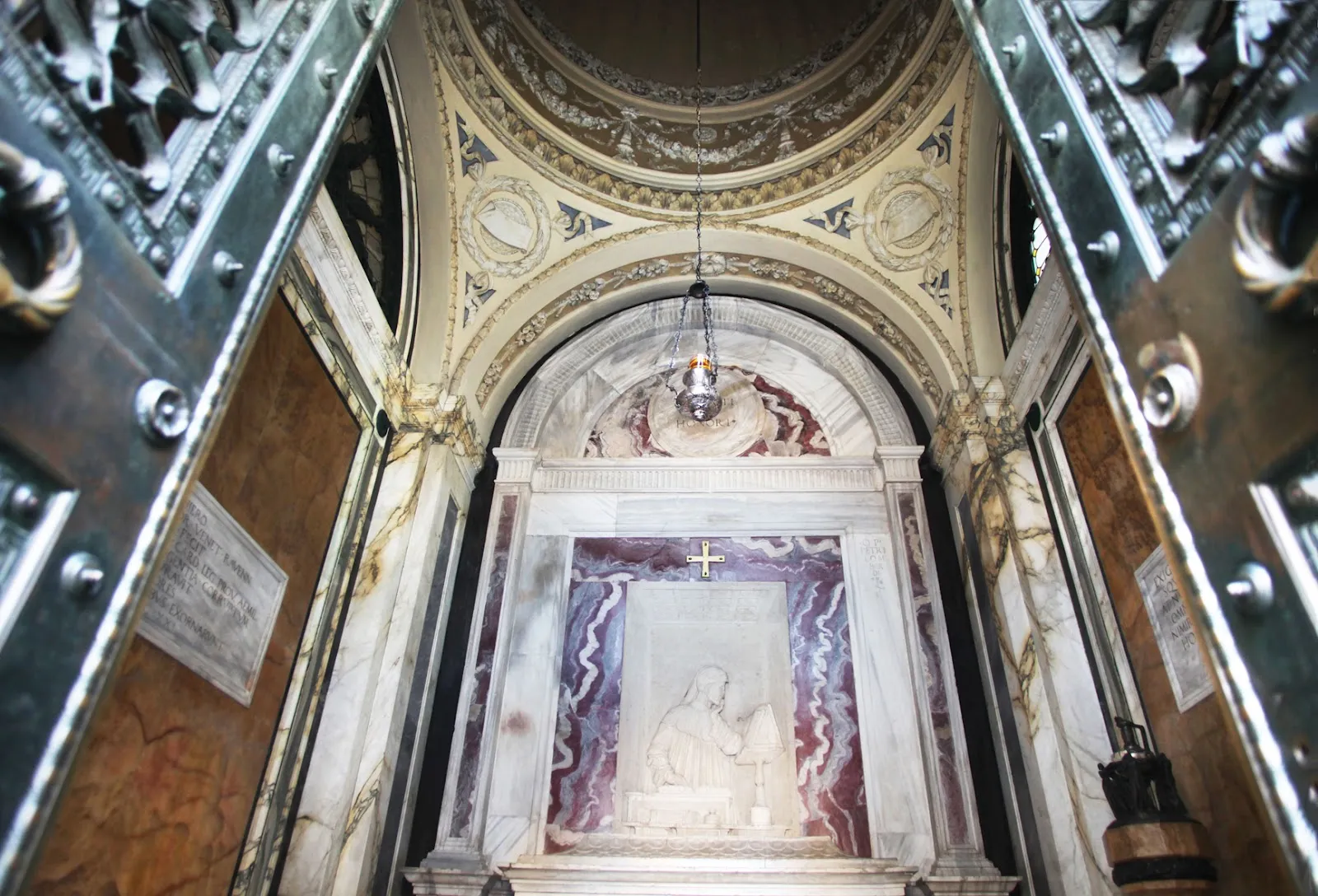
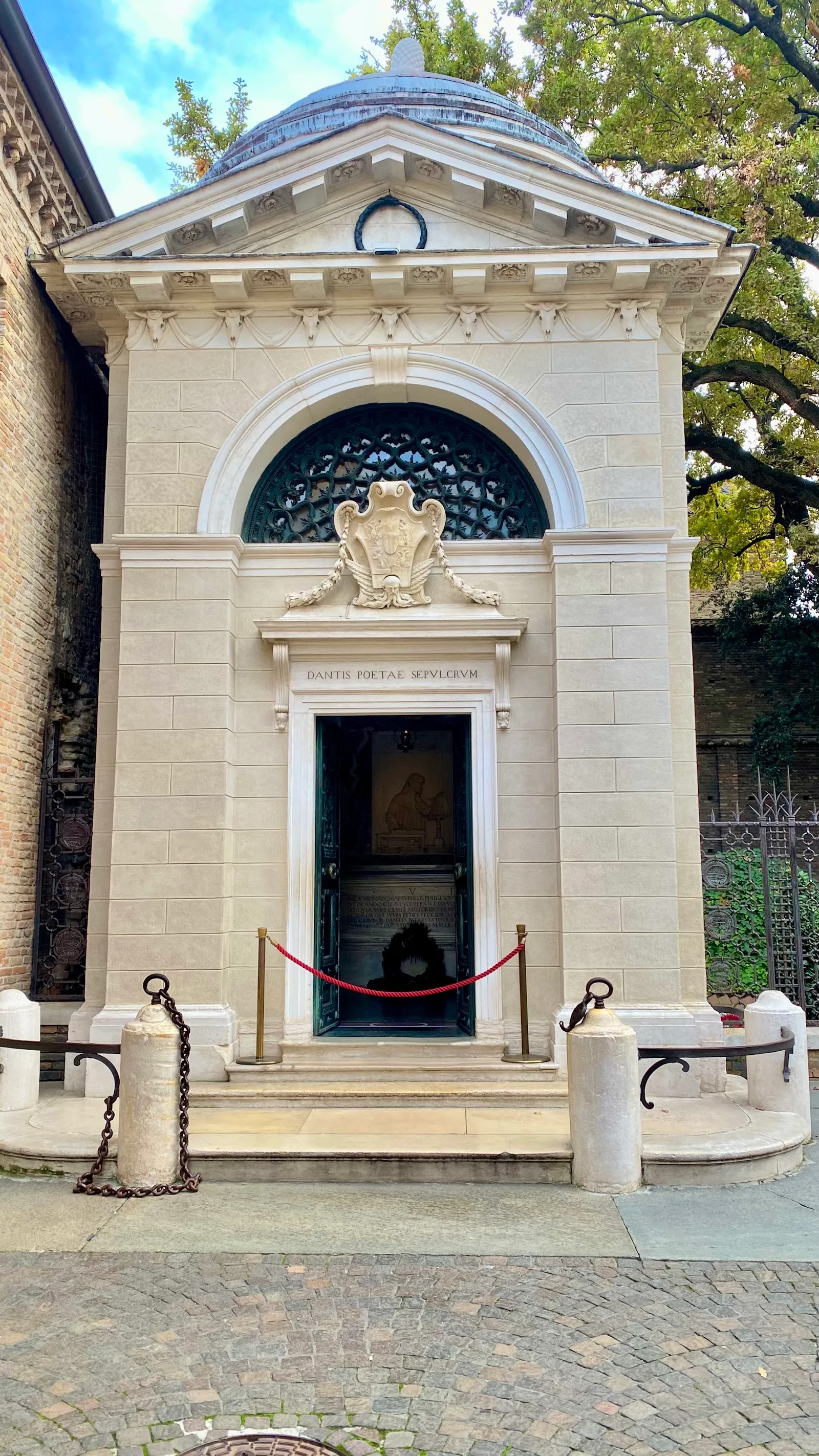
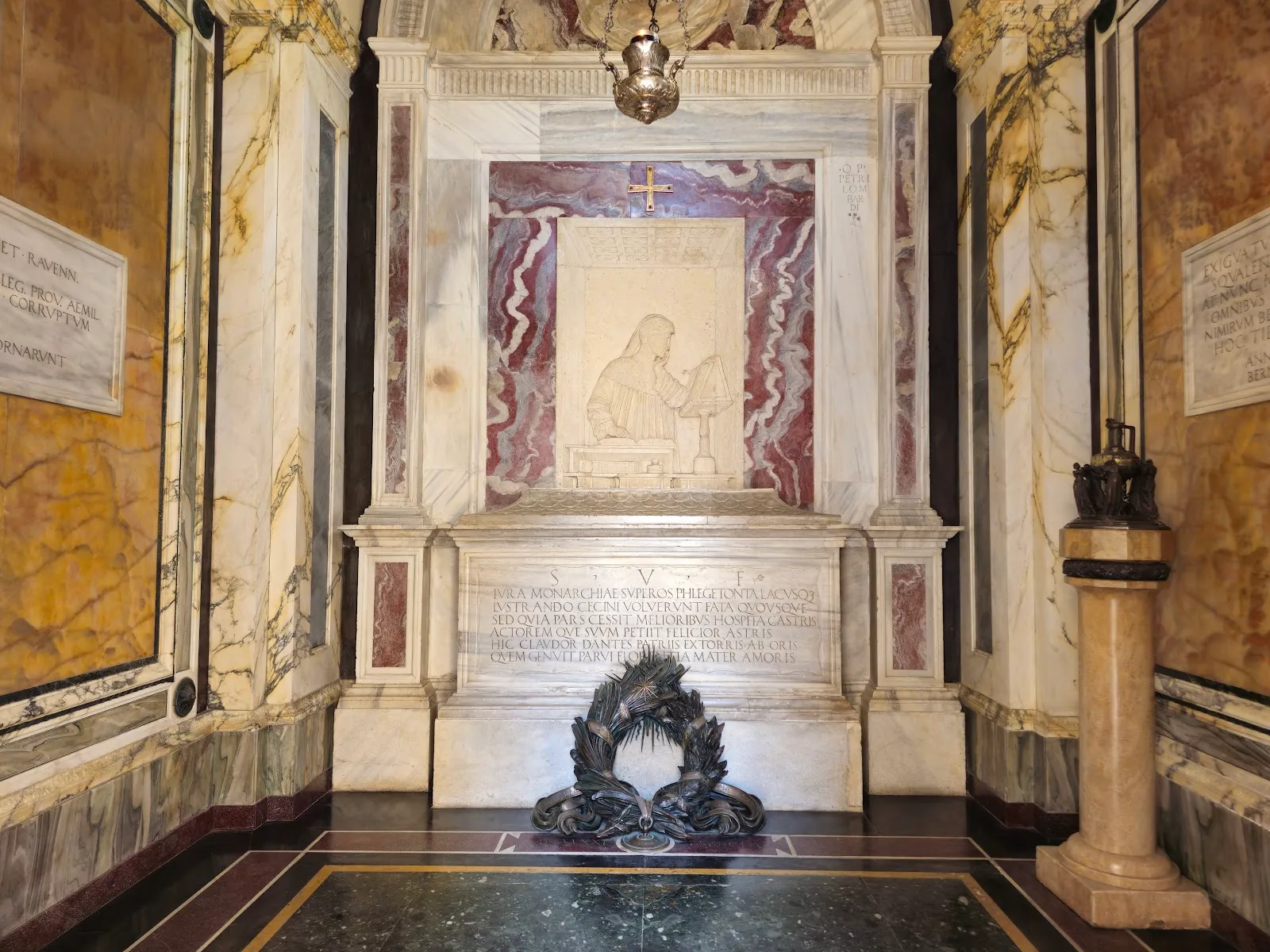
Dante's Tomb is a small neoclassical mausoleum at the end of Via Dante Alighieri, beside the Basilica of San Francesco in Ravenna. Dante Alighieri, author of The Divine Comedy, spent his last years in the city and died there in 1321. Inside, a 1483 relief by Pietro Lombardo shows him at his lectern, and a silver lamp burns Tuscan oil that Florence sends each year. The tomb stands in a quiet zone, where you can read the plaques, see the garden where his remains were hidden during World War II, and visit the Dante Museum nearby.
Who is buried here
Dante Alighieri was born in Florence in 1265. He was exiled from the city in 1302, when he was around 37, and spent his last years in Ravenna, where he finished The Divine Comedy. He died there in 1321.
Florence has tried for centuries to bring his remains home. Ravenna has kept them, on the argument that a city which did not welcome him in life does not deserve him in death. The tomb is the place where that dispute is most visible.
The 1780 mausoleum and its relief
The present building is a compact neoclassical mausoleum, designed by Camillo Morigia and completed in 1780. Its interior is finished in polychrome marble.
The main image inside is a relief by Pietro Lombardo, dated 1483, that shows Dante absorbed in his reading at a lectern. A Latin inscription mourns his exile. A bronze wreath left by the Italian army dates from 1921.
The space is small and restricted. Visitors stand at the entrance to look, pay their respects and take photographs, so take your time and read the inscriptions before moving on.
The lamp from Florence
A silver lamp keeps a flame burning in the tomb. The oil is Tuscan, and Florence sends it each year.
Each September, the anniversary of Dante's death is marked with an offering of Tuscan olive oil on the tomb. The ceremony is a sign of the long tie between the two cities, even though they have disagreed over where he belongs.
Hidden twice, once from the friars and once from war
In 1519 the Pope ordered Dante's bones moved to Florence, but the Franciscan friars hid them. The friars' hiding place is part of the story told in the tomb's history.
During World War II the remains were hidden again, in a small mound in the garden to the right of the tomb. The ivy-covered mound still stands there and marks the spot. The friars hid the bones in 1944 and 1945, and the mound is a plain reminder of that time.
The Zone of Silence and nearby sights
The tomb sits in a quiet area called the Zona dantesca, also known as the Zona del Silenzio. Through the gate on the right you reach the Quadrarco di Braccioforte, which holds medieval sarcophagi.
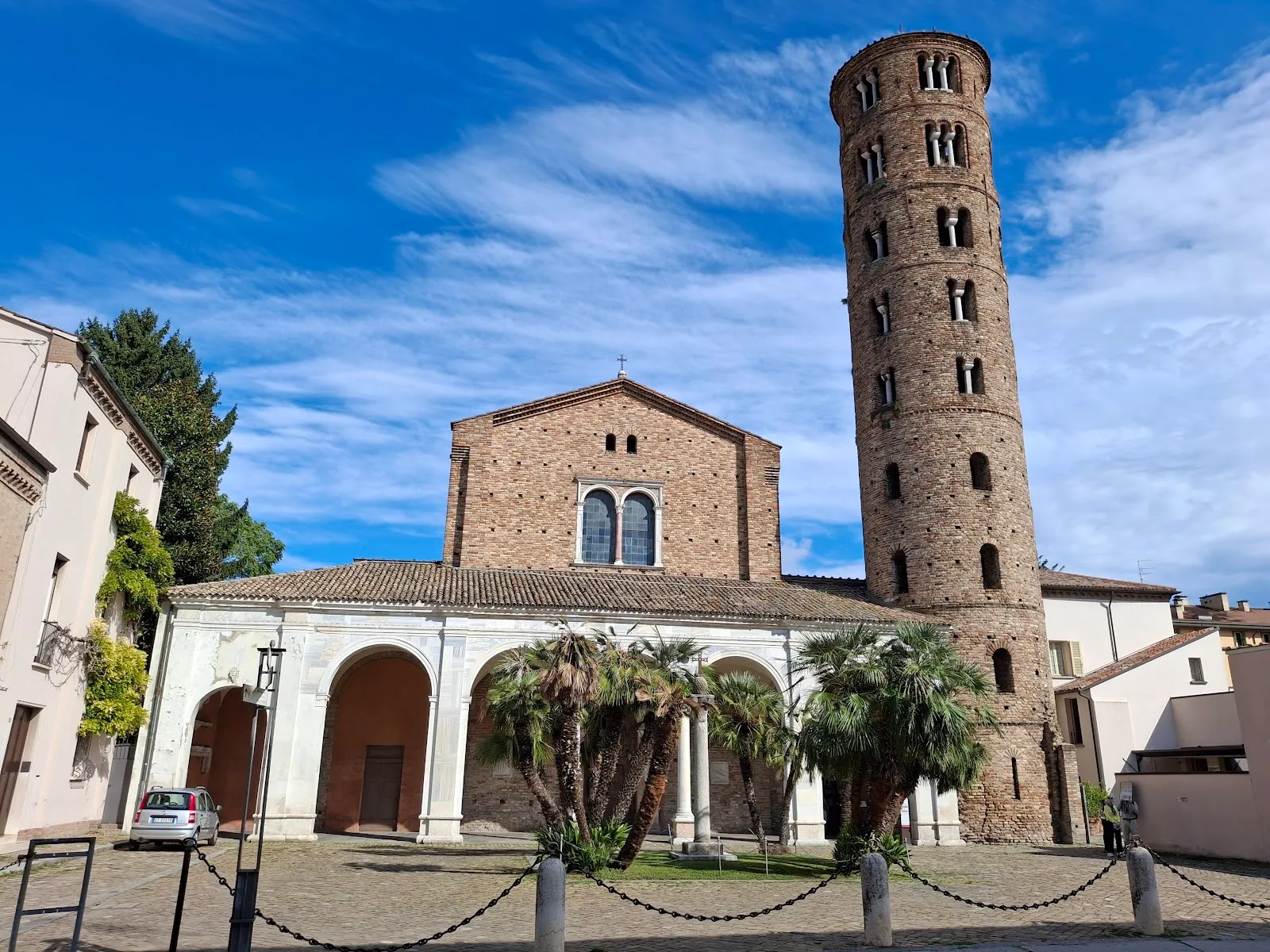
The Basilica of San Francesco is next door. It was originally built in the 5th century and dedicated to Saints Peter and Paul, later given to the Franciscans in 1261, and renamed for Saint Francis. Dante's funeral was held there in 1321. Its crypt is partly flooded, and the water is part of its character.
The Dante Museum is also in the zone. The garden and chapels were restored between 1921 and 1932, which gave the area much of its present appearance.
How a visit works
Most visitors reach the tomb on foot from Piazza del Popolo, a few minutes away. The street leading to the tomb is pedestrian and quiet.
A practical route is to see the tomb first, then the basilica, then the mosaic sites. Ravenna has eight UNESCO World Heritage Sites, and the tomb is a short walk from several of them.
The site has a wheelchair accessible restroom and a wheelchair accessible parking lot, and it is good for children.
FAQ
Is Dante's Tomb wheelchair accessible?
The site has a wheelchair accessible restroom and a wheelchair accessible parking lot.
Is it suitable for children?
The site is good for children.
Should I book tickets in advance?
Booking tickets in advance is recommended.
Where is Dante's Tomb in Ravenna?
It is at the end of Via Dante Alighieri, beside the Basilica of San Francesco and close to Piazza del Popolo.