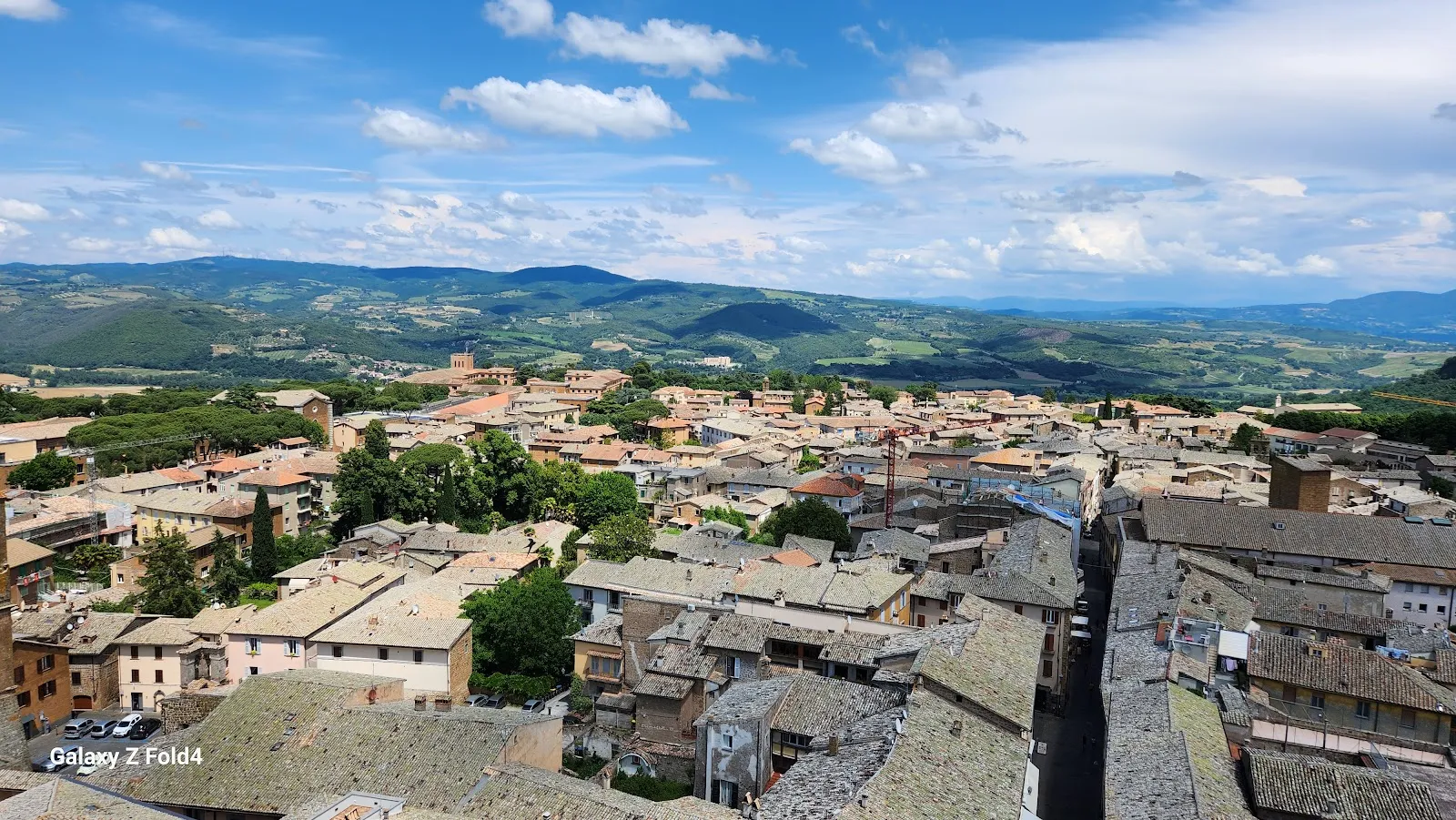
Orvieto Cathedral stands on Piazza del Duomo, at the top of the volcanic rock the town is built on. It is dedicated to the Assumption of the Virgin Mary. The facade, 40 metres wide and 52 metres high, is covered in gold mosaics, bas-reliefs and a rose window, and the side walls carry bands of pale travertine and dark basalt. Inside, the San Brizio Chapel holds Luca Signorelli's Last Judgment frescoes, and the Chapel of the Corporal keeps a revered reliquary. The cathedral is a place of worship as well as a gallery of art, so visit quietly.
Built over three centuries from 1290
Work on the cathedral began in 1290 and ran for about three centuries. Dozens of builders, sculptors and painters took part, and accounts put the number of artists at around twenty. Arnolfo di Cambio is reputedly the first designer, the same architect tied to the base of Florence's Duomo. Lorenzo Maitani took over the work later and is credited with the facade.
The cathedral is dedicated to the Assumption of the Virgin Mary and is also called the Cattedrale di Santa Maria Assunta. It is a Romanesque and Gothic building, and its size looks surprising in a town of around 20,000 people. Standing on volcanic rock above the hills, it can be seen from far across the Umbrian countryside.
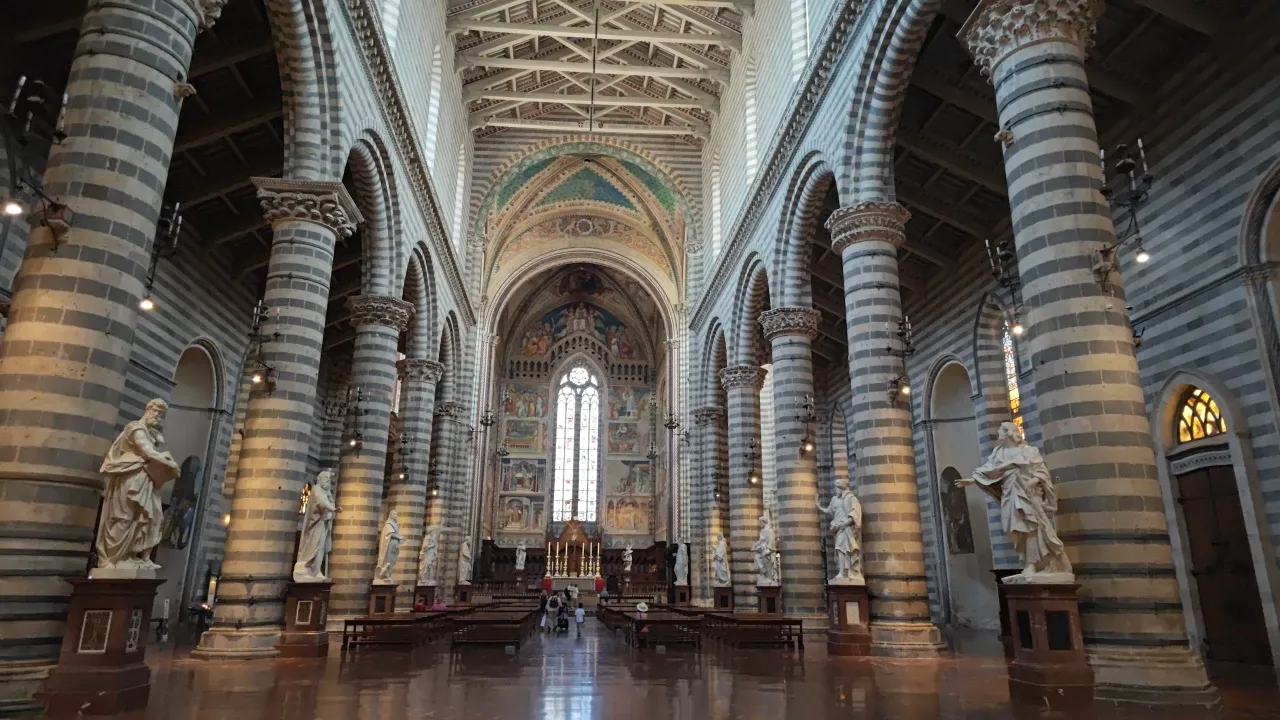
In the late 19th century, ten small side apses with Baroque altars were removed from the interior to restore the original structure. Inside, columns and pillars divide the space into three naves.
The facade and the striped walls
The facade is the part most people come for. It is 40 metres wide and 52 metres high and is often compared to a golden triptych. At the base, bas-reliefs tell stories from the Old and New Testament. Higher up are the rose window, designed by Andrea Orcagna, and a field of mosaics.
The mosaics follow the life of the Virgin, from the Nativity and the Assumption to the Coronation. In the gable segments you can pick out the Annunciation, the Apostles in ecstasy at the Assumption, and Joachim and Anna. Bronze statues and carved stone add to the surface. The gold shimmers as the sun moves, so the facade looks different at different hours.
The side walls are plainer, with alternating bands of white travertine and dark basalt. The same banded pattern appears on the interior columns. Many visitors compare the cathedral with Siena's, but the Orvieto facade is richer in sculpture and mosaic.
Inside: San Brizio and the Corporal chapels
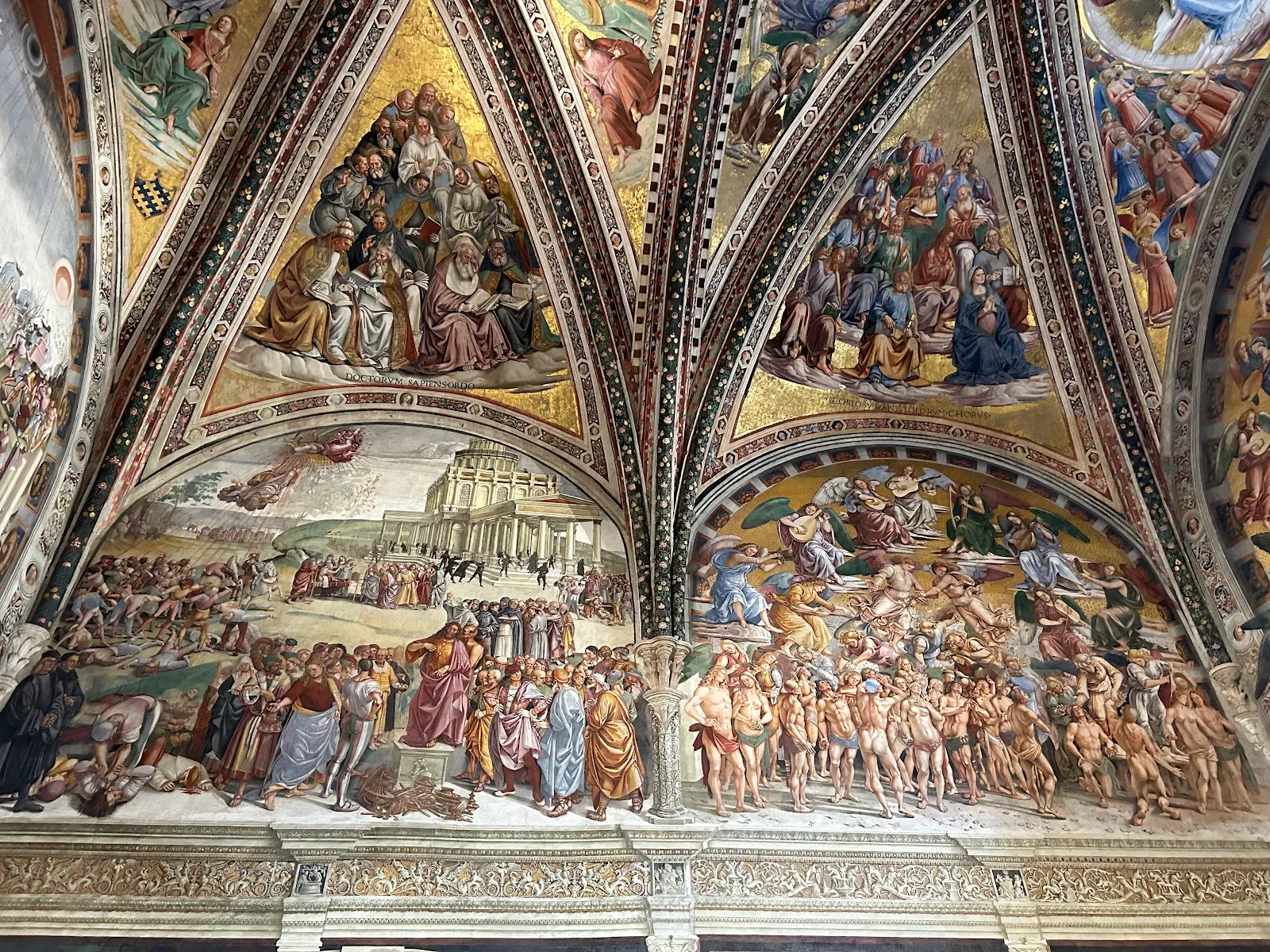
The most famous work inside is Luca Signorelli's fresco cycle in the San Brizio Chapel, which includes the Last Judgment. Colour and figures cover every wall. The frescoes are said to have influenced Michelangelo's work in the Sistine Chapel. Allow time to look slowly, since the scenes are dense. The ceiling of the nave is still in its original state.
The Chapel of the Corporal is the main devotional focus. It guards the reliquary containing a linen cloth stained with blood, linked to the miracle of Bolsena. The story tells of a priest who saw blood on the altar linen, and the cloth is kept in the cathedral today. Visitors come here to pray as well as to look, so keep your voice low and give worshippers space.
The statues of the Annunciation and the Apostles are also kept inside. They returned to the cathedral after about a century elsewhere.
The museums next door
The Museo dell'Opera del Duomo is on the second floor of Palazzo Soliano, the old papal palace beside the cathedral. Several popes took refuge in Orvieto in turbulent times and lived there. The museum shows documents on how the cathedral was planned and built. It also holds medieval painted works, among them a 13th century icon from Santa Maria del Carmine and a painted crucifix from San Ludovico.
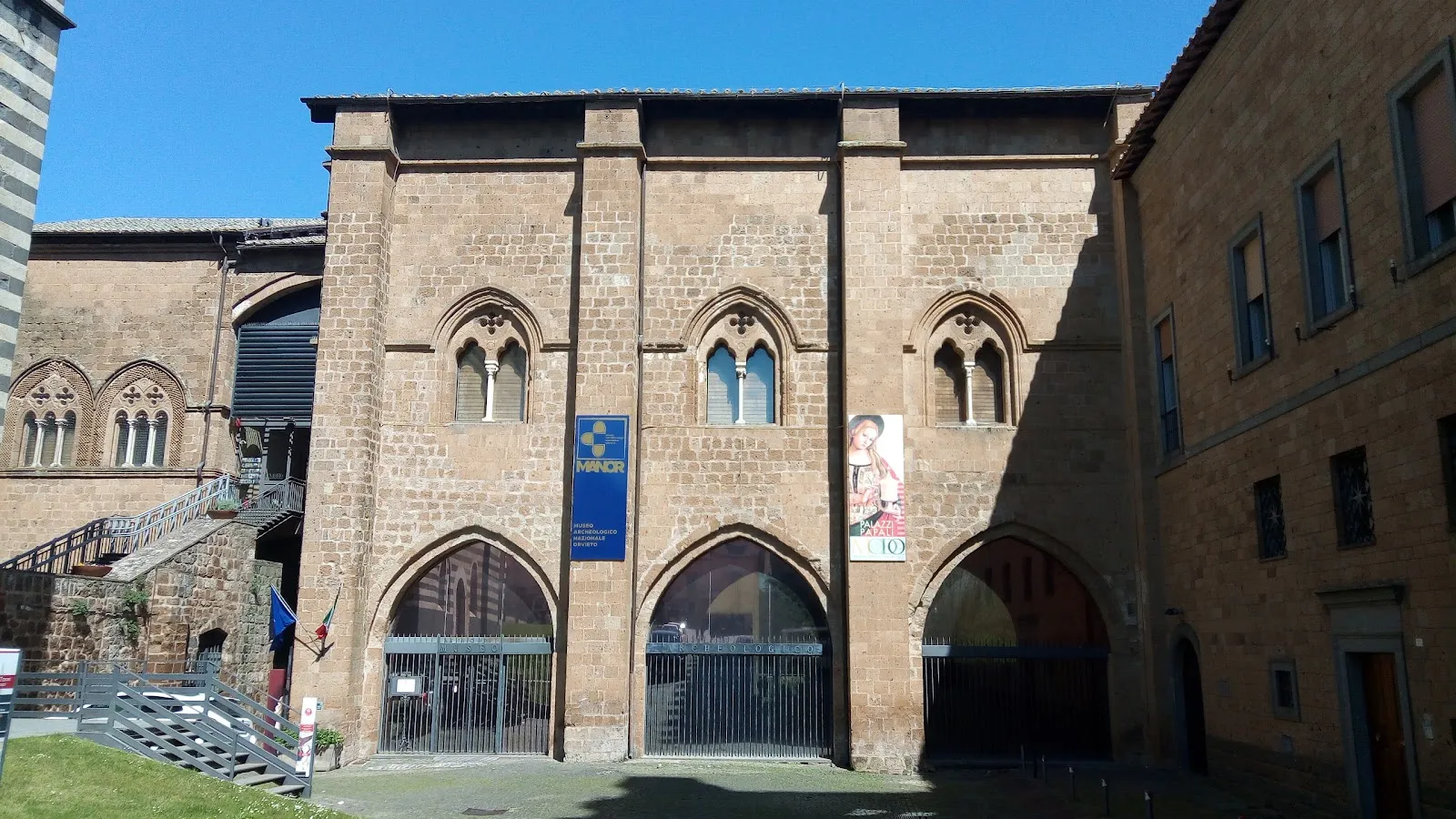
Opposite the cathedral, the Museo Archeologico Nazionale di Orvieto has one of Italy's leading collections of Etruscan finds, including pottery and sculpture. It suits a visitor who wants to see how Orvieto looked long before the cathedral was started.
A ticket for the cathedral can include the crypts and the cathedral museum. Groups of ten or more may get a free entry for the organizer.
FAQ
Is there an entry fee for Orvieto Cathedral?
Yes, entry is by ticket, and card and cash are both accepted. The ticket also gives access to the crypts and the cathedral museum. Buying in advance is recommended.
Can you take photos inside Orvieto Cathedral?
Using cameras inside is discouraged, as the cathedral is an active place of worship. Photograph the facade from the piazza instead.
How do you get to Orvieto Cathedral?
Orvieto can be reached by train from Rome or Florence, followed by the funicular up the hill. From the main car park it is about a 6 minute walk to Piazza del Duomo.
What is the most important thing to see inside?
Luca Signorelli's frescoes in the San Brizio Chapel, including the Last Judgment. The Chapel of the Corporal, with its reliquary, is also a main focus.
Is Orvieto Cathedral wheelchair accessible?
Yes. There is a barrier-free entrance, with ramps and elevators, plus reserved parking and accessible toilets nearby. Free wifi is also available.