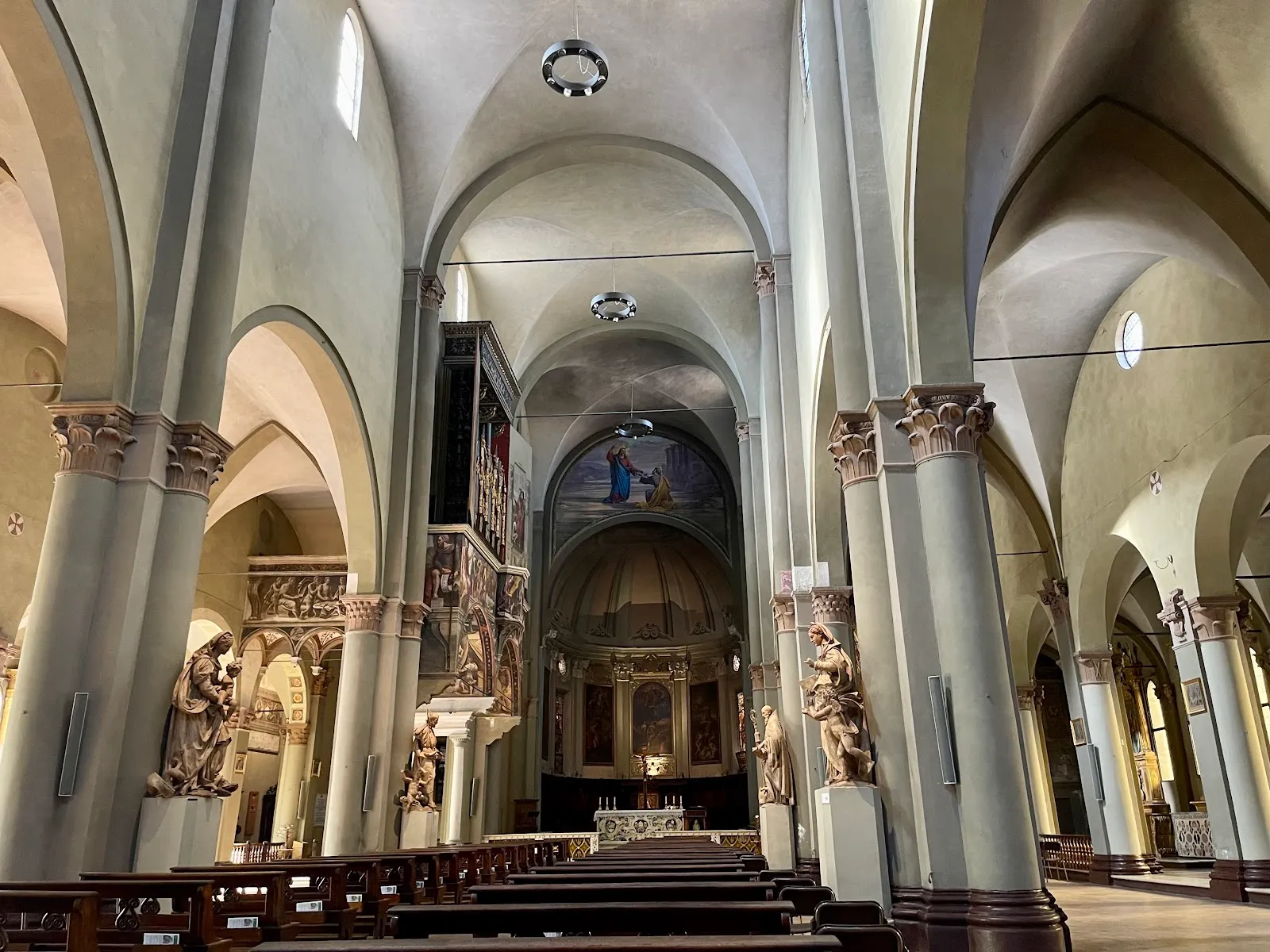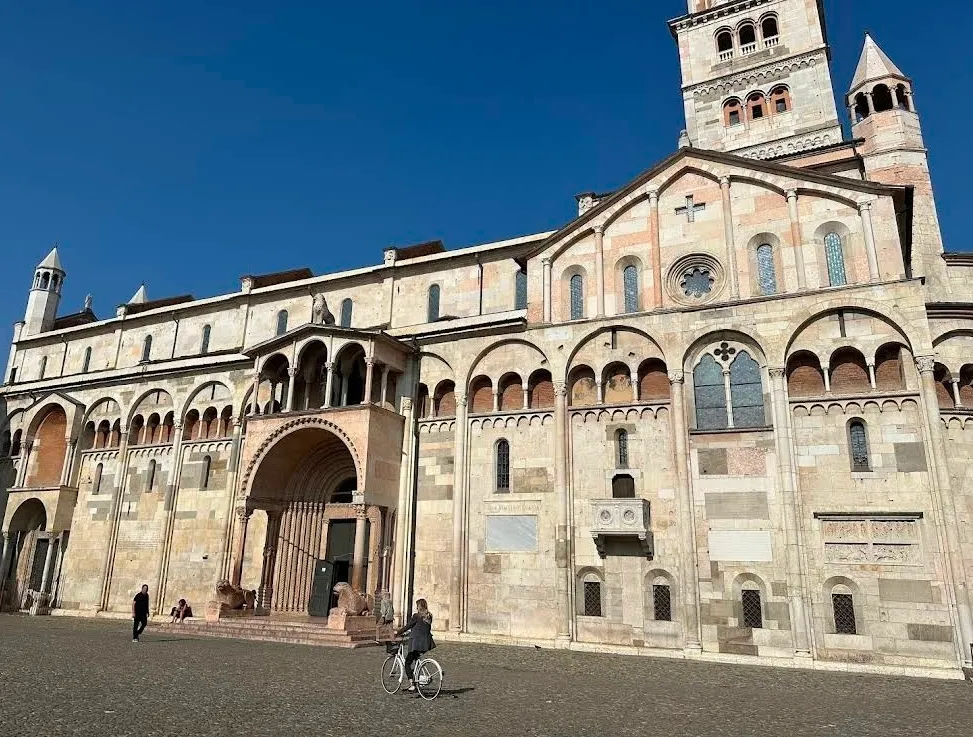
Modena Cathedral is the Romanesque church at the centre of Modena, on Piazza Grande beside the Ghirlandina tower. Work began in 1099, and the building was raised to hold the tomb of Saint Geminianus, the city's patron. The façade carries Wiligelmo's reliefs and scenes from Genesis, and the capitals and statuettes differ from one another. Inside, the space is calm and well kept, with an altar of statuettes from 1440 and 1441. Climb partway up the Ghirlandina for a view over the city.
From 1099 to the Campionese masters
Construction began in 1099, when the architect Lanfranco drew the first design for the church. It was built to hold the tomb of Saint Geminianus, Modena's patron saint, and earlier churches on the site were destroyed to make room for it.
Work went on for generations. Wiligelmo carved the façade reliefs. Later, Anselmo da Campione and his heirs, known as the Campionese masters, added to the building. The family worked across three generations. Enrico da Campione completed the Ghirlandina spire in 1319 and built the internal pulpit by 1322.
Mathilda of Tuscany helped secure the cathedral's continued construction during her reign. The rose window was added by Anselmo in the 13th century. The two lions that support the entrance columns are older, probably from Roman times, and were most likely found while the foundations were dug.
The façade and the Genesis reliefs
The façade is the part most visitors come to study. Wiligelmo's reliefs cover it, and the sculptures carry the Bible into stone. Four slabs show scenes from Genesis: two sit above the side doors and two beside the central porch. The scenes include Adam and Eve, Cain and Abel, and the Universal Flood.
The carvers worked with a good deal of individual freedom, so the capitals, columns and statuettes are each distinct. Look up at the portals and the roofline as well. The original metopes, eight relief panels that first sat on the roof projections, are now housed in the cathedral's museums.
Inside the cathedral
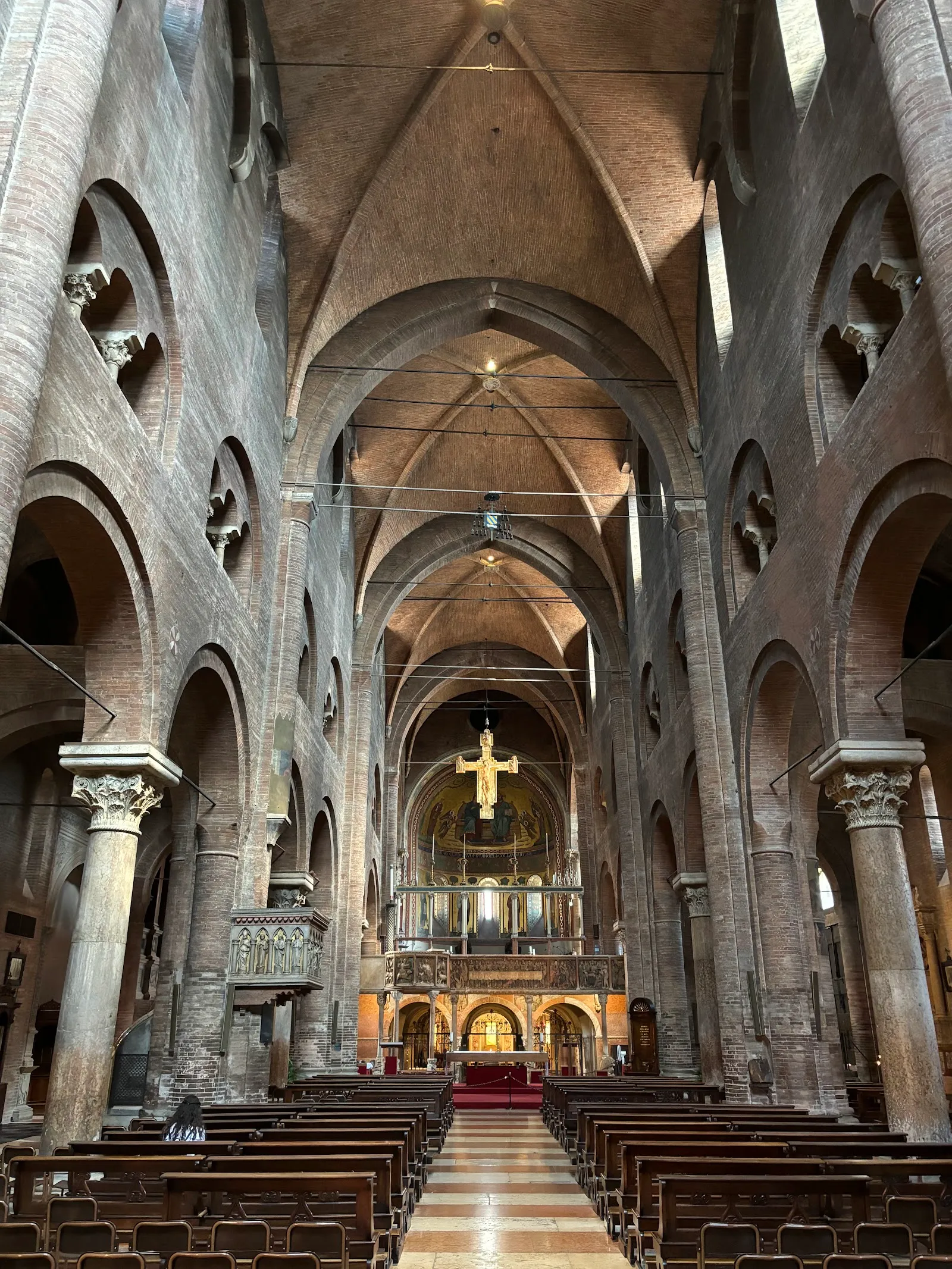
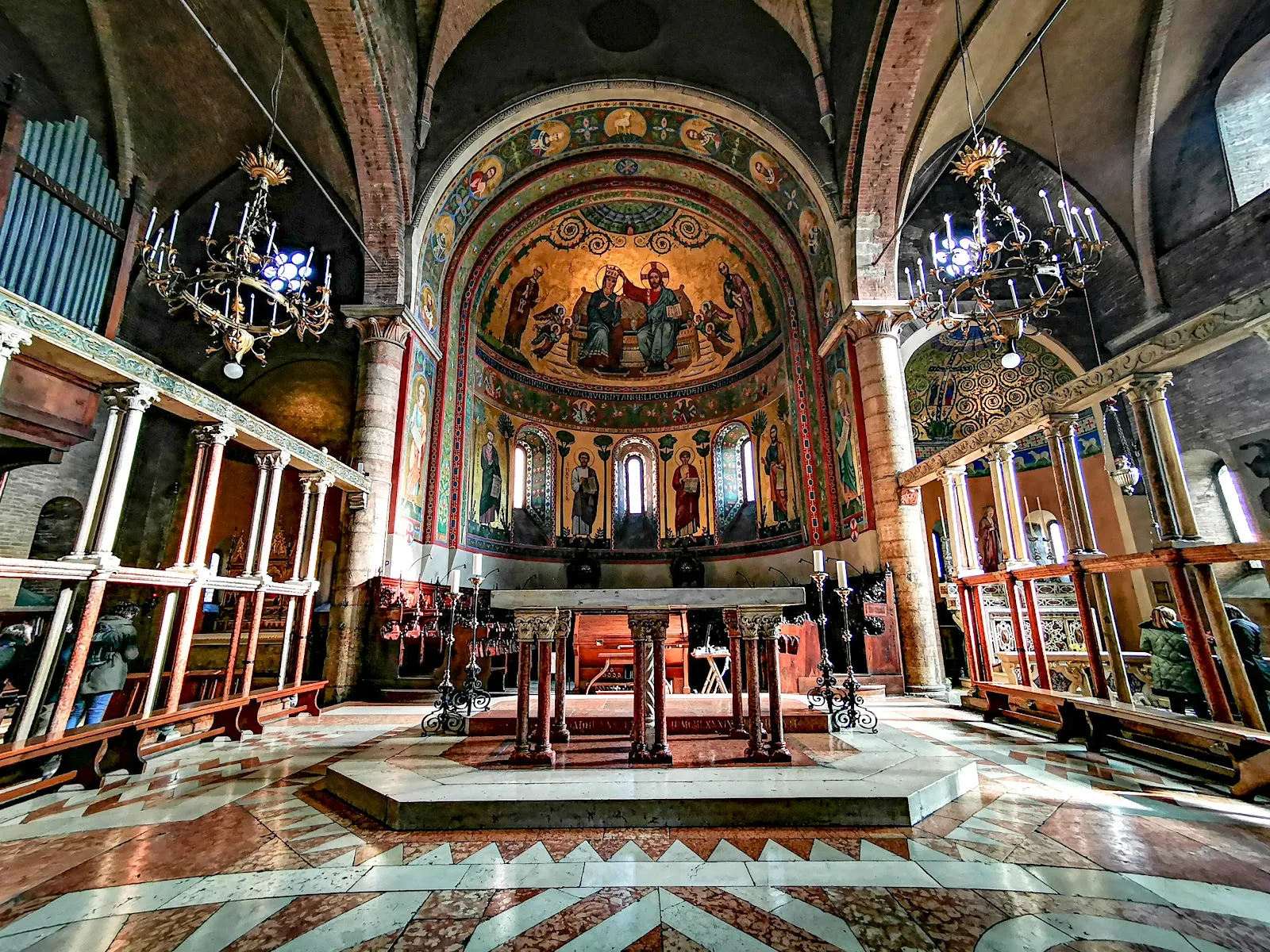
The interior is quiet and well kept. Two works are worth seeking out: the Altar of Statuettes, made in 1440 and 1441, and Dosso Dossi's altarpiece of Saint Sebastian.
The crypt holds the relics of Saint Geminianus. A 2 euro contribution is suggested to visit the first floor. Marble is used throughout the building, and in places it gives the stone an almost liquid look.
The tower and Piazza Grande
The Ghirlandina rises 86.14 metres beside the apse and serves as the cathedral's bell tower. It is the best-known symbol of Modena. You can climb about halfway up, where the view covers the city around the tower, and there is information along the way.
The cathedral, the Ghirlandina and Piazza Grande were listed together as a UNESCO World Heritage site in 1997. Piazza Grande has long been the place where religious and civic power meet, and the Town Hall stands on it. The square also hosted a market, and it was called the Piazza delle erbe until the early 19th century.
Planning the visit
Buying tickets in advance is recommended. Visiting early or late in the day keeps the crowds smaller. The entrance is wheelchair accessible.
The cathedral sits on Corso Duomo, a short walk from the tower and the square, so the three can be seen in one visit. Dress with covered shoulders and knees as a courtesy, since the cathedral is still a place of worship.
FAQ
Is there an entry fee?
A 2 euro contribution is suggested to visit the first floor. Buying tickets in advance is recommended.
Can you climb the tower?
Yes. The Ghirlandina can be climbed about halfway, for views over the city and information along the way.
Is the cathedral wheelchair accessible?
Yes, the entrance is wheelchair accessible.
Why was the cathedral built?
Construction began in 1099 to hold the tomb of Saint Geminianus, Modena's patron saint.