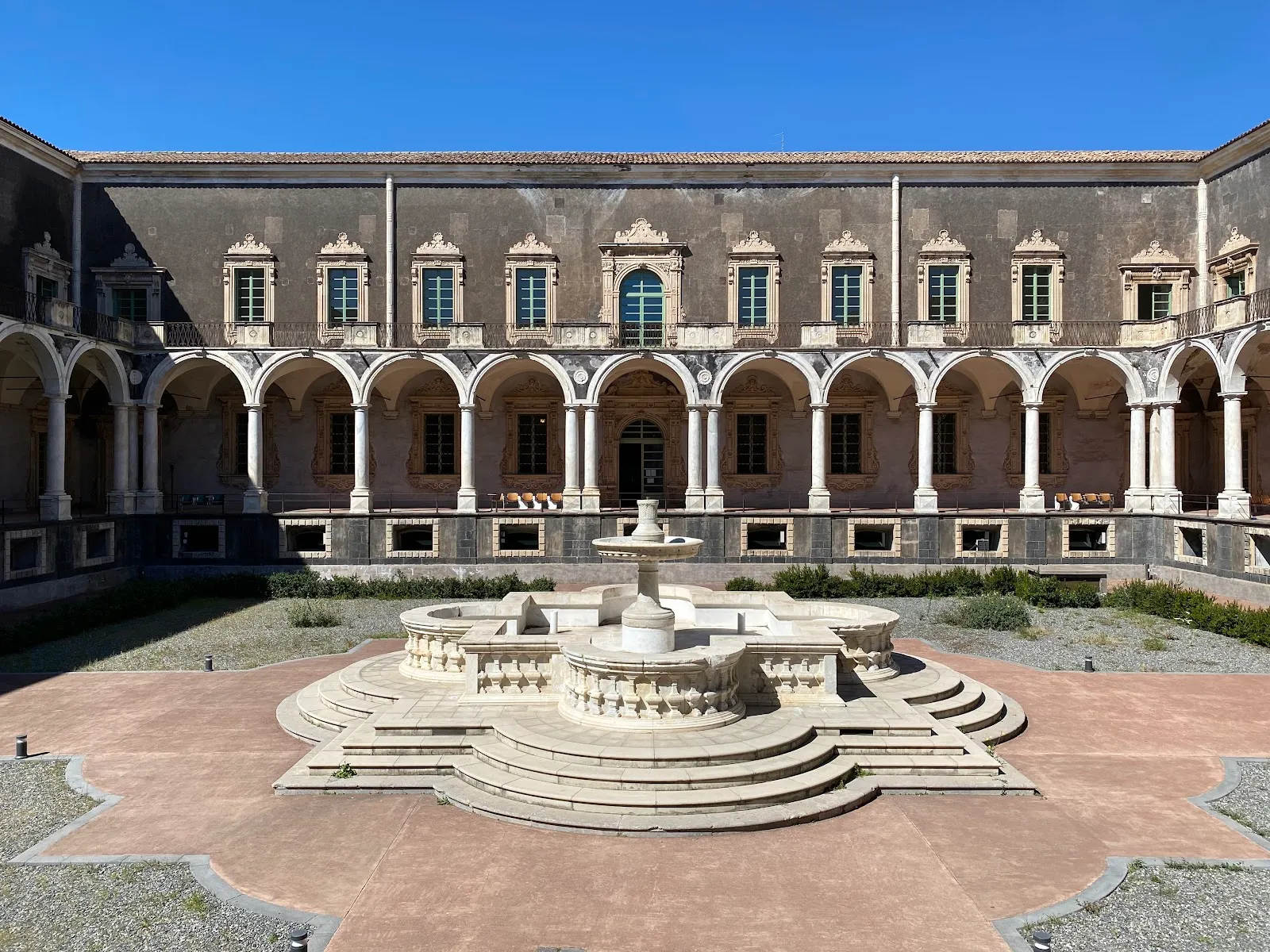
On Via Crociferi in Catania, the Church of Saint Julian pairs a late-Baroque interior with access to the top of its dome. Climb up for a wide view over the city and Mount Etna, then take time to look at the church’s paintings and sculpted details. The church is dedicated to Saint Julian the Hospitaller and was built after the 1693 earthquake destroyed an earlier church on this site. An audio guide can add context to the visit.
Built after the 1693 earthquake
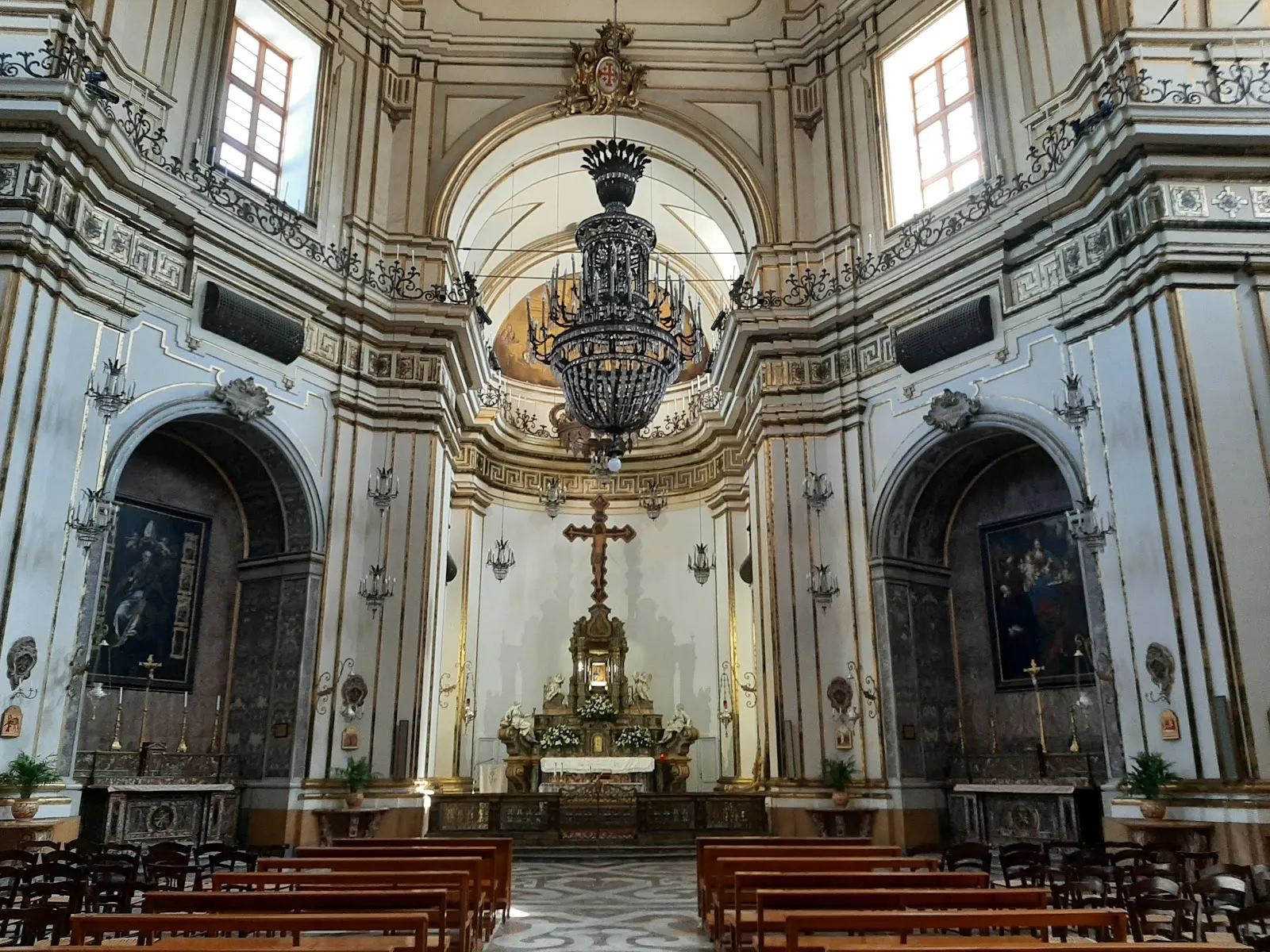
The Church of Saint Julian stands on the site of an earlier church destroyed in the 1693 earthquake. Dedicated to Saint Julian the Hospitaller, the present church was built from 1739 to 1751. Giuseppe Palazzotto and Vincenzo Caffarelli designed it in the late-Baroque style.
Its facade has a pronounced convex shape. Dense iron grilles cover the upper-story windows. Benedictine nuns in the attached monastery used those windows to watch the procession for the feast of Saint Agatha as it passed. The pediment is broken into sections, each with a reclining maiden sculpted by Gaspare Ciriaci. A tall metal fence frames the portal, whose door bears the cross of the Order of the Holy Sepulchre. The order restored the church after 1939.
The octagonal nave and its artworks
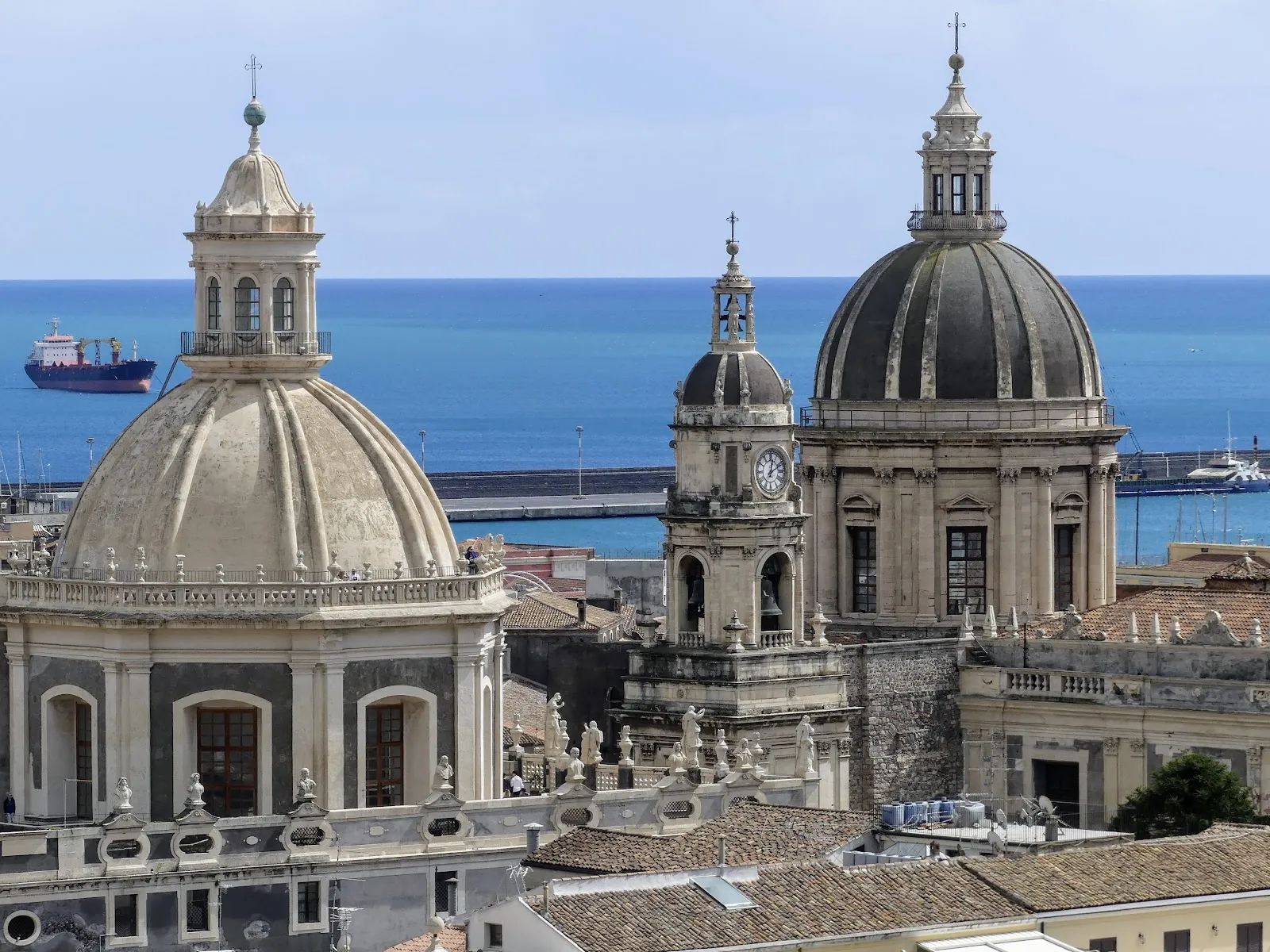
Inside, the nave forms an elongated, asymmetrical octagon. It has a main altar and four shallow altars around its sides. Antonino Battaglia, son of Francesco, designed the layout of the interior.
Giovanni Battista Vaccarini designed the polychrome main altar, which Giovanni Battista Marino sculpted. Allegorical figures of Faith and Charity flank its throne and painted cross. Among the works named in the church are Olivio Sozzi’s Madonna of the Graces with Saint Joseph and Saint Benedict, and Pietro Abbadessa’s Saint Anthony Abbot in Ecstasy. Other subjects include scenes from the life and martyrdom of Saint Julian, and a Crucifixion with Mary of the Sorrows, Mary Magdalene and Saint John the Evangelist.
Climbing to the dome
The climb leads to the top of the dome, a viewpoint above Catania with a broad outlook towards Mount Etna. The route includes stairs; one account describes three flights to the roof. The view is the main reason to make the climb, and the elevated position gives a different perspective from the church interior.
An audio guide is available on site and can help explain the church’s history and significance. There are also small catacombs. The dome was frescoed by Giuseppe Rapisardi in 1842, though the available description of the fresco is incomplete.
FAQ
Can you climb to the top of the dome?
Yes. Visitors can climb stairs to the top of the dome for views over Catania and Mount Etna.
What can you see inside the church?
The interior includes a polychrome main altar, paintings and sculptures, including works depicting Saint Julian, Saint Joseph and Saint Benedict.
Is there an audio guide?
Yes, an audio guide is available on site.