
Shalimar Bagh is a Mughal garden on the northeast shore of Dal Lake in Srinagar. Emperor Jahangir laid it out in 1619 for his wife Nur Jahan. It covers 31 acres in three terraces joined by a central water channel, with chinar trees along the walkways and the Zabarwan range behind. The paved paths are easy to walk at any age, and lawns, flower beds and benches leave room to slow down. Spring flowers and autumn leaves show the garden at its best, and the Chini Khana fountain is one of its best-known features.
Built for Nur Jahan in 1619
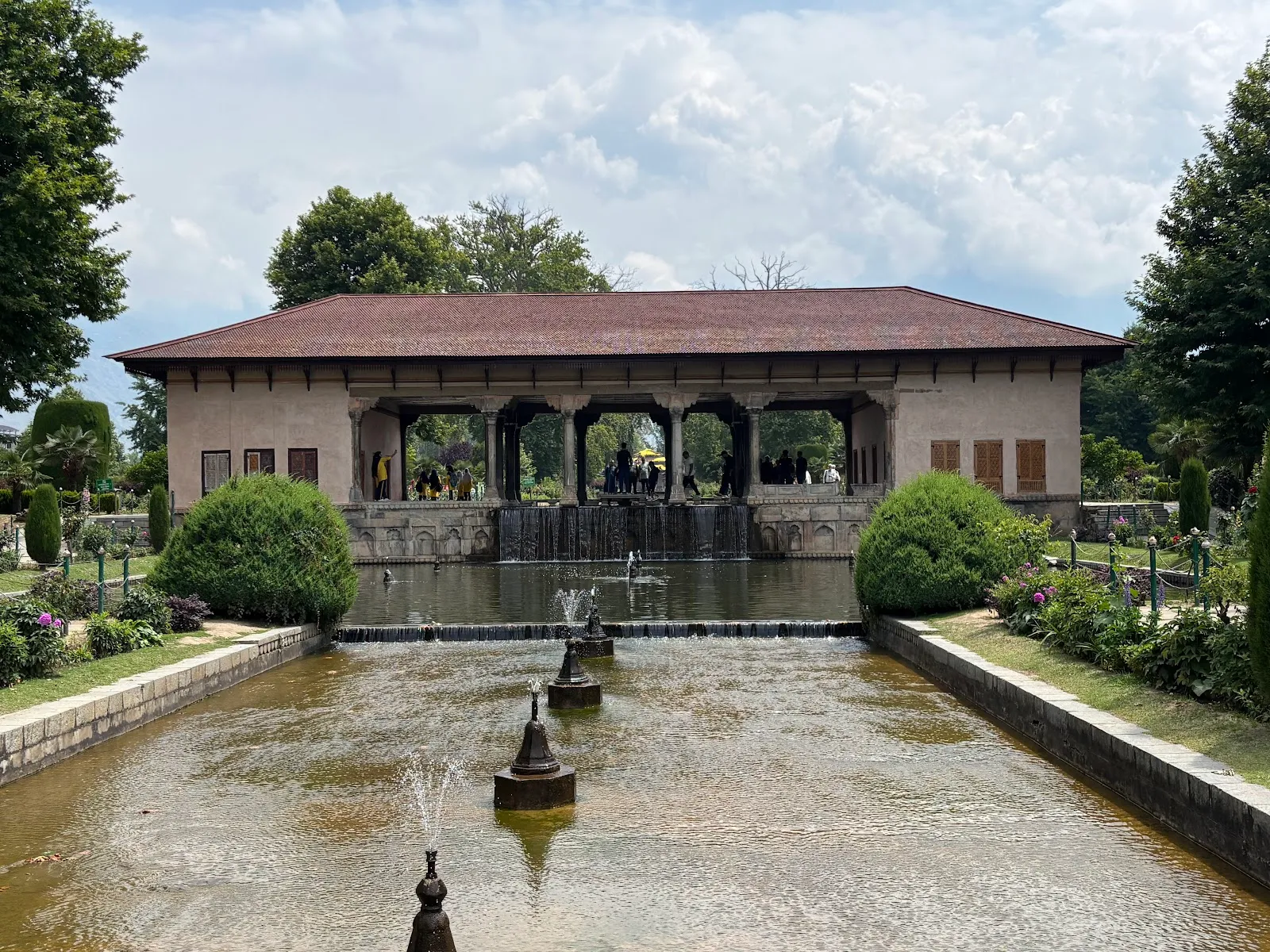
Emperor Jahangir had the garden built in 1619 for his wife Nur Jahan. It is known by several names: Shalimar Bagh, often translated as abode of love, and Farah Baksh and Faiz Baksh, the first meaning delightful. Locals and guidebooks also call it the Crown of Srinagar.
Shalimar Bagh was a royal garden and is now a public park. It is the largest of the Mughal gardens along Dal Lake. Nishat Bagh is the next largest in the Kashmir Valley, and Chashme Shahi and Pari Mahal are close by. Most visitors combine Shalimar with Nishat Bagh, since both sit on the lake shore.
Terraces, channel and pavilion
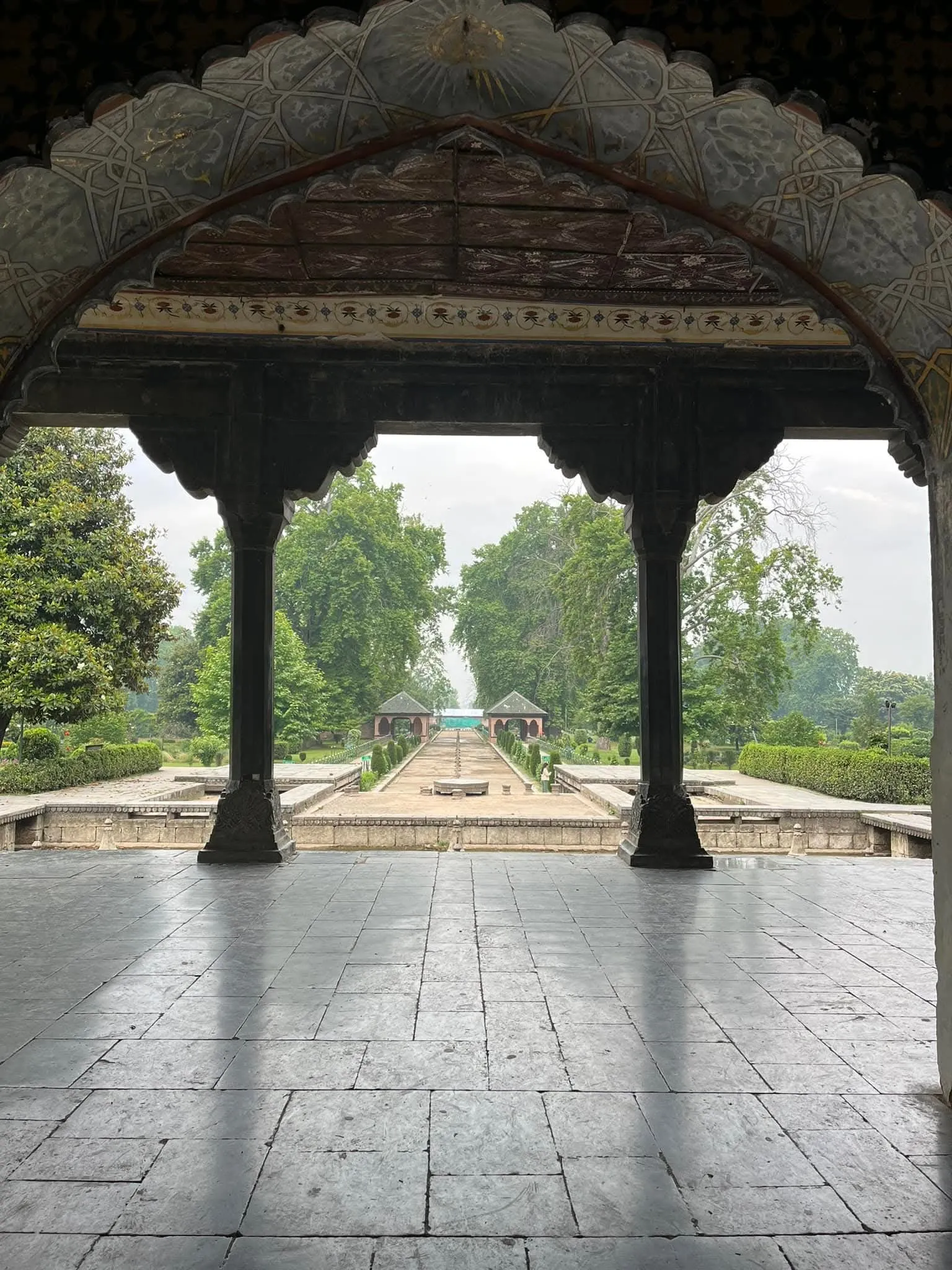
The garden covers about 31 acres (12.4 hectares) and runs uphill from the lake in three terraces. Together they stretch 587 metres. A central water channel, the shah nahar, carries water from the highest level to the lowest. In places the water drops down sloping stone chutes called chaddars, and fountains line the channel.
On the upper terrace stands a black marble pavilion surrounded by fountains. The Chini Khana fountain is another feature that shows the Persian influence on the design. Chinar trees frame the grand walkways, and lawns and flower beds fill the terraces between them.
The Zabarwan mountains rise behind the garden. From the middle of the garden you can see the Himalayas, and Dal Lake lies on the other side.
How the water reaches the fountains
The fountains work without electricity or mechanical pumps. High in the Zabarwan hills, a freshwater spring called Harwan feeds a canal system that the Mughal builders laid down to bring the water to the top terrace. The garden slopes down toward Dal Lake, and gravity drives the water through the channel and the fountains below.
This is why the water is quiet in the dry months. When flow is low in winter the fountains are inactive, and the channel looks much less lively than in summer.
The garden through the year
Spring brings blossom and flower beds, with tulips and other plants that suit close-up photography. Reports from April mention flowers, green lawns and water cascading over the chutes. Autumn is the other peak season, when the chinars change colour.
In winter the leaves fall and the fountains stop, so the garden looks dry and less colourful. The structure of the terraces and the view of Dal Lake are still there, and some travellers find the lake views at their best in the cold months.
The garden is also a popular picnic spot for local families, and evenings can be busy. Early morning is quieter.
Before you enter
Near the entrance is a fountain known as the Zamzam fountain. Visitors are asked not to drink from it or spit near it, so treat it with respect.
Parking is available, paid in the lot and free on the street. If you are travelling by water, shikara rides on Dal Lake can include Shalimar Bagh among their stops, alongside Nishat Bagh and the Hazratbal Shrine.
The garden is quick to see, and the walk from the entrance to the top terrace and back takes about half an hour. Allow longer if you want to sit under the trees, picnic or photograph the terraces.
FAQ
How much is the entry fee for Shalimar Garden?
Entry is Rs 30. Carry cash to pay it.
How long do you need at Shalimar Garden?
The whole garden can be walked in about 30 minutes. Allow up to an hour if you want to sit, picnic or take photographs.
What is the best time to visit Shalimar Garden?
May to October is best, with blooming flowers in spring and autumn leaves later. In winter the fountains are inactive and the trees are bare. Early morning or evening avoids the busiest hours.
Who built Shalimar Garden and when?
Emperor Jahangir built it in 1619 for his wife Nur Jahan. It is also called Farah Baksh and Faiz Baksh.
Is Shalimar Garden wheelchair accessible?
The entrance and the parking lot are wheelchair accessible, and the walkways are paved. Seating inside the garden is limited.


